Vocabulary for ielts cambridge
Vocabulary for ielts cambridge
Vocabulary for ielts cambridge
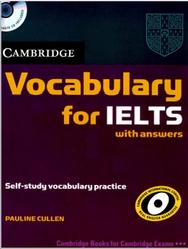
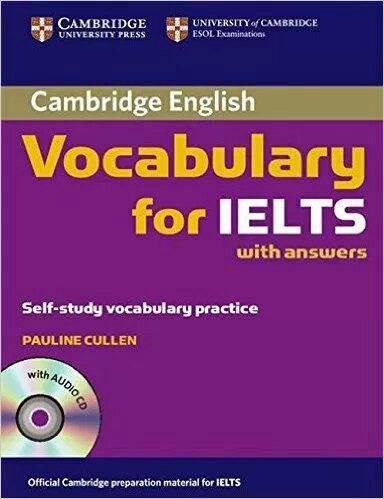 Cambridge Vocabulary for IELTS Book with Answers and Audio CD
Product description
Cambridge Vocabulary for IELTS includes useful tips on how to approach IELTS exam tasks and covers especially tricky areas such as the language needed to describe data and processes. It is informed by the Cambridge International Corpus and the Cambridge Learner Corpus to ensure that the vocabulary is presented in genuine contexts and includes real learner errors.
Похожие материалы
A government’s role is only to provide defence cap
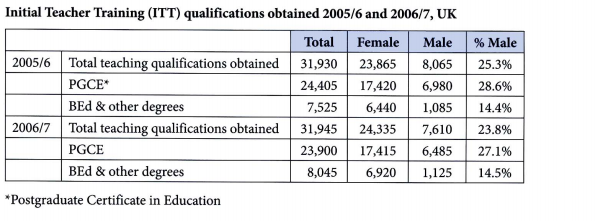
The table below shows the number of students livin
Many people think that nowadays people are being s
These days more fathers stay at home and take care
In some countries children are engaged in some kin
In the developed world, average life expectancy is
It’s important for children to learn the differenc
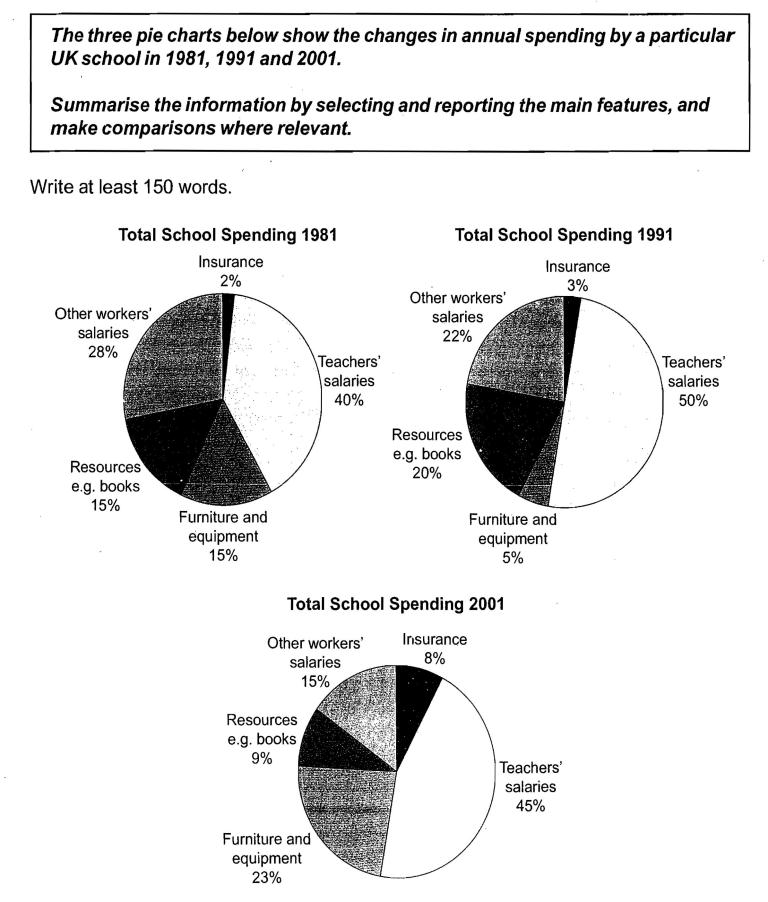
The three pie charts below show the changes in ann
Many people believe that for pen and paper examina
Road accidents claim far too many lives. What can
Increasing the price of petrol is the best way to
Fast food is now universally available in most cou
Some people believe that visitors to other countri

The charts give information about two genres of TV
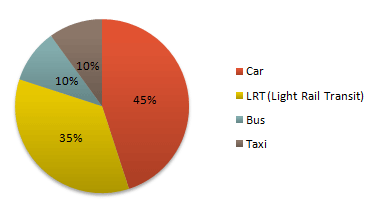
The diagrams below give information on transport a
It is generally believed that some people are born

The chart below shows the number of travellers usi
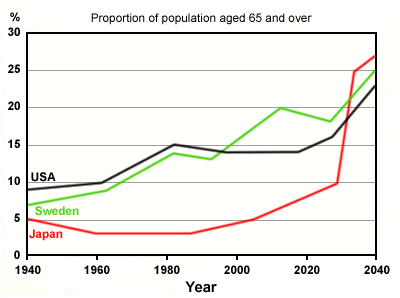
The graph shows the proportion of the population a
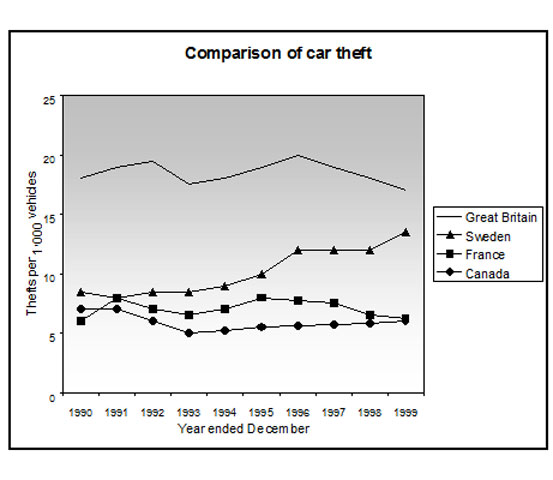
The line graph shows thefts per thousand vehicles
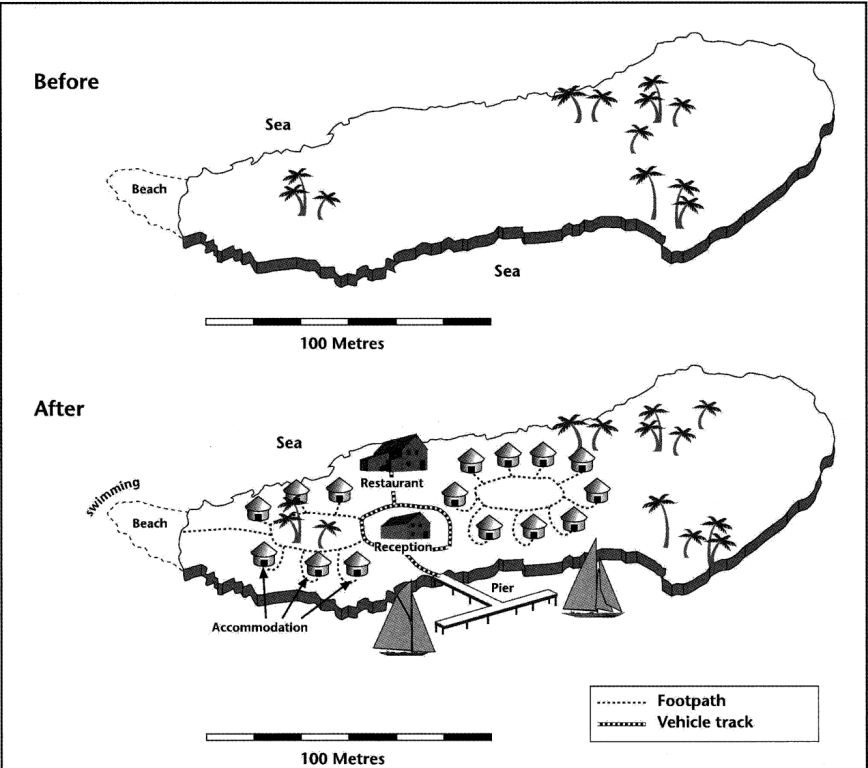
The two maps below show an island, before and aft
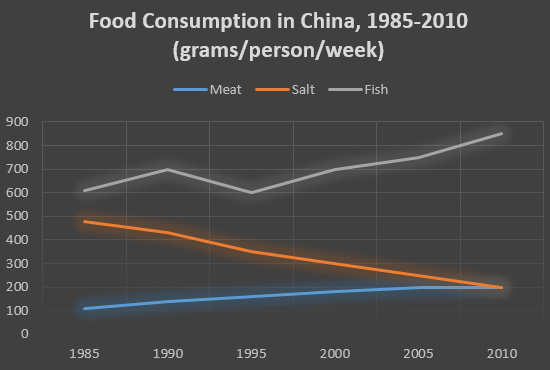
The graph below shows the changes in food consumpt
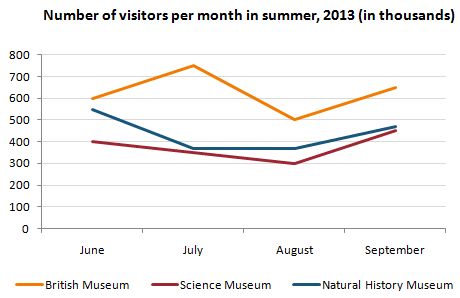
The line graph below gives information about the n

The graph below shows the population change betwee
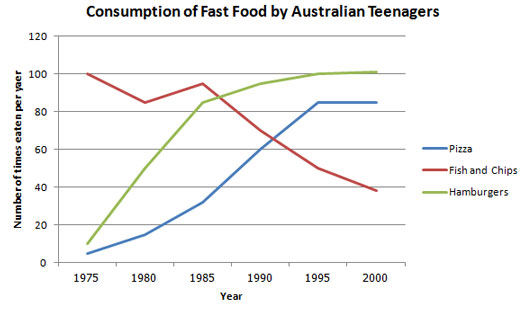
The line graph below shows changes in the amount a
Many parents encourage their children to take up s
Computer games teach us nothing and young people s
The internet has transformed the way information i
It’s generally believed that some people are born
Discuss the advantages and disadvantages of living
The graph below shows the number of books read by
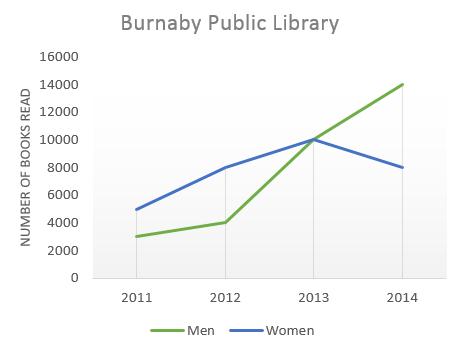
The graph below shows the number of books read by

The line graph below shows the changes in the shar
The table below shows the worldwide market share o
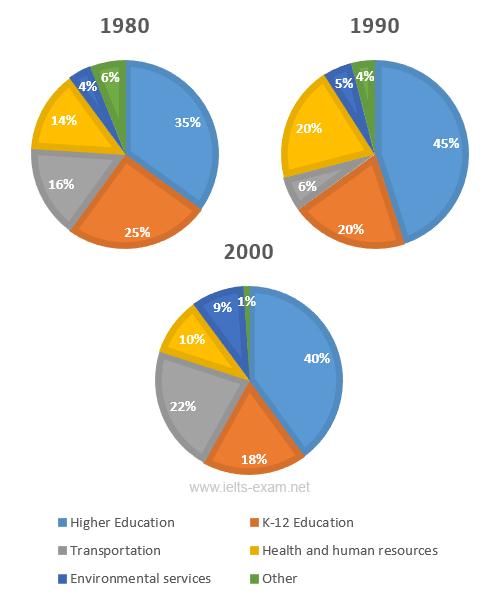
The three pie charts below show the changes in ann
Rich countries should allow jobs for skilled and k
The advance of science and technology has a signif
Nowadays many people have access to computers on a
Some people believe the aim of university educatio
These days, in many countries fewer and fewer peop
Theme: Nowadays many people have access to compute
Theme: Road accidents claim far too many lives. Wh
The road accident claim for too many lives. What c
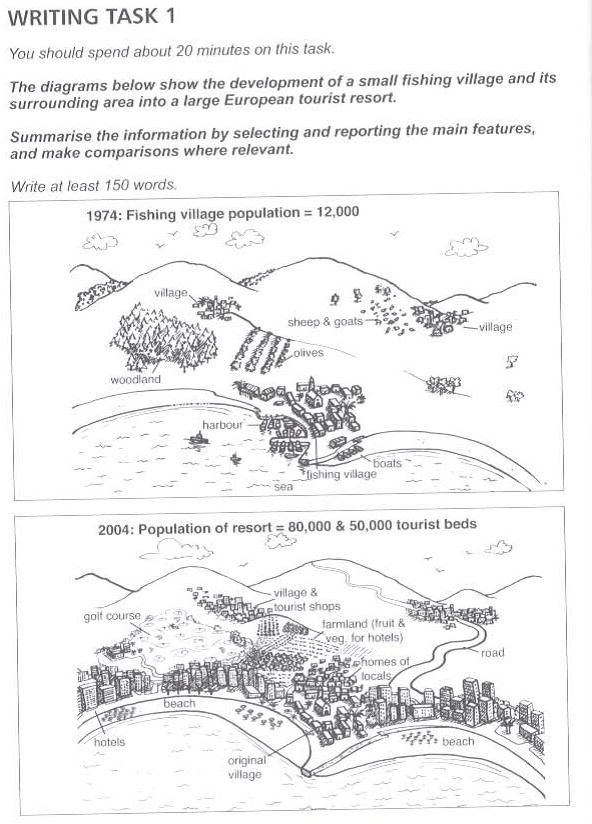
The diagrams below show the development of a small
The ownership of cars should be restricted to one

The chart below shows global sales of the top five
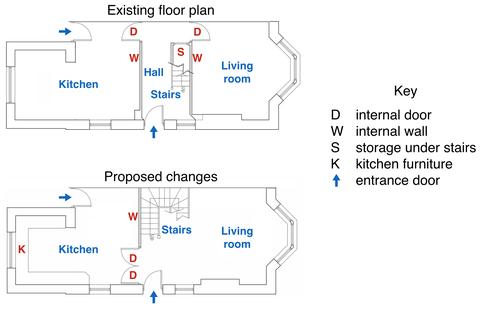
The diagrams below show the existing ground floor
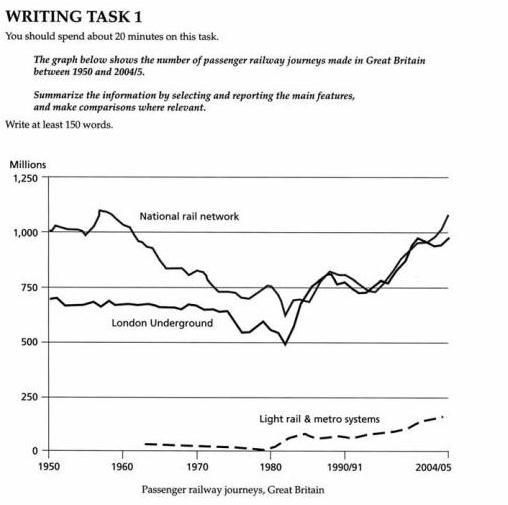
The graph below shows the number of passenger rail
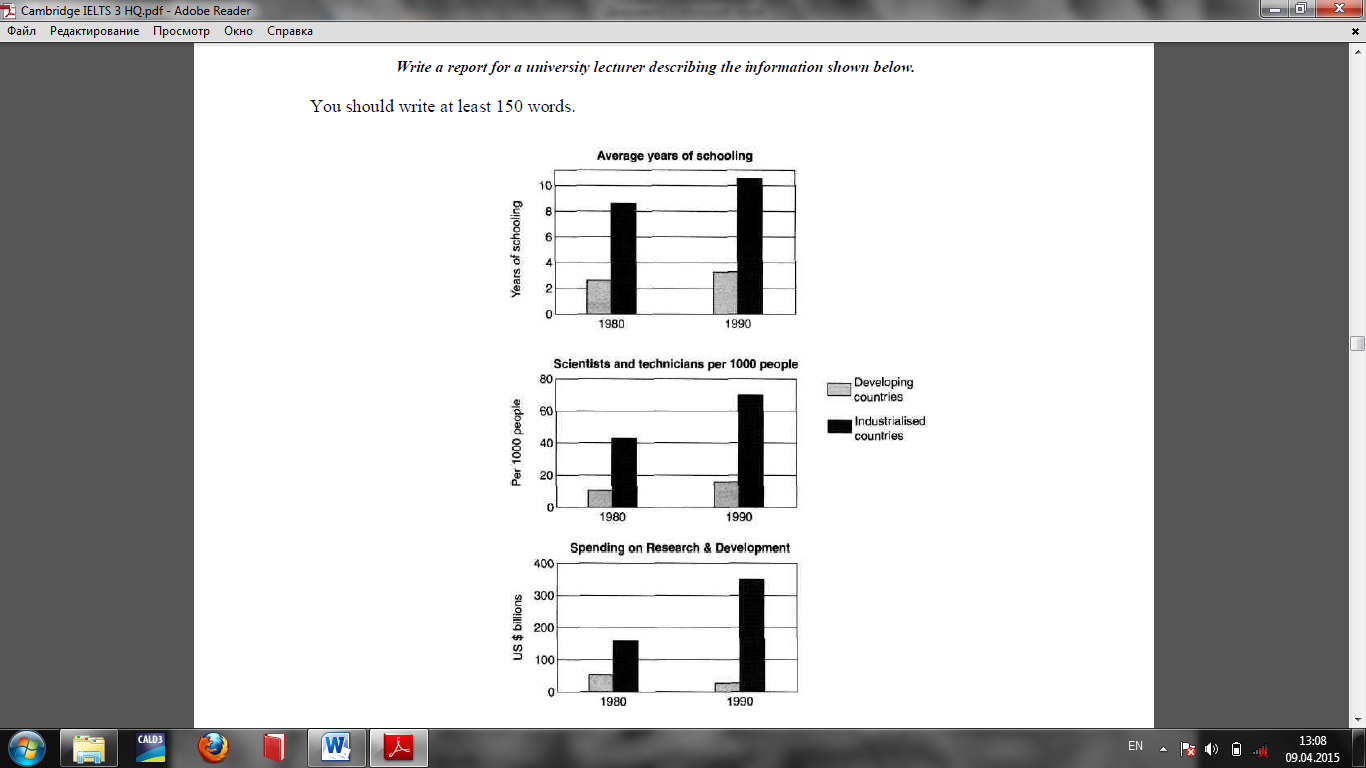
The charts below show the levels of participation
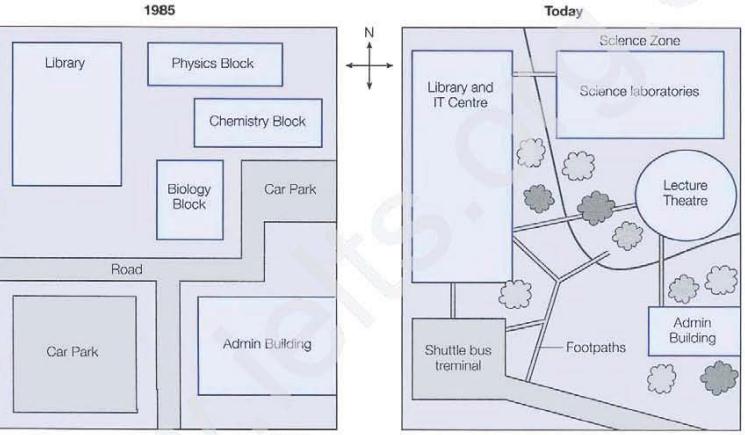
The diagrams below show changes to one university
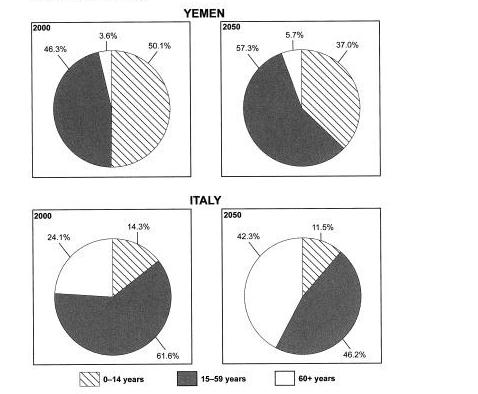
The charts below give information on the ages of t
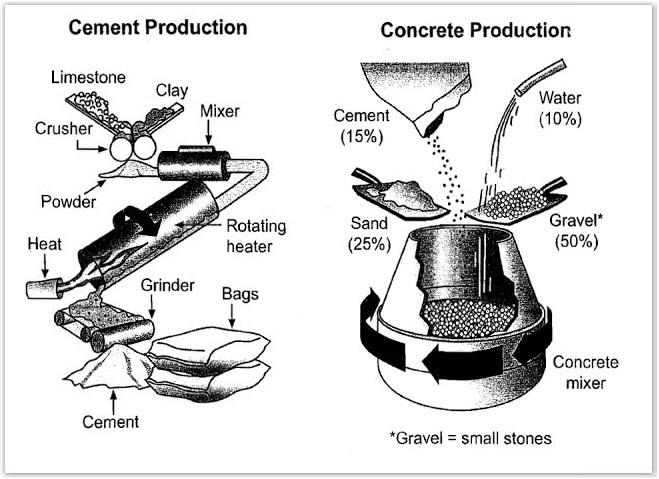
The diagram below shows the stages and equipment u
Radio and TV in my life
Your Health and You

The charts below show the number of Japanese touri
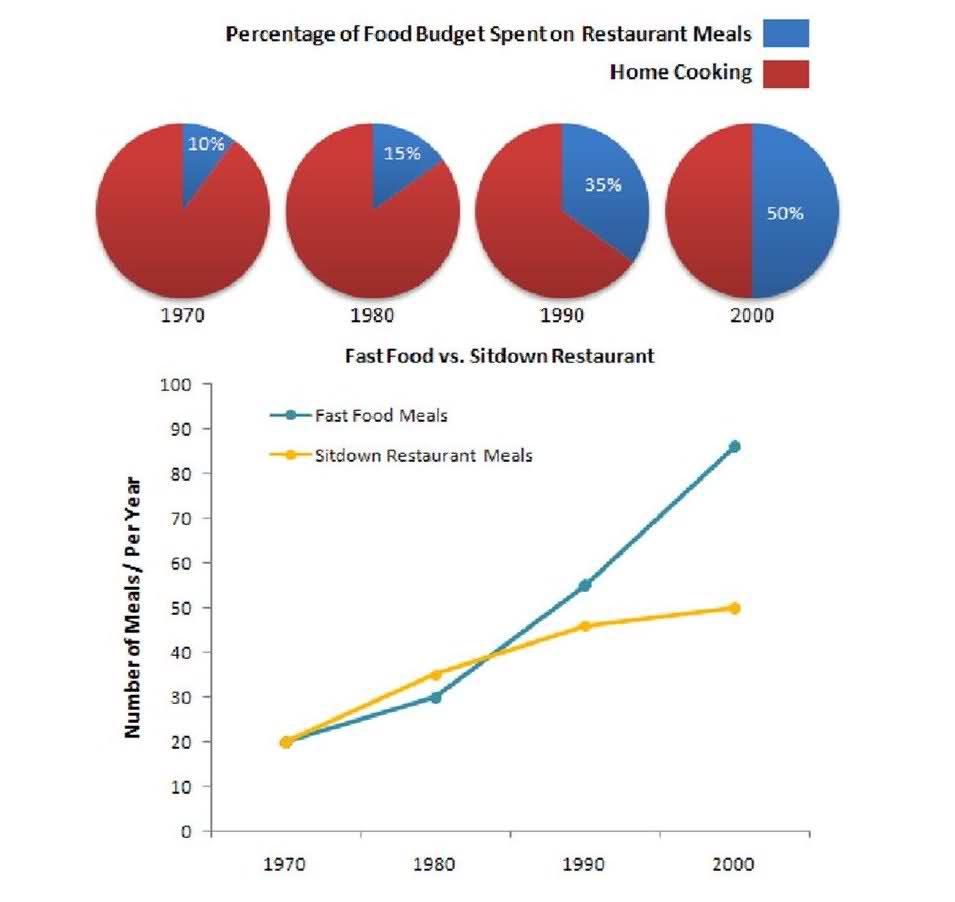
The charts below show the percentage of their food
Should arts-related entertainment venues such as m
Prevention is better than cure. Out of a country’s
Some people think that parents should teach their
Some people prefer to spend their lives doing the
Tenses and Conjugation
Without capital punishment (the death penalty) our
Networking and the Internet
What is capitalism and how does it operate?
Housing and accommodation has become a major probl
Without capital punishment our lives are less secu
Discuss the advantages and disadvantages of living

The graph shows the unemployment rates in the us a
Holidays should be time for doing new and challeng
Many parents encourage their children to take up s
More and more people are becoming vegetarians nowa
Computer games teach us nothing and young people s
What are are advantages and disadvantages of owni
Advantages and disadvantages modern technology in
Crime and Criminals
Ethics and media
Should wealthy nations be required to share their
Discuss advantages and disadvantages living in a f
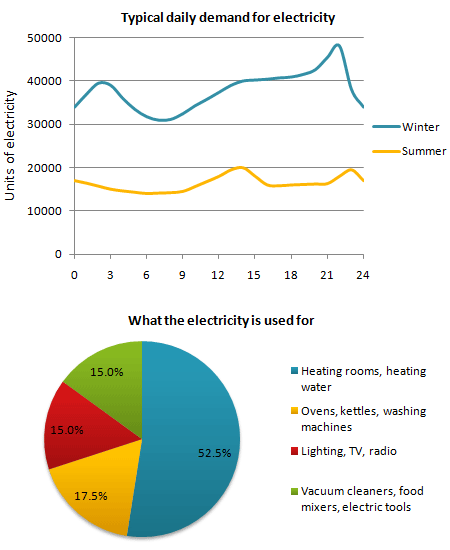
The graph below shows the demand for electricity i
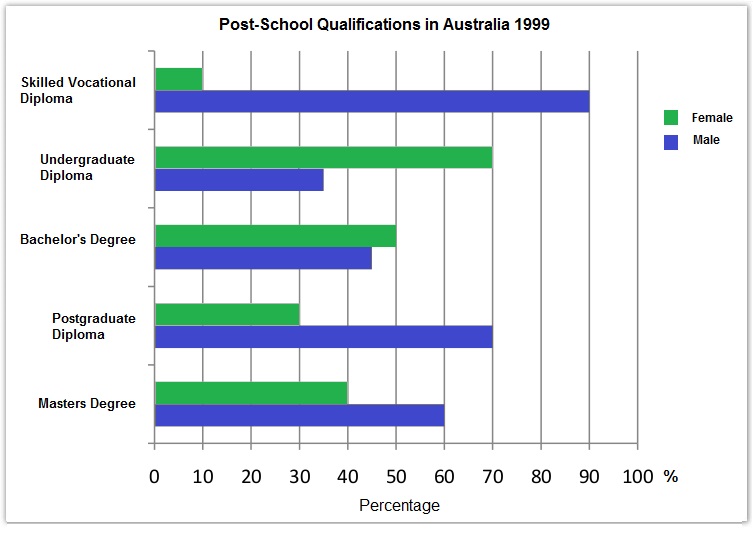
The chart below show the different levels of post-

The charts below give information about travel to

The table shows the worldwide market share of the
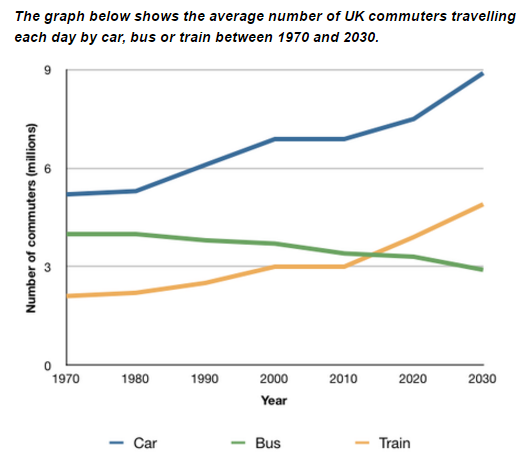
The graph below shows the average number of UK com
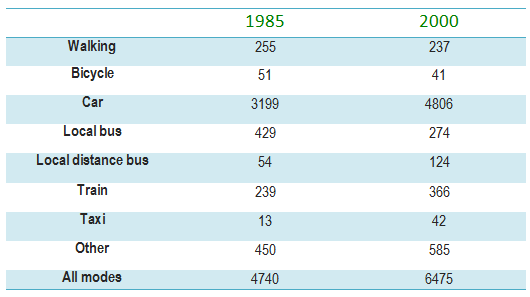
The table below gives information about changes in
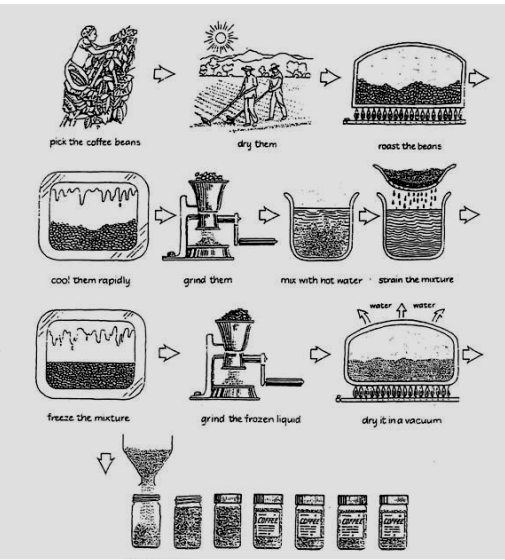
The diagram below shows how coffee is produced and
Uzbekistan and the world
The United Kingdom and London
Junk food and healthy food
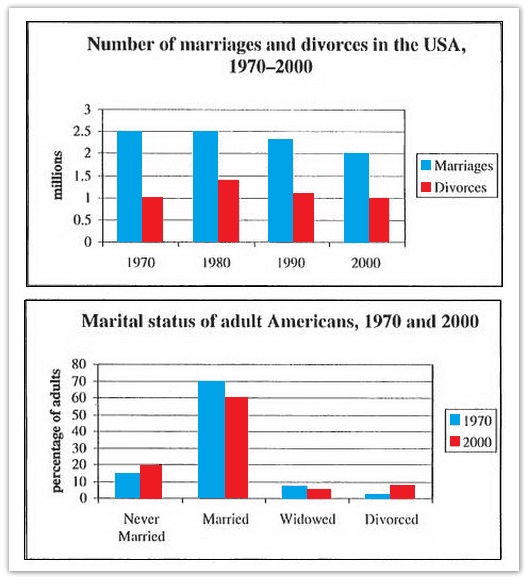
The charts below give information about USA marria
Using ICT in learning and teaching English
The conditions of internet service market and its
ANALYZING THE CONDITIONS AND DEVELOPMENT PERSPECT
Types and Levels of Communication
CD va DVD disklar bilan ishlash dasturlari (AIM.U
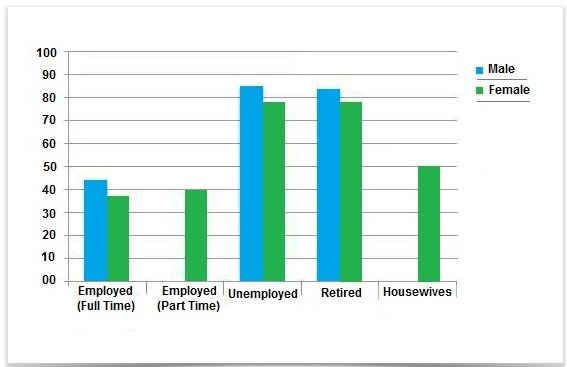
The chart below shows the amount of leisure time e

The graphs below provide information on global pop
The charts below give information about USA marria
Proportion of population aged 65 and over
Teaching and assessing writing (CEFR)
“Seasons and weather” mavzusida 4-sinflar uchun in
Because of the busy pace of modern life, many chil
How to… help your IELTS students improve their vocabulary

As well as helping your students improve their vocabulary for IELTS, perhaps by focusing on words/phrases related to topics often included in the test, or words/phrases that may be useful in particular parts of the test, you should also help your students develop their academic vocabulary. This is relevant whether they are preparing for IELTS Academic or General Training. Pete Jones has been helping IELTS test takers and teachers for over 15 years. In this article, he looks more closely at why academic vocabulary is important for IELTS preparation and how you can help your students develop it.
What is academic vocabulary and why is it important for IELTS preparation?
Put simply, academic vocabulary are words that are commonly used in academic texts but are not among the most frequently used words in English more generally.
Perhaps the most well-known list of academic vocabulary is the Academic Word List (AWL), but as you’ll see below, I’m not suggesting you give the list to your students to remember.
A more recent list of academic vocabulary is the New Academic Word List, but I’ve found this to be less useful for IELTS preparation because words from the list appear less frequently in IELTS texts.
I’ve found that words on the AWL…
• account for up to 18% of the different words in IELTS Academic Reading texts,
• make up around 10% of the different words in IELTS General Training Reading Section 3 texts,
• can be around 10% of the different words in IELTS Listening Part 4 recordings,
• are useful for students in Writing Task 1 (IELTS Academic) and Writing Task 2 (IELTS Academic and General Training).
For these reasons, and the fact that many IELTS students are taking IELTS to go on to further academic study, spending time helping your students with academic vocabulary is generally time well spent.
How can you help students develop their academic vocabulary?
I don’t recommend you give your students the AWL and ask them to remember all of the vocabulary on the list. What I do suggest is that you first become familiar with the AWL list yourself as you’ll probably find that not all words you expect to be on the list are actually examples of academic vocabulary. To show you what I mean, predict which of the words in this blog post are on the AWL and then, after reading about Academic Word List highlighters below, copy and paste this post into an AWL highlighter to check.
Once you’re familiar with the AWL yourself, you can help students in these ways:
• Teach chunks that contain academic vocabulary, e.g. ‘It would be beneficial for…’ or ‘…has an impact on…’. I’ve included a link to my blog post on teaching chunks in the ‘Useful tools and further reading’ section below.
• Use an AWL highlighter to create vocabulary exercises based on texts that your students have read. An AWL highlighter is an online tool that highlights academic vocabulary in a text that you have copied and pasted into a box and submitted. You could, for example, ask students to find words in the text that match definitions you provide or complete a gap-fill activity where the gaps are academic vocabulary that you’ve removed from part of the text. I’ve included a link to an AWL highlighter and gap-fill maker in the section below.
• Show students how to use an AWL highlighter and gap-fill maker so that they can identify which vocabulary is academic in online texts they read independently and create gap-fill exercises themselves.
• Notice when academic vocabulary is the reason why your students don’t understand an IELTS question or get an answer wrong, and then clarify the meaning of this vocabulary.
Writing task
The following Writing Task 2 question from IELTS 16 Academic is an example of how academic vocabulary may be the reason why students don’t fully understand a question. Read the task and decide which word your students may be least familiar with.
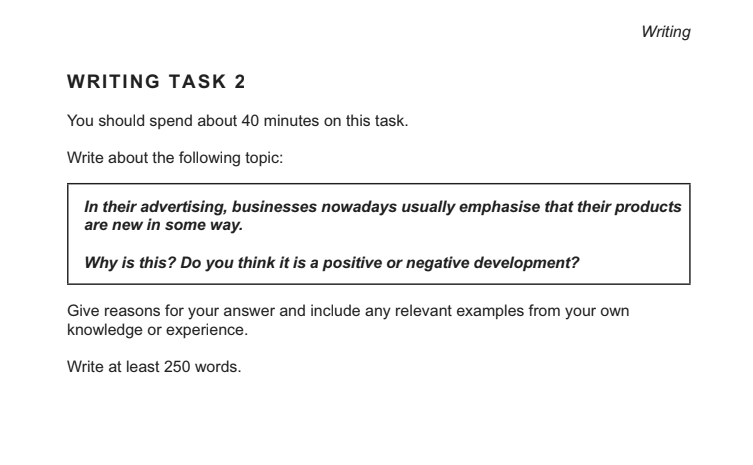
If you chose the word ‘emphasise’, this is probably because the word is on the AWL and is the least frequently used word more generally. Knowing this ahead of time means you can anticipate why your students may not understand the task and plan how you can support them.
Useful tools and further reading
• AWL highlighter and gap-fill maker – This highlighter identifies the words on the AWL in a text and allows you to colour-code them based on how frequently they appear in academic texts. The gap-fill maker allows you to create gap-fill activities where students will have to choose the right academic vocabulary or the right form of the vocabulary.
• Using chunks to improve your IELTS students band scores – In this post, I give some examples of chunks and suggest ways that you could help your IELTS students learn them.
• Using corpora to inform the teaching of academic vocabulary – In this webinar recording, the author Michael McCarthy takes an in-depth look at how corpora can be used to understand academic vocabulary.
• We Love IELTS has lots of resources for students looking to improve their academic vocabulary.
How important do you think academic vocabulary is to your IELTS students? How do you help them improve their academic vocabulary?
Cambridge Vocabulary for IELTS with answers. Cullen Pauline.

Are you preparing for the IELTS test? Do you want to practise all the vocabulary you need to be confident in the test? Cambridge Vocabulary for IELTS covers the vocabulary needed by your aiming for band 6 or above in the IELTS test. The book provides you with practice of test tasks from each paper. It includes useful tips on how to approach IELTS exam tasks and covers especially tricky areas such as the language needed to describe data and processes. It is informed by the Cambridge International Corpus and the Cambridge Learner Corpus to ensure that the vocabulary is presented in genuine contexts and includes real learner errors.
Format : mp3 / zip
Contents:
Map of the book 2
Introduction 4
IELTS Test summary 6
Unitl Growing up 8
Unit 2 Mental and physical development 12
Unit 3 Keeping fit 16
Unit 4 Lifestyles 22
Unit 5 Student life 26
Test One 30
Unit 6 Effective communication 32
Unit 7 On the move 38
Unit 8 Through the ages 42
Unit 9 The natural world 46
Unit 10 Reaching for the skies 52
Test Two 56
Unit 11 Design and innovation 58
Unit 12 Information technology 64
Unit 13 The modern world 68
Unit 14 Urbanisation 72
Unit 15 The green revolution 78
Test Three 82
Unit 16 The energy crisis 84
Unit 17 Talking business 90
Unit 18 The law 94
Unit 19 The media 98
Unit 20 The arts 102
Test Four 108
Unit 21 Language building 1 110
Unit 22 Language building 2 114
Unit 23 Academic Writing Task 1 118
Unit 24 Academic Writing Task 2 122
Unit 25 General Training Writing Tasks 1 and 2 126
Test Five 130
Answer key 132
Recording scripts 157
Word list 167
Acknowledgements 173
CD Tracklist 174
What does the book aim to do?
It aims to extend and improve the accuracy of your vocabulary and help you prepare for the IELT5 test. It introduces vocabulary through listening and reading texts that reflect the materials used in the IELTS test. Learning new words in context can help you to remember them and also helps you to understand their meaning. This book also gives you opportunities to practise new words so that they can become part of your active vocabulary.
Who is it aimed at?
The book is designed for students working alone who want to revise and extend their vocabulary. But it can also be used as part of an IELTS preparation course in the classroom, or set as homework by a teacher. It is also suitable for advanced students, or those studying English for academic purposes.
Pauline Cullen «Cambridge Vocabulary for IELTS with answers (+ Audio CD)» в Санкт-Петербурге

Vanessa Jakeman, Amanda French, Pauline Cullen «The Official Cambridge Guide to IELTS. Student’s Book with Answers (+ DVD)»
Audio CD. Cambridge IELTS 9 (количество CD дисков: 2)
Pauline Cullen «Cambridge Vocabulary for IELTS Advanced Band 6.5 + Edition with answers and Audio CD»
Audio CD. Cambridge IELTS 10: Authentic Examination Papers from Cambridge English Language Assessment (количество CD дисков: 2)
Pauline Cullen «Cambridge Vocabulary for IELTS with answers (+ Audio CD)»
Objective IELTS. Advanced. Workbook with Answers
Cambridge IELTS 14 Academic. Student’s Book with Answers & Audio Download. IELTS Practice Tests
Pauline Cullen «Cambridge Vocabulary for IELTS without Answers»
Pauline Cullen «Cambridge Vocabulary for IELTS Advanced Band 6.5+ Edition without Answers»
Pauline Cullen «Common Mistakes at IELTS Intermediate»
Pauline Cullen «Common Mistakes at IELTS Intermediate Paperback with IELTS Academic Testbank»
Pauline Cullen «IELTS Vocabulary for Bands 6.5 and above + Answers + Audio»
Cambridge IELTS 15 Authentic Practice Tests Academic Student’s Book with Answers and Audio Download
Cambridge IELTS 13 Academic Student’s Book with Answers
Cambridge IELTS 13 Academic Student’s Book with Answers
Cambridge IELTS 14 Academic Student’s Book + Answers + Audio
Hopkins, Diane «Cambridge Grammar for IELTS: with answers with CD (Audio)»
Cullen Pauline «IELTS Vocabulary up to Band 6.0. Student’s Book with Downloadable Audio»
Pauline Cullen «IELTS Vocabulary for Bands 6.0 and above + Audio»
Hopkins, Diana «Cambridge Grammar for Ielts Without Answers»
Pauline Cullen «Common Mistakes at IELTS Intermediate Paperback with IELTS General Training»
Pauline Cullen «Common Mistakes at IELTS Advanced Paperback with IELTS Academic Testbank»
Pauline Cullen «Common Mistakes at IELTS Advanced Paperback with IELTS General Training Testbank»
Cambridge English Language Assessment «Cambridge IELTS 9 Student»s Book with Answers: Authentic Examination Papers from Cambridge ESOL (IELTS Practice Tests)»


Cambridge ESOL «Cambridge IELTS 6: Examination Papers from University of Cambridge ESOL Examinations: English for Speakers of Other Languages»
Diana Hopkins, Pauline Cullen «IELTS Grammar for Bands 6.5 and above + Answers + Audio»
Cambridge IELTS (International English Language Testing System) 4 Student’s Book with answers
Cambridge IELTS 10 Audio CDs (2)
Cambridge IELTS 6 Audio CDs
Rachael Roberts, Joanne Gakonga, Andrew Preshous «IELTS Foundation: Class CDs (аудиокурс на 2 CD)»
IELTS Life Skills Official Cambridge Test Practice B1 Audio CDs
IELTS Life Skills Official Cambridge Test Practice A1 Student’s Book with Answers and Downloadable Audio
Cullen Pauline «Common Mistakes at IELTS. Bands 5.0–6.0»
Cambridge IELTS 12. Academic Student’s Book with Answers Authentic Examination Papers
Moore, Julie «Common Mistakes at Ielts Advanced: And How to Avoid Them»
IELTS 14 General Training. Student’s Book with Answers (+ Audio CD). Cambridge IELTS Authentic Examination Papers
Cambridge ESOL «Cambridge IELTS 4 Self Study Pack»
Cambridge Vocabulary for IELTS Advanced Band 6.5+ without Answers
Cambridge IELTS 10. Student’s Book with Answers: Authentic Examination Papers from Cambridge English Language Assessment (IELTS Practice Tests)
Pauline Cullen «Cambridge: Vocabulary for IELTS Advanced: With Answers (+ CD)»
Cullen Pauline «Cambridge Vocabulary for IELTS Advanced Band 6.5+ without Answers»
Cambridge IELTS 10 Student’s Book with Answers
Cambridge English. IELTS 13. Academic Student’s Book with Answers
Cambridge IELTS 13 General Training. Student’s Book with Answers (+ Audio CD)
Williams Anneli «Collins Vocabulary for IELTS (+ CD)»
Cullen Pauline «Common Mistakes at IELTS Intermediate with IELTS Academic Testbank»
Pauline Cullen «Cambridge Vocabulary for IELTS Book with answers and Audio CD»
Pauline Cullen «Cambridge Vocabulary for IELTS Advanced Band 6.5+ Edition with answers and Audio CD»
Pauline Cullen «Cambridge Vocabulary for IELTS Advanced + Answers + Audio CD»
Pauline Cullen «Cambridge Vocabulary for IELTS Book without answers»
Cullen Pauline «Common Mistakes at IELTS Intermediate with IELTS General Training Testbank (+ DVD)»
Cullen Pauline «Common Mistakes at IELTS Intermediate with IELTS G»
Cullen Pauline «Common Mistakes at IELTS Intermediate with IELTS A»
Pauline Cullen «Common Mistakes at IELTS Intermediate Paperback with IELTS Academic Testbank: And How to Avoid Them | Каллен Полина»
Pauline Cullen «Common Mistakes at IELTS Intermediate Paperback with IELTS General Training Testbank»
Emma Heyderman, Peter May «Complete Preliminary for Schools Student’s Book without Answers with Online Practice: For the Revised Exam from 2020»
Pauline Cullen «Cambridge Vocabulary for IELTS Advanced Band 6.5+ Book without answers»
English Solutions
Search This Blog
Cambridge Vocabulary For IELTS Book & Audio
IELTS Books | Cambridge Vocabulary for IELTS | PDF
Cambridge Vocabulary for IELTS shows you how to expand and improve your English vocabulary skills, improving accuracy and helping you in preparing before the IELTS test. Learn how to calculate your IELTS Band Score
Cambridge Vocabulary for IELTS Self Study Book
Cambridge Vocabulary for IELTS presents vocabulary using listening exercises and reading texts that are very similar to the real IELTS test.
By learning new vocabulary in context you will find it easier to remember and understand the meaning of new words.
Cambridge Vocabulary for IELTS helps you practise new words and include them in your active English vocabulary.
Who is Cambridge Vocabulary for IELTS for?
It is aimed at students studying on their own who need to revise and expand their English vocabulary.
It is also ideal for use as an integral component of any IELTS preparation course, or for homework assignments by a teacher.
Its content is appropriate for many advanced English students and students of English for Academic purposes.
What is the best way to use Cambridge Vocabulary for IELTS?
It is a good idea to study each unit in order as the vocabulary exercises may revise the vocabulary from a previous exercise or unit.
The book includes test practice sections which give additional practice in the various IELTS test sections.
How is Cambridge Vocabulary for IELTS organized?
The book contains 25 units. The first 20 units explain and practise vocabulary related to both general and academic themes.
Each unit has listening, reading, writing and speaking exercises similar to the tasks in the IELTS test.
Also, each unit includes an IELTS test practice task. The test practice sections have various examples of different IELTS tasks which commonly appear in the Academic Reading, General Training Reading, Academic Writing, General Training Writing, Listening and speaking sections of the IELTS test.
These IELTS practice tasks give an opportunity for you to test your vocabulary and IELTS test skills.
The book contains an overview of each IELTS test, a general guide on how to learn and use new vocabulary, and useful tips on how to develop your vocabulary even further by using a dictionary.
Cambridge Vocabulary for IELTS comes with a complete answer key for each exercise, sample answers for the writing tasks, a wordlist for each unit, and recording scripts for the listening tasks.
Cambridge Vocabulary for IELTS Audio
The audio has listening tasks and pronunciation exercises for each vocabulary unit.
The listening test practice exercises in the book are also on the audio tracks.
The book contains a comprehensive wordlist summarizing vocabulary from each unit and these can be used for quick reviews or for vocabulary ideas to include in IELTS writing practice tasks.
It is an excellent learning resource which will help you develop a wide and varied vocabulary required for a high IELTS score.
Download Audio
Good luck in your IELTS test!
Издательство «Cambridge»
Серия «Cambridge Vocabulary for IELTS»
«Cambridge» — издательство Кембриджского университета, старейшее в мире. Первые книги были опубликованы им в 1584 году. К середине двадцатого века издательство «Cambridge» развилось в крупнейший современный издательский дом, которым является сегодня. В издательстве работают около тысячи человек, а его филиалы и представительства имеются в США, Австралии, Латинской Америке, Африке, Азии и практически во всех странах Европы, включая Россию.
В Издательстве выходит учебная и научная литература по специальным отраслям знания, в том числе по экономике, финансам и менеджменту. В последние годы Издательство уделяет большое внимание количественным методам анализа экономики и финансов. Целый ряд изданий посвящен проблемам стран с переходной экономикой. Важную часть издательской программы составляют серии учебников, написанные по лекционным курсам ведущими профессорами западных университетов.
Другим важнейшим направлением деятельности издательства является публикация учебников английского языка, включающих многоуровневые учебные курсы, самоучители, материалы для подготовки к сдаче международных экзаменов по английскому языку.
Однoй из приоритетных областей деятельности издательства является создание высококачественной справочной литературы, словарей и энциклопедий, многие из которых переносятся на электронные носители.
English Tests: Improve your score in the TOEIC, TOEFL, IELTS, Cambridge tests. 4+
digiSchool
Designed for iPad
Screenshots

Description
The English Tests application by digischool is the ideal solution to make sure you get top marks in the TOEIC, TOEFL-PBT, IELTS and Cambridge tests.
The English Tests application by digischool is the ideal solution to make sure you get top marks in the TOEIC, TOEFL-PBT, IELTS and Cambridge tests.
Updates: At the start of the application, we offer a 50 questions test, in order to determine your level of English. At the outcome of these 50 questions, we advise you on a suitable training module or whether to go directly to the English test itself.
The questions found in the application have been created by professionals and conform to the different test norms. You will have access to numerous tests equalling over 1000 questions.
The sections present in the TOEIC
— Photographs
— Questions / Answers
— Conversations
— Talks
— Incomplete sentences
— Text Completion
— Reading Comprehension
The sections present in the TOEFL-PBT
— Short Conversations
— Incomplete Sentences
— Error recognition
— Short Talks
The sections present in the IELTS
— Reading
— Listening
To get you to the best possible score, we have created 3 types of training.
— Training by category. This mode allows you to work on the specific areas that you wish to revise ( Photos, conversations, talks. )
— The mini-tests. Here you will have 20 questions chosen at random from the different sections, to help you familiarise yourself with the different types of question (MCQ, Fill in the blanks, listening. )
— Simulation. Here you will take the tests in exam conditions; the TOEIC, 200 questions in 2 hours; the TOEFL, 140 questions; etc. We have also created simulations of 50 and 100 questions.
To have fun while learning you will be able to collect trophies throughout your training! Our English Tests application will get you ready for the big day.
You have to sign up to be able to access all the mock theory tests found in the application.
Four different membership packages are available
— 1 month membership: £7,99
— 3 month membership: £14,99
— 6 month membership: £25,49
— 12 month membership: £49,99
Your membership will be automatically renewed until the termination of the automatic renewal (at least 24 hours before the end of the current payment period.)
Your itunes account will be automatically debited at the same price for renewal, during the 24 hours leading up to the end of the current payment period, until you change your subscription preferences in your settings.
Vocabulary for IELTS

IELTS is one of the most widely taken English proficiency tests for admissions to universities abroad. It is essential to understand the exam pattern and follow a well-structured study plan in order to get a high IELTS score. The exam evaluates the English Reading, Listening, Writing, and Speaking skills of the students. Refined vocabulary is a prominent part of the IELTS Syllabus as it helps students in each exam segment. This blog focuses on important words, exercises, and tips to improve vocabulary for IELTS.
This Blog Includes:
How to Learn IELTS Vocabulary in 6 Steps?
If you are wondering about how to learn or get started to learn IELTS vocabulary, then here is a 6 step method to help you excel in your English vocabulary for IELTS.
1. Find a Suitable Source of Learning
Choose an interesting book, TV show, radio show, podcast, YouTube series, or magazine. People learn more efficiently when they are having fun, so don’t choose anything dull and boring.
2. Maintain a Journal or a Vocab Notebook
Yes, if you truly want to improve your English vocabulary quickly, you must keep a diary or vocab copy. You will write the new words that you will learn each day in this copy. Make sentences with these terms and their definitions. The notebook does not have to be pricey; it simply has to be a place where you can keep track of your daily notes.
3. Consume your Source
Read/watch/listen to whatever you choose in Step 1 and highlight or mark at least 10 words that you don’t understand or maybe don’t know the meaning of. Try to deduce what they imply from the context. This is an essential stage since it will help you remember the new words.
4. Start Using New Words
Simply writing down and memorizing the word meanings of new words will not help you enhance your English vocabulary. You must begin utilizing these newly discovered words in your regular life and in your daily interactions and communication. Only then will you be able to excel in English vocabulary.
5. Look for Synonyms
In an online dictionary, look for alternative synonyms for the new words. Make a note of the synonyms, collocations, antonyms, and pronunciation for each word. You may also use images to help you recall the term.
6. Review your New Words
Finally, keep reviewing the list of new words, their synonyms, and antonyms after every one week, two weeks, and then one month.
List of Words for IELTS Vocabulary
Here are a few words to build your vocabulary for IELTS:
Here is a set of 50 Difficult words with meanings to master the IELTS Vocabulary!
Category-wise Vocabulary for IELTS
Here are some important words as per category for IELTS preparation-
Advertising
Business Environment
Fashion World
Travel and Tourism
Books, Films and Art
Social Media
Check out this video to get a hold of IELTS Band 9 Vocabulary-
Vocabulary for IELTS: Preparation Tips
Here are a few tips to make your vocabulary more proficient:
Vocabulary Exercises
Practicing sample papers and taking regular mock tests in attaining a better IELTS score. It also helps in mastering difficult topics. Based on the IELTS paper, we have curated an IELTS vocabulary exercise for you:
Answers
What vocabulary do I need to know?
Check out some of the types of vocabulary that will help you in scoring high for the IELTS
Vocabulary for IELTS reading
Reading comprehension involves multi-tasking, these are the skills that can be improved by practice.
High-Frequency words
High frequency words are the words that appear most often in written English. High frequency words are also common exception words, such as ‘I’, ‘the’, and ‘you’.
Academic Words
Academic Words are those high-frequency words that appear regularly in written text but are not frequently used in conversational language.
Technical/Topic specific words
Technical words are one of those subject-specific that is added in the academic lists. These lists, however, are not specifically technical in nature. Their purpose is to include academic words which occur frequently. The words provide better coverage for those disciplines.
Vocabulary for IELTS writing
IELTS writing vocabulary is for both versions Academic and General. It involves writing an essay, in about 250 words.
Paraphrasing
There are two important components to any word. They are synonyms and antonyms.
| Synonym – a word that means exactly, the given word For example: Confused – baffled, perplexed, perplexed, mystified |
| Antonym – a word that means the opposite of a given word. For example: Confused – Lucid, precise, clear |
Vocabulary for IELTS essays
Majority of essay topics are about burning issues in the society. So it can easily be learnt by reading newspapers and magazines regularly.
IELTS Writing Task 1 Vocabulary
There is writing task 1 for the Academic part. It involves visual interpretation and vocabulary related to maps, pie-charts, bar graphs, line graphs etc.
IELTS Writing Task 2 Vocabulary
Writing task 2 is for both versions of Academic and General that involves writing an essay, in about 250 words. There are different types of essays.
Vocabulary for IELTS speaking
Practicing idioms and phrasal verbs will help to improve English. Many people insert them while speaking that looks quite unnatural. People who use them well have actually picked them up through experience.
Phrasal verbs
Phrasal verbs are the phrases that has actions. They usually consist of a verb with a preposition or an adverb.
| Look forward to :Verb adverbprepositionLookforwardToMeaning – search/seek Example: She is always looking forward to the holidays. |
Vocabulary for IELTS PDF
Here is a practice worksheet for you to ace the Vocabulary for IELTS-
Online Sources and Websites
In these trying times of the pandemic, we’re scarcely venturing out to find new materials to assist us to enhance our English vocabulary. Having said that, there are several internet resources available to you. The nice thing about using internet resources is that you can pick and choose what you want and never get bored. The following is a collection of world-renowned websites for reading online English study resources and also practice and improve English language:
Subscribe to Leverage IELTS for more such information
IELTS Vocabulary Books
Here are a few highly recommended books that can boost your English vocabulary for IELTS.
| Books | Links to Buy |
| Collins Vocabulary for IELTS | Buy here |
| Barron`s Essential Words for the IELTS | Buy here |
| IELTS Band 9 Vocab Secrets | Buy here |
| 4000 English Words | Buy here |
| IELTS Band 9 Vocab Secrets | Buy here |
| English Vocabulary in Use | Buy here |
| Oxford Word Skills | Buy here |
| IELTS Vocabulary Booster | Buy here |
| Cambridge Vocabulary for IELTS | Buy here |
| Check your English Vocabulary for IELTS | Buy here |
We hope our blog helped you in improving your vocabulary for IELTS. Leverage Edu provides excellent online IELTS preparation. Ranging from personalized study plans to detailed doubts clearing sessions, our expert faculty ensures that students get the best scores! Get in touch with us to start your IELTS preparation.
Vocabulary for IELTS
Are you learning English or preparing for the IELTS test or looking to improve your IELTS score?
With useful tips on vocabulary learning and how to approach the test, this section aims to extend and improve the accuracy of your vocabulary and help you prepare for the IELTS test. It is designed for students working alone who want to revise and extend their vocabulary. But it can also be used as part of an IELTS preparation course in the classroom, or set as homework by a teacher.
Exam Preparation
SHARE THIS PAGE
The reading, writing and listening practice tests on this website have been designed to resemble the format of the IELTS test as closely as possible. They are not, however, real IELTS tests; they are designed to practise exam technique to help students to face the IELTS test with confidence and to perform to the best of their ability.
While using this site, you agree to have read and accepted our terms of use, cookie and privacy policy.
Copyright 1999-2020 by english-exam.org. All Rights Reserved.
This is to inform you that we have moved to a new domain, https://www.english-exam.org/IELTS/.
Our old domain, https://www.ielts-exam.net/ will remain active till the time we migrate all our content to the new domain.
We look forward to your continuing support.

Термины в модуле (58)
used before giving more details or being more exact about something
Some tribes use special facial markings to [—] status.
What she said was pure [—].
The study [—-s] the link between poverty and malnutrition.
Deborah opened her mouth to [—], but closed it again.
Dad just can’t bear to be [—-ed].
Just as biologists rarely see a new species arise, linguists rarely get to discover an unknown [—] or even better, to see a new Language being born.
The thing that makes language different from other [—][—][—] is that it is made of units that can be combined in different ways to create different meanings.
Ann Senghas, of Columbia University, in New York, is one of the Linguists who have been studying the way these have gradually [—-d] in Nicaraguan Sign Language (NSL).
The language [—d] in the late 1970s, at a new school for deaf children.
The flowers [—] in the spring.
Eventually the truth [—d].
By conducting experiments on people who attended the school at various points in its history, Dr. Senghas has shown how NSL has become more [—] over time.
Early users, too, didn’t develop a way of [—ing] Left from right.
Dr. Senghas showed this by asking signers of different ages to [—] about a set of photographs that each could see.
What intrigues the Linguists is that, for a sign language to emerge spontaneously, deaf children must have some [—] tendency to Link gestures to meaning.
What [—s] the Linguists is that, for a sign language to emerge spontaneously, deaf children must have some inherent tendency to Link gestures to meaning.
Top 11 IELTS Vocabulary Books
Updated On Jul 30, 2022
Having your vocabulary on point should be one of your goals if you want to ace the IELTS test. Building your vocabulary is not just memorising unheard-of words and their definitions, but also using them in conversation effectively.
People are often on the lookout for IELTS vocabulary book pdf files or the best vocabulary books available for IELTS in pdf format and other related resources online. So the question arises: are there any good books to improve vocabulary? The good news is, there are.
In this article, we have given some of the best IELTS vocabulary book recommendations for candidates to choose from. These are some of the best vocabulary books available for IELTS that will help you take your English vocabulary prep to the next level.
Check out this list of the 11 best vocabulary books for IELTS preparation.
1. IELTS Vocabulary 

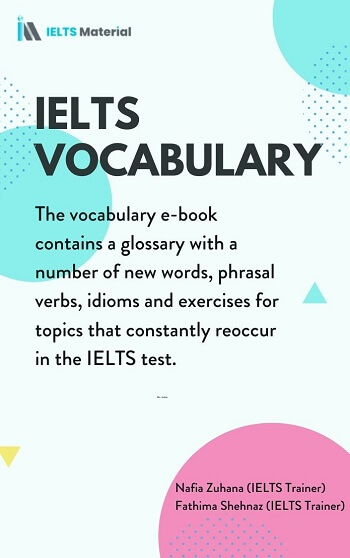
The IELTS Vocabulary book by IELTSMaterial.com is one of the best books for English vocabulary. It consists of glossary, idioms, phrasal verbs, exercises and a sample essay for each topic. These topics very commonly appear in the IELTS Test. This vocab e-book not only helps you learn new words, but also introduces you to new idioms, phrasal verbs and understand the usage of the words in the writing section by providing you with an example of a sample essay for each topic.
2. Collins Vocabulary for IELTS
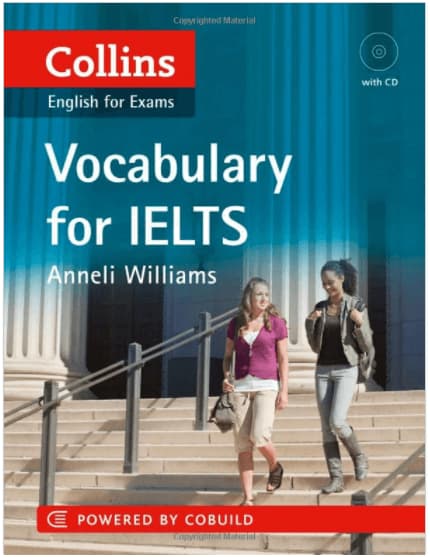
This IELTS vocabulary book comes with a CD and is divided into 20 units. The vocabulary it covers is relevant to all the four sections: speaking, listening, reading, and writing.
Each unit contains activities that help you build your vocabulary in a systematic way. There is also a practice test at the end of each unit modelled on the actual IELTS exam.
3. Barron’s Essential Words for IELTS
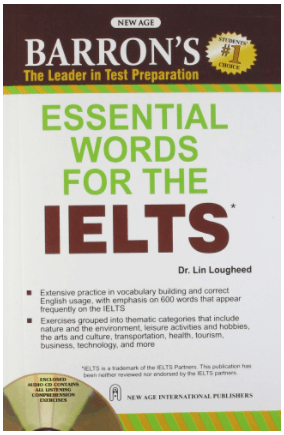
This book is truly essential for students who want to ace the IELTS exam. You will get comprehensive practice in building your vocabulary and correct usage in conversation. You also get a mega-list of 600 words that frequently appear in the IELTS exams. These words related to popular categories that include tourism, nature, the environment, art, hobbies, social issues and many more.
4. 4000 English Words
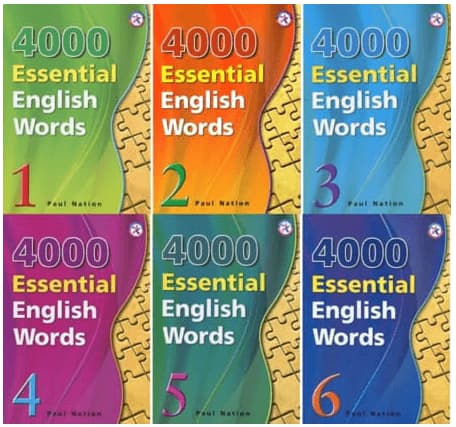
A six-book series, 4000 English Words aims to build your vocabulary by focusing on 4000 words that frequently appear in the IELTS exam from beginner to advanced level.
Each unit in each book contains 20 words along with sample sentences showing you their proper usage. The end of each unit also features a short story with all the words being used so that you get a more in-depth understanding of their usage.
Furthermore, the vocabulary and stories get more sophisticated every level you cross.
5. IELTS Band 9 Vocab Secrets
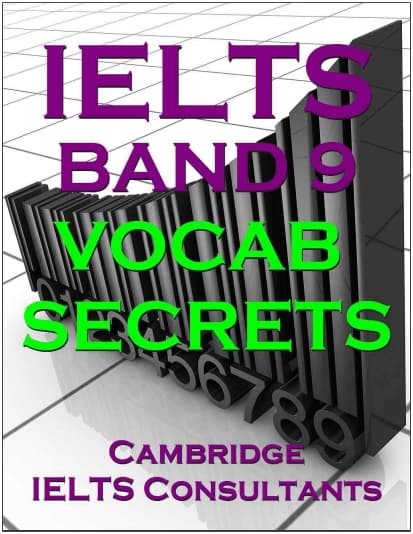
Published by Cambridge IELTS consultants, this book has ten vocabulary topics including but not limited to: Work and careers, education and schooling, culture, art and traditions, children and families, and global challenges.
Each topic gives you a lexicon of words and a sample academic writing task pertaining to that topic. They also explain how to go about answering that writing task.
Furthermore, in every topic module, lies a band 9 model essay showing you the correct usage of all the words discussed in that module.
6. English Vocabulary in Use
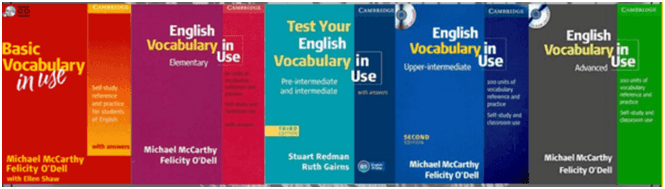
English Vocabulary in Use is a series of vocabulary training books ranging from basic/beginner, all the way to advanced. The Cambridge University Press publishes this series. They follow a specific format, which involves presenting the vocabulary on the left-hand page and practice questions on the right-hand page.
For each level, there are two books: a study book, and a “test your English vocabulary in use” exercise book.
This is one of the most popular series of books on this list.
7. Oxford Word Skills
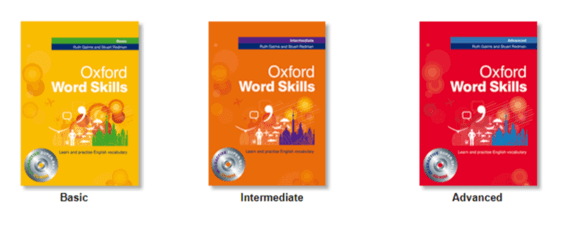
Oxford Word Skills is a three-level vocabulary course with books and corresponding CDs to help you with listening and pronunciation.
8. IELTS Vocabulary Booster
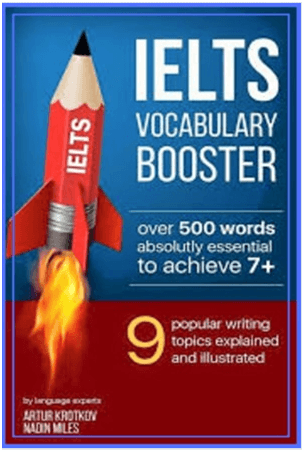
IELTS Vocabulary Booster contains all the important vocabulary needed for IELTS. It is a collection of over 500 words frequently used in IELTS exams, essential to score a band of 7 and above.
Now, this book mainly concentrates on vocabulary in the context of essay-writing. However, you will find it useful for the other sections as well.
9. Cambridge Vocabulary for IELTS
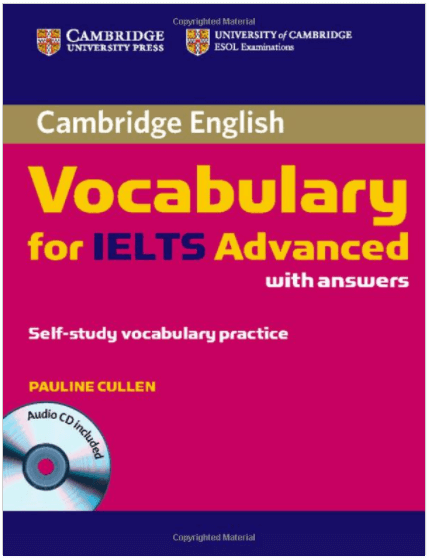
Cambridge Vocabulary for IELTS is a self-study guide for students taking the Academic IELTS who want to score a band of 6.5 and above. The book all comes with an audio CD to help you improve your listening skills.
Instead of just listing new words, they are introduced via listening and reading exercises, similar to those in IELTS exams. This is a more effective way of building your vocabulary as you remember new words better when you learn them through exercises.
10. Check your English Vocabulary for IELTS
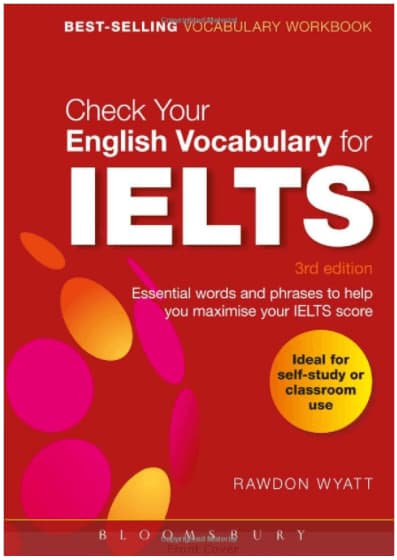
Check your English Vocabulary for IELTS is a must-have book for all non-native English speakers who want to gain the upper hand in their IELTS preparation, specifically in the writing section.
They follow an interesting structure. Instead of just providing a list of words to memorize, they help you build your vocabulary through simple exercises. This has the benefit of improving retention.
11. Vocabulary Building Series
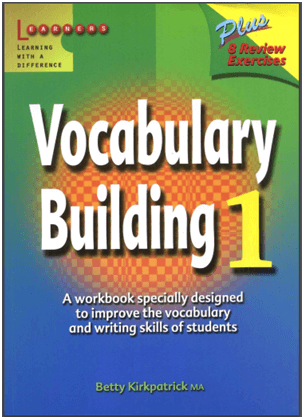
Vocabulary Building by Betty Kirkpatrick, contains four volumes, with the first one pictured above. These books focus on common words and expressions which tend to be either vague in meaning, or overused.
Books 1 and 2 focus on the usage of common words in the English language.
Books 3 and 4 help students build on the knowledge they gained in books 1 and 2, and also focus on euphemisms, cliches and other expressions.
So there you have it. The top ten vocabulary books we recommend to take your IELTS like a boss!
Frequently Asked Questions
Why are vocabulary books important?
What are the top 5 vocabulary books useful for the preparation of the IELTS?
What are some additional strategies to improve vocabulary besides reading books?
Why is it important for an IELTS aspirant to have good vocabulary skills?
Will the vocabulary books help with IELTS preparation?
Cambridge Vocabulary for IELTS Advanced with answers. Self-study vocabulary practice (+CD)
| ID товара | 2566404 |
| Издательство | Cambridge University Press |
| Серия | Cambridge English |
| Год издания | 2012 |
| ISBN | |
| Кол-во страниц | 174 |
| Формат | 24.6 x 19 x 1 |
| Тип обложки | Мягкая глянцевая |
| Вес, г | 360 |
Поделиться товаром
Как получить бонусы за отзыв о товаре
Сделайте заказ в интернет-магазине.
Напишите развёрнутый отзыв от 300 символов только на то, что вы купили.
Дождитесь, пока отзыв опубликуют. Если он окажется среди первых десяти, вы получите 30 бонусов на Карту Любимого Покупателя.
Можно писать неограниченное количество отзывов к разным покупкам – мы начислим бонусы за каждый, опубликованный в первой десятке.
IELTS Writing Task 1 Vocabulary: Слова и выражения для IELTS графиков
IELTS Academic Writing Task 1 Vocabulary: Слова и выражения для IELTS графиков: Line graphs, Bar charts, Tables, Pie charts
Слова и выражения для IELTS графиков на балл 7.0-9.0.
Bar charts
Tables
Pie charts
Зазубривать все слова не нужно. Выбирайте те, которые хотите использовать в своих ответах и те, которые реально можете запомнить. Всё это IELTS Academic Writing Vocabulary.
Супер крутые слова на 8.0-9.0 помечены жирным шрифтом
ГЛАГОЛЫ
 | ||||||||||||||||||||||||||||||||||||||||||||||||||||||||||||||||||||||||||||||||||||||||||||||||||||||||||||||||||||||||||||||||||||||||||||||||||||
 |








| Words | Synonyms |
| Amazing | Incredible |
| Answer | Respond |
| Awful | Bad |
| Beautiful | Pretty |
| Begin | Start |
| Come | Arrive |
| Cool | Frosty |
| Dangerous | Risky |
| Decide | Settle |
| Definite | Certain |
| Delicious | Savoury |
| Wrong | Mistaken |
| Tell | Narrate, Inform |
| Show | Display, Exhibit |
| New | Recent, current |
| Neat | Clean |
| Interesting | Intriguing |
| Important | Vital, crucial |
| Help | Assist |
| Happy | Content |
| Famous | Well-known |
| Funny | Amusing |
| Place | Procedure |
Academic Word List
Candidates can also follow the academic wordlist and consists of 1000 words for IELTS. Through this, they can learn important vocabulary that comes in the reading and writing section. Below is the IELTS vocab list is given for easier understanding:
List 1
| Words 1-10 | Words 11-20 | Words 21-30 | Words 31-40 | Words 41-50 |
| appropriatearea aspects assistance assume achieve administration affect analysis approach | authority available community complex concerning benefit category conclusion conduct consequence | consistent constitutional consumer context culture data definition destructive discovery create | distinction error equation establish estimate economic element environment evaluation evidence | identifyimpact factors feature final financial focus function global income |
| Words 51-60 | Words 61-70 | Words 71-80 | Words 81-90 | Words 91-100 |
| item legal indicate individual injury investment involve issue maintenance major | obtain restrict occur participation media method modern normal per cent period | primary process policy positive potential previous purchase range recent region | resident resources response regulations relevant require research sector security significant | strategy structure theory threat similar solution source specific traditional transport |
List 2
| Words 1-10 | Words 11-20 | Words 21-30 | Words 31-40 | Words 41-50 |
| alternative amendment annual access activity alter apparent application approximate artificial | challenge circumstance comment attitude aware capacity communication concentration conflict considerable | constant correspond criteria cycle contact contribution core debate decline deduction | dominant emerge emphasis enable demonstrate despite dimension domestic energy enforcement | exclude exposure external ensure equivalent evolution facilitate fundamental funds generation |
| Words 51-60 | Words 61-70 | Words 71-80 | Words 81-90 | Words 91-100 |
| hence hypothesis image immigration implement illustrate initial integration layer legislation | maximum mechanism medical mental location logic marginal modification negative network | overall parallel occupation option orientation outcome perspective philosophy precise predict | project promote proportion psychology reaction remove resolution specify stability subsequent | sufficient technology summary supply task technique transition trend version volume |
List 3
| Words 1-10 | Words 11-20 | Words 21-30 | Words 31-40 | Words 41-50 |
| adaptation adequate adjust abstract accurate acknowledge adult advocate aid attribute | comprehensive author brief capable civil classical contrary coordination couple decades | definite disposal diversity domain dynamic deny discrimination eliminate equipment estate | exceed expansion expert flexibility foundation gender global fees grade guarantee | identical ignorance imply incorporated index infrastructure incentive inhibition innovation instance |
| Words 51-60 | Words 61-70 | Words 71-80 | Words 81-90 | Words 91-100 |
| instruction intelligence interact interval investigation justification lecture liberal isolated migration | minimum monitoring motivation neutral obvious overseas parameter phenomenon prohibit publish | pursue rational recovery reject release reveal role satisfy scope sequence | simulation solely somewhat status stress successive survey survive style substitution | sustainable symbolic topic trace transformation ultimate underline unique utility visible |
List 4
| Words 1-10 | Words 11-20 | Words 21-30 | Words 31-40 | Words 41-50 |
| accommodation anticipate appendix appreciate arbitrary assure accompany advance analogous automatically | behalf bias cease commodity confirm chart clarity coherence coincide contemporary | contradict controversy cooperate crucial currency denote detect conversely deviation device | devote diminish displacement display distorted dramatic differentiation duration ethical eventually | exhibit explicit extract federal fluctuations format founded exploitation guidelines highlighted |
| Words 51-60 | Words 61-70 | Words 71-80 | Words 81-90 | Words 91-100 |
| Implicit induce inevitably inherent intensity intermediate incompatible internal manual mature | medium military norms notion nuclear mutual objective paragraph passive perceive | priority prospect qualitative radical portion precede predominantly random reinforce relax | sphere suspended target team revision revolution scenario schedule temporary tension | vehicle via violation virtual theme thereby uniform validity vision widespread |
List 5
| Words 1-10 | Words 11-20 | Words 21-30 | Words 31-40 | Words 41-50 |
| abandon abate abrupt accumulation acquisition adjacent aggregate albeit ambiguous ancestor | assembly assessment assign attain avert coal collapse colleagues combat commit | compile complement comprise conceive concurrent confined conform confuse consciousness convinced | creditable deceive depression derive distribution divergent doubt drastic election empirical | encounter enhance enormous entirely entrepreneur erosion forbearance forthcoming frustration goal |
| Words 51-60 | Words 61-70 | Words 71-80 | Words 81-90 | Words 91-100 |
| homogenous inclination indulge infer initiative insight inspection integral intervention intrinsic | invoke justify nonetheless notwithstanding odd likewise link manage manipulation merge | presumption ratio refine relate ongoing overlap persistent pose possess preliminary | reluctant restore restraint rigid route sacrifice scale so-called straightforward subordinate | substantiate supplementary sympathy termination transmission undergo unify vital voluntary whereby |
Tips to prepare for IELTS Vocabulary
Candidates should follow these tips diligently while preparing for their IELTS exam. At the end of the day, attaining a good score is the stepping stone towards pursuing their dream of studying abroad.
Read, listen and converse in English.
Candidates should read English newspapers and get into the habit of reading. While reading, if they find any new word, they should note it down and look for its meaning.
Practice
Practice makes a man perfect and hence is the key to nailing a good score. Whether it’s reading, writing, speaking or listening, practising each of these sections is necessary.
Use YouTube
Candidates should use YouTube to understand how academic words are pronounced. They can also watch English shows to learn new vocabulary.
Avoid Memorizing in all circumstances.
Memorizing words is an activity that should be avoided as the meaning of words change according to their context.
Besides the list of vocabulary words for IELTS, candidates can also make use of audio and videos as this can amp up the preparation process.
Frequently Asked Questions
1. Is there any vocabulary test in IELTS?
No, there is no vocabulary test in IELTS. However, a wide range of vocabulary can help score well in the exam. Candidates can follow our list of vocabulary words for IELTS to prepare for the exam.
2. Is 7.5 a good score?
This score shows that the candidate has a good command of their English language. Most universities across the globe accept this score.
IELTS 2022: Updated List of Vocabulary Words for IELTS | IELTS 2022: Updated List of Vocabulary Words for IELTS
Поиск материала «Cambridge Vocabulary for IELTS Advanced with answers, Cullen P., 2012» для чтения, скачивания и покупки
Найденные материалы, документы, бумажные и электронные книги и файлы:
Ниже показаны результаты поиска поисковой системы Яндекс. В результатах могут быть показаны как эта книга, так и похожие на нее по названию или автору.
Search results:
The book covers all the vocabulary needed by students aiming for band 6.5 and above in the IELTS tests and provides students with practice of exam tasks from each paper.
Pauline Cullen [ Cambridge ] (2008). The book covers the vocabulary needed by students aiming for band 6 in the IELTS test and provides students with practice of test tasks from each paper.

Канцтовары: бумага, ручки, карандаши, тетради. Ранцы, рюкзаки, сумки. И многое другое.
Pauline_ Cullen _ Vocabulary _ for _ IELTS _ Advanced _wi.pdf.
Download Cambridge Vocabulary for IELTS pdf for free with answers and audio. Cambridge Vocabulary for IELTS is a guide for students who prepare for Academic IELTS and want to score 6.5 points or higher.
IELTS Interactive self-study: 200 Advanced Vocabulary Questions/ Book 2. A powerful method to
Overview: The IELTS Academic Task 2 essay types. The most common mistakes in IELTS Writing.
administered by the University of Cambridge Local Examinations Syndicate, The British Council 4.
Contents: Map of the book 2 Introduction 4 IELTS Test summary 6 Unitl Growing up 8 Unit 2 Mental and physical development 12 Unit 3 Keeping fit 16 Unit 4 Lifestyles 22 Unit 5 Student life 26 Test One 30 Unit 6 Effective communication 32 Unit 7 On the move 38 Unit 8 Through the ages 42 Unit 9 The natural world 46.
Pauline _ Cullen _ Vocabulary _ for _ IELTS _ Advanced _wi.pdf.
Download Cambridge Vocabulary for IELTS pdf for free with answers and audio. Cambridge Vocabulary for IELTS is a guide for students who prepare for Academic IELTS and want to score 6.5 points or higher.
The materials of the book can be used both for self-preparation for the test and during classes with the teacher. But for students with a low level of preparation, this textbook may seem rather complicated. You can get a hard copy from Cambridge vocabulary for IELTS from Amazon or download a soft copy for free.
by Cullen Pauline.
Check Your English Vocabulary for IELTS : Essential words and phrases to help you maximise your.
The arts 102 Test Four 108 Unit 21 Language building 1 110 Unit 22 Language building 2 114 Unit 23 Academic Writing Task 1 118 Unit 24 Academic Writing Task 2 122 Unit 25 General Training Writing Tasks 1 and 2 126 Test Five 130 Answer key 132 Recording scripts 157 Word list
Год выпуска: 2012 г. Автор: Pauline Cullen Издательство: Cambridge University Press Язык курса: Английский ISBN: 9780521179225 Формат: PDF + MP 3 PDF: отсканированные страницы Количество страниц: 176 Битрейт аудио: 192 kbps. Дорожка. Слушать. Vocabulary for IELTS Advanced 01.
Рефераты, слайды, разработки уроков, IELTS всё в одном AIM.UZ Referatlar, Dars ishlanmalar, Testlar, Taqdimotlar, Tadbir va bayram senariylari. Barchasi birda.
Download books for free.
Рефераты, слайды, разработки уроков, IELTS всё в одном AIM.UZ Referatlar, Dars ishlanmalar, Testlar, Taqdimotlar, Tadbir va bayram senariylari. Barchasi birda.
Download books for free.
Год выпуска: 2012 г. Автор: Pauline Cullen Издательство: Cambridge University Press Язык курса: Английский ISBN: 9780521179225 Формат: PDF + MP 3 PDF: отсканированные страницы Количество страниц: 176 Битрейт аудио: 192 kbps. Дорожка. Слушать. Vocabulary for IELTS Advanced 01.
На данной странице Вы можете найти лучшие результаты поиска для чтения, скачивания и покупки на интернет сайтах материалов, документов, бумажных и электронных книг и файлов похожих на материал «Cambridge Vocabulary for IELTS Advanced with answers, Cullen P., 2012»
Для формирования результатов поиска документов использован сервис Яндекс.XML. 
Нашлось 44 млн ответов. Показаны первые 32 результата(ов).
IELTS Vocabulary Lists
By Fiona on May 2, 2022 7
Increasing your IELTS Vocabulary is essential for a higher Band Score, but what exactly is “IELTS Vocabulary” and which list should we trust?
I did a quick search on Google and it brought up probably the worst and most confusing list that I’ve ever seen in my life (see extract below).
So I asked Word List expert Sheldon Smith to help me learn more about where to find the best word lists for IELTS students.
Sheldon’s website is EAPFoundation.com and he creates the BEST topic-related vocabulary videos for IELTS students, so make sure that you go to his site for all the links in this blog, and subscribe to his YouTube channel.
In this blog he kindly shares with us his knowledge and experience of the most reliable word lists and how you can use them. He also answers some of my Members Academy students’ questions.
1. The Academic Word List (AWL)
What is the common mistake about using wordlists? (Pam)
I’ll start off by talking about the Academic Word List (AWL) which is the most well-known list. It existed without any real ‘competition’ for a long time, but it has also been criticised. This led to the emergence of other word lists.
Many recent lists therefore do not include word family information, but instead show inflected forms, for example for ‘analyse’ we have only
plus variant spellings (with ‘z’).
The word ‘analysis’ is considered to be separate.
Another problem with the AWL is that coverage varies across disciplines. It is supposed to be about 10% of academic texts, but for computer science it is 16%, while for biology it is 6.2%.
(This information is from a well-known article called Is There an “Academic Vocabulary”? by Ken Hyland and Polly Tse, published in TESOL Quarterly, June 2007).
2. The General Service List (GSL)
Another problem with the AWL for productive (i.e. writing) purposes is that it excludes the General Service List (GSL). For reading purposes, this is not a big problem, since most students will know most words in the GSL already.
For productive purposes, however, it is potentially an issue, since some of the words in the GSL are suitable for academic use.
Indeed some GSL words are more common in academic than general English (e.g. thus, suggest, likely), while some words are far less common (e.g. bad, big, know), and students studying academic English need to identify which are which in order to make the ‘vocabulary shift’ from general to academic.
To answer Pam’s question, one common mistake with word lists is only using the AWL, and thinking it is a perfect list. It is a good list, and has its advantages, but it also has drawbacks as shown above.
Another problem (not necessarily a mistake) is studying the whole word family, including less frequent members, which may not be an efficient use of time and effort.
3. Academic Vocabulary List (AVL)
What is the best wordlist for IELTS preparation? Why?
Since IELTS is not subject specific, a general academic list, which is intended for students studying any discipline, is more suitable than a subject-specific list.
The AWL is a general list, and may be the most helpful, since there are a lot of resource and practice materials available.
However, there are other general lists besides the AWL. One that I think is especially useful is the Academic Vocabulary List (AVL) is very useful. This is a more recent list, and, unlike the AWL, it does not exclude any list, meaning it covers words that might be considered ‘general’ words, but which are in fact more frequent in academic than non-academic writing.
For example, the following words are in the top 50 of the AVL but not in the AWL: control, develop, development, figure, however, human, provide, rate, relationship, report, suggest, practice.
4. The Academic Collocation List
Another general academic list I think is very useful is the Academic Collocation List (ACL).
It is important to understand how words combine with other words, and there is no other comprehensive list of collocations available.
The list is pretty huge, with 2469 collocations, though I recently spent a lot of time adding frequency information to the list, which is not officially sanctioned by the list creators, but I think is extremely useful.
An example of a terrible IELTS Word List
How to use word lists for IELTS
Why is it important to use these ‘official’ word lists?
I wouldn’t say any of them are actually ‘official’. Some of the more well-known ones are used as the basis for academic English courses, especially the AWL.
Each list has its critics who would tell you not to use it. Generally, however, they are a good starting point.
It is important to use them since otherwise, the words you choose to study come from one of two sources: either you select them, or a teacher selects them.
If you select them, you really have no basis, except that you don’t know the meaning. Is it a common word? Is it worth studying? It is extremely difficult for you to know, which is why word lists are useful.
If words are chosen by a teacher, a similar problem arises. A teacher may have a better ‘feel’ for which words to study, though essentially they are relying on intuition, and their intuition may be wrong.
I personally feel I have a good understanding of which words students will or will not know, which words are academic and useful for study, but I am continually surprised, and see words that I think are useful but which turn out to be rather low frequency in academic English.
What is the difference between all the word lists?
I think I’ve covered this in the above, but I’d like to highlight here the many different subject specific lists.
Anyone preparing for IELTS should realise that this is a stepping stone to university study. You will eventually specialise, and knowing academic words or technical words which are common in your discipline will also be important.
It’s also useful to remember that although word lists are the result of fairly rigorous research, not so much research has been done in how useful specific lists are. Some may be better than others.
Finally, word lists are just a tool. There are many useful words, general, academic and technical, which are not contained in word lists, and conversely some words in word lists that you will never end up needing or using.
Are there different lists for Spoken and Written English?
While most academic word lists are for written English, there are also word lists for spoken English. e.g. the Hard Science Spoken Word List (HSWL) or the Academic Spoken Word List (ASWL).
Generally, I don’t see these as so interesting or useful, since the ‘rules’ for academic speaking are not as strict as for academic writing. Words you can use in writing can be used in speaking, but the reverse is not true. For example, when giving a presentation (academic speaking), you can (and probably should) use basic transitions such as ‘So’ and ‘And’ and ‘But’ since they are clear and simple.
However, you should probably avoid these in your writing. Conversely, if you use ‘As a result’ and ‘In addition’ and ‘However’ in academic speaking, you will sound a bit formal, but there is nothing wrong with those words. No one will stop you and say, ‘Hey, you can’t use that word in your speaking.’
What is the best way to learn from these word lists?
I personally feel it is better to study words from reading (or listening) texts you already have, and identify useful words from some of the word lists.
However, this approach has its limitations. I know some courses might use lists such as GSL 2k or the AWL as a basis, and test students on any of those words. Therefore being proactive and studying unknown words in those lists might be helpful.
Also if you want to increase your vocabulary, and aren’t sure where to start, the lists are useful for that.
Is it better to learn a few words and use them well, or to learn many words in order to read faster and understand the listening better (active vs. passive knowledge)?
Ideally, both, by studying the more frequent words e.g. AWL or AVL in more depth for active use, but continuing to study less frequent words at least for recognition i.e. passive use, and generally ignoring the very low frequency words.
There are tools such as vocabulary profilers to help identify how frequent words are, but generally speaking, those in a recognised word list are frequent enough for students to be studying for active use.
All of them! No, just kidding. I’ve mentioned the 8000-9000 range a few times, which comes from research (there is a useful article on this written by Schmitt and Schmitt called ‘A reassessment of frequency and vocabulary size in L2 vocabulary teaching’).
But there are different levels of knowing a word, and therefore different degrees of learning. Native speakers don’t know all the words in English, and the number they do know, which is impossible to measure anyway, is not useful.
I’ll share an anecdote to maybe explain this point. At university, I studied Mathematics, but I always wanted to be a writer so I spent most of my time reading novels and travel books. There were a lot of words I didn’t know and I would jot them down in a notebook and look them up.
One day when I was in my thirties I found one of these notebooks, which I had made when I was in my early twenties, and I looked through all these pages of words, and the thing is, I knew almost all of them, and was surprised I’d written them down and didn’t know them before. So I’m a native speaker, but in my twenties there were so many words I didn’t know, and I chose to study and learn to expand my vocabulary.
I’m pretty sure the average native speaker would not know many of the words I’d written down, since the average native speaker doesn’t read as much as I did, and doesn’t bother studying new words all that much.
How can I remember new words and collocations? I often make a mistake in putting the wrong word in a full sentence. How can I use the words more accurately? (Evi, Kin Man)
It’s important to study many aspects of a word, and which aspects depend on how you plan to use it. Many students just focus on meaning (often by translation). This is generally how they started learning vocabulary in school. This is fine if all you want to do with a word is recognise it when you read it, and for many words, that may be enough.
But if you want to use it, then you need to know how to pronounce it (to use it in speaking, also essential for listening), part of speech (n, v, adj, adv), other members of the word family, any special spelling rules, how it combines with other words (collocation), usage (e.g. followed by preposition ‘of’ or ‘with’ or ‘doing’ vs. ‘to do’), and whether it is academic or informal.
It is not easy studying this kind of information (a good dictionary will be essential), and you will still make mistakes when using the words.
Recording words in a vocabulary notebook is a good idea, with some of the information above (pronunciation, part of speech, usage and so on). You may encounter the words again when reading and want to add more information later.
Trying to use words you’ve recently studied is also helpful, and hopefully you can get feedback (for speaking, feedback could be a nod of understanding or look of puzzlement, for writing if you have a teacher they may identify errors, or you can explicitly ask, ‘ Can you check these words, have I used them in the right way?’ ).
Short answer: Remembering and using vocabulary accurately takes a lot of time, and a lot of effort, and involves going beyond just the meaning of a word. You will always make mistakes, but the goal should be to expand your vocabulary and have mistakes decrease.
How can I use the memorized words naturally and avoid mechanism (being mechanical?)? (Dina)
Good language learners try to use words they know to express the meaning they want, while less able learners try to avoid words or phrases (or grammar structures) they are unsure of, which is called a ‘reduction strategy’.
By attempting to use phrases like ‘mechanism’ and ‘being mechanical’ you can receive feedback and correct errors.
Self noticing is also important, as you find words or phrases you are unsure of and hopefully take the time to check or ask how to use them properly.
You have probably heard this before, but reading more is the best way to learn new vocabulary, as long as you are being active. This is great not just for identifying new words to study, but also for reinforcing words you have already learned, if you encounter them again.
For example, you might forget whether ‘mechanism’ or ‘being mechanical’ is correct, but if you read a passage with either of these words in it you will pay attention and reinforce what you know about the words in a more natural way.
How can I choose the right words and collocations? And how can I group them?
I’ve been creating a series of videos recently on different common IELTS/TOEFL topics (physical health, environment, crime – see example below), using word lists, since it is known that it is easier to remember words if they are linked somehow, e.g. a common topic.
Going beyond those word lists can be important, as explained in the videos I’ve been making. Comfortable reading requires 8000-9000 words, while common word lists generally only take things to the 3000 word level.
Источники:
- http://www.cambridge.org/elt/blog/2021/10/08/help-ielts-students-improve-vocabulary/
- http://www.at.alleng.org/d/engl_en/eng401.htm
- http://compumir.ru/pauline-cullen-cambridge-vocabulary-for-ielts-with-answers-audio-cd
- http://englishsolutionsco.blogspot.com/2012/10/download-cambridge-vocabulary-for-ielts.html
- http://www.labirint.ru/series/54511/
- http://apps.apple.com/us/app/english-tests-improve-your-score-in-the-toeic-toefl/id731851303
- http://leverageedu.com/blog/vocabulary-for-ielts/
- http://www.english-exam.org/IELTS/vocabulary/
- http://quizlet.com/256203404/cambridge-vocabulary-for-ielts-unit-6-effective-communication-flash-cards/
- http://ieltsmaterial.com/best-ielts-vocabulary-books/
- http://m.chitai-gorod.ru/catalog/book/949898/
- http://yourielts.ru/prepare-for-ielts/vocabulary/ielts-writing-task-1-vocabulary
- http://quizlet.com/256418808/cambridge-vocabulary-for-ielts-unit-8-through-the-ages-flash-cards/
- http://yourielts.ru/prepare-for-ielts/vocabulary/studies-vocabulary
- http://obuchalka.org/20181220106037/vocabulary-for-ielts-with-answers-cullen-pauline.html
- http://yourielts.ru/prepare-for-ielts/vocabulary/accommodation-vocabulary
- http://www.chitai-gorod.ru/catalog/book/949898/
- http://www.thescorebooster.com/blog/vocabulary-for-ielts-words-list-for-each-module/
- http://ieltsgame.com/vocabulary-for-ielts-education-environment-food/
- http://www.ieltsupdatesandrecentexams.com/2020/11/vocabulary-for-ielts-band-8-or-9-words.html
- http://ieltsnazrul.com/ielts-2022-updated-list-of-vocabulary-words-for-ielts/
- http://nashol.biz/searchdoc/96011
- http://ieltsetc.com/2022/05/ielts-vocabulary-lists/