Typeerror unsupported operand type s for list and list
Typeerror unsupported operand type s for list and list
I am trying to implement the Naive Gauss and getting the unsupported operand type error on execution. Output:
This is the code

4 Answers 4
Trending sort
Trending sort is based off of the default sorting method — by highest score — but it boosts votes that have happened recently, helping to surface more up-to-date answers.
It falls back to sorting by highest score if no posts are trending.
Switch to Trending sort
You can’t subtract a list from a list.
Simple way to do it is using numpy :
You can also use list comprehension, but it will require changing code in the function:
Use Set in Python
The operations needed to be performed, require numpy arrays either created via
or can be converted from list to an array via
As in the above mentioned case, 2 lists are inputted as operands it triggers the error.
This question has been answered but I feel I should also mention another potential cause. This is a direct result of coming across the same error message but for different reasons. If your list/s are empty the operation will not be performed. check your code for indents and typos
Why i get this error what i need is to move the even numbers to the second list in order by size and later from the second list to the first the odd numbers in order by size too.. i’m a noob in this please help me understand
3 Answers 3
Trending sort
Trending sort is based off of the default sorting method — by highest score — but it boosts votes that have happened recently, helping to surface more up-to-date answers.
It falls back to sorting by highest score if no posts are trending.
Switch to Trending sort
what i need is to move the even numbers to the second list in order by size
First, sort the list, and then build your new list with the even numbers. In this example, i is [10,6,5,4,7,8,9,1,3,2] :
Here is an example of the above using a list comprehension, which is a short hand way to write loops that return lists:
To move them to another list, just add the two lists together:
Comments
InnovativeInventor commented Aug 8, 2017
Description
In this line of code in the api,
I was running this code in the examples.
Any help is appreciated.
The text was updated successfully, but these errors were encountered:
ageitgey commented Aug 8, 2017
Can you post the entire output of you running the program and the full error you got?
deepseads commented Oct 17, 2017
I’ve met the same problem: 
I make some changes in api.py.face_distance: 
And it works! 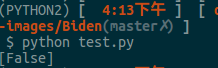
I’m not very sure why it helps, maybe we cannot do operate the list directly.
This is my first comment on github and I do not know how to insert code correctly so I use pictures. Wish it helps. 🙂
AlainPilon commented Oct 17, 2017
The general rule when using face_recognition is that you should use the numpy.array for everything until you are done with processing and convert them into list at the end.
AlainPilon commented Oct 17, 2017
This is my first comment on github and I do not know how to insert code correctly so I use pictures.
Click on the text «Styling with Markdown is supported» to learn about styling comments. But for code snippet, you can wrap it with backticks `like this`
deepseads commented Oct 17, 2017
@AlainPilon :
Thanks for your helpful reminds, I’m happy to learn so much on git hub.
I’ve figured out my problems and I do not need to modify the original codes. In my program, I was just trying the simple example:
It seems that I forgot to enter [0] s and [] of biden_enconding in my script, That makes the program do operations on the wrong objects.
amanmishra1321 commented Apr 17, 2020
@AlainPilon :
Thanks for your helpful reminds, I’m happy to learn so much on git hub.
I’ve figured out my problems and I do not need to modify the original codes. In my program, I was just trying the simple example:
It seems that I forgot to enter [0] s and [] of biden_enconding in my script, That makes the program do operations on the wrong objects.
Can you justify where should I write [0] and what should I write [0]s or [] or [0] only.
dipanshparmar commented Sep 14, 2021
@AlainPilon :
Thanks for your helpful reminds, I’m happy to learn so much on git hub.
I’ve figured out my problems and I do not need to modify the original codes. In my program, I was just trying the simple example:
It seems that I forgot to enter [0] s and [] of biden_enconding in my script, That makes the program do operations on the wrong objects.
Can you justify where should I write [0] and what should I write [0]s or [] or [0] only.
I have been working with Python for a couple of months..Now,I have to perform min-max normalization for a column of my dataset(.csv file) for which I get the above mentioned type error..I have tried a lot but it still persists..Correct values are retrieved for min and max functions but the types of the results are list rather than float/integer..
This is the line that causes error
where krr is the column retrieved from the dataset.Please help.
I have a function «normal» which does the min-max normalization.. I have taken column values using eval as shown in code

1 Answer 1
OK, so the key issue here is that you are working on a list of sublists, with each sublist containing one number.
If you look at your formula:
My recommendation is that immediately after you finish constructing krr, you add the following line to your code:
which converts krr from a list of sublists, to a list of the first element of each sublist.
Edit:
An alternative that I think will work, and is more efficient, is to change
map applies float to each element of the following list, and creates a new list. Instead, we’re asking for the first element of that list, and applying float directly to it. That float is assigned to the index in krr.
TypeError: unsupported operand type(s) for %: ‘list’ and ‘int’
Дан целочисленный массив из 30 элементов. Элементы массива могут принимать натуральные значения от 1 до 10 000 включительно. Опишите на одном из языков программирования алгоритм, который находит минимум среди элементов массива, не делящихся нацело на 6, а затем заменяет каждый элемент, не делящийся нацело на 6, на число, равное найденному минимуму. Гарантируется, что хотя бы один такой элемент в массиве есть. В качестве результата необходимо вывести изменённый массив, каждый элемент выводится с новой строчки. Например, для исходного массива из шести элементов:
программа должна вывести следующий массив
1 ответ 1

Всё ещё ищете ответ? Посмотрите другие вопросы с метками python-3.x или задайте свой вопрос.
Похожие
Подписаться на ленту
Для подписки на ленту скопируйте и вставьте эту ссылку в вашу программу для чтения RSS.
Нажимая «Принять все файлы cookie» вы соглашаетесь, что Stack Exchange может хранить файлы cookie на вашем устройстве и раскрывать информацию в соответствии с нашей Политикой в отношении файлов cookie.
I’m trying to create a program in python that will tell you the day of the week you were born using the Zeller algorithm http://en.wikipedia.org/wiki/Zeller%27s_congruence but it’s giving me this error
(It’s the first program I create by myself, so be nice please 😉 )

2 Answers 2
Trending sort
Trending sort is based off of the default sorting method — by highest score — but it boosts votes that have happened recently, helping to surface more up-to-date answers.
It falls back to sorting by highest score if no posts are trending.
Switch to Trending sort
What’s happening in answer to your direct question has been answered by @mellamokb and comments.
However, I would point out that Python already this builtin and would make it easier:
Then you can perform calculations more easily on an object that is actually a datetime rather than co-erced strings.
Python TypeError: unsupported operand type(s) for +: ‘int’ and ‘list’
I want to create a funcion that print the most appeared number, but I have the problem on the title, this is my function:
This is the error:
the result need to be 3,[2,5] because 2 and 5 appear 3 times

2 Answers 2
Trending sort
Trending sort is based off of the default sorting method — by highest score — but it boosts votes that have happened recently, helping to surface more up-to-date answers.
It falls back to sorting by highest score if no posts are trending.
Switch to Trending sort
You don’t have to delete items from your list in order to filter at the end the item with most occurrence in your list, simply, just iterate through it and keep the value with maximum count in your variable and store elements with that max count in a list then return max count and list, this way:
An alternative way, is to use built in method, like max with key being the count of each item, this way:
TypeError: unsupported operand type(s) for ** or pow(): ‘list’ and ‘int’
I’m trying to take the values from the previous function and use in another function. This is my first programming class and language, and i’m totally lost. I figured out how to take the variables from astlist and put them into the function distance, but now Python is telling me I can’t use these variables in an equation because they’re in a list now? Is that what it’s saying? I’m also just printing the lists to see if they are running. These are two of my functions, and the functions are both defined in my main function. I’m taking these lists and eventually putting them into files, but I need to figure out why the equation isn’t working first. Thanks!


3 Answers 3
Trending sort
Trending sort is based off of the default sorting method — by highest score — but it boosts votes that have happened recently, helping to surface more up-to-date answers.
It falls back to sorting by highest score if no posts are trending.
Switch to Trending sort
I’m not sure what you’re trying to accomplish with all these lists but you should change the code so that you’re only trying to raise numbers to the power of two and not lists.
After first cycle of loop:
After second cycle of loop:
As you can see, list1 is now a list of lists, and astlist is now a list of duplicates of list1 (a list of lists of lists)
list1 is probably redundant and you probably want just
in the first bit.
In the second function, you use
but actually the following would be better:
as for loops in Python iterate over members of a sequence (or other iterable value) rather being just a simple counter. What you are doing with the range(len(astlist)) construct is actually generating a list [1,2,3. ] and iterating over that.
If you particularly need a numerical index then you can use the enumerate function which returns a series of (index,value) pairs that you can iterate over thus:
TypeError: unsupported operand type(s) for &: ‘list’ and ‘QueryInstance’
I am trying to have a login system where user input will be crosschecked with tinydb’s json file. I managed to get the registration working but when I try logging in I got this error.
TypeError: unsupported operand type(s) for &: ‘list’ and ‘QueryInstance’
I tried removing password verification and it worked. Not entirely sure the reason behind it. Would be great if I can receive some guidance as to what went wrong. Thanks!
2 Answers 2
Trending sort
Trending sort is based off of the default sorting method — by highest score — but it boosts votes that have happened recently, helping to surface more up-to-date answers.
It falls back to sorting by highest score if no posts are trending.
Switch to Trending sort
& in Python is logical bitwise operator not the conditional operator, so replacing & with and should get it to work
Not the answer you’re looking for? Browse other questions tagged python tinydb or ask your own question.
Related
Hot Network Questions
Subscribe to RSS
To subscribe to this RSS feed, copy and paste this URL into your RSS reader.
By clicking “Accept all cookies”, you agree Stack Exchange can store cookies on your device and disclose information in accordance with our Cookie Policy.
I’m trying to create a program in python that will tell you the day of the week you were born using the Zeller algorithm http://en.wikipedia.org/wiki/Zeller%27s_congruence but it’s giving me this error
(It’s the first program I create by myself, so be nice please 😉 )
2 Answers 2
Trending sort
Trending sort is based off of the default sorting method — by highest score — but it boosts votes that have happened recently, helping to surface more up-to-date answers.
It falls back to sorting by highest score if no posts are trending.
Switch to Trending sort
What’s happening in answer to your direct question has been answered by @mellamokb and comments.
However, I would point out that Python already this builtin and would make it easier:
Then you can perform calculations more easily on an object that is actually a datetime rather than co-erced strings.
TypeError: unsupported operand type(s) for +: ‘int’ and ‘list’
I keep getting this error for my code for a Binary Search function
the problem seems to be the mid = first + last / 2 equation.

2 Answers 2
Trending sort
Trending sort is based off of the default sorting method — by highest score — but it boosts votes that have happened recently, helping to surface more up-to-date answers.
It falls back to sorting by highest score if no posts are trending.
Switch to Trending sort
Hey i just fixed your Code and added comments to the changes 🙂 But your Code will get into a endless loop because you never set done to True
Not the answer you’re looking for? Browse other questions tagged python list int or ask your own question.
Related
Hot Network Questions
Subscribe to RSS
To subscribe to this RSS feed, copy and paste this URL into your RSS reader.
By clicking “Accept all cookies”, you agree Stack Exchange can store cookies on your device and disclose information in accordance with our Cookie Policy.
TypeError: unsupported operand type(s) for +: ‘int’ and ‘list’ when trying to split a text file
The program is intended to load a text file which has one proxy on each line. It then asks the user to input what separations they needed the proxies into. For example if I had 100 proxies in the text file on 100 separate lines, and said that I needed five 10 packs of proxies and two 25 packs of proxies, the program would output a total of seven text files which would add up to a total of 100 proxies.
This is the error:
Not sure what to do, the program works fine when I replace [packs] in splitted_list = split_list(filename, [packs]) with [5, 3, 2] for example.
2 Answers 2
Trending sort
Trending sort is based off of the default sorting method — by highest score — but it boosts votes that have happened recently, helping to surface more up-to-date answers.
It falls back to sorting by highest score if no posts are trending.
Switch to Trending sort
When you define packs by adding [pack10] * 10 up and so on, Python is taking liberties and creating a bunch of new lists with the pack variables simply appearing the number of times you multiply by. 
When you add these lists up together, it does the same thing again, creating one large one-dimensional list. 
Getting Error in airflow DAG unsupported operand type(s) for >>: ‘list’ and ‘list’. Sequential and Parallel execution of tasks
I am new to Apache airflow and DAG. There are total 6 tasks in the DAG (task1, task2, task3, task4, task5, task6). But at the time of running the DAG we are getting the error below.
DAG unsupported operand type(s) for >>: ‘list’ and ‘list’
Below is my code for the DAG. Please help. I am new to airflow.
3 Answers 3
Trending sort
Trending sort is based off of the default sorting method — by highest score — but it boosts votes that have happened recently, helping to surface more up-to-date answers.
It falls back to sorting by highest score if no posts are trending.
Switch to Trending sort
What is your desired Task Dependency? Do you want to run task_4 after task_2 only or after task_2 and task_3
Based on that answer, use one of the following:
(use this if task_4 should run after both task_2 and task_3 are completed)
(use this if task_4 should run after task_2 is completed and task_5 should run after task_3 is completed)
A tip, you don’t need to do the following:
You can pass the dag parameter to your task itself, example:
TypeError: unsupported operand type(s) for /: ‘list’ and ‘int’ after 28 iterations
My code runs on a random image for 28 iterations and THEN gets the error:
TypeError: unsupported operand type(s) for /: ‘list’ and ‘int’
I’m not really sure why it is getting that error after 28 iterations when it should have broken after 1 iteration only.
My code:

2 Answers 2
Trending sort
Trending sort is based off of the default sorting method — by highest score — but it boosts votes that have happened recently, helping to surface more up-to-date answers.
It falls back to sorting by highest score if no posts are trending.
Switch to Trending sort
Initialize s1 and m as arrays, not lists.
Without studying the whole code or testing it, here’s something that looks suspicious:
+= for a list ( s1 ) is concatenate. For an integer ( s2 ) it mean add. The += appear to be similar, but are totally different because of how the 2 variables are created.
is the one that raises the error, since / is not defined for a list.
So I have written a function which reads a file (csv) and returns the average of each line of numbers, as a list. I believe the code should work however I have tried many ways and cant get the data to convert to numerical values(that can then be summed etc.) from a list.
specifically when I run this with my file I get:
sorry if an easy fix as I am new to this lol


3 Answers 3
Trending sort
Trending sort is based off of the default sorting method — by highest score — but it boosts votes that have happened recently, helping to surface more up-to-date answers.
It falls back to sorting by highest score if no posts are trending.
Switch to Trending sort
So, it looks live you’ve realized the source of your error is that your list contains strings instead of a numeric data type, which is why addition won’t work. The naive way to do this (a perfectly reasonable one I might add), is to simply loop:
OK, we didn’t use the sum function. Would could also do something like:
This also works fine, although, it creates an unecessary intermediate list. But note the pattern from the above two loops: you apply the same function over-and-over to each element in the list, i.e. you map the function onto the list. Well, Python is batteries included:
Note, on Python3, the above solution doesn’t create an unecessary intermediate list!
I’m getting the error TypeError: Unsupported operand type(s) for %: ‘list’ and ‘int’
I am new to python, but I am getting this error and don’t know how to solve it.

5 Answers 5
Trending sort
Trending sort is based off of the default sorting method — by highest score — but it boosts votes that have happened recently, helping to surface more up-to-date answers.
It falls back to sorting by highest score if no posts are trending.
Switch to Trending sort
If your requirement is to find the odd numbers:

numbers is a list and you can’t use modulo with a list only with an integer.
if (numbers % 2) == 1:
should probably look like:
if (numbers[b] % 2) == 1:
Sidenote: In most programming languages arrays / lists start at 0.
The error you’re getting happens because of this line:
You should see what farbiondriven said, but also note that you’re saying to Python «divide this list by 2», and Python doesn’t know what to do, so it throws an Error

if you wish to print out only the odd numbers from the given list ‘numbers’, you can try the following code.
Trying to sum up nested lists but receive error TypeError: unsupported operand type(s) for +: ‘int’ and ‘list’
Im using python 3 to create a list of random dice rolls and add them up, however when i try to add all the totals it gives me TypeError: unsupported operand type(s) for +: ‘int’ and ‘list. What to do?
2 Answers 2
Trending sort
Trending sort is based off of the default sorting method — by highest score — but it boosts votes that have happened recently, helping to surface more up-to-date answers.
It falls back to sorting by highest score if no posts are trending.
Switch to Trending sort
Hi You are trying to add int value to list So, Type mismatch error, You have to try to add int value with list value

No offence, but oh my god, that is so unpythonistic that my eyes bleed. But obviously you have to start somewhere 😉 I guess you have done C development previously. In Python you don’t need to preallocate memory or arrays. You also can iterate over any iterable directly, no need to use an increasing integer index.
TypeError For Unsupported Operand type ‘int’ and ‘list’
I am creating a Python program that will tell you if a number is prime or not. It is basically the Rabin Miller Algorithm, but on line 60, my program stops and I get the error:
TypeError: unsupported operand type(s) for %: ‘int’ and ‘list’.
What am I doing wrong?
2 Answers 2
Trending sort
Trending sort is based off of the default sorting method — by highest score — but it boosts votes that have happened recently, helping to surface more up-to-date answers.
It falls back to sorting by highest score if no posts are trending.
Switch to Trending sort

Not the answer you’re looking for? Browse other questions tagged python or ask your own question.
Related
Hot Network Questions
Subscribe to RSS
To subscribe to this RSS feed, copy and paste this URL into your RSS reader.
By clicking “Accept all cookies”, you agree Stack Exchange can store cookies on your device and disclose information in accordance with our Cookie Policy.
TypeError: unsupported operand type(s) for /: ‘list’ and ‘int’ after 28 iterations
My code runs on a random image for 28 iterations and THEN gets the error:
TypeError: unsupported operand type(s) for /: ‘list’ and ‘int’
I’m not really sure why it is getting that error after 28 iterations when it should have broken after 1 iteration only.
My code:
2 Answers 2
Trending sort
Trending sort is based off of the default sorting method — by highest score — but it boosts votes that have happened recently, helping to surface more up-to-date answers.
It falls back to sorting by highest score if no posts are trending.
Switch to Trending sort
Initialize s1 and m as arrays, not lists.
Without studying the whole code or testing it, here’s something that looks suspicious:
+= for a list ( s1 ) is concatenate. For an integer ( s2 ) it mean add. The += appear to be similar, but are totally different because of how the 2 variables are created.
is the one that raises the error, since / is not defined for a list.
TypeError: unsupported operand type(s) for ** or pow(): ‘list’ and ‘int’
I’m trying to take the values from the previous function and use in another function. This is my first programming class and language, and i’m totally lost. I figured out how to take the variables from astlist and put them into the function distance, but now Python is telling me I can’t use these variables in an equation because they’re in a list now? Is that what it’s saying? I’m also just printing the lists to see if they are running. These are two of my functions, and the functions are both defined in my main function. I’m taking these lists and eventually putting them into files, but I need to figure out why the equation isn’t working first. Thanks!
3 Answers 3
Trending sort
Trending sort is based off of the default sorting method — by highest score — but it boosts votes that have happened recently, helping to surface more up-to-date answers.
It falls back to sorting by highest score if no posts are trending.
Switch to Trending sort
I’m not sure what you’re trying to accomplish with all these lists but you should change the code so that you’re only trying to raise numbers to the power of two and not lists.
After first cycle of loop:
After second cycle of loop:
As you can see, list1 is now a list of lists, and astlist is now a list of duplicates of list1 (a list of lists of lists)
list1 is probably redundant and you probably want just
in the first bit.
In the second function, you use
but actually the following would be better:
as for loops in Python iterate over members of a sequence (or other iterable value) rather being just a simple counter. What you are doing with the range(len(astlist)) construct is actually generating a list [1,2,3. ] and iterating over that.
If you particularly need a numerical index then you can use the enumerate function which returns a series of (index,value) pairs that you can iterate over thus:
TypeError For Unsupported Operand type ‘int’ and ‘list’
I am creating a Python program that will tell you if a number is prime or not. It is basically the Rabin Miller Algorithm, but on line 60, my program stops and I get the error:
TypeError: unsupported operand type(s) for %: ‘int’ and ‘list’.
What am I doing wrong?
2 Answers 2
Trending sort
Trending sort is based off of the default sorting method — by highest score — but it boosts votes that have happened recently, helping to surface more up-to-date answers.
It falls back to sorting by highest score if no posts are trending.
Switch to Trending sort
Not the answer you’re looking for? Browse other questions tagged python or ask your own question.
Related
Hot Network Questions
Subscribe to RSS
To subscribe to this RSS feed, copy and paste this URL into your RSS reader.
By clicking “Accept all cookies”, you agree Stack Exchange can store cookies on your device and disclose information in accordance with our Cookie Policy.
Why my code return a Type error of unsupported operand type(s) for +: ‘NoneType’ and ‘list’
I wang to reserve a char list by recursion in python, but I get a type error in the last step, I don’t know why this happened. I will appreciate you
expected output [‘d’,’c’,’b’,’a’]
there is a type error:
unsupported operand type(s) for +: ‘NoneType’ and ‘list’

1 Answer 1
It might be better to check if the string has a length that is zero (so the empty string), such that your function can reverse an empty string as well:
Using recursion, especially linear recursion is not a good idea here, since the call stack grows with the length of the string, and thus for not so small strings, you will get a stackoverflow.
You can make use of the reversed(..) iterator of a string, and thus return the reversed string with:
this is especially useful if you want to iterate over the string in reverse, without constructing one (for example when processing the individual characters in reverse).
TypeError: unsupported operand type(s) for +: ‘int’ and ‘list’
I keep getting this error for my code for a Binary Search function
the problem seems to be the mid = first + last / 2 equation.
2 Answers 2
Trending sort
Trending sort is based off of the default sorting method — by highest score — but it boosts votes that have happened recently, helping to surface more up-to-date answers.
It falls back to sorting by highest score if no posts are trending.
Switch to Trending sort
Hey i just fixed your Code and added comments to the changes 🙂 But your Code will get into a endless loop because you never set done to True
Not the answer you’re looking for? Browse other questions tagged python list int or ask your own question.
Related
Hot Network Questions
Subscribe to RSS
To subscribe to this RSS feed, copy and paste this URL into your RSS reader.
By clicking “Accept all cookies”, you agree Stack Exchange can store cookies on your device and disclose information in accordance with our Cookie Policy.
unsupported operand type(s) for |=: ‘list’ and ‘list’
I am having trouble with some code for an AMT22 encoder. I am getting the following error: TypeError: unsupported operand type(s) for |=: ‘list’ and ‘list’. I know I cant do an operation like this on two lists, but I don’t know how to declare currentPosition as uint16 as I would like too.
I am using python on a Raspberry Pi 4 B through which the encoders communicate by SPI, so I am using spidev library.
Here is all the code with the error attached at the bottom.
Any help would be appreciated, Thank you!

1 Answer 1
From what I can see, the method xfer returns a list of bytes and so does your spiWriteRead function.
I am going to assume that for your calculation you want to take the first two bytes from that list and convert them to a 16 bit unsigned integer in little-endian format.
You can use the struct module to do that:
What this line does is as follows:
convert the list spiWriteRead returns in to an array of bytes so unpack can process it.
Unpack the array in to a single unsigned short (‘H’ formatting letter) in little-endian (‘ unpack always returns a tuple, take the first element ([0]) which will be an integer, thus you can do the | (or) operation on it.
For more information on working with binary data in Python read the struct documentation.
If this is the case, there is no need to use the struct module, only extract the single member of the list that contains the actual byte value.
Note however, the result must be bit shifted not simply or’ed to get the correct value.
Here is how the code would look in that case:
(this again assumes we are working in little-endian, so least significant byte is read first)
Note the only difference from the original code is adding the list index [0] and in the second call shifting all the bits by 8 places to make them the higher byte of a 2 byte int.
I am trying to create a Python definition to display a list and trying to add a feature where if the list is more than 10 it will display it horizontally.
And here’s the log:
5 Answers 5
Trending sort
Trending sort is based off of the default sorting method — by highest score — but it boosts votes that have happened recently, helping to surface more up-to-date answers.
It falls back to sorting by highest score if no posts are trending.
Switch to Trending sort
You must have an element contained in the list where it is not a string. The error message is telling you that the program is breaking because you are trying to concatenate a None type with a string type. For example:
a = «string1» + «string2» print(a) # will give you string1string2
But if you try a = None + «string1» # You will get the same error message
Using this logic, you can add a conditional check to make sure that the element of the list is not of None type, then you could successfully concatenate it
How to fix «TypeError: unsupported operand type(s) for &: ‘list’ and ‘list'» using numpy.where() with python?
I have a csv table with many columns, including a column named «blend» and a column named «hires.» Blend has elements like ‘N’, ‘Y unpub NAME’, and ‘Y? unnpub NAME.’ Hires has elements like ‘N’, ‘redo;NAME OF TELESCOPE’, and ‘NAME OF TELESCOPE.’
I want a list (called ‘known_binary’) where the following conditions are true: blend==’Y’ & hires!=’N’ & hires!=’redo’. (I’ll be making other lists with other combinations of those possibilities like a list where: blend==’Y?’ & (hires==’N’ | hires==’redo’).
I know how to have python just look at either the first letter of the element, or first four letters, etc.. (for example, this works without error):
But, when I put multiple things in np.where() it doesn’t work:
I get the error: «TypeError: unsupported operand type(s) for &: ‘list’ and ‘list'»
I just want a list of indices (might be the wrong wording, sorry) where the conditions I stated are true.
If the elements in the hires column (for example) were just «redo» and not «redo;name of specific telescope» I wouldn’t be having any issue.
I know how to do some specific stuff in python for astronomy, but overall I have VERY little understanding of how all of this stuff works. Thanks in advance!
TypeError: unsupported operand type(s) for +: ‘int’ and ‘list’ when trying to split a text file
The program is intended to load a text file which has one proxy on each line. It then asks the user to input what separations they needed the proxies into. For example if I had 100 proxies in the text file on 100 separate lines, and said that I needed five 10 packs of proxies and two 25 packs of proxies, the program would output a total of seven text files which would add up to a total of 100 proxies.
This is the error:
Not sure what to do, the program works fine when I replace [packs] in splitted_list = split_list(filename, [packs]) with [5, 3, 2] for example.
2 Answers 2
Trending sort
Trending sort is based off of the default sorting method — by highest score — but it boosts votes that have happened recently, helping to surface more up-to-date answers.
It falls back to sorting by highest score if no posts are trending.
Switch to Trending sort
When you define packs by adding [pack10] * 10 up and so on, Python is taking liberties and creating a bunch of new lists with the pack variables simply appearing the number of times you multiply by.
When you add these lists up together, it does the same thing again, creating one large one-dimensional list.
unsupported operand type(s) for +: ‘int’ and ‘list’
I am trying to read a csv file as list in this python program. The file test.csv contains only one row of various numbers. I want to find the possible combination of numbers whose sum is equal to 500 and after getting output as a list the python program will append this list in my test.csv file.
I have written all code but getting this error:

2 Answers 2
Trending sort
Trending sort is based off of the default sorting method — by highest score — but it boosts votes that have happened recently, helping to surface more up-to-date answers.
It falls back to sorting by highest score if no posts are trending.
Switch to Trending sort
Your input/how you’re importing it is your problem:
reader must be a nested list which then sum([[]]) gives TypeError: unsupported operand type(s) for +: ‘int’ and ‘list’
after you fix your input, you’ll likely get
which means you need to map that list to ints. To fix this would be replacing the list() call with map(int, ) :

list(reader) gives you a list of rows, where each row is a list of strings. In other words, your row1 is a list of lists, not a list of numbers, which is why sum() throws that particular exception.
The fact that you have named it row1 suggests that you are only interested in the first row. If so, then you actually mean to say row1 = list(reader)[0] and that would give you a list that sum() can work on. But beware that you’ll lose access to the rest of the table if you do that.
To preserve the whole table while converting it from strings to numbers, you could do this:
TypeError: unsupported operand type(s) for +: ‘int’ and ‘list’ when using numpy
I’m trying to solve a strange error in a strange context. A user is running some of my code and has encountered this TypeError:
The specific piece of code which is throwing this error is trying to do a Hough transformation in Numpy land (NOTE: I have imported np.sin as np_sin etc.):
In this code, cols and half_rows are ints, dth and dr are floats and data is a numpy array with shape (cols, 2) (ie. a set of coordinates)
I can make the same TypeError easily on the python prompt using:
But of course with numpy:
Is OK. Now, the exact line which causes the error is this one:
The types of the members here are:
But the error gives the indication that:
I am very confused. Has anyone encountered something like this before? I’m happy to go on a fishing trip, does anyone have any idea where I should cast my line? I am completely out of ideas and I need to find some kind of resolution to this problem.
NOTE: The user is a reviewer of the academic paper (link is to preprint) describing this code so I can’t make contact with them directly, nor can I get hold of the data which crashed the program, nor can I get detailed information about the system it’s running on. Also, this crash is somewhat deep into the running of the code.
So for all intents and purposes I can’t reproduce it with the original data, nor can I give some test data which will reproduce it.
Finally, here is the code in question cut out of context for anyone who wants to try get the error.
I’m happy to try anything that’s suggested, thanks.
Based on Akavall’s comment I can produce the exact TypeError by setting Cs to:
(after it’s been set initially of course. )
I know this isn’t what’s happening in the code. But I also don’t know why this makes the TypeError. If anyone can explain what’s going on under the hood to raise that particular TypeError on this particular array, it’d be a help and may help me get closer to the solution.
Sum function prob TypeError: unsupported operand type(s) for +: ‘int’ and ‘str’
I’m new to python (PYTHON 3.4.2) and I’m trying to make a program that adds and divides to find the average or the mean of a user’s input, but I can’t figure out how to add the numbers I receive.
When I open the program at the command prompt it accepts the numbers I input and would print it also if I use a print function, but it will not sum the numbers up.
I receive this error:
My code is below:
Any help would be deeply appreciated.

5 Answers 5
Trending sort
Trending sort is based off of the default sorting method — by highest score — but it boosts votes that have happened recently, helping to surface more up-to-date answers.
It falls back to sorting by highest score if no posts are trending.
Switch to Trending sort
input takes a input as string
you are telling user to give input saperated by comma, so you need to split the string with comma, then convert them to int then sum it
TypeError: unsupported operand type(s) for Pow: ‘list’ and ‘int’ on line 15
All I want to do is have my loop use the distance formula to move the turtle down every second. However, every time I try and use the formula this error comes up. Does anyone know where I am going wrong?
2 Answers 2
Trending sort
Trending sort is based off of the default sorting method — by highest score — but it boosts votes that have happened recently, helping to surface more up-to-date answers.
It falls back to sorting by highest score if no posts are trending.
Switch to Trending sort
Your variable time = range(1, 10, 1) is equivalent to time = [1, 2, 3, 4, 5, 6, 7, 8, 9] and so trying to square a list, as in distance = float((gravity/2)*((time**2)-((time-1)**2))) is undefined.
Above I used a lambda, which is an inline function. you could just have (slightly less) easily (slightly more inline with PEP8):
Also: You subtracted 1 from your list as well. I’ll leave it up to you to figure out a solution to that using the tools above.
TypeError: unsupported operand type(s) for ** or pow(): ‘list’ and ‘int’
I’m trying to take the values from the previous function and use in another function. This is my first programming class and language, and i’m totally lost. I figured out how to take the variables from astlist and put them into the function distance, but now Python is telling me I can’t use these variables in an equation because they’re in a list now? Is that what it’s saying? I’m also just printing the lists to see if they are running. These are two of my functions, and the functions are both defined in my main function. I’m taking these lists and eventually putting them into files, but I need to figure out why the equation isn’t working first. Thanks!
3 Answers 3
Trending sort
Trending sort is based off of the default sorting method — by highest score — but it boosts votes that have happened recently, helping to surface more up-to-date answers.
It falls back to sorting by highest score if no posts are trending.
Switch to Trending sort
I’m not sure what you’re trying to accomplish with all these lists but you should change the code so that you’re only trying to raise numbers to the power of two and not lists.
After first cycle of loop:
After second cycle of loop:
As you can see, list1 is now a list of lists, and astlist is now a list of duplicates of list1 (a list of lists of lists)
list1 is probably redundant and you probably want just
in the first bit.
In the second function, you use
but actually the following would be better:
as for loops in Python iterate over members of a sequence (or other iterable value) rather being just a simple counter. What you are doing with the range(len(astlist)) construct is actually generating a list [1,2,3. ] and iterating over that.
If you particularly need a numerical index then you can use the enumerate function which returns a series of (index,value) pairs that you can iterate over thus:
Unsupported operand type(s) for /: ‘list’ and ‘int’ when using transforms.scale() function vision #149
Comments
mmderakhshani commented Apr 17, 2017 •
Hi,
I wrote below code to read MSCOCO Detection images using DataLoader. In this code I would like to alter the size of the read images to (448,448). Here is the code:
But when I ran above code, below error has happened ( 😑 )
Could you please tell me what should I do? 😇
The text was updated successfully, but these errors were encountered:
soumith commented Apr 17, 2017
mmderakhshani commented Apr 17, 2017
@soumith, Sorry. I posted a question there, but no answer has happened. I just want to know the answer as rapidly as possible.
fmassa commented Apr 17, 2017
You need to update torchvision.
mmderakhshani commented Apr 17, 2017
@fmassa pytorch and torchvision versions are:
soumith commented Apr 17, 2017
mmderakhshani commented Apr 17, 2017
@soumith I installed my torchvision and pytorch using conda!
soumith commented Apr 17, 2017
i understand, but try the command above
mmderakhshani commented Apr 17, 2017
@soumith sure. give me some time to try it. I will notify you. thanks.
mmderakhshani commented Apr 17, 2017 •
@soumith. I ran above code. It seems something has installed. But when I ran my code, the error happened again:
Python __add__() Magic Method
Table of Contents
Syntax
Python’s object.__add__(self, other) method returns a new object that represents the sum of two objects. It implements the addition operator + in Python.
We call this a “Dunder Method” for “Double Underscore Method” (also called “magic method”). To get a list of all dunder methods with explanation, check out our dunder cheat sheet article on this blog.
Example
You have defined the dunder method so that the resulting sum of two Data objects is a Data object itself:
How to Resolve TypeError: unsupported operand type(s) for +
Consider the following code snippet where you try to add two custom objects without defining the dunder method __add__() :
Running this leads to the following error message on my computer:
Related Video
Advanced Example of Adding Lists in a Custom Class
In the following code, you add two baskets together by combining their contents:
The output of this code snippet is the combined basket:
The code consists of the following steps:
Python __add__ vs __iadd__
The expression x += y is syntactical sugar for the longer-form x = x + y :
So, here’s the difference between Python __add__ and Python __iadd__ :
Programmer Humor
❓ Question: Why do programmers always mix up Halloween and Christmas?
❗ Answer: Because Oct 31 equals Dec 25.
(If you didn’t get this, read our articles on the oct() and int() Python built-in functions!)
Where to Go From Here?
Enough theory. Let’s get some practice!
Coders get paid six figures and more because they can solve problems more effectively using machine intelligence and automation.
To become more successful in coding, solve more real problems for real people. That’s how you polish the skills you really need in practice. After all, what’s the use of learning theory that nobody ever needs?
You build high-value coding skills by working on practical coding projects!
Do you want to stop learning with toy projects and focus on practical code projects that earn you money and solve real problems for people?
🚀 If your answer is YES!, consider becoming a Python freelance developer! It’s the best way of approaching the task of improving your Python skills—even if you are a complete beginner.
If you just want to learn about the freelancing opportunity, feel free to watch my free webinar “How to Build Your High-Income Skill Python” and learn how I grew my coding business online and how you can, too—from the comfort of your own home.

While working as a researcher in distributed systems, Dr. Christian Mayer found his love for teaching computer science students.
To help students reach higher levels of Python success, he founded the programming education website Finxter.com. He’s author of the popular programming book Python One-Liners (NoStarch 2020), coauthor of the Coffee Break Python series of self-published books, computer science enthusiast, freelancer, and owner of one of the top 10 largest Python blogs worldwide.
His passions are writing, reading, and coding. But his greatest passion is to serve aspiring coders through Finxter and help them to boost their skills. You can join his free email academy here.
Источники:
- http://stackoverflow.com/questions/18755581/typeerror-unsupported-operand-types-for-list-and-list
- http://github.com/ageitgey/face_recognition/issues/148
- http://stackoverflow.com/questions/27739141/getting-typeerror-unsupported-operand-types-for-list-and-list-while-do
- http://ru.stackoverflow.com/questions/1033390/typeerror-unsupported-operand-types-for-list-and-int
- http://stackoverflow.com/questions/14042291/typeerror-unsupported-operand-types-for-int-and-list
- http://stackoverflow.com/questions/34481071/python-typeerror-unsupported-operand-types-for-int-and-list
- http://stackoverflow.com/questions/27083622/typeerror-unsupported-operand-types-for-or-pow-list-and-int
- http://stackoverflow.com/questions/65514666/typeerror-unsupported-operand-types-for-list-and-queryinstance
- http://stackoverflow.com/questions/14042291/typeerror-unsupported-operand-types-for-int-and-list?rq=1
- http://stackoverflow.com/questions/42576139/typeerror-unsupported-operand-types-for-int-and-list
- http://stackoverflow.com/questions/50013039/typeerror-unsupported-operand-types-for-int-and-list-when-trying-to-sp
- http://stackoverflow.com/questions/62895219/getting-error-in-airflow-dag-unsupported-operand-types-for-list-and-lis
- http://stackoverflow.com/questions/42498850/typeerror-unsupported-operand-types-for-list-and-int-after-28-iteratio
- http://stackoverflow.com/questions/47165189/typeerror-unsupported-operand-types-for-int-and-str-cant-seem-to-con
- http://stackoverflow.com/questions/66317341/im-getting-the-error-typeerror-unsupported-operand-types-for-list-and
- http://stackoverflow.com/questions/45996311/trying-to-sum-up-nested-lists-but-receive-error-typeerror-unsupported-operand-t
- http://stackoverflow.com/questions/28421369/typeerror-for-unsupported-operand-type-int-and-list?rq=1
- http://stackoverflow.com/questions/42498850/typeerror-unsupported-operand-types-for-list-and-int-after-28-iteratio/42500807
- http://stackoverflow.com/questions/27083622/typeerror-unsupported-operand-types-for-or-pow-list-and-int?rq=1
- http://stackoverflow.com/questions/28421369/typeerror-for-unsupported-operand-type-int-and-list
- http://stackoverflow.com/questions/57739239/why-my-code-return-a-type-error-of-unsupported-operand-types-for-nonetype?lq=1
- http://stackoverflow.com/questions/42576139/typeerror-unsupported-operand-types-for-int-and-list/42578475
- http://stackoverflow.com/questions/62139655/unsupported-operand-types-for-list-and-list
- http://stackoverflow.com/questions/59522537/python-typeerror-unsupported-operand-types-for-nonetype-and-str-wha?lq=1
- http://stackoverflow.com/questions/56941076/how-to-fix-typeerror-unsupported-operand-types-for-list-and-list-usi
- http://stackoverflow.com/questions/50013039/typeerror-unsupported-operand-types-for-int-and-list-when-trying-to-sp/50013135
- http://stackoverflow.com/questions/43551319/unsupported-operand-types-for-int-and-list
- http://stackoverflow.com/questions/24443511/typeerror-unsupported-operand-types-for-int-and-list-when-using-numpy
- http://stackoverflow.com/questions/26923445/sum-function-prob-typeerror-unsupported-operand-types-for-int-and-str
- http://stackoverflow.com/questions/32674575/typeerror-unsupported-operand-types-for-pow-list-and-int-on-line-15
- http://stackoverflow.com/questions/27083622/typeerror-unsupported-operand-types-for-or-pow-list-and-int/53182359
- http://github.com/pytorch/vision/issues/149
- http://blog.finxter.com/python-__add__/