Speaking cards for elementary students
Speaking cards for elementary students
STARTERS Speaking Part 1 picture cards/Карточки

Здесь можно найти карточки для первой части устного экзамена Young Learners Starters + вводная речь экзаменатора:
Look at these, this is a living-room. The children are playing. Here is the car.

Now look at these. Which is the dog? I’m putting the dog next to the girl.

Look at these, it’s a beautiful day. The family are having lunch. Here is the mother.

Now look at these. Which is the bag? I’m putting the bag next to the girl.

Look at these, this is the beach. The family are having a day at the sea. Here is the father.

Now look at these. Which is the radio? I’m putting the radio next to the girl.

MORE PRACTICE MATERIALS:
YLE STARTERS Speaking part 1: Карточки
YLE STARTERS Speaking part 2: Карточки
YLE STARTERS Speaking part 3: Карточки
YLE STARTERS Speaking Part 4: Sample questions
Карточки для развития навыков говорения (Speaking cards)
упражнения по лексике и грамматике английского языка

Give a talk on Leisure Activities.
Remember to discuss:
· what teenagers like doing in their spare time
· whether teenagers have enough time for their hobbies, why
· what a hobby is
· what you and your friends prefer doing at leisure time, why
Give a talk on School Years. The Best Friend.
Remember to discuss:
· what teenagers always remember about school years
· whether it is difficult for teenagers to make friends, why
· what makes the best friend
· whether you have the best friend
· what your best friend is like
Give a talk on Travelling.
Remember to discuss:
· why people enjoy travelling
· whether you like traveling, why
· what ways of travelling you can name
· what your favourite way of travelling is, why
Give a talk on Great Britain.
Remember to discuss:
· what you imagine when you think of Great Britain
· what parts it consists of, their capitals
· what historic events you can remember
· what places in Great Britain you would like to visit, why
Give a talk on London.
Remember to discuss:
· what images come across your mind when you think of London
· what parts it consists of
· what historic events you can think of
· why London is so popular with young people
Give a talk on Moscow.
Remember to discuss:
· what images come across your mind when you think of Moscow
· whether Moscow is a business center of Russia
· what historic events you can remember
· what places in Moscow you would like your foreign friend to visit, why
Give a talk on The Places of Interest in Moscow.
Remember to discuss:
· what places in Moscow people from different countries usually visit, why
· whether Moscow is a cultural center of Russia
· how Moscow has changed over the last years
· what places in Moscow you would like your foreign friend to visit, why
Give a talk on The Places of Interest in London.
Remember to discuss:
· what London is famous for
· whether London has changed over the last years
· why people from all over the world come to stay in London
· what places in London you would like to visit, why
Give a talk on Family Relations.
Remember to discuss:
· what family relations can be between the members of the family, why
· what the reasons for disagreements between parents and children are, why
· whether it is good\bad to be an only child, why
· what your relations with the members of your family are
Give a talk on Learning Foreign Languages.
Remember to discuss:
· whether it is important to learn foreign languages, why
· whether it would be better to have only one language on the planet
· why you started learning English
· what you especially like about learning English

Курс повышения квалификации
Современные педтехнологии в деятельности учителя
Курс профессиональной переподготовки
Английский язык: теория и методика преподавания в дошкольном образовании
Курс повышения квалификации
Педагогические основы деятельности учителя общеобразовательного учреждения в условиях ФГОС
«Домашнее обучение. Лайфхаки для родителей»

Акция до 31 августа

«Начало учебного года современного учителя»
Свидетельство и скидка на обучение каждому участнику
Дистанционные курсы для педагогов
Видеолекции для
профессионалов

Найдите материал к любому уроку, указав свой предмет (категорию), класс, учебник и тему:
5 906 939 материалов в базе
Другие материалы
Вам будут интересны эти курсы:
Оставьте свой комментарий
Авторизуйтесь, чтобы задавать вопросы.
Настоящий материал опубликован пользователем Гуменюк Татьяна Юрьевна. Инфоурок является информационным посредником и предоставляет пользователям возможность размещать на сайте методические материалы. Всю ответственность за опубликованные материалы, содержащиеся в них сведения, а также за соблюдение авторских прав несут пользователи, загрузившие материал на сайт
Если Вы считаете, что материал нарушает авторские права либо по каким-то другим причинам должен быть удален с сайта, Вы можете оставить жалобу на материал.
Автор материала

Московский институт профессиональной
переподготовки и повышения
квалификации педагогов
Дистанционные курсы
для педагогов
663 курса от 490 рублей
Выбрать курс со скидкой
Выдаём документы
установленного образца!

«Организация развивающей образовательной среды в условиях реализации ФГОС ДО»
«Читаем вместе: беседа с авторами книги «Большой поход Приключения в лесу»»
«Теория и методика образовательной работы в научной организации»
Подарочные сертификаты
Ответственность за разрешение любых спорных моментов, касающихся самих материалов и их содержания, берут на себя пользователи, разместившие материал на сайте. Однако администрация сайта готова оказать всяческую поддержку в решении любых вопросов, связанных с работой и содержанием сайта. Если Вы заметили, что на данном сайте незаконно используются материалы, сообщите об этом администрации сайта через форму обратной связи.
Все материалы, размещенные на сайте, созданы авторами сайта либо размещены пользователями сайта и представлены на сайте исключительно для ознакомления. Авторские права на материалы принадлежат их законным авторам. Частичное или полное копирование материалов сайта без письменного разрешения администрации сайта запрещено! Мнение администрации может не совпадать с точкой зрения авторов.
Speaking cards for elementary students
Super elementary speaking activities are a really good way to get students speaking at a low level. They have to be designed so they are easy to explain and understand. If an activity works, the class is much more entertaining, fun and helps students get over their reticence to speak English.
1 Daily Activities Speaking Activity
This is one of the most basic speaking activities to get students practicing with the verb “to do”. Students ask other students about their daily activities.
Subscribe to Eslflow
Subscribe to get full access to the latest and best resources from eslflow.com. There are no ads in the newsletter and you will receive entertaining, high quality, and up-to-date teaching resources regularly. Also, if you take out a paid subscription, you can download large collections of PDF, audio and video materials in zip files.
2 Do you….”So do I” and “Neither do I”
Another exercise to get students speaking a little bit. And it also introduces them to negative and positive agreement.
3 Elementary Job Suitability Interview
This is a great way of familiarizing students with some useful adjectives in a personalized way. Students have to interview their partner and then match their personal preferences with a suitable job.
4 Roommate Interview
This is similar to the exercise above but it is using the verb “to be” and further expands students knowledge of adjectives. It’s also a really personal and quite funny exercise as students have to asses their partners/friends as possible roommates.
Related Resources:
5 Personality Adjective Survey
This is a bit more advanced than the two exercises above. It also focuses on adjectives It can be really successful in a talkative class. The adjective list can be greatly expanded on if the students are up to it. Sometimes I have assigned each student or a pair of students an adjective and found this a way of getting a great variety of questions and talking going on in the classroom.
6 Shopping Speaking Activity
Shopping is a great topic for any elementary English language lesson. This is a simple way to get some speaking done and getting students to practice using the verb “do”.
7 Talking Shopping
This is a little more advanced and a little more interesting than the exercise above. It explores shopping vocabulary in a matching exercises and the students create short conversations.
8 Movie Brainstorm and Speaking
Movies usually (in my experience) get students motivated. Students have to match movie genres to the pictures and then think of movie titles for each genre. Then they can ask their partners the questions at the bottom of the page.
9 Music Brainstorm and Speaking
This exercise explores genres of music and asks students about their musical preferences. Similar to the speaking activity above, it is a great way to start off a class.
11 Fun ESL Speaking Activities for Teens or Adults
Every language teacher knows that speaking is a core skill to teach and practice, but sometimes it can be challenging coming up with creative or engaging ESL speaking activities and games. You can use them to improve the community feeling inside the classroom, too.
Let’s dive into nine quick, easy and fun ESL speaking activities for teenagers and adults you can integrate into your lessons.
They are designed to be high-quality and enjoyable – and mostly suitable for online lessons, too.
Join our mailing list to receive a free ESL teaching resource every week.
They don’t need much preparation, but will get your students talking and help them to hone their conversational skills without even thinking about it.
1. Interview Pop
Student level: Pre-Intermediate to Advanced
Type of Lesson: Group or Individual
This is a great one for students to have fun and be creative. Put students in pairs, or you could also carry this one out in a one-one lesson.
Students choose one person they want to interview. It can be anybody of their choice, and the person doesn’t necessarily have to be alive still.
I tell students to choose someone they know a lot about or who they admire because then they’ll have more material to talk about when the speaking part of the activity comes around.
Each student has to choose five verbs from their list.
They make a different question using one of their five verbs in each question; these questions are made for the person they want to interview.
Each question will have a different verb.
For example, let’s say a student chooses Barack Obama. They have to make five interview questions for Barack Obama, each question using a different verb from their list.
While I usually just come up with the verbs myself, you can also find some verb lists online, along with a list of people for your students to choose from.
While the students are making their questions, go through the class and help students fix the grammatical mistakes.
This is a great activity if you are practicing question formation as a grammar topic with your students.
The students then give their partner the questions that they wrote and then assume the role of the person they wanted to interview, while their partner asks them the questions they just made.
So this means that each student answers the questions from the perspective of the person they wanted to interview, as their partner asks them the questions.
Go around and listen for mistakes.
You could also then have students report to the class the person their partner chose and how they responded to the questions.
2. Word Racing
Student level: Pre-Intermediate to Advanced
Type of Lesson: Group
A very interactive and high-energy ESL speaking activity. Many students get so into it and excited that they won’t even notice they are speaking in a foreign language and won’t even have time to think about making mistakes.
All you need to prepare for the game is to write down 15-20 vocabulary terms you want to practice with your students, each term is written on a different small slip of paper. Give a stack of these slips to each group.
You can also let the students write down the vocabulary (for example on the last topic they’ve learned) but then some words might be double and they also might not think of the words you want them to practice.
Divide your students into groups of three or four and explain the rules of the game.
One player from the first group starts. This student then has one minute to explain or define as many words written on their slips to their own group as they can, without saying the word they have on the card.
They want their group to guess as many words as possible in one minute.
Each time the members of the group guess a word, they put the card down, which gets them a point, and then they take a new card and repeat the same thing.
Once the minute is over, the next group takes their turn.
After the minute is up, each group counts their points and the group with the most points wins that round.
If you have time to play more rounds, after all, words are guessed, put them back in the basket and let them play again, although this time they can only use one word to explain the word on the card, for example, a synonym or a word they associate with the word on the card.
An example might be that if the word on the card is ‘handcuff’ then they say the word ‘police’ and the other students have to guess the word ‘handcuff’.
Students only get one guess. Once a student guesses, the student must move on to the next card, whether the word was guessed correctly or not.
In the last round, they act out or pantomime the words on their cards.
While there are many other good vocabulary-charades type games that can be done with both younger and older students, this one has been my favorite.
3. Guess Who or What I Am
Student level: Pre-Intermediate to Upper-Intermediate
Type of Lesson: Group
This is a very simple but effective activity with no preparation needed and can be played in two versions.
It’s usually more suitable for lower-level students but can also be used in intermediate or upper-intermediate students, especially for the other variation of the activity described below.
In version one, one student thinks of a person – it could be someone in the class or a famous person, someone that everyone is likely to know – and the rest of the class asks them yes or no questions about the person until they can guess who it is.
The student who guesses the person with the least amount of questions wins.
In version two, one student goes in front of the door, while the rest of the class decides on a person. Then the student comes back in and has to ask the class yes or no questions until they can guess who the person is.
Another variation of this game is to put students in groups and describe themselves from the perspective of an object, and the other students must guess what that object is in the quickest time possible.
Each student in the group writes down an object and then speaks from the perspective of that object as if they were actually that object.
For example, if one student chooses ‘handcuffs’ they would say something like:
Students shouldn’t do any gesturing or acting on this one because that will give it away. The student who is able to guess the most objects correctly wins.
The reason I like this one more is that the students have to get a little bit more creative about expressing their ideas and they also tend to have more fun with this one.
4. Would you rather…
Student level: Intermediate to Advanced
Type of Lesson: Group or Individual
This is a great way to practice ‘would’ in the conditional form.
There’s a lot of different ways you can organize this one. One of the easiest ways is to just come up with some of your own ideas (5-10 should be enough), type them out, and cut them up into cards.
Go around the class and have a student draw a card, read it aloud, and then call on another student to answer it.
The goal is to make the “Would you rather” questions funny, crazy, interesting, or controversial. Think about what kind of questions you think would be fun to discuss if you were learning a foreign language.
As stated before, you can make up your own. If you are doing a specific topic for your lesson, then you can try to make them as closely related to the topic as possible.
Give each group or pair of students the same card and have each of them state their opinion about the topic on the card.
You can give them a few minutes to take notes on their opinion and what they want to say before starting. Then students go around and say their opinion and support their argument.
This is one is sure to bring some good conversations and even laughs in your class.
In addition to this, you could also assign students to make their own “Would you rather…” topics for the class or other groups. Make sure they keep them appropriate!
Help facilitate the conversations and ask follow-up questions while students are speaking.
5. How-to Presentation
Student level: Pre-Intermediate to Advanced
Type of Lesson: Group or Individual
This activity is great for a number of reasons: it’s simple to assign and explain, effective for students to develop speaking, and fun because it’s on a topic they’re interested in.
It’s also practical because they’re teaching the class how to do something or how something works.
Basically, all you need to do for ESL speaking activities like this one is have students choose some topic. It can be any appropriate topic according to their wishes.
Then they give a five-minute presentation on that How-to topic.
In order to get students cooperating together, you could also put them in pairs and have them decide on and organize the speech together.
There are some great tips you can share with your students on giving a presentation in a foreign language.
Have students prepare the speech at home or during the lesson, and then have them present their topic during the next lesson.
You could take notes on their speaking or pronunciation mistakes while they present and go over them after the presentation.
6. Living Memory
Student level: Pre-Intermediate
Type of Lesson: Group
This is a game based on the classic board game “memory” designed for lower-level students.
Two students go out of the room (Student A and Student B). The rest of the class gets together in pairs.
If you have an uneven number of students, one group can be in three.
Each pair chooses a word according to the learning objective.
For example, if your students are learning about food, then in pairs they will mutually agree on a meal or a food they both like. Then the two students come back into the classroom and these two students play against each other to gain points.
To gain points, Student A starts off and asks any student in the class “What do you like eating?” and that student answers “I like eating…”, and then Student A asks another student what they like to eat.
If the second student likes the same thing, then Student A gets one point. Then Student B goes and tries to match the pairs based on the food they mutually chose together.
This is a fun game to practice vocabulary and simple phrases.
You can make the game more interactive if students make gestures and movement demonstrating the type of food. For example, they gesture peeling a banana if the food they chose is ‘banana’.
7. Video Talk
Student level: Pre-Intermediate to Advanced
Type of Lesson: Group or Individual
Find a YouTube video topic that you think would be interesting for your students. I would choose a relatively short video (two to five minutes), or something like a TedTalk.
Make some preview discussion questions about the topic presented in the video, go through them with students before watching, and then watch the video together.
You can then have some questions prepared based on the video content and some post-discussion activities while going through some of the important vocabulary terms from the video.
Students tend to love working with videos and there are so many good ones out there nowadays.
Using video is effective because it brings the outside world to your students, and they can generate some great discussions in class, inspiring students to speak their mind and share their opinions and ideas.
8. Talk About Your Weekend
Student level: Beginner to Intermediate
Type of Lesson: Group
This activity is a better choice if your students are happy talking but maybe are a bit nervous speaking in front of a class:
Split the class into pairs.
Students need to discuss their weekend with their partner.
Use only English!
You need to be observant with this type of activity. Keep an eye on each student’s talk time.
If you are finding some students are much more talkative than their partners, maybe set a time limit for how long each student can talk for before switching. This ensures that everyone gets a fair chance to practise.
9. Timed Discussion
Student level: Pre-Intermediate to Advanced
Type of Lesson: Group or Individual
This is another simple yet great activity for building confidence in speaking!
Give the student a topic card, for instance, “Talk about your favorite place.” or “What’s your favorite band or artist?”
The student has a certain amount of time to prepare some ideas for what they will say.
The student then has to talk about that topic for a chosen amount of time.
When starting out with this activity, make sure to give more time for preparation and less time for the presentation. 5 minutes of preparation time and 1 minute of the presentation should be plenty.
With time, you can reduce the preparation time or increase the presentation time.
10. Debating Club
Student level: Intermediate to Advanced
Type of Lesson: Group or Individual
Prepare a list of controversial topics, and two opposing views about each topic.
Split your students into pairs or small groups (each with an even number of students). Split each groups into two parties. Assign a topic to each group: each party has to hold an opposite view.
Give them some time to prepare arguments for their standpoint. 5 to 10 Minutes should be enough.
Then let each group debate their topic in front of the class. One party starts voicing their first argument, then the other answers.
Each statement shouldn’t exceed 30 seconds – use a stopwatch with a countdown, so students know when they have to stop.
The debate is over after a set time – for example 5 minutes – or when the parties stated all their arguments.
After each debate, the whole class votes which party was more convincing and won the debate.
If it’s an individual lesson, you and the student play the opposite parties – no final vote then.
Make sure to prepare topics according to the fluency level of your students. The topics can be rather serious and controversial, or fun and weird.
Here are a couple of examples:
11. Taboo Words
Student level: Beginner to Intermediate
Type of Lesson: Group
Finally, and absolute classic activity. Split your students into groups, each with at least 3 three students.
Prepare a list of words. For each word, think about 3-5 words which can be used to describe the original word. These can be synonyms, adjectives or any kind of related terms.
Write the words on cards.
Now, one student has to take one card and explain the word to the other in their group. Here’s the catch: He must not use one of the words on the card (also, no parts or variations of the words.). He must not use gestures, facial expressions or voices. He has to circumscribe the word using other verbal expressions.
The rest of the group have to guess the word. Set a time for each round, like one minute. One group has to guess as many words as possible within that time; each guess is one point.
When the explaining student uses one of the taboo words (or other taboo means), he has to skip the current word and continue with the next card.
Count the points after each round. Then, the next group has its turn. The game is over, when each student in each group had their turn to explain words. Sum up the points; the group with the most wins.
Other possible game modes: Let the groups guess one word alternating, and set a 30 seconds time limit for each guess. Or let a student explain a word to the whole class, and who guesses it first, gets a point.
Join our mailing list to receive a free ESL teaching resource every week.
To Be Or Not To Be
Deals with the problem of forming questions with «to be» or with the auxiliary «do». Students must separate the verb «to be» from all the other verbs which use «do» to form questions. Teacher-led activity which elicits both types of questions.
Past Simple Flashcards
Collection of flashcards that act as prompt cards for students to ask each other questions about the past.
Time Flashcards
Flashcards with times, that can be used to practice a variety of grammar forms such as Present Simple, Past Simple and practice at telling the time.
The Dangling Modifier
Our new blog, for teachers and learners of English.
Party Mix Flashcards 2
Similar to the Party Mix Flashcards for beginners, but with slightly more complex questions using also past simple and present continuous. Students move around asking and answering the questions, using appropriate answers.
When Did You Last Flashcards
Flashcards for use in speaking activity by students or by teacher at front of class to elicit answers/questions to practice ‘when did you last’ structure.
Going To Flashcards
‘Going To’ flashcards to be used for conversation prompts, pairwork, etc.
Can cards
Prompt cards to be used either by the teacher or by students in pairwork.
Метка: elementary

The most important thing in every person’s life is happiness, and spring is probably the time when people think about it the most. It’s little wonder: the nature around us is blooming, and we want to live happily. How often do we think about what can make us happy? This worksheet is a good reason […]

After long winter days when everything was covered in white, it’s high time for the world to show it’s true colors, wake up and shine. Bring new fun tasks of Springtime again worksheet to help beginners or elementary students make their skills blossom! Read more: Экономьте время на подготовку к урокам и проверку домашних заданий […]

Happy Valentine’s Day! With this worksheet, your students will be deep in the mood of this holiday of love, master their skills of saying compliments and watch an exciting fairy-tale. Lesson type: vocabulary, speaking, listening, grammar. Age: 7-10. Level: Elementary. Time: 50 minutes. Number of students: 1–15. Materials: if you want your students to make […]

Safer Internet Day is celebrated every year on the second day of the second week of February. Its aim is to provide a safer and better internet without data leaks. Online safety is really important for everyone who uses the World Wide Web. Do the exercises from this worksheet to make sure your students stay […]

Christmas Day, on the 25th of December, is one of the most festive Christian holidays in many countries around the world. Children like this holiday most of all. Although in our country New Year’s Day is more popular, it’s good to teach students Christmas traditions. This Christmas worksheet will make your lesson brighter and more […]






“Hobbies” is a great topic to talk about. Try to spice up your lessons by discussing offbeat hobbies! Birdwatching is among them. It’s very popular abroad. Your students will definitely like it. We’ve made a worksheet suitable for low levels (starting from Elementary). There is a text for reading and a video for watching as well […]

This worksheet is aimed at introducing vocabulary on the topic “Household duties”, suitable for students 9-10 years old. The students will expand their vocabulary, work on their listening and grammar skills through the games, YouTube videos and personalized tasks. Age: 9-10 Level: Elementary, Pre-intermediate Time: 30 mins Lesson type: vocabulary, listening and speaking Number of […]

In this lesson, students will practise the vocabulary related to the means of transport and learn to talk about modes of transport they use in everyday life. In addition, they will learn to talk about travelling by different means of transport with correct prepositions. Age: 9-11Level: ElementaryTime: 40 minSkills: reading, speaking and listeningNumber of students: […]

In this lesson, children will revise the vocabulary on the topics “Gardening” and “Nature” and learn how to speak about them. Moreover, they will be able to tell what activities they do in the garden at a country house. The materials used in the lesson will boost your students’ listening, reading and speaking skills. Age: […]

Here is a worksheet on the topic “Sport” that you can use with your primary learners to improve their listening and speaking skills and to enlarge vocabulary. The worksheet is designed for Elementary learners. The duration of the lesson is approximately 35-40 minutes.
Метка: elementary

Все затаили дыхание. Вот-вот уже и конец школьным онлайн урокам. Родители ворчат, зачем учителя все еще высылают ссылки на конференции, а дети уже привычно садятся за свои столы дома и вводят идентификатор и пароль в зуме. Оценки выставлены, но администрация вашей школы настаивает на уроках для повторения пройденного? Проведите “вкусный” урок перед каникулами, чтобы и […]

In this lesson, your kids will revise the vocabulary on the topics “Seasons” and “Weather” and learn how to speak about them. The materials used in the lesson will boost your students’ listening, reading and speaking skills. Age: 8-9 Level: Low Elementary Time: 45 min Lesson type: vocabulary, reading, writing, speaking and listening Number of students: 2-15 Materials: worksheet, teacher’s notes

We all love “tasty holidays”. Pancake Day is one of them. It’s celebrated on the 25th of February. Here are some ideas that will help you to organize an amazing lesson suitable for teenagers and adults (Elementary-Pre-Intermediate level). Let’s start! Lead-in Show these pictures to your students and ask whether they can explain the difference […]

Тема “Время” в курсе английского языка часто кажется детям сложной, так как многие ученики начальной школы еще с трудом определяют часы и минуты на русском. Получается, учителю нужно напомнить принципы подсчета, отработать понятия четверть и половина, а также непривычные для русскоязычных людей — a.m. и p.m. Данные упражнения предназначены для этапа отработки для учеников 8-11 […]

This lesson will turn out to be quite useful while teaching the topic “Holidays in the UK” with your kids. It is aimed at enlarging students’ vocabulary, improving their pronunciation, listening and speaking skills. Age: 9-11 Level: Elementary Time: 40 min Lesson type: Vocabulary, Reading, Speaking and Listening Number of students: 1-15 Materials: worksheets, YouTube video

Online exercises and quizzes are becoming more and more popular among online and offline students. They engage the participants in a unique and fun way, connecting them to the learning material. Students get an immediate feedback to their answer and they do not have to wait for a long time to find out the results. […]

Teaching English to primary school learners requires lots of patience, creativity, and ability to adjust each activity into the needs and wishes of the kids. In this respect, board games play a crucial role in our ESL classrooms. They encourage students to have fun, to learn and to develop creative thinking. Taking into consideration all […]

This lesson will be really helpful while teaching the topic “Clothes” to the third-grade learners. It contains vocabulary practice, songs, engaging activities and games. The lesson aims at developing speaking and listening skills as well as broadening the vocabulary and mastering the pronunciation. Age: 8-9 yearsLevel: ElementaryTime: 40 minLesson type: vocabulary, speaking and listeningNumber of […]

Первый урок в новом учебном году — событие волнительное как для учеников, так и для учителей. Но если первым нужно всего лишь прийти на урок, то учителям гораздо сложнее — нужно этот урок подготовить. Мы поможем сделать этот процесс максимально легким и приятным. Начнем с золотого правила — «не перегружать учеников в первый день». Об […]

By the end of the lesson, students will have watched and understood a not-adapted 18-minute TED-talk video about travelling, developed their listening skills (Croatian accent), enriched their vocabulary in the context of travelling and developed their speaking skills predicting ideas and sharing their views on travelling. Age: adults Level: Elementary/Pre-intermediate Time: 50 min Lesson type: […]
Speaking cards for elementary students
When it comes to classroom speaking activities, I try to give emphasis to real-life situation, authentic activities and meaningful tasks to promote communication. To develop this productive skill, students need intensive and constant practice.
But unlike other macro skills such as Listening, Reading and Writing including teaching vocabulary, it is more difficult to come up with speaking activities that are interesting enough to motivate students to produce the language. Sometimes, a little creativity from the teacher is needed.
So in response to the queries I’ve been getting from my blog readers, I listed down some speaking activities that I use in my English class including some downloadable PowerPoint to help you get started. These classroom speaking activities can be done in a variety of ways such as individual tasks, pair works or group activities.
Classroom Speaking Activities

Secret Zombie

This is a fun conversation activity that, although they talk in pairs, involves the whole class!
The scenario is that a virus has attacked the world and everybody is turning into a zombie! The virus is contagious – it affects everyone it touches – and students have to reach the safe zone before it’s too late!
First, prepare some strips of paper with either Z or H which stand for zombie or human; then let students pick their role. They shouldn’t let anyone know.
Students will go around the classroom asking and answering questions. After they have asked and answered, they will shake hands. The zombie will infect the other student by secretly scratching the inside part of the other student’s hands.
If a student shakes 5 people’s hands without getting infected, he/she enter the safe area and humans will win the game! Otherwise, zombies will take over the world! This is surely one of those speaking activities that students will have fun doing!
Thinking Hats
This speaking activity is based on a system designed by Edward de Bono with an ESL twist. Basically, 6 Thinking Hats is a tool for group discussion and individual thinking involving 6 colored hats. Just like de Bono’s idea, each color represents a mode of thinking which allows the students to expand their views on a particular thing or issue. I love this speaking task because it helps students to think logically and become better speakers.
You can see the PowerPoint I created with instructions on how to do this speaking activity. To ensure that every member participates during discussion and presentation, you may also use the role cards included in the member resources page.
Activity Type: Individual, Pair, Group
Would You Rather
This conversation activity is about student preference. Students are given a question that starts with “Would you rather…” followed by two equally good or equally bad options. For example, “Would you rather be beautiful but poor or less attractive (ugly) but rich?” Answering “neither” or “both” is against the rules so students must choose 1 and justify their answer. Sometimes, students’ answers will crack you up! One student said that she’d rather be rich but ugly because if she’s rich, she could afford plastic surgery!
Just like other speaking activities, Would You Rather will be a success if the questions are age and proficiency level appropriate. Due to file storage issues, I can only upload a sample copy. However, you can find more Would You Rather questions here and use the template I created to see how it looks like.
Activity Type: Individual, Pair
TED Ed Riddles
This one uses video prompts such as the riddle videos from TED Ed. These are brain teasers presented in a professionally animated video that hook students and keep them engaged in our speaking activities! Each riddle is divided into two parts – the problem and the answer. I show my students the first part, pause the video and make sure that they understand every detail of the riddle. I provide them a mini-whiteboard and give them time to discuss the problem in their group and come up with possible solutions. When the time is done, I ask each group to discuss their answer to the whole class.
You can find a lot of TED Ed riddles on YouTube but you may check out my favorite Hat and Bridge riddles to start with.
Activity Type: Group
Missing Dialogues
This is a drill conversation activity where you pair your students up to practice the dialogue you show on the screen. Simply show your slide and have students read out loud. After two rounds, you will start deleting words in the dialogue and replace it with blanks. Do this in sequence until the entire dialogue is just a series of blanks.
You get the idea, right? You can also see these 3 beginner sample dialogues on PowerPoint then you can go ahead and create your own missing dialogues based on your lessons! This speaking drill is absolutely effective!
Activity Type: Pair
Picture Sequencing
In this story telling activity, students must put a series of pictures in order. They color the pictures and write descriptive words using adjectives, adverbs and expressions of time and sequence. When they finish, they go in front of the class to tell their story.
By doing picture sequencing before the speaking activity, students are able organize information and ideas efficiently thereby enhancing necessary skills such as reasoning and inferring.
You can download samples in the resources page.
FlipGrid
Have you always wanted to assess your students’ speaking abilities but you have no time to do it in your classroom? Then FlipGrid is for you! This activity is sort of a homework if students have access to computers at home.
FlipGrid is video discussion platform where you can (1) create a grid for your classroom; and (2) add a topic to spark discussion. Students can respond with short videos (up to 1 minute and 30 seconds only) without creating an account as long as they have the code to access your topic.
FlipGrid allows you to create unlimited topics/discussion and unlimited video uploads for all your speaking activities and tasks!
Activity Type: Individual
Tongue Twisters
Well, everybody knows what a tongue twister is! It is a series of words or sounds that are usually repetitive and are difficult to pronounce quickly and correctly. I use tongue twisters as one of our speaking activities to develop my students pronunciation and accent; or sometimes just for the sheer fun of doing it. I often get my students to memorize this and ask them to say it out loud in class as a group and in pairs.
You can download this tongue twister PowerPoint I created.
Activity Type: Pair, Group
Information Gap
In this activity, you will create two different versions of a dialogue and hand out version A to Student A and version B to Student B. The idea behind this is all the B section sentences that are missing on version A appear on version B; and vice versa.
Version A
Student A: How are you today?
Student B: _____________________!
Version B
Student A: ____________________?
Student B: I’m fine, thank you!
During the speaking task, students have to read out loud and listen to and write down sentences from the other student’s paper. You have to make sure though that students are really having a conversation and not just sharing and copying each other’s dialogues.
Activity Type: Pair
Conversation Cards
If you don’t want all your kids to have a conversation at the same time, then conversation cards is just the answer! In this speaking game, you will only have up to 10 to talk in front of the class per round. I usually use this activity when teaching positive/negative question or sentence but I think you can adapt this one to your lesson.
To do this speaking activity, you need to prepare cards that have conversation starter sentence or question, such as “What did you do last weekend?” or “Do you like watching cartoons?” and so on.
Talking Cards
Activity Type: Group
Jenga
I saw this activity on Pinterest and I thought it was fun to do in my class too! To do this game, give each group their Jenga blocks and play as it is supposed to be played: stack the blocks in sets of three until they have built a tower that is 18 blocks high. They take turn picking 1 block from any level until the tower collapses. Just write a question in the target language, and have students answer as they pull the blocks out. You could also write verbs and pronouns on each block and make a game adaptable to any tense you are working on.
Activity Type: Group
Other common speaking activities that I do in my English class
So much for creativity, I believe we don’t always have to reinvent the wheel. Below are some common activities that we also shouldn’t ignore.
Discussions or Brainstorming
In groups, students share ideas, ask questions or find solution to an issue or problem that you give them. To make discussions work well, it is suggested to assign each member a specific role such as leader, time keeper, recorder, challenger, etc.
Role Plays
Students pretend they are in a different social setting taking on a different social role. To make role plays successful, it is important that students understand their role and the context of the situation. For example, students can be the waiter and the costumers in “In a Restaurant” role play, and so on.
Interviews
Students can interview foreigners about a certain topic to allow them to use the language outside the classroom. Another way to do this is to provide an opportunity to talk with some experts via Skype and have students prepare their questions beforehand.
Debates
Debate doesn’t have to be formal and serious. In my experience, ESL students don’t have the drive to do extensive research about a topic and then talk about it at a later date. I modify debate to make it easy and not tedious, for example, I do 30 seconds Debate where I group the class into two: For vs Against. I flash interesting and sometimes funny statements like “Soda should be banned” or “Students should not watch TV.” Each student-representative from each group will give their stand in 30 seconds per round.
Class Presentation or Reporting
There are many ways to do class reports in the classroom. Students can do a presentation about a project or you can provide opportunity for each student to teach the class about whatever topic that he/she is interested in. I did this activity before where everyday, one student got to talk for 5 minutes before I started the lesson. My colleague called this activity as “Students Can Teach Too!“
Performance Activities
Sometime ago, I wrote about how I use Classroom Performance Activities. These are activities which students need to prepare for before presenting in front of an audience.
18 ESL Speaking Activities for Adults: Free Their Inner Kids
Younger ESL students know what’s up. They treat being in ESL class like being on the playground.
And that’s how it should be! ESL class is the perfect place to make English mistakes.
That being said, speaking out loud in front of other people—especially in a second language—can be nerve-wracking for anyone.
Keep reading to find out all you need to know about teaching speaking lessons to your adult ESL students.
Contents
Download: This blog post is available as a convenient and portable PDF that you can take anywhere. Click here to get a copy. (Download)
Important Considerations for Teaching Adult ESL Students
If you’re teaching a class overseas (rather than a class with mixed nationalities in your home country), you need to be aware of local sensitivities, especially to appropriateness in mixed gender situations.
What can you do about it?
There are a few other things to consider about teaching ESL to adult students:
No matter the unique challenges facing each adult ESL student, with the right motivation, encouragement and direction they can still learn to improve their English speaking skills.
Strategies for Getting Adult ESL Students to Speak

Students need to speak out loud by themselves and not just follow along in their heads while someone else speaks. It isn’t good enough for them to only mumble along with the crowd as in a drilling exercise.
Here are some possible speaking opportunities that you can provide your students:
It’s also important to lay the groundwork outside of dedicated ESL speaking activities. While young students are often comfortable diving straight into new tasks, adults may want to see it done first and mentally prepare.
18 Ideas for ESL Speaking Activities for Adults
1. Short Talks
Create a stack of topic cards for your students, so that each student will have their own card.
Each student draws their card, and then you assign them a time limit—this limit may be one minute initially, or maybe three minutes when they have had practice. This is the amount of time that they’ll have to speak about their given topic.
Now, give the students a good chunk of time to gather their thoughts. You may want to give them anywhere from five minutes to half an hour for this preparation stage. You can let them write down three to five sentences on a flashcard to remind them of the direction they’ll take in the course of their talk.
To keep listening students focused, you could create an instant “Bingo” game. The class is told the topic and asked to write down five words that they might expect to hear (other than common words such as articles, conjunctions and auxiliary verbs). They listen for those words, crossing them off as they hear them and politely raising a hand if they hear all five.
2. Show and Tell

Students can be asked to bring to school an object to show and tell about. This is lots of fun because students will often bring in something that’s meaningful to them or which gives them pride. That means they’ll have plenty to talk about! Encourage students to ask questions about each other’s objects.
Instead of having students bring their own objects, you could provide an object of your own and ask them to try to explain what they think it is and what its purpose is. Another option is to bring in pictures for them to talk about. This could be discussed with a partner or in a group, before presenting ideas in front of the whole class.
Generate a stronger discussion and keep things flowing by asking students open-ended questions.
3. Video Dictionary

The English videos on FluentU—with their built-in vocabulary lists—can be catalysts for conversation practice. Every word used in a video has a definition, plus extra usage examples.
In this activity, students will learn some vocabulary words from the videos, then create their own definitions or usage examples for those words.
Select several FluentU videos for teams of your students to watch. With hundreds of available videos, you can easily find suitable videos that work for your students’ learning levels and interests. Videos are authentic, which means your students can learn with native content like music videos, TV show clips, news segments and more.
You can then use the built-in vocabulary list to select the words you’d like your students to learn. (You can also combine words from several different videos into the same multimedia flashcard deck in FluentU.)
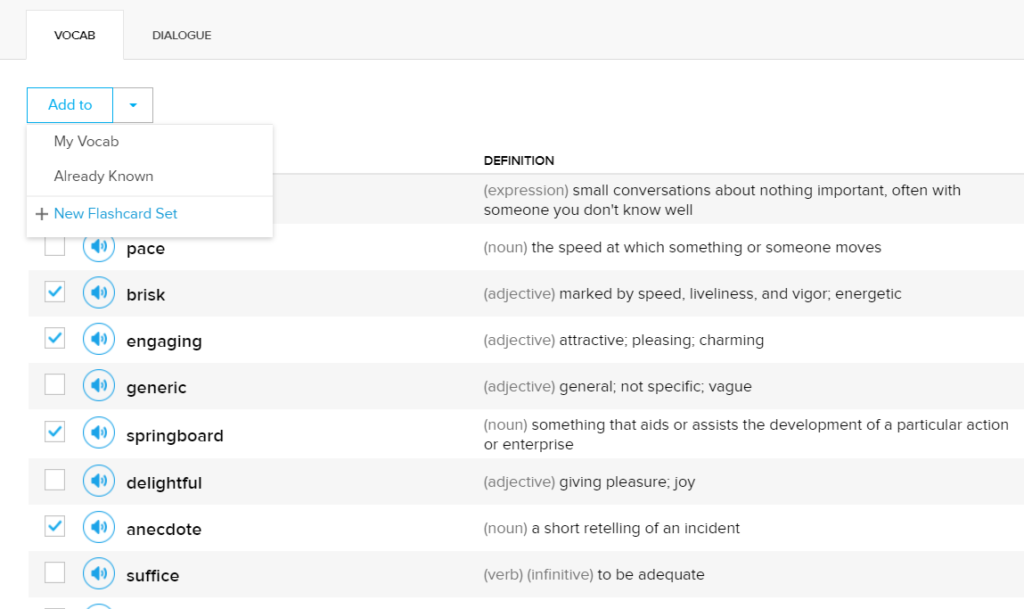
Divide your class up into teams of about three or four students apiece and have them watch the selected videos. Students will work together to come up with new usage examples or definitions to illustrate the vocabulary words from their chosen video. Each sentence’s context should make the target vocabulary’s meaning clear.
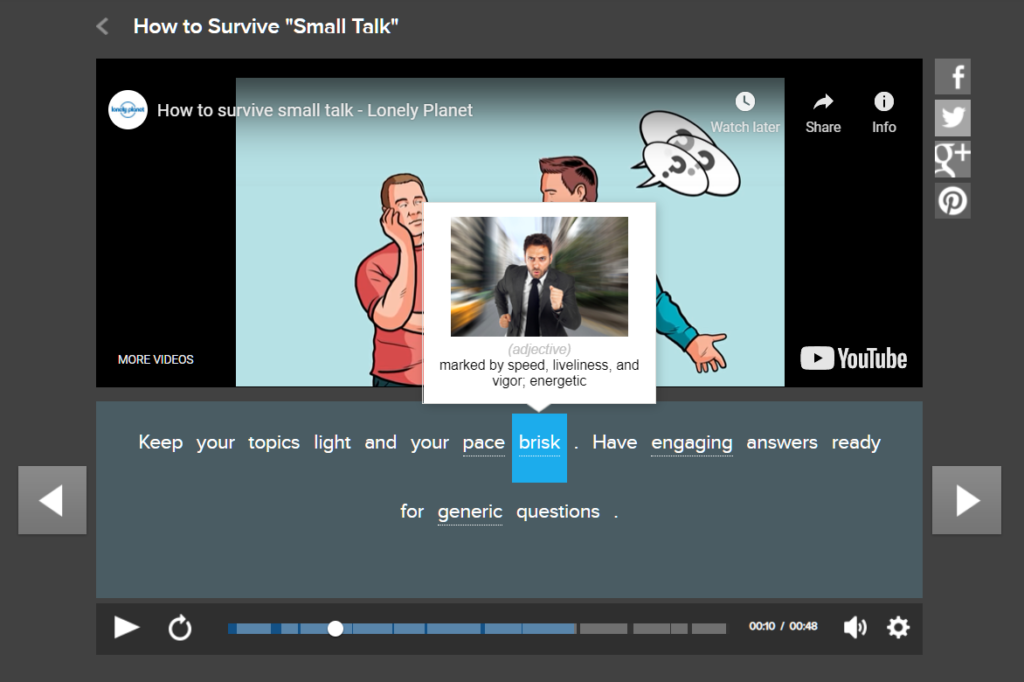
Teams will then take turns presenting words (and their own examples or definitions) to each other. Students on each team should take turns presenting their example sentences or definitions.
Students can also be given time for discussing the words they learn, having conversations about what the words mean and how to use them.
After watching the other teams’ presentations, students who didn’t watch the video can take the accompanying quiz on FluentU, to see how well they learned the target words from their fellow students.
You can request a free trial of FluentU for classrooms if you want to give this activity a try.
4. PechaKucha
If your students have laptops (or a computer lab they can use) and are reasonably familiar with presentation software (such as PowerPoint), then all that’s left to acquire for this activity is access to an LCD projector.
Students can have a lot of fun speaking while giving a presentation to the class. Using projected images helps to distract some attention away from the speaker and can be helpful for shy students.
The “PechaKucha” style of presentation* can give added interest with each student being allowed to show 20 slides only for 20 seconds each (the timing being controlled by the software so that the slides change automatically) or whatever time limit you choose. You could make it 10 slides for 15 seconds each, for example.
You could also add rules such as “no more than three words on each slide” (or “no words”) so that students must really talk and not just read the slides. They need to be given a good amount of time, either at home or in class, to prepare themselves and practice their timing. It can also be prepared and presented in pairs, with each partner speaking for half of the slides.
*PechaKucha originated in Tokyo (in 2003). The name means “chitchat.”
“Nowadays held in many cities around the world, PechaKucha Nights are informal and fun gatherings where creative people get together and share their ideas, works, thoughts, holiday snaps—just about anything, really.”—the PechaKucha 20×20 format.
5. Bingo
Many people think of this game as a listening activity, but it can very quickly become a speaking activity.
There are a number of ESL websites that will allow you to quickly create a set of Bingo cards containing up to 25 words, phrases or even whole sentences. They’ll allow you to make as many unique cards as you need to distribute a different card to each student in class. Each card can contain the same set of words arranged differently, or you can choose to have more or less than 25 items involved.
Rather than having students mark up their cards, you can give them markers (such as stones or sunflower seeds) to place on each square as they recognize it. This way the markers can be removed and the game can be repeated.
For the first round, the teacher should “call” the game. The first student to get five markers in a row in any direction shouts out “Bingo!” Then you should have this student read out every item in their winning row.
The winner is congratulated and then rewarded by becoming the next Caller. This is a great speaking opportunity. Everyone removes their markers and the game starts again. Every expression that’s called tends to be repeated quietly by everyone in the room, and by the end of a session, everyone can say all of the expressions on the card.
6. Two Texts
This challenging task is great for more capable students and it involves reading. Having texts in front of them can make adult students feel more supported.
Choose two short texts and print them out. Print enough of each text for half of the class. Create a list of simple questions for each text and print out the same quantity.
Divide the class into two groups and hand out the texts. Hang onto the question sheets for later. One group gets one text, the second group gets the other text. The texts can be about related topics (or not).
Group members then read their texts and are free to talk about them within their group, making sure they all understand everything. After five minutes or so, take the papers away.
Another day use two different texts and try this activity again. Students do remarkably better the second time!
7. Running Dictation
This useful activity requires students to use all four language skills—reading, writing, listening, and speaking—and if carefully planned and well-controlled can cause both great excitement and exceptional learning.
Pair students up. Choose who will run and who will write. (At a later stage they could swap tasks.)
Print out some short texts (related to what you’re studying) and stick them on a wall away from the desks. You should stick them somewhere out of sight from where the students sit, such as out in the corridor.
There could be several numbered texts, and the students could be asked to collect two or three each. The texts could include blanks which they need to fill later, or they could be asked to put them in order. There are many possibilities here!
The running students run (or power-walk) to their assigned texts, read, remember as much as they can and then return to dictate the text to the writing student. Then they run again. The first pair to finish writing the complete, correct texts wins.
Be careful that you do not:
8. Surveys and Interviews

Becoming competent at asking and answering questions is invaluable in language learning.
In the simplest form of classroom survey practice the teacher hands out ready-made questions—maybe 3 for each student—around a topic that is being studied.
For example, let’s say the topic is food. Each student could be given the same questions, or there could be several different sets of questions such as questions about favorite foods, fast foods, breakfasts, restaurants, ethnic foods, home-style cooking, etc.
Then each student partners with several others (however many the teacher requires), one-by-one and asks them the questions on the paper. In each interaction, the student asking the questions will note down the responses from their peers.
At the end of the session, students may be asked to stand up and summarize what they found out from their survey.
9. Taboo
In this game, one player has a card listing four words:
This game can be played between two teams. It can also be played between partners.
You can create your own sets of words based on what you’ve been studying, or you can find sets in your textbook and on the internet.
10. Discuss and Debate
More mature students can discuss and debate issues with a partner. They can even be told which side of the argument they should each try to promote. This could be a precursor to a full-blown classroom debate.
Working with a partner or small group first gives them an opportunity to develop and practice the necessary vocabulary to speak confidently in a larger forum.
11. I Like People

Adults do like to have fun, as long as they aren’t made to feel or look stupid. This is a brilliant game for helping them think quickly and speak more fluent English (rather than trying to translate from their native tongue).
1. Students sit on chairs in a circle, leaving a space in the circle for the teacher to stand.
2. First, they’re asked to listen to statements that the teacher makes and stand if it applies to them, such as: “I like people who are wearing black shoes,” “I like people who have long hair,” etc.
3. Next, the teacher asks standing students to change places with someone else who’s standing.
4. Now it becomes a game. The teacher makes a statement, students referred to must stand and quickly swap places. When the students move around, the teacher quickly sits in someone’s spot, forcing them to become the teacher.
5. The students quickly get into the swing of this game. Generally, they’ll quickly notice a “cheating” classmate who hasn’t stood up when they should have, and they’ll also eagerly encourage a shy student who finds himself standing in the gap with no ideas.
This game has no natural ending, so keep an eye on the mood of the students as they play. They may start to run out of ideas, making the game lag. Quickly stand and place yourself back into the teacher position and debrief (talk with them about how they felt about the game).
12. Sentence Auction
Create a list of sentences, some correct and some with errors.
Next to the list of sentences draw three columns: Bid, win, lose.
You can set a limit for how much (imaginary) money they have to spend, or just let them have as much as they want.
They need to discuss (in English) and decide whether any sentence is 100% reliable, in which case they can bid 100 dollars (or whatever unit you choose). If they’re totally sure that it’s incorrect (and they rarely are) they can put a “0” bid. If they’re unsure, they can bid 20, 30, 40, based on how likely it is to be correct. (Having a limit on their total bid will make them decide more carefully.)
This activity is most effective when the students work together as partners, reading and discussing the correctness of sentences. Students are encouraged to use English to discuss their strategies with their partner.
13. Alibi
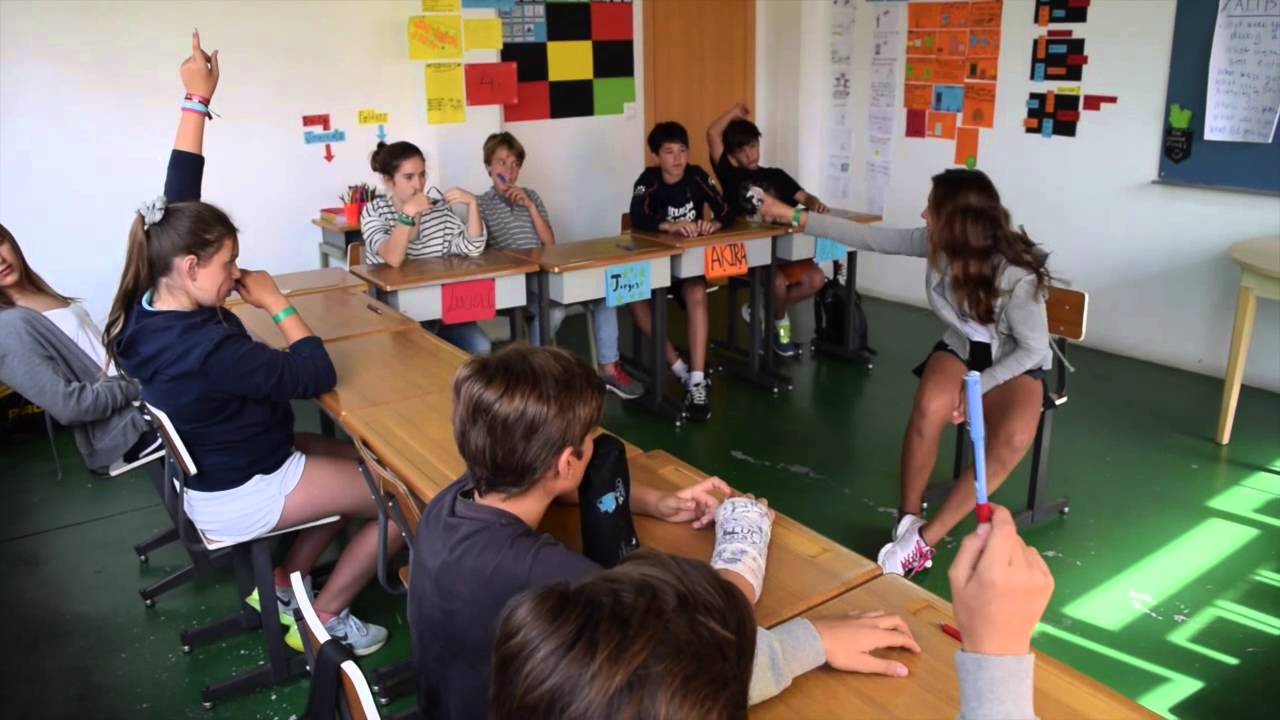
This well-known ESL game is great speaking practice for adults. The teacher tells the class that a particular crime has been committed. For fun, make it locally specific. For example:
“Last Friday night, sometime between ___ and ___, someone broke into the ____ Bank on ____ Street.”
Depending on the size of your class, pick several students as “Suspects.” The “Police” can work in groups of 2-4, and you need one Suspect for each police group. So, for example, in a class of 20 you could choose four Suspects and then have four groups of four Police for questioning.
Tell the class: “___, ___, ___ and ___ were seen near the scene of the crime, and the police would like to question them.”
The Suspects go outside or to another room to prepare their story. They need to decide all of the details about where they were during the time of the crime. For example: If they were at a restaurant, what did they eat? What did it cost? Who arrived first?
1. The Police spend some time preparing their questions.
2. The Suspects are called back in and go individually to each police group. They’re questioned for a few minutes, and then each one moves on to the next group.
3. The Police decide whether their answers match enough for them to have a reasonable Alibi. (Maybe up to five mistakes is reasonable.)
14. Typhoon
Explain to students that this game is named after the strong wind that blows everything away. It can be played with a class as small as three, but it also works with large classes. It’s great for reviewing speaking topics.
1. On the board draw a grid of boxes—a 6 x 6 grid works well and can take about 45 minutes to complete, but you may vary this once you’ve played a few times. You’ll just want to choose the size depending on how much time you have. Mark one axis with numbers, the other with letters. (Or use vocabulary words like adjectives on one and nouns on the other.)
2. On a piece of paper or in a notebook (out of sight) draw the same grid. On your grid, fill in scores in all of the boxes. Most of them should be numbers, and others will be letters. It doesn’t matter which numbers you choose, but it’s fun to have some small ones (1, 2, 3, etc.) and some very big ones (500, 1000, etc.). About one in four boxes should have the letter “T” for “Typhoon.”
3. Put the students into teams—at least three teams—and mark a place on the board to record each team’s score.
4. Ask questions or give speaking tasks to each team in turn. If they answer correctly, they then “choose a box” using the grid labels. The teacher checks the secret grid, and writes the score into the grid on the board. This score also goes into the team’s score box.
5. If the chosen box contains a number, the scores simply add up. But if the box contains a “T,” the team then chooses which other team’s score they want to “blow away” back to zero.
Notes on Typhoon:
15. Improv
All the world’s a stage, and this role-playing activity will prepare your students for their speaking parts.
1. Devise several scenarios with two or more characters and a premise. These could be something simple, like someone going to a bakery to buy a cake, taking a bus across town (and figuring out the schedule and transfers) or visiting a museum with an unusual exhibit.
2. Divide your students into teams, with one student per role.
3. Give your students the premise for the scenario they’re going to act out. For example, you might say, “You’re a father at a bakery, trying to buy a cake with your child’s favorite cartoon character. The baker has never heard of this character. You need to describe how the character looks so that the baker can create the cake you want.”
4. Each team member will have about five minutes to prepare their part of the skit. Ask each student to prepare separately. That way, the other students they are interacting with must react spontaneously to their questions and statements.
5. Each team will perform their vignette in front of the whole class. Limit the time to play out each scenario to five or ten minutes.
6. At the end of each round, the non-performing class members can ask questions of those performing their roles. The performing students should respond in character to the questions.
7. Play can continue for as long as you’d like. Students can get the opportunity to play different types of characters with different issues.
This activity will help students react to impromptu situations. It will encourage them to react and respond to the prompts and cues of their fellow players directly in English, rather than translating from their native language.
With this activity, you can guide students to exercise their topical vocabulary in real-life contexts. There are almost limitless possibilities for the scenarios you can create.
VARIATION:
To add writing (and reading) practice to this activity, consider having students create scenarios for each other’s role-playing.
16. News Brief

Ripped from today’s headlines is a speaking activity that also benefits listening comprehension and conversational fluidity.
Prepare a number of short news stories for different students to read. You can use stories directly from a source like:
Depending on the students’ fluency levels, you can give them the original story to read in context, or just prepare a “news brief” for them that’s level-appropriate.
1. Divide the class into teams of four or five students apiece. Each team will read one of the short news stories you’ve prepared.
2. One student on the team will pretend to be a news anchor reporting on the story. Another student can play a field reporter, who will interview the remaining students. The remaining students can play either passers-by (for a “person on the street,” opinion-poll story) or eyewitnesses to an incident (such as a blizzard, a car chase or a fire.)
3. Depending on how much time you’d like to fill with this activity, you can prepare multiple stories for each team. With each new story, students should exchange roles, so that they each have a chance to practice different kinds of speaking.
This activity combines reading, writing (preparing the “news copy” and “interview questions”) and speaking.
Students playing the “people on the street” or “eyewitnesses” will get the opportunity to answer spontaneously, especially if they’re not privy to the reporter’s questions ahead of time.
Students can also learn about using different registers of English in context.
The news anchor and reporter roles will require more formal, neutral English than the casual register of speech used by the interviewees.
The interviewees will also have more opportunities to practice speech that expresses emotion, since they’ll be communicating their opinion on a hot topic—or relaying their reaction to a dramatic event.
VARIATION:
To give your students more writing practice, or to stretch out this activity into multiple lessons, consider assigning your students a writing exercise in which they “manufacture” their own news stories.
These news stories can have a humorous bent. Especially for intermediate and advanced learners, this variation could afford them the opportunity to explore satire using English.
17. Untranslatable?
Language learners tend to be fascinated by foreign words without direct translations.
If you happen to have students in your classroom with different native languages, they’ve almost certainly stumbled across words without direct English translations. You can use your students’ expertise in their own languages to spark conversation in the classroom.
1. Divide the class into small groups of students—preferably, each group of students will represent two or more native languages.
If the students in a group all speak the same native language, no worries—there are still different dialects, regionalisms and variations in individual experiences to drive conversation about each “untranslatable” word and its possible English definition.
2. Ask each student to come up with a small handful of words that they cannot translate directly into English.
3. Students will then take turns presenting to their respective groups, pronouncing each featured word and explaining—to the best of their ability—what it means in English.
4. After the presentation of each word, the other students will have the opportunity to ask questions, to clarify the word’s meaning and usage.
5. Where possible, each student who hears a presentation can also be asked to think of a word in their own language that means the same as the presenter’s “untranslatable” word.
6. Depending on the skill level of your students, they can also participate in open discussion of the featured word and its meaning after the presentation.
This activity encourages students to conceptualize the meanings of words in both their native language and English.
It brings the real-world experiences of each student into the classroom and can help make students less self-conscious. After all, each student has likely struggled to find an English equivalent to a seemingly “untranslatable” word.
This activity can be an ice-breaker for your students, prompting unscripted conversation and even civilized debate.
It’s also a very flexible activity since you could limit it to one new word a day, or use it to fill an entire classroom session.
VARIATION:
In addition to individual words, ask students to come up with “untranslatable” slang or idiomatic expressions from their own languages.
This activity can also be done with the entire class, in a round-robin fashion. Especially if you are teaching a classroom of English students who share the same native language, you can become their student as they work together to teach you “untranslatable” words in their mutual language.
18. Skill Share

Everyone has hobbies that they enjoy or activities where they excel—whether it’s music, sports, playing video games, cooking or traveling. This activity combines giving presentations with having conversations about the presentation topic.
1. Ask each student to come up with a hobby or skill they can share with the rest of the class in a short presentation. You can give them several days to prepare ahead of time, making the preparation a homework assignment and saving time in the classroom.
2. If you have a larger class, you can divide your students up into teams to allow each student more time to present in a smaller group setting. You can also pair off your students, so one student will take turns presenting to one other student only.
3. Students will take turns making a short presentation—between 10 and 15 minutes, max—to their respective audience. In their presentation, they should explain their chosen hobby, skill or activity in clear terms that can be easily understood.
4. Within their presentations, students will also give simple, step-by-step instructions, to teach their audience members the target skill. For example:
5. After each presentation, the student’s audience must ask the presenter at least one relevant question pertaining to the skill or activity in question. The questions should clarify their understanding of the process.
6. When the presentations and “Q & A” sessions are done, students can pair off with other partners or form new teams.
VARIATION:
Audience members can use the information they’ve gleaned from a teammate’s presentation to explain the process they’ve learned to someone in the class who didn’t hear the original presentation.
The original presenter can act as a subject matter expert, prompting their former audience member (as needed) to explain the process more clearly.
After the Speaking Activity
If you run your speaking activity well, the students will often get really involved in it. They may well need to be “debriefed” afterward before they leave the classroom. This helps them get out residual excitement and reinforce the lessons they learned.
Always allow a few minutes of class time to talk about the activity, what they liked about it (or hated), how it made them feel and what they think they’ve learned.
Of course, all of this involves more worthwhile speaking time!
Download: This blog post is available as a convenient and portable PDF that you can take anywhere. Click here to get a copy. (Download)
Cambridge Speaking Part 1 – Chat Cards

Speaking Part 1 in Preliminary (PET), First (FCE) and Advanced (CAE) are all quite similar and can be practised with these fantastic chat cards!
Chat cards are great because you can use them in lots of different ways. They could be a warmer for a rainy day, they could be used as part of a game where the chat card serves as a type of forfeit, they can be used in examiner/candidate role plays or they can be extended into vocabulary building activities where the teacher pushes the students to improve their answers by using specific lexis.
For all the exams, Speaking Part 1 is a short ice breaker where the examiner will ask the candidates a few personal questions. The topics are more or less the same from one exam to the next, the noticeable difference is in the way the questions are written.
Possible topics for Speaking Part 1
How to prepare for Speaking Part 1
Students often take this part of the exam quite lightly. They might not worry about it because it seems like an easy and inconsequential part of the speaking exam. However, this is the first impression that they will give to the examiners so a misstep here could cost them a lot.
Help your students by preparing them for all the topics listed above and getting as much practice as possible. Don’t let them ramble on, but make sure they extend their answers too. As the levels increase from PET to FCE to CAE, the expectation that candidates will produce something substantial also increases.
The Materials
Use these Speaking Part 1 chat cards as a warmer, cooler or filler. As students get closer to their exam date, they should be able to give nice extended, but concise, answers to these questions. Extend the activity by having your students make their own!
EXAM PART: Speaking
EXAM SKILLS: Discussing familiar topics, discourse management
TIME: 20 minutes
PREPARATION: Print on to card and cut up a set for each group of 2-3 students
Activities to Improve Speaking Fluency

Why are your students studying English? Would you agree that most students want to improve their speaking skills, overcome the language barrier and speak fluently? Fluency, which is defined as “being able to speak and write quickly or easily in a given language», helps learners to feel confident while having a conversation in the target language. So each teacher must think of a range of techniques and strategies which will equip students with the possibility to improve their fluency. Each lesson must include an activity to practice speaking for fluency. In this article, we will present some great speaking fluency activities which turn to be quite fruitful for any lesson.
1. Priorities
A typical ranking activity looks like this:
Students imagine the situation when they are on a desert island and have to rank items in order of usefulness on it, e.g. water, food, a boat, clothes, rope, a tent, a compass, etc. The activity can be organized in the form of pyramid discussions, where students first rank the items on their own. Then they compare their lists with their partners, afterwards,, they discuss in groups and in a group choose top 5 items. As a sum-up activity, each group shares their ranking results and in an open class discussion the whole class votes for the 3 items.
A similar ranking activity is this one which will hone students critical thinking and fluency.
After studying some vocabulary or grammar you might prepare a list of phrases/sentences and ask students to rank them according to certain criteria, e.g. you have studied the topic “Jobs”, ask students to rank jobs: 1 — the best 10 — the worst.
2. Problem-solving
Find a problem-solving activity to suit the topic studied in the lesson. Students might follow instructions to find a place on a map, to draw a picture, or give a piece of advice to a person who has got a problem. While doing these activities students need to converse with each other, ask and answer questions, give instructions, etc. This fluency activity is great for students who like resolving difficult cases, finding the solution through cooperative work. Make sure students do in fact have to talk to each other to achieve the end result.
Here and here you can find problem-solving activities which can be used for any topic/lesson.
3. Question and Answer games
These type of activities range from very simple «Find someone who…» (plays the guitar, has been abroad, would like to travel in Europe, has broken something expensive, etc ) to quite elaborated student surveys. ‘Question and Answer’ games prompt conversation, therefore it would be nice to teach students some follow-up questions, such as ‘Really, how well can you play?’ or ‘When did you travel there?’.
4. Talk time
Students take turns to choose a topic card and talk for a minute (use an online stopwatch). When he/she finishes, the rest of the group ask as many follow-up questions as they can. When all the questions are over, the next member of the group picks up a speaking card.
These discussion questions are a great source for ‘Talk time’ activity.
5. What’s your secret
In this game, each student writes a secret down on a piece of paper, using grammar or vocabulary from the lesson. The papers are placed in a hat for each student to draw one. Students need to ask each other as many questions as possible to find the author of the secret. They need to ask questions within a limited time. After the set time, they rotate their pairs until they find whose secret it was.
All the activities can be adjusted to any topic or language material being studied as most of them are in the form of pair or group discussions. For each activity, we have provided some ready-made examples. However, teachers can make some changes or create their own worksheets to match the format of the activity.
Speaking cards for elementary students
This is an elementary ESL elementary speaking test. it includes general and relatable questions to make it easy for English language learners to express themselves.
Click on the image or the link to download the printable PDF file.
Subscribe to Eslflow
Subscribe to get full access to the latest and best resources from eslflow.com. There are no ads in the newsletter and you will receive entertaining, high quality, and up-to-date teaching resources regularly. And, if you subscribe, you will be supporting the eslflow website.
Elementary Speaking Test 2
This is another elementary ESL elementary speaking test. It includes more general and relatable questions to make it easy for English language learners to express themselves.
Related Resources:
Elementary Business English Speaking Test
This is an elementary Business English speaking test. It includes basic questions about work and companies.
Speaking cards for elementary students
Updated 27th July 2022
Create-a-conversation worksheets help students practice new vocabulary, build speaking skills and develop confidence using a second language. These PDF worksheets are great for classroom and online teaching. They are easy to submit, edit and correct online, especially in Google Classroom. In addition, example conversations with video and audio are provided with the worksheets. So these exercises are perfect for speaking and listening classes.
The audio file or the video on YouTube can be used as listening activities. In particular the YouTube video is great for online listening activities. The PDF create-a-conversation worksheet is an excellent way to assess students’ language abilities.
I teach really large classes. One of the biggest problems in large classes is assessing students’ speaking and language abilities. So, at the end of a class I hand out the worksheets. Of course, this can be done online more easily (no paper!). The students create their own conversation or dialogue and come and perform the dialogue for me. Or they can make a video and submit online. Or they can just submit the written conversation. I give each student a score. This exercise (write a conversation format ) can be done every 2 or 3 classes (or even every class!-it’s worked really well for me) and gradually you build up a really accurate picture of a students’ abilities.
1 Write a conversation: talking about houses & neighborhoods
This is a conversation writing exercise which could be the basis of a speaking activity or role play. Students get to talk about and describe their houses and neighborhoods.
Subscribe to Eslflow
Subscribe to get full access to the latest and best resources from eslflow.com. There are no ads in the newsletter and you will receive entertaining, high quality, and up-to-date teaching resources regularly. And, if you subscribe, you will be supporting the eslflow website.
2 Comparative adjectives conversation
This is a listening/speaking exercise to help students practice and understand the use of comparative adjectives.
3 Write a conversation exercise: plans for the weekend (with examples and audio)
“Plans for the weekend” is a future tense conversation exercise. It requires students to understand language for talking about the future. But the good thing about these exercises is that students can choose words and phrases they can manage.
Speaking Cue Cards
Speaking module in IELTS is a module about which the student does not have confidence. The main reason behind it is that many students afraid about which kind of question the examiner can ask from them. This is why they find it difficult to do this because they need to think about the answer for a while and in the middle of the answer they do not have time to think. Also, a big pause in your answer can be the reason for your score deduction. So, it’s better to think about your answer first that you can finish in 2 minutes. For this, you need to practice well. Here for your practice, we are going to provide you some expected IELTS speaking cue cards 2022. You can practice it and it can be expected that any of those cue cards will your examiner ask in your IELTS speaking. So practice these cue cards, we are not telling you to memorize your answer, but it will be beneficial for you if you have already practiced out the same thing before your real test. So, check it out and prepare well.
EXPECTED CUE CARDS FROM JANUARY TO APRIL 2022
EXPECTED CUE CARDS FOR OCTOBER To DECEMBER 2021
● Describe a line from a poem or song that you remember.
● Describe one of your country’s traditions.
● Describe someone you believe is very extrovert
● Describe a long lost friend with whom you recently reconnected.
● Describe about a family you enjoy and are pleased to know
● Describe about an instance when you witnessed youngsters misbehaving in public
● Describe a topic about which you were uninterested in a conversation
● Describe about an expensive hobby or pastime that you love pursuing on occasion
● Describe a scientific field that you are interested in
● Describe about a reward you have won
● Describe the first time you spoke in a foreign language
● Describe about a recent good decision you made
● Describe about a time when you were at an event and didn’t enjoy the music that
● Describe a long term goal that you’ve had
● Describe a time when you changed your mind about something
● Describe a favourite snapshot of yourself (or you have taken)
● Talk about a person who volunteers in his or her spare time to benefit others.
● Describe a prize you’d like to win.
● Describe a book that was valuable to you or an intriguing book that you read.
● Give an example of a moment when you received excellent news.
● Describe a comedy film or a comedy movie that made you chuckle.
● talk about a time when you squandered your time.
● Describe something or someone who created a lot of noise.
● Describe a future water sport that you’d like to try.
● Describe an instance when you were taken aback when you ran into a buddy.
● Describe a senior citizen you know and admire
● Describe a risk you’ve taken that has resulted in a positive outcome.
● Recollect a blunder you’ve made.
● Describe a computer or phone programme or app.
● Describe a long vehicle trip you recently took
● Describe about a time when you visited a location that was polluted
● Describe a buddy or someone you know who is a great leader
● Describe a memorable dinner you had
● Describe an individual who has apologised to you.
● Describe an intriguing animal
● Describe a health article you read in a magazine or on the internet
● Describe an advertisement that you remember
● Describe a special day that made you happy
● Describe a product made in the region you come from
● Describe a person to whom you admire
● Describe an application that is made on artificial intelligence
● Describe an interesting conversation with someone
● Talk about an unforgettable bike trip you had
● Describe a time when you were encountered with a wild animal
● Talk about a meal you enjoyed
● Talk about a pandemic you witnessed
● Talk about a situation when you had to stay indoor
● Describe a dream you want to fulfill
● Describe a polite person you know
● Describe an incident which changed your opinion
● Describe an old person you know
● Describe an interesting ritual of your country
● Describe a time when you had to wait long in a queue
● Describe a time when you made a promise with someone
● Describe a bag you want to own
● Describe an unforgettable train journey
● Describe your favorite weather
● Describe a time when you gave a good advice to someone
● Describe a famous person
● Describe a movie which inspired you most
● Describe a crowded place you have been
EXPECTED CUE CARDS FOR JUNE To SEPTEMBER 2021
1. Describe a time you were pleased with your purchase.
2. Describe a line that you remember from a poem or song.
3. Describe a thing that is most important to your family.
4. Describe a part of a city or town you enjoy spending time in.
5. Describe a time when it was important to tell your friend the truth.
6. Describe the time when you first talked in a foreign language.
7. Describe a time you got lost in a place you didn’t know about.
8. Describe a new public place/building you would like to visit.
9. Describe something you did that might have had a negative result but ended up positive.
10. Describe someone or something that made a lot of noise.
11. Describe a gift you have received that was important to you.
12. Describe a newspaper or a magazine that you like to read.
13. Describe an interesting journey you have been on.
14. Describe a large company that you are interested in.
15. Describe an important text message you received.
16. Describe an important text message you received.
17. Describe a practical skill you learned recently.
18. Describe a website that you often use.
19. Describe your favorite politician.
20. Describe your favorite gadget.
21. Describe an important decision/choice that you made in your life.
22. Describe an exciting experience in your life.
23. Describe a short- term job you’d like to do in a foreign country
24. Describe a prize that you want to win
25. Describe a friend who has played an important part in your life.
26. Describe a piece of furniture that you own.
27. Describe your experience with an illness or injury.
28. Describe a time you were late for something.
29. Describe the most useful household appliance that you have.
30. Describe what you would do if you received a very large amount of money.
31. Talk about a painting you would like to have in your home.
32. Describe a small business you want to start.
33. Describe an exciting experience you’ve had.
34. Describe a family member that you get on well with.
35. Describe a famous food from your hometown or country
36. Describe an interesting piece of news that you have recently read about or heard about.
37. Describe the best party you have been to.
38. Describe people that you know and believe to be very good parents.
39. Talk about one thing you are going to do next weekend.
40. Describe a time when you helped someone.
41. Describe a traffic rule or law you know about.
42. Describe a website that you often use.
43. Talk about a subject you would like to study in the future.
44. Describe an area of science that you are interested in.
45. Describe a shopping street in your hometown.
46. Talk about a book you have never read but would like to read.
47. Describe a useful electronic device you would like to own.
48. Describe a person that you wanted to be like when you were a child
49. Describe an exercise you know.
50. Describe your favorite author
51. Describe your favorite writer
52. Describe a song or poem about the history of your country
53. Describe a time when you use read a map or used a map.
54. Describe a time when you visited a farm
55. Describe a time when you had some medicine
EXPECTED CUE CARDS FOR FEBRUARY To MAY 2021
1. Describe an aquatic animal
2. Describe a time when you needed to use your imagination
3. Describe a special hotel you stayed in
4. Describe a short journey you often take but did not like
5. Describe an exhibition you often visited
6. Describe a person who wears unusual cloth
7. Describe an interesting conversation you had with someone
8. Describe a place you like to visit but do not like to stay there
9. Describe a time when you were in trouble
10. Describe a time you helped someone
11. Describe a part of your city you enjoy spending time
12. Describe a thing you bought and you are happy about it
13. Talk about a toy you liked in your childhood
14. Describe a person who is very extrovert
15. Describe a tradition of your country
16. Describe a family you like and happy to know
17. Describe a conversation in which you were not interested
18. Describe an expensive activity you enjoyed occasionally
19. Describe a time when you changed your opinion
20. Describe an ambition you have from a long time
21. Describe an intelligent person you know
22. Describe a person who helps others in his/her free time
23. Describe an occasion when you wasted your time
24. Describe a long car journey
25. Describe your favorite dress
26. Describe a mistake you made
27. Describe a large company you are interested in
28. Describe a place you visited is affected by pollution
29. Describe a risk you have taken which had a positive result
30. Describe an exciting book you read
31. Describe a time when you received a good news
32. Describe a good decision you made recently
33. Describe a time when you were cheated
34. Describe an unusual vacation you had
35. Describe a time when a children made you laugh
36. Describe a practical skill you learned
37. Describe a time when you solved a problem through internet
38. Describe an advertisement that you remember
39. Describe a special day that made you happy
40. Describe a product made in the region you come from
41. Describe a person to whom you admired
42. Describe an application that is made on artificial intelligence
43. Describe an interesting conversation with someone
44. Talk about an unforgettable bike trip you had
45. Describe a time when you were encountered with a wild animal
46. Talk about a meal you enjoyed
47. Talk about a pandemic you witnessed
48. Talk about a situation when you had to stay indoor
49. Describe a dream you want to fulfill
50. Describe a polite person you know
51. Describe an incidence which changed your opinion
52. Describe an old person you know
53. Describe an interesting ritual of your country
54. Describe a time when you had to wait long in a queue
55. Describe a time when you made a promise with someone
56. Describe a bag you want to own
57. Describe an unforgettable train journey
58. Describe your favorite weather
59. Describe a time when you gave a good advice to someone
60. Describe a famous person
61. Describe a movie which inspired you most
62. Describe a crowded place you have been
EXPECTED CUE CARDS FOR SEPTEMBER To DECEMBER 2020
1. Describe a line that you remember from a poem or song
– What it is
– What poem is it from
– How you know about it
– How you feel about it
– What it is
– Who takes part in it
– What activities there are
– And explain how you feel about it
– Who this person is
– How you know this person
– Why do you think this person is very open
– And explain how you feel about this person.
– Who he or she is
– What he or she is like
– How you got in contact
– And explain how you felt about it
– Who they are
– Where they live
– How you know them
– And explain why you like them.
– Who this person is
– How you know this person
– Why you think this person is energetic
– And explain how you feel about this person
– Where it was
– What the children were doing
– How others reacted to it
– And explain how you felt about it
– Who you talked with
– When you had the conversation
– What the topic was
– And explain why you were not interested
– What it is
– Who do you do it with
– Why is it expensive
– And explain how you feel about it
– What it is
– How you learned about it
– Why are you interested in it
– What it was
– When you received it
– What did you do for it
– And explain how you felt about it
– Where were you
– Who you were with
– What did you talk about
– And explain how you felt about it
– What it was
– When you made it
– What the result was
– And explain how you felt about it
– What the event was
– Where you were
– What the music was like
– And explain why you didn’t like the music.
– What it is
– What you did for it
– When can you achieve it
– And explain why you have this ambition
– When it was
– What the original opinion was
– Why you changed it
– And explain how you felt about it.
– Who is the person?
– What does he do?
– Why do you think he is smart?
– How do you feel about him?
– When it was taken?
– Where it was taken?
– Who took it? or How you took it?
– Explain how you felt about the photo
– Who this person is?
– How often this person helps others?
– How this person helps others?
– Why this person helps others?
– How you feel about this person?
– What prize it is?
– How do you know about it?
– What will you do to win it?
– Why do you want to win?
– When you read it
– What type of book is it
– What is it about
– Why did you find it useful
– What was it about
– Who told you the news
– When you knew it
– How you felt about it
– Why do you think it was good
– What is the name of this movie?
– when did you watch it?
– Who you watched it with
– why it made you laugh?
– Where you were
– When it was
– What you did
– And explain why you think it was a waste of time
– Who or what made the noise?
– What was the noise like?
– What did you do when you heard the noise?
– And how you feel about it?
– What is it
– Where you will do it
– Whether it is easy or difficult
– Why would you like to try it
– Where it was
– Who you met?
– When was it?
– Why were you surprised?
– Who he or she is
– How you know this person
– What he or she is like
– And explain why you respect him or her
– What it was?
– Why you took it?
– What the result was?
– How you felt about it?
– What it is?
– When you made it?
– How you made it?
– How you felt about it?
– What it was
– Where it was
– Why you volunteered
– How you felt about it
– What the app/program is
– When, where you found it
– How you use it
– and how you feel about it
– Where you went
– What you did at that place
– Who you went there with
– Explain why you went on that journey by car
– Where is it
– When you visited this place
– What kind of pollution you saw there
– And explain how this place was affected
– Who this person is
– How you know this person
– What he does
– How this person behaves
– Why do you think he is a good leader
– When it was
– What you ate
– Who you were with
– And explain why you enjoyed it
– Which company is it
– What it is like (what kind of business it does)
– How you know about it
– How you feel about it
– Why you have interest in this company
– Who he or she is
– What he or she does for a living
– What he or she is like
– And explain why you admire him or her
– When it was
– Who asked you for help
– How you helped
– How you felt about it
– When did it happen
– Who was with you
– What did you do
– How you felt about it
– Which country it is or what culture
– Where it is
– How you know about it
– Why you want to know more about it
– Where it is
– What it is like
– How often you go there
– and how you feel about this place
– What it was
– With whom you did it
– When you did it
– How you felt about it
– When and where you watched it?
– What was the movie about?
– Why you chose to watch it?
– How you felt about it? and explain why it made you think a lot?
– Which building/place is it
– Where is it
– When would you like to visit it
– With whom would you like to visit
– Why do you want to visit it
– What is it like
– Who gave it to you or where you bought it
– How often you wear it
– Explain how you feel about it or why you enjoy wearing it?
Or Describe an ocassion when you wore your best clothes
– Who is he/she?
– What do you usually do together?
– What kind of person he/she is?
– Why you spend most of the time with him/her?
– Why was it important
– What caused the delay
– What happened at the end
– Describe what caused the delay
– What it was?
– Who were the members of the team?
– What role did you play in this team?
– And explain how you achieved your goal?
Or describe a time when you set a goal and tried your best to achieve it
– What it was
– When did you set it
– How did you achieve it
– Explain how it influenced your life
– Who this person is?
– When this happened?
– What this person said for apologizing?
– Explain how you felt about the apology?
– What it looks like
– When you saw it
– Where you saw it
– Explain why it is interesting
– What the article was
– When and where you read it
– What you learned from the article
– Explain why you think it is a good or bad article
– Who he or she is?
– What did this person show up on TV for?
– How do you know what this person?
– Why you want to meet him?
– When this happened
– Where you were
– What kind of weather it was
– Explain why you couldn’t finish the thing
– What you did at the end
– Where was it
– When was it
– Why you were not allowed
– What did you want to do with your cell phone
– who shared the message with you?
– what the news was about?
– how was it written?
– and explain why the news was important?
– What is it?
– When you bought it?
– What does it do?
– Explain how difficult was it to be used?
– What is the business is?
– Where it is?
– Who runs the business/how do you know about this business?
– And explain why you think it is successful?
– Who the person is?
– What he/she is like?
– What he/she taught you?
– How you felt about him/her?
– What was the challenge?
– When and where did you complete/met it?
– Why was it difficult?
– How you felt about it?
– Where is it
– When you went there
– With whom you went there
– And explain how you felt about being there?
– What is the job
– Why you don’t want to do it?
– How you feel about the job?
– When you wear it?
– Who bought it for you?
– What does it look like?
– How you feel about it?
– What the situation was?
– Who the person was?
– How you helped them?
– Explain how your felt after helping them?
– What is it
– With whom did you play
– How often you played it
– How did you feel about it
– What it was?
– When you watched it?
– Who you were with?
– Why you watched it and how you felt about it?
– What it is?
– How it can be done?
– What problem it will solve?
– How you feel about it
– Where you were?
– When it was?
– Who you were with?
– explain why were you excited?
– When you travelled?
– Where you travelled?
– What was the purpose of your travel?
– How you felt about it?
– What this skill was
– When you learned it
– How you learned it
– And explain why you think it was important
– How you felt about it?
– What it is
– How would you learn it
– Where you can learn it
– and explain why you want to learn it.
– Where this place would be
– What it would look like
– When you would like to live there
– Explain why it is ideal to you
Describe an ideal house
● Where this place is
● What it is like
● When you want to live there
● Explain why it is ideal to you?
EXPECTED CUE CARDS FOR APRIL To AUGUST 2020
EXPECTED CUE CARDS FOR JANUARY To APRIL 2020
EXPECTED CUE CARDS FOR SEPTEMBER To DECEMBER 2019
EXPECTED CUE CARDS FOR MAY To AUGUST 2019
EXPECTED CUE CARDS FOR MARCH & APRIL 2019
EXPECTED CUE CARDS FOR FEBRUARY 2019
EXPECTED CUE CARDS FOR DECEMBER 2018
EXPECTED CUE CARDS FOR OCTOBER 2018
EXPECTED CUE CARDS FOR SEPTEMBER 2018
These are some expected IELTS speaking cue cards 2020. Your examiner can ask these questions in a different way so also be careful about it. We do not assure you that you will definitely get it into your IELTS but hopefully it can be the part of your IELTS speaking module and if its not, then still no worry, because after practicing it you will be more confident about your IELTS speaking.
Example Widget
This is an example widget to show how the Right Sidebar looks by default. You can add custom widgets from the widgets screen in the admin. If custom widgets are added then this will be replaced by those widgets.

Speaking Cards
Содержимое публикации
What’s your favourite colour?
What makes you happy?
What’s your mum’s name?
Do you prefer writing with a pen or a pencil?
What time do you go to bed?
What kind of pizza do you like?
Which animal do you like?
Who is your favourite singer?
What’s your favourite fruit?
What do you like doing in summer?
What’s your favourite vegetable?
What is your favourite place to eat?
Do you play any sports?
Do you like playing video games?
How tall are you?
What is your favourite subject to study at school?
What is your favourite song?
Can you spell your name backwards?
How many people are in your family?
What do you usually have for lunch?
What are you wearing today?
Who is your best friend?
Name your 3 favourite animals.
What time do you wake up in the morning?
Have you got any brothers or sisters?
What makes you angry?
What is your favourite season?
Who is your favourite teacher?
What is your favourite month?
What is your favourite game?
Do you like reading books?
Name 3 things in this classroom.
What do you like doing at the weekends?
Name 3 things you are good at.
Describe your bedroom.
Do you have a bike? What colour is it?
What is your lucky number?
What is your favourite English activity?
Do you like doing homework?
Do you prefer chocolate or vanilla ice-cream?
What was the last song you heard?
What did you do last Sunday?
What do you think your teacher did last weekend?
When was the last time you saw your best friend?
What do you think he/she did yesterday?
When was the last time you went to a birthday party?
Did you read any books last month?
What did you wear yesterday?
When was the last time you went to the cinema?
Name 3 activities you enjoyed doing last summer.
How did you celebrate your last birthday?
What did you eat for breakfast today?
Tell us about a film you saw recently.
What was your favourite fruit when you were younger?
How old were you when you started speaking English?
Did you see your friends yesterday?
What is the best thing you ate last week?
When was the last time you got a haircut?
Who was the first person you said “Hi” this morning?
When was the last time you cleaned your room?
What is 1 thing you hated doing last summer?
How old were you when you started school?
When was the last time you went to a park?
When was the last time you ate a hamburger?
What kind of vegetables you ate last week?
When was the last time you wrote a letter?

Международный конкурс изобразительного искусства, декоративно-прикладного творчества и фотографии ко Всемирному дню моря «МОРСКИЕ ПРОСТОРЫ »

Интеллектуальная викторина «КАКИХ ПРОФЕССИЙ ТОЛЬКО НЕТ! »

Всероссийская олимпиада для дошкольников к Дню космонавтики «ПУТЬ К ЗВЕЗДАМ »
Если вам понравилась статья, лучший способ сказать cпасибо — это поделиться ссылкой со своими друзьями в социальных сетях 🙂
FCE SPEAKING PART 2 SAMPLE CARDS/КАРТОЧКИ #1

Здесь можно найти карточки для второй части устного экзамена FCE:
A one-minute «long turn» for each candidate plus 20 second responce from the second candidate.
The examiner gives you two photographs and asks you to talk about them for one minute. The examiner then asks your partner a question about your photographs and your partner responds briefly.
Then the examiner gives your partner two different photographs. Your partner talks about these photographs for one minute. This time the examiner asks you a question about your partner’s photographs and you reaspond briefly.

Partner’s question: Where would you prefer to live?

Partner’s question: What do you enjoy doing in your free time?

Partner’s question: How do you prefer to relax?

Partner’s question: Where would you prefer to go for holidays?

Partner’s question: Do you think it’s difficult to ask for help?

Partner’s question: Do you enjoy shopping?

Partner’s question: Would you like to learn to cook?

Partner’s question: Would you like to try a risky hobby?
You might also like:
FCE SPEAKING Part 1 Sample questions
FCE SPEAKING Part 3 Sample cards/Карточки #1
You can get more information from the official website
ESL Conversation Cards
This page has all of the ESL conversation cards from the Excellent ESL 4U site collected together on one page. For each topic there are two conversation cards for you to download.
When you are learning to speak and having a conversation in English it is often difficult to think of something to talk about. You try hard to think of something to say, but are not sure what to talk about. This page will help you with that as you can use the conversation cards from this page.
Newest ESL Conversation Card
I am adding new material to this site all the time, and the newest set of conversation topics for you to use as a speaking activity is below. Then the rest of the conversation cards for you to download are at the end of the page.
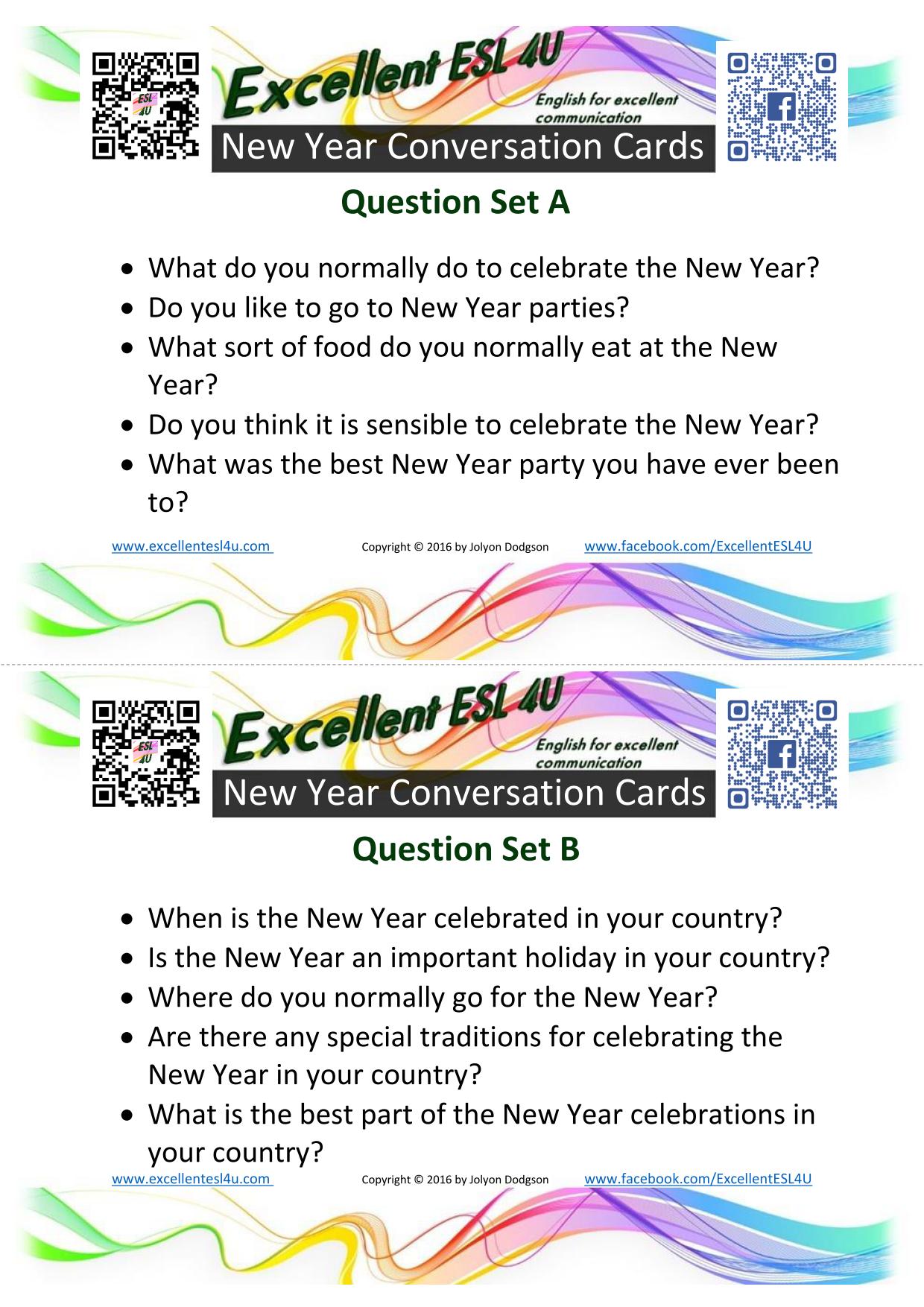
Each set of conversation cards has two lots of five questions each. These all come from the ESL conversation part of this site, so if you want more conversation tasks or example conversations to look at you should also look at that part of my site.
In addition to these conversation cards that have already been published on my site, I also have an вЂ80 ESL Conversation Cards’ ebook (coming soon) that you can download. This book has four sets of questions each for twenty different topics. Half of these are the conversation questions that are part of this page while the other half are new and will only be published as part of the book.
How to use these Conversation Cards
To use these cards you really need to have a partner or friend to work with. You decide which topic you want to do and then print the speaking activity questions. The downloaded worksheet has the first question set at the top of the page and the second set at the bottom of the page. You should cut the page in half and one of you has the top half with вЂquestion set A’ and the other one has the bottom half with вЂquestion set B.’
Then one of you asks the first question from your conversation card and the other answers the question by saying as much as they can, so they can practice speaking as much as possible. Then when the person has finished answering, they then ask their first question, and the first person answers it.
Carry on like this, alternating asking questions, until you have asked all of the questions. At this time you could either stop or swap question sets and start again.
Remember to say as much as you can and also ask extra questions. If you can think of a question you want answering, just ask it. You are trying to practice speaking, so the more to talk the better.
If you liked these question and they were helpful, remember I also have my вЂ80 ESL Conversation Cards’ ebook (coming soon) that has extra questions sets for you to use.
ESL speaking activities and games for adults
Table of contents
Whether you teach English people in a classroom or on Zoom, you should have some engaging and entertaining exercises up your sleeve. Playing games is a necessary part of language lessons to connect previous and current topics, and make the learning process smoother. Language acquisition takes concentration, which might stress some people. We need something to encourage them to use English provoking particular knowledge at the same time.
It isn’t so easy to choose appropriate activities for teenagers or adult learners. There are fat chances that they will willingly start singing or playing «Crocodile» as children. Use fillers between important exercises and help to relax for a short time. Firstly, understand the reason of a speaking activity, what skill is supposed to be trained. Even speaking activities may base on certain directions such as reading, listening, vocabulary, and grammar. We prepared some light-hearted ideas, which are sorted in terms of training skills. You may use them teaching online and personally.
Video
Vocabulary review games for adult ESL students
One of the most difficult problems that English learners face is memorizing vocabulary. Not only is it hard to remember new collocations but also to use them freely in speaking. It takes at least 15 times to come across a new word in order to remember it. That is why English as a Second Language.
«>ESL tutors come up with different situations, which provoke particular vocabulary. The more ways we suggest using learned words, the sooner students start producing them independently.
Most games don’t require long preparation, so you can use them at any time. Moreover, all of them are flexible, just adapt rules depending on a level and a topic. Such activities are funny enough to make students laugh and compete. They are quite popular, so it is likely that learners have already played something like that in their mother tongue.

Alias
There is a quite popular board game among teenagers and adults. You can either buy cards or find an online version. The second option is flexible because if you have an online classroom, you can do such cards on your own. For example, if you have already taught food or colors, you should make such cards with appropriate words from the previous topic.
The rules are pretty simple and fit even beginners to review new words from the last session. A student takes a card and explains the word or phrase, that he sees on it. The thing is to explain words on cards with synonyms or antonyms. Pre-Intermediate students can even describe situations, which relate to phrases. That student, who guessed the word is the next speaker.
Charades
This vocabulary game works in a different way in comparison with Alias. Give a card with a word to a student. While he is showing the word from the card, his classmates are trying to guess what he is displaying. They should pronounce all options that relate to the topic. The point is learners have to remember all words from the last lesson. In this case, they don’t need to look for synonyms or antonyms to explain the word, they have to find certain. It fits lower-level students to have fun and recall such vocabulary as animals, jobs, routine, and hobbies.
Taboo
There is a fun ESL practice, which helps to master paraphrasing. You can choose a topic such as relationship. Students take turns one by one, having cards with a word they need to explain and a taboo word, which they mustn’t pronounce during their explanation. For example, the word is «love» but you can not say «people, person» because they are taboo. It might seem difficult at the first sight, but everyone will love it. Such an exercise provokes using collocations, phrasal verbs, and even idioms. It fits perfectly everyone from Intermediate to Advanced.
Password
There is a fun activity for beginners. It reminds another game, which is called Association. Pair your students up or divide them into small groups. One representative from each team thinks of a password for his secret file and gives others a hint to guess what it is. The mission of others is to name all words, which pop in their minds in order to win. The team, which guessed most of words, is the winner. The amount of words depends on how much time you set to play.
Scattergories
It seems to look like a vocabulary mind-map. Depending on the topic that students have learned recently, you determine how many categories will be. For instance, the last lesson was devoted to animals, there are two branches of it, wild and farm animals. Divide people into two teams and assign them to write down as many words as they can to fill in each category. The rule is to play against the clock. Despite players are adults, they will have fun.
Grammar oriented ESL activities for adults

Drilling exercises are important in order to excel. However, it may lead to a problem of using it appropriately in a speech. That is why a lot of Intermediate learners get stuck. They know conditionals and even Past Perfect, but when it comes to speaking, they do everything in order to avoid these tenses. Teachers’ mission, in this case, is to show how many situations require using such grammar and help to use it changing the context. And a game helps to spark a feeling of competition. It works well, especially in groups, when people are in the process of gaining points. But if you teach individually, it looks good as well, because students have a chance to share some fun facts about their life and use their imagination.
Usually, such activities don’t imply the teacher’s comments and corrections. Just observe and take some notes, what was the most difficult in a task. After it, you may draw students’ attention to their mistakes. But don’t say names of people, who made them. When it comes to making mistakes and getting feedback, people tend to take advice to heart. We don’t want to upset them. Just highlight common mistakes and ask to explain them to each other.
Alibi
This activity fits perfectly a lot of topics such as crimes, Past Simple, and Past Continuous. You need to prepare a situation to describe what happened. There is a role-play where some students are police while others are suspects. That is a good way to train coherence and understanding. One group should brainstorm to come up with appropriate and grammatically right questions, which another group will answer. If you have no time to prepare, there are a lot of templates of this game on the Internet. It suits all levels.
Never Have I ever
There is no way you haven’t watched The Ellen show. However, we should change rules to train grammar point. Instead of providing an example of a life situation, you should assign your students to do that using Present Perfect tense. Each student has 3 attempts to keep playing. For example, the first student says what he has never done, and those people, who have done it, lose one attempt. People get out of the game when they have no attempts. Pre-Intermediate and Intermediate learners will love it. It is a kind of ice-breaker, which helps to get to know each other.
Interview Pop
Another way to check knowledge is having an interview. Ask adults to choose a person they admire. They should write down ten questions about what they would like to know about him. The advantage of this activity is flexibility. You can simplify it for Elementary students, giving hints to use question words such as what, where, why, when. Write down 3 or 4 recent grammar rules, which they learned. It means, they must use those structures to make questions. Then pair students up, and each student answers the questions he wrote, assuming the person, he was planning to interview.
Jeopardy
That is free practice, where a teacher sets the rules. You can choose 3-5 topics or tenses, which you’ve recently taught. Here you let participants choose any topic to start with. Each question or task that relates to the covered topic is worth some points. And a player answers right to get them. A person with the most amount of points will win. The more difficult question is, the more points a participant gets.
Guess who or what I am
Players should choose a favorite actor, singer, or movie character, which all classmates are likely to know. They have to question each other, one by one, in order to guess who or what the person is. They ask different yes or no questions, depending on how many grammar structures they know. The winner is the learner, who understood an imaginative personality for the least amount of questions.
Would you rather…
That is a brilliant idea on how to practice the second conditional. Provide some situations and options like, «Would you rather be a happy homeless or a miserable millionaire», or «Would you rather have a cat or a dog?» Make up any examples, depending on vocabulary knowledge of your class. They paraphrase examples using the second conditional explaining their choice. For instance, «If I were a wealthy person, I wouldn’t be miserable». Let adults speak up helping them if they need.
Conversation games for adult ESL learners

These activities are supposed to encourage students to speak paying attention to fluency rather than grammar. We know how learning rules may become boring. It takes time and effort to use tenses right in speaking. Such speech is prepared. That is why we need to provide some typical life situations, where people can demonstrate their ability to talk spontaneously and be proud of themselves. It must relate to their interests and language goals. For example, an activity to solve a conflict situation with a client fits Business English students rather than General ones.
There are different ways, where you can get relevant ideas for materials. Use social media platforms such as Instagram, Facebook, or TikTok. Also, YouTube is a wonderful tool to find original TV or game shows. When it comes to responsibilities, teachers shouldn’t interrupt a speaker in order to correct or paraphrase. The significant thing here is fluency, so, listen to a speech and take some notes, where they stumble over. Usually, it works with higher-level students, because they have enough knowledge to keep the speech going. However, it isn’t outlawed to try to conduct such things with even Elementary. It may help them to see the real meaning of the language in life.
Box of lies
That is a decent way to check whether a class speaks English without preparation. A class has a minute to describe a picture, which you prepared beforehand. However, they have an option, they can either depict an illustration precisely or lie and tell about everything they want. Whatever a player has chosen, other participants listen to him for one minute and then decide, whether he told the truth or lied. The more imaginary pictures are, the funnier the game is.
Just a minute
It is similar to the previous activity and quite popular for exam preparation courses. Teachers often use it with Advanced learners to quickly review and check two things, language fluency, and vocabulary knowledge. Imagine, you have taught health and medicine last week. Prepare some questions to check how many words a person remembers and how quickly he answers. While a student is talking for a minute, the teacher and classmates mustn’t interrupt him. You can listen to all participants, and provide feedback at the end of the activity to mention common mistakes.
Video Talk
That is a way how you can combine listening and speaking practice. Choose a relevant video on YouTube and prepare preview and discussion questions, which will make a class think of something and skip to content. Then talk about the topic using post-watching questions to check listening comprehension. Highlight keywords to help learners to come up with answers. Usually, it works with higher-level students to expand vocabulary.
Debating club
When you teach linking words, you can show your learners how it works in practice. Choose some controversial topics about money, health, environment, or love, and prepare some opposite statements for each category. For example, «money makes people happy» or «zoos should be banned». Then pair participants up and give your students cards with the assignment. One player agrees with the statement, another disagrees. Both should provide examples and explain their opinion using linking words to sound polite.
Dictation
A good way to combine many skills at once, listening, reading, and writing. Adapt it depending on the level. Choose an appropriate text and pair students up. Assign one team member to read and memorize the text to retell it to his partner. The partner is supposed to write down what he has heard. This is a kind of pronunciation game. The pair, which restore the story precisely is the winner.
Conclusion
There are great ESL ways of teaching. That is important to understand that even older students don’t mind letting their hair down. Teaching requires not only professional knowledge about grammar, reading, and writing. It implies understanding of learners’ feelings and possible mistakes. A knack for languages is a daunting and energy-consuming thing. That is our duty to make it as enjoyable as possible. Find spark and motivation in learners’ eyes to take into account and use as a game. Let your young adults show their speaking skills in a spontaneous way. While they are thinking that it is just a way to have fun, you have a chance to observe and take notes regarding their struggle and mistakes.
If you don’t feel confident to adapt a course program or conduct appropriate things when it is necessary, you should improve your teaching skills. Thanks to an online Teaching English as a Foreign Language.
We hope you found this article useful and valuable. Remember, practice makes perfect. Use these games in your lessons as soon as possible to check students’ positive reactions. Feel free to leave comments below if you have some questions about teaching.
KET Speaking Part 2 Sample cards/Карточки #1 NEW

Здесь можно найти карточки нового образца (KET Speaking Sample cards) для подготовки ко второй части устного экзамена KET + вводная речь экзаменатора:
Phase 1
Now, in this part of the test you are going to talk together.
Here are some pictures that show different places in a town.
Do you like these different places in town? Say why or why not. I’ll say that again.
All right? Now, talk together.
Do you think shopping centres are interesting?
Do you think bus stations are dirty?
Do you think museums are boring?
Do you think parks are beautiful?
So, Candidate A, which of these places in town do you like best?
And you, Candidate B?

Phase 2
Now, do you prefer going to the same places in your town or going to lots of diferent places, Candidate B? Why?
And what about you, Candidate A? Why?
Where do you think is the best place in this town to meet friends, Candidate A? Why?
And what about you, Candidate B? Why?
Thank you. That’s the end of the test.
Phase 1
Now, in this part of the test you are going to talk together.
Here are some pictures that show different sports.
Do you like these different sports? Say why or why not. I’ll say that again.
Speaking cards for elementary students
Students will have to write first then report back to the whole class.
 Communicative Classroom Games & Ideas
 Communicative Classroom Games & Ideas
1. Hot-seat : A lifetime favorite for most language teachers, this game has long been the cornerstone of most ESL classroom speaking activities and games. It is quite easy to play yet it gets a lot of language out of students if well thought out. Good for all Levels
2. Freeze!or Stop! Ball Game: This game can practice any language point and it is very easy to set up. How to play. Read more. Good for Young Learners/Teenagers
3. Hop and Say + Rocks, Paper & Scissors : Perfect and exciting game with cards lined up on the floor. Learn how to play Good for all but especially young learners/Teenagers
4. Talking Volleyball: A high-energy game; talking volleyball will practice vocabulary and simple sentences in a communicative way. How to play. Read more. Good for hyperactive Young Learners
5. Mallet Mallet: A fun game for practicing vocabulary and sentences. How to play. Good for Young Learners/Teenagers
8.Fly swatting: A vocabulary practice game with speaking and pronunciation practice. How to play. Read more. Good for Young Learners
9. Musical chairs: How to play- Bring some nice kids music to class. Put chairs in circle and make it short by one chair. Students listen to music and when you stop it they sit down. The one person who remains standing answers a few questions. Game continues. Good for young learners
10) SWAP. : This seat swapping game gets kids very excited. Kids sit in a circle. Prepare some word or phrase cards and put the up side down in the middle of the circle. When teacher says SWAP, students have to stand up and run to another seat(change seats). The teacher tries to find a seat also. There will be one student standing. That student will have to pick up a card and use it to make a sentence. After that the game proceeds until you sense they have gained much speaking practice in the lesson focus of the day.
This game is good for all revision activities in ESL kid’s classes.
Variations: Simply ask questions to the student standing if you don’t have time to make cards. You can ask questions related to the topic. For example if I was teaching Weather and Seasons. I would ask the one standing questions like:
When is winter in your country?
What’s the weather like in the winter?
STARTERS SPEAKING SAMPLE QUESTIONS/Список вопросов

Список вопросов из устной части STARTERS на английском языке
How old are you?
What is your favourite sport?
What is your friend’s name?
Where do you live?
Do you live in a flat/an apartment or a house?
How many rooms are there in your flat/apartment/house?
Do you live in a big house or a small house?
What games do you play?
Where do you play?
Who do you play with?
How many brothers and sisters have you got?
What is your father’s name?
How old is he?
What is your sister’s name?
How old is she?
What is your brother’s name?
How old is he?
What is your mother’s name?
How old is she?
Is your mother’s hair short or long?
What is the name of your school?
Is your school big or small?
What is in your classroom?
How many teachers have you got?
What is your favourite lesson?
Is your teacher a man or a woman?
Who do you sit next to at school?
What is your favourite hobby?
What is your friend’s name?
How old is your friend?
What do you do with your friend?
Where do you see your friend?
What sport do you play?
Where do you play sport?
Who do you play with?
What is your favourite animal?
What is your favourite clothes?
Where do you learn English?
What food do you like?
Prepare for your speaking exam
YLE STARTERS Speaking part 1: Карточки
YLE STARTERS Speaking part 2: Карточки
YLE STARTERS Speaking part 3: Карточки
YLE STARTERS Speaking part 4: Sample questions
You might also like:
You can get more information from the official website
Рубрика: Планы уроков

Один мой взрослый ученик долго расспрашивал и тщательно записывал слова по теме My house. Дело в том, что он путешествовал с семьей и ему постоянно приходилось уточнять у персонала отеля, как он может воспользоваться холодильником, утюгом, прачечной, телевизором и т. д. Этих слов на английском языке он тогда не знал, поэтому было очень непросто. С […]

In this lesson, students will learn about new travelling opportunities offered by virtual reality. While watching videos about VR and VR apps, students will think about all the pros and cons of VR trips. They will boost their listening and speaking skills and enrich their vocabulary. The worksheet is suitable for Intermediate+ level. More worksheets […]

Do your students know all spring idioms? Can they use them in their speech? If they face difficulties with spring idioms, use these interactive exercises to help them learn the expressions and practise them. Task 1 Learn 20 Spring idioms on Quizlet cards. Task 2 Match the phrases with the definitions. Task 3 Memory game: […]

Ученик охотнее заговорит, если тема урока вызывает у него интерес, любопытство и противоречия — проверено преподавателями Skyeng! Предлагаем обсудить различия языка и коммуникации мужчин и женщин с учениками высоких уровней: актуально, необычно и очень дискуссионно. Ниже — подробный план урока по теме. Эту статью подготовили методисты Skyeng на основе существующего часового урока по теме «Male and […]
The most important thing in every person’s life is happiness, and spring is probably the time when people think about it the most. It’s little wonder: the nature around us is blooming, and we want to live happily. How often do we think about what can make us happy? This worksheet is a good reason […]




The lesson plan is based on the materials provided by the Travli.NET foundation. The topic of bullying is traditionally seen as a taboo for discussion during a lesson. Yet, it has always been quite relevant in a context of nationality-based discrimination and oppression. The lesson seeks to provide not only linguistic but also conceptual value […]

Затрагивать или не затрагивать острые темы на уроках — большой вопрос. Совместно с благотворительным фондом «Журавлик» подготовили для вас статью-методичку о том, как самому не пропустить травлю в классе, вовремя ее заметить и остановить. Что в статье: Почему важно уметь открыто говорить с учениками на сложные темы? С чего начать выстраивать психологически безопасную среду в […]

Дискуссия — лучший вид практики разговорного английского. Выбирая актуальную тему, вы подогреваете интерес ученика и мотивируете его говорить больше! Психологическая помощь — одна из таких тем. Предлагаем обсудить топик со студентами по нашему плану урока. Эту статью подготовили для вас методисты Skyeng на основе существующего часового урока по теме психологической помощи для нашей собственной платформы Vimbox. […]

World Water Day is a great opportunity to bring awareness about the importance of water to your classroom. Here is a worksheet designed for teenagers with Upper Intermediate level. Students will: improve their vocabulary connected with water; watch videos about water movement in the world; learn more about groundwater which is this year’s theme; learn some […]

Teaching Conditionals to ESL students may sometimes be tough and time-consuming, especially when it comes to choosing the right type of Conditional in a sentence. Here we will present the most practical activities that will definitely come in handy when working with Conditionals. 1. Murphy’s Law If anything can go wrong, it will. The activity […]
Источники:
- http://infourok.ru/kartochki-dlya-razvitiya-navikov-govoreniya-speaking-cards-1447641.html
- http://eslflow.com/super-elementary-speaking-activities.html
- http://jimmyesl.com/easy-esl-speaking-activities-practice/
- http://www.esl-lounge.com/level1bflashcards.php
- http://skyteach.ru/tag/elementary/
- http://skyteach.ru/tag/elementary/page/3/
- http://englishteaching101.com/speaking-activities-english-class/
- http://www.fluentu.com/blog/educator-english/esl-speaking-activities-for-adults/
- http://breakoutenglish.com/preliminary-pet/cambridge-speaking-part-1-chat-cards/
- http://skyteach.ru/2019/08/26/activities-to-improve-speaking-fluency/
- http://eslflow.com/useful-elementary-speaking-tests.html
- http://eslflow.com/elementary-conversation-exercise.html
- http://western-overseas.com/expertise-in/speaking-cue-cards/
- http://www.art-talant.org/publikacii/26879-speaking-cards
- http://eslcafe.ru/materials/fce-speaking-part-2-sample-cards-1/
- http://www.excellentesl4u.com/esl-conversation-cards.html
- http://tefl-tesol-certification.com/blog/esl-speaking-activities-and-games-for-adults
- http://eslcafe.ru/materials/ket-speaking-sample-cards-kartochki-1-2020/
- http://esl-galaxy.com/speaking.html
- http://eslcafe.ru/materials/starters-sample-questions-spisok-voprosov-2/
- http://skyteach.ru/category/lesson_plan/page/6/