Months worksheets for kids
Months worksheets for kids
Months of the Year Worksheets and Printables
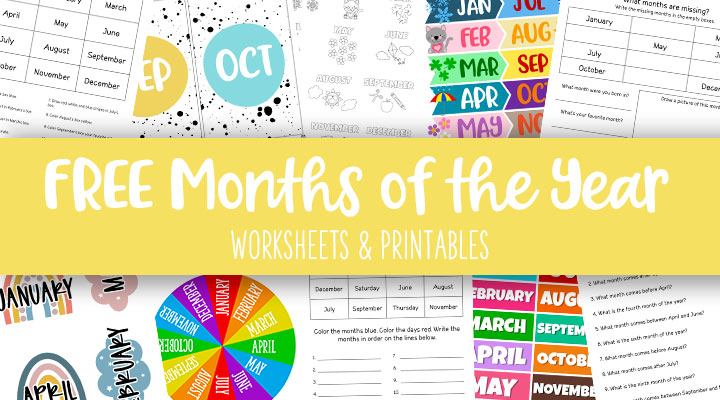
Much like the days of the week, the months of the year are a must-learn for children who are starting to write the date on all their paperwork. Each month is unique in terms of weather and/or holiday, which makes it extra fun and easy to memorize them all. Below, we have lots (and lots!) of free printables to help young ones memorize the months of the year. There are two specific types of printables available:
1. Worksheets: These worksheets are for individual learning. They are the kind of activities that children can do at their desk (if you’re a school teacher), or at the kitchen table at home (if you are a homeschooler). You may need some supplies like scissors, crayons, or tape to do some of these activities but that’s what makes them so much fun!
2. Display: These printables are meant to be printed (best on cardstock), laminated, and posted around the room or on the chalkboard/whiteboard or wall. These can be interactive for the entire class – combine the days of the week with the months of the year to determine the date and then display it on the board. They can also be posted for everyone to see so they can remind themselves how all the months are spelled or in which order they go. Or maybe you could put all the months of the year on the board and have children come up to the front of the room to put them in order. However you decide to use them, they are no doubt a wonderful learning tool and look great around the room too!
All you need to do is click on the printable(s) you want below, download the file to your computer, and print! It’s 100% free and super easy to do. We hope you love these free printable months of the year printables as much as we do!
Helpful Supplies
Here are a few helpful supplies we’ve found when using these worksheets and printables:
Laminator – A good laminator is perfect for the printables meant for your homeschooling or classroom walls.
Lamination sheets – Replacement sheets for your laminator.
Cardstock – Our favorite cardstock! Perfect for the printables that end up on walls (after laminating) so they last even longer!
Paper – Affordable and good-quality paper!
Paper cutter – Perfect for straight cuts without breaking the bank or needing a massive paper cutter that isn’t portable!
Scissors – Our favorite pair of scissors. Perfect for any size or cut!
Velcro Dots – Velcro dots perfect for decorating your walls or classroom.
Disc Magnets – Another great option for adhering months of the year printables where needed.
Brads – Tiny but indispensable these brads are perfect for a couple of our printables to help you children/students learn the months of the year!
The links above are affiliate links. This simply means we get a small amount of money if you buy them on Amazon. These are purely optional and provided to help. Whether you need supplies or not, we hope you enjoy the free printables below. No strings attached!
Months of the Year Worksheets
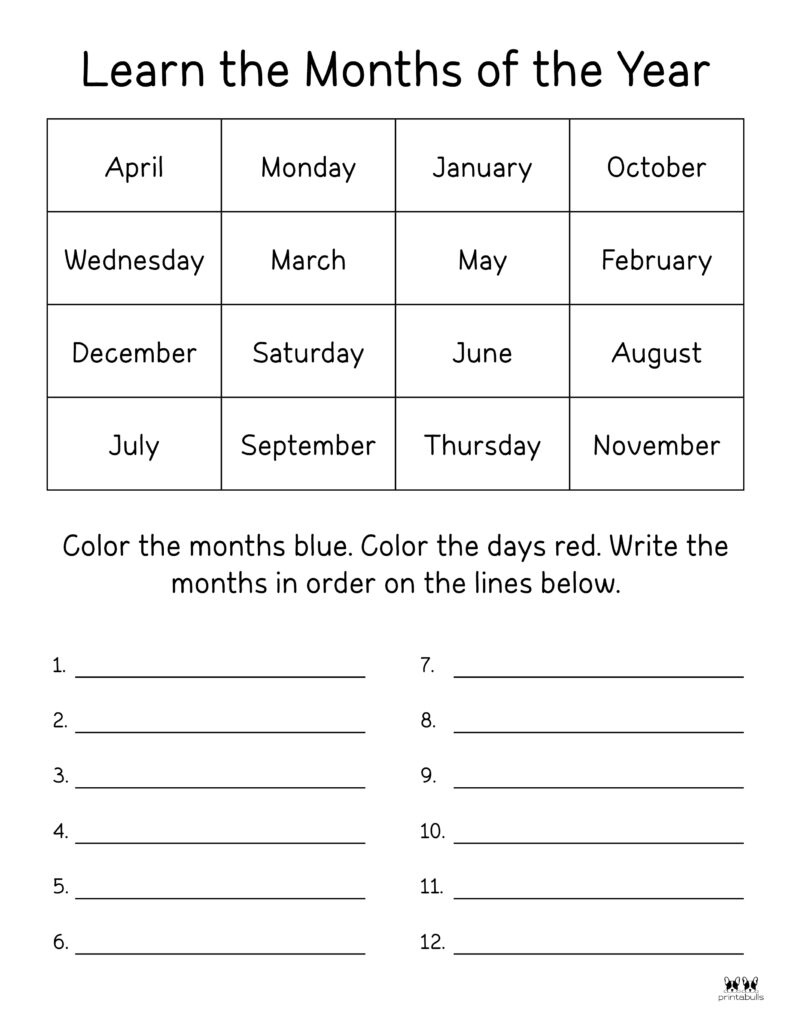
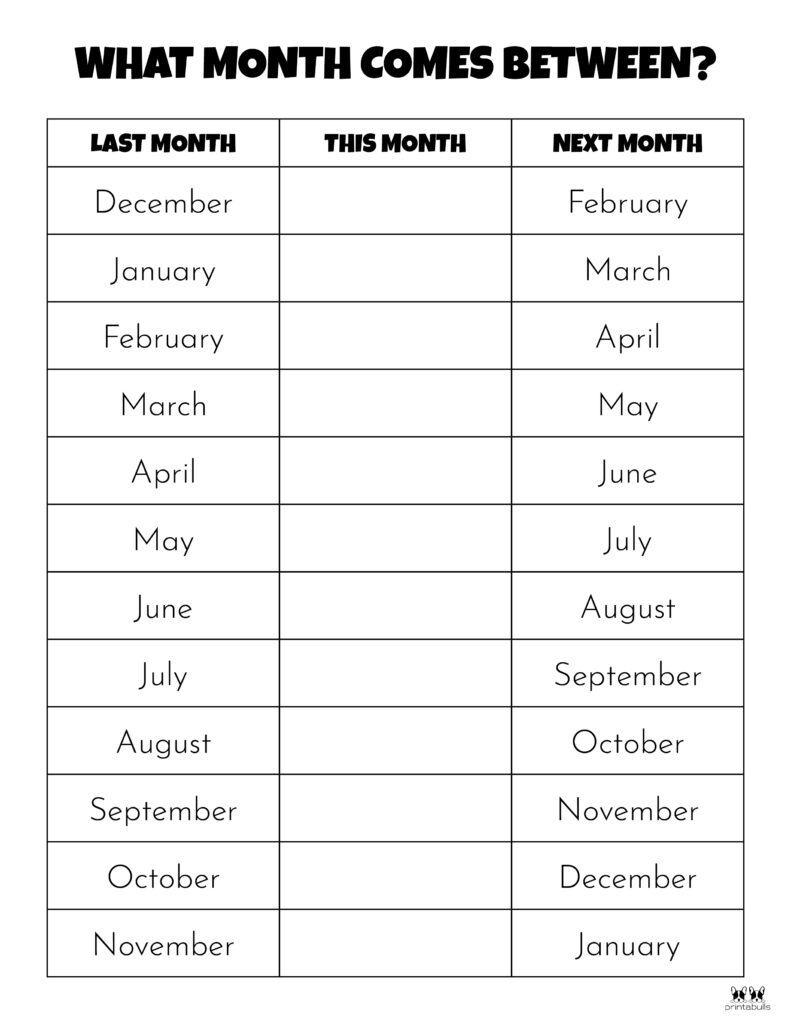
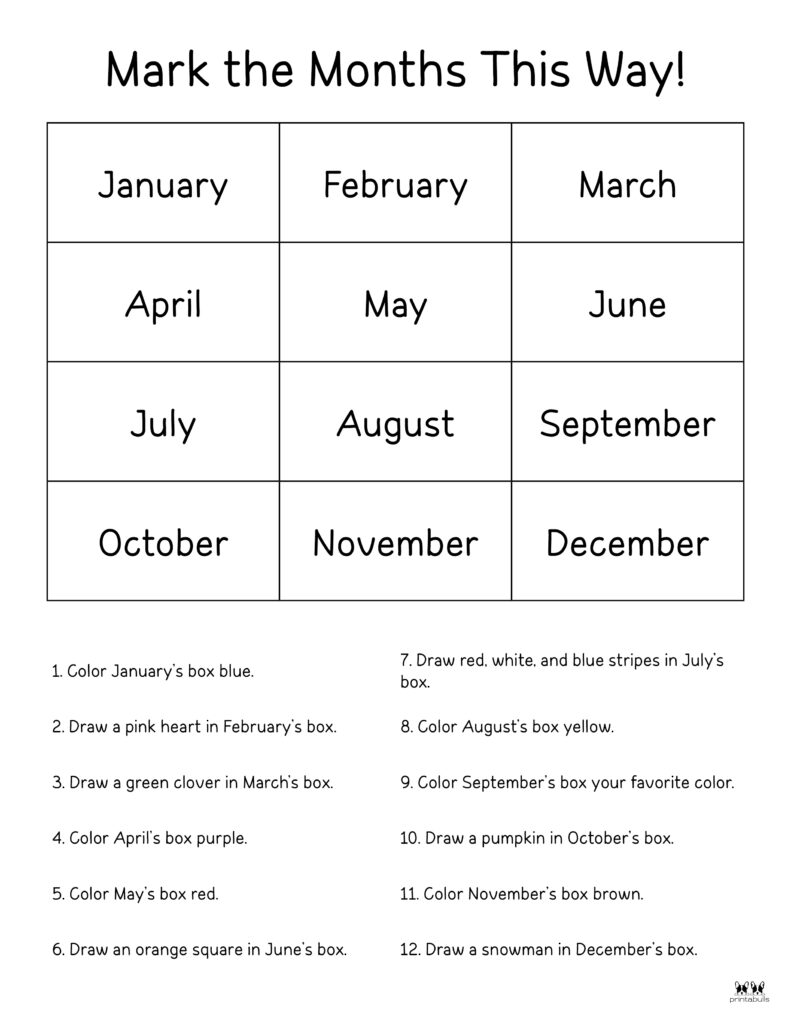
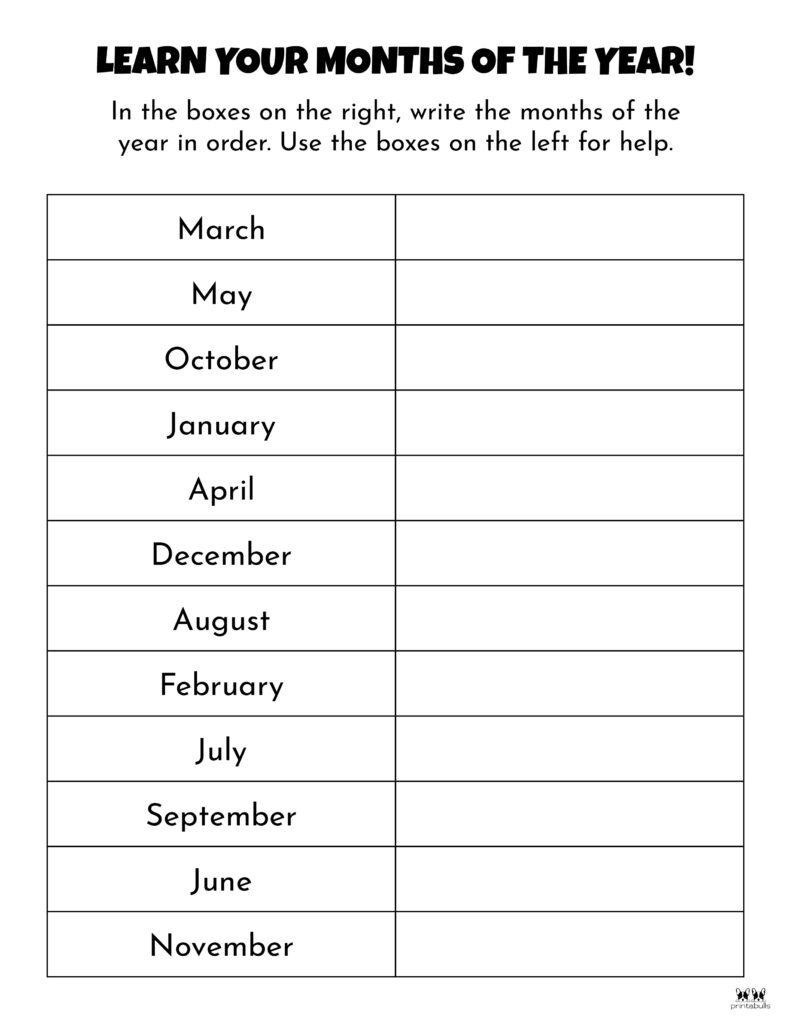
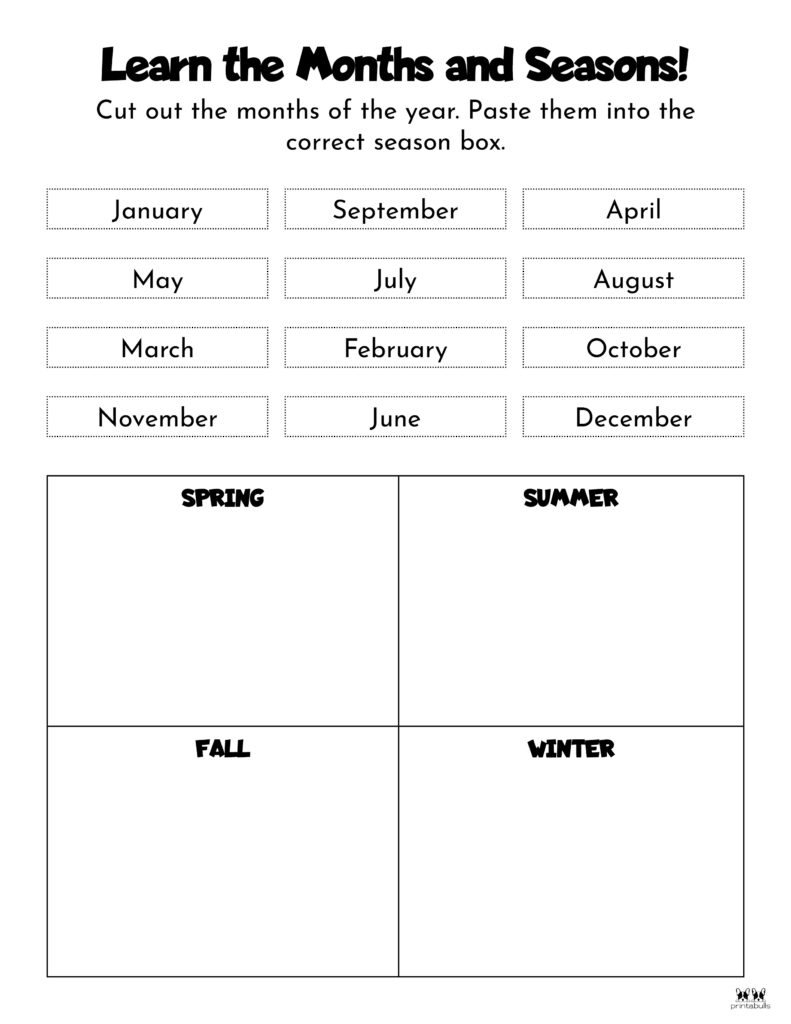
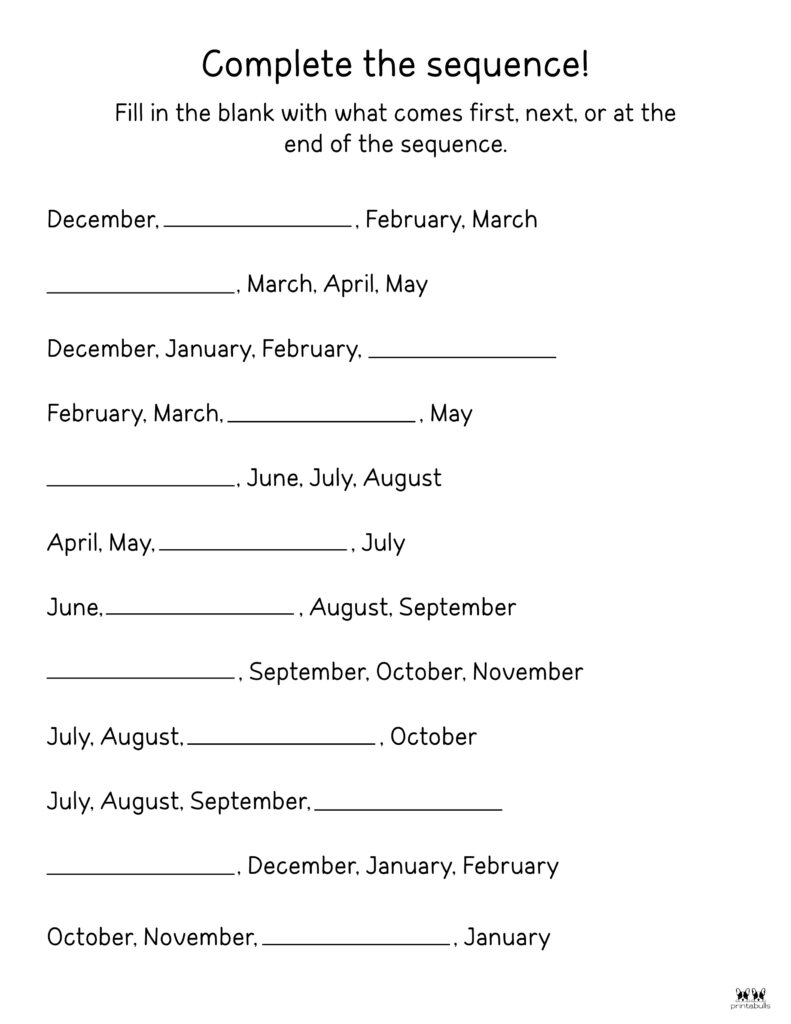
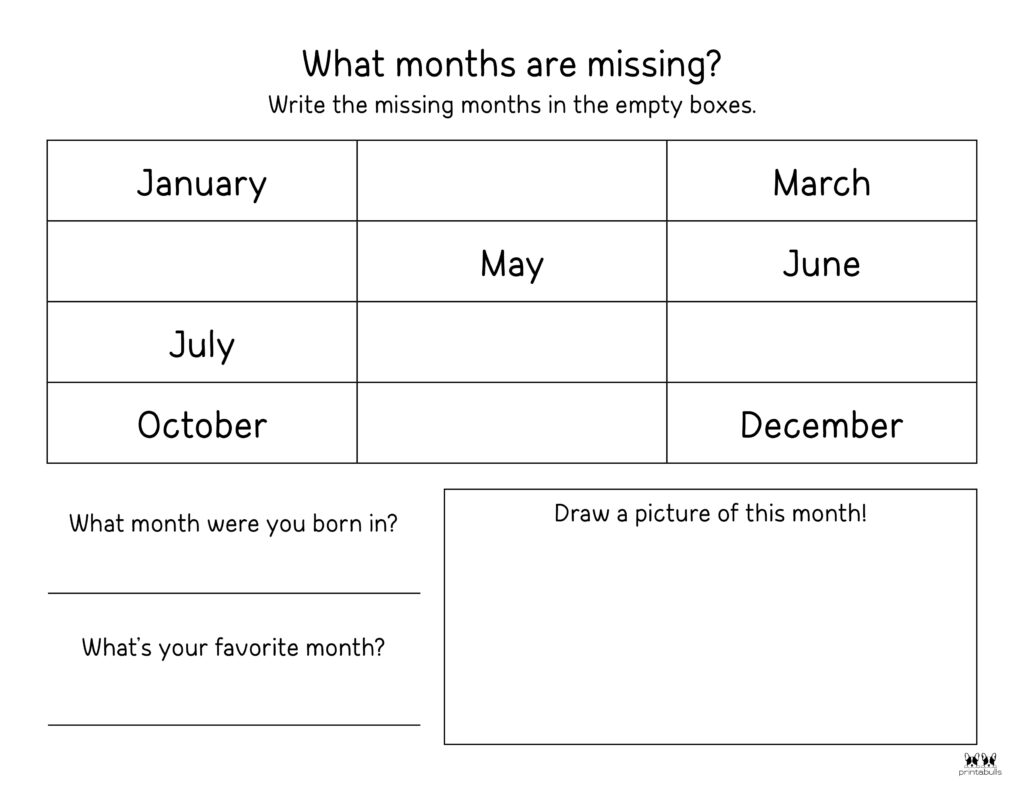
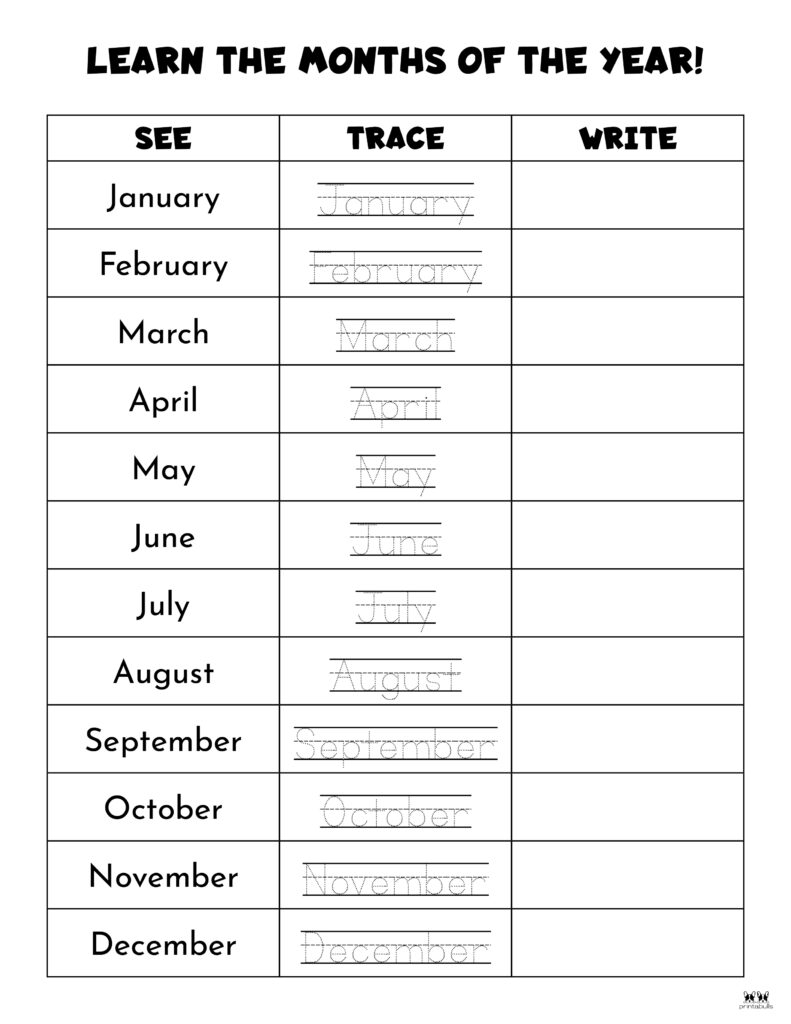
Use the worksheets and activities below to teach your children or students about the months of the year and other related concepts. All of the pages are free. Pages with a yellow background are just to display multi-page downloads. The downloads themselves do not have a yellow background.
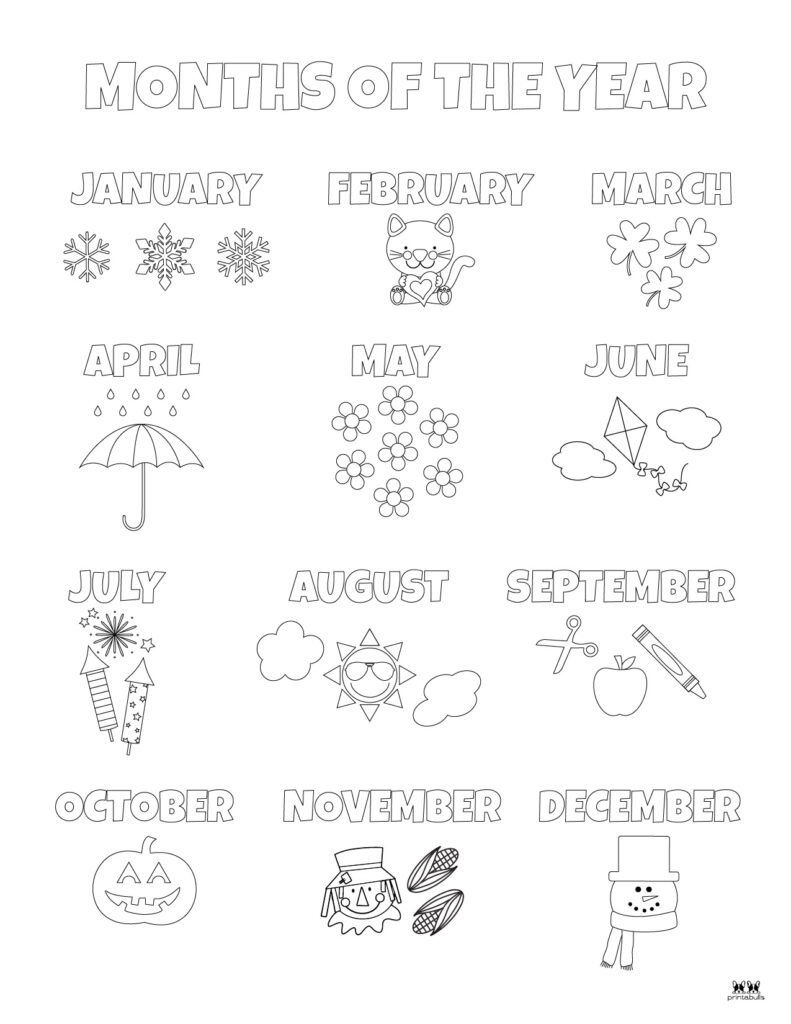
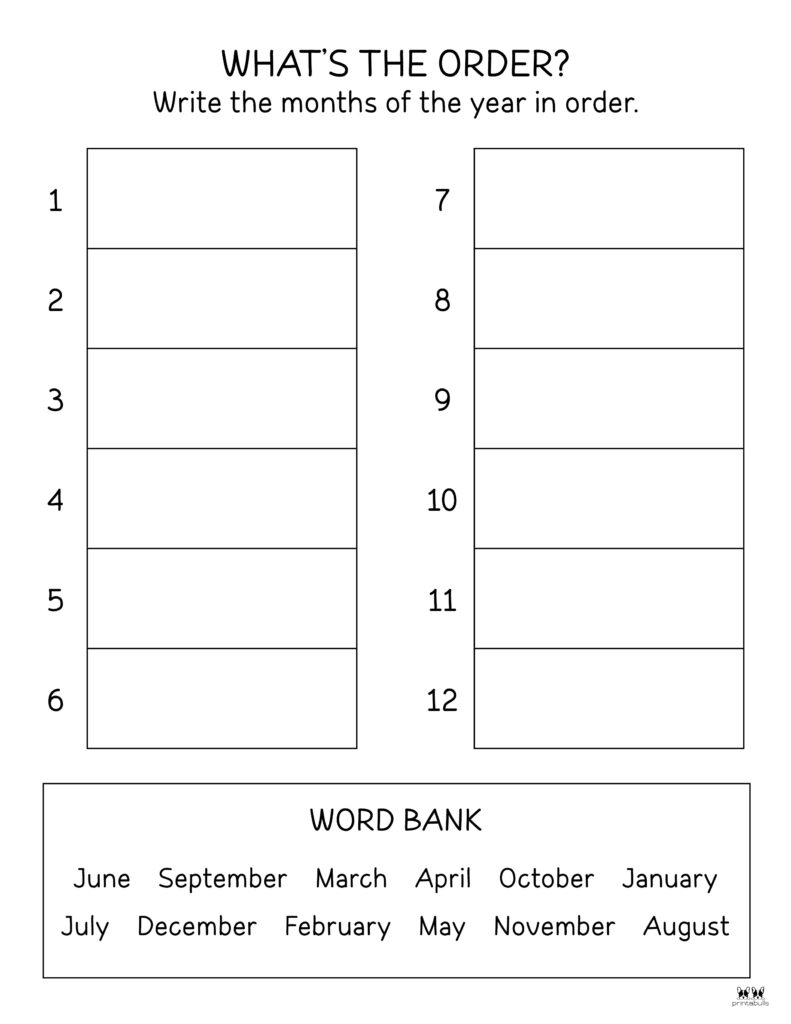
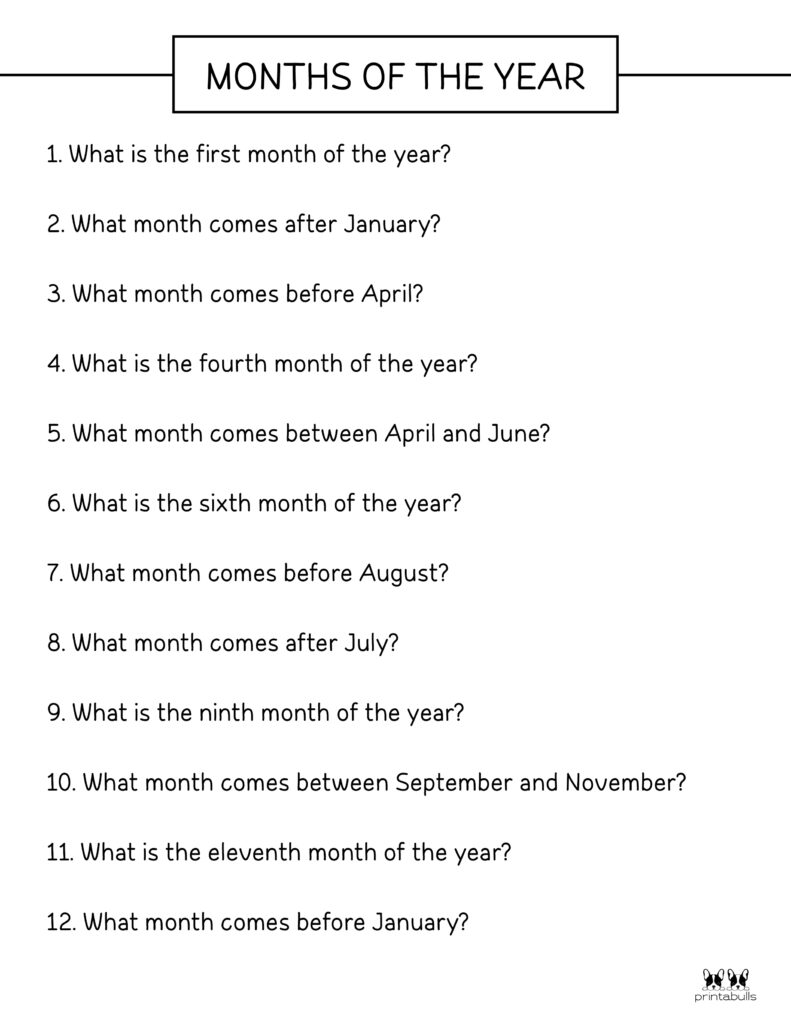
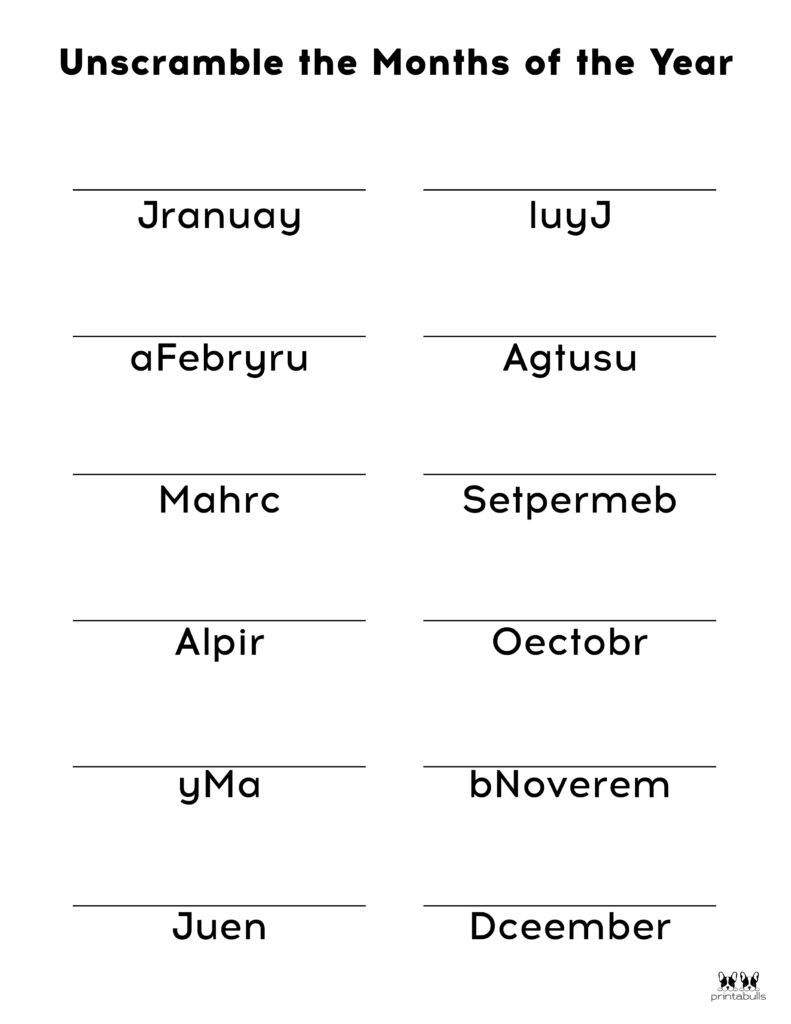
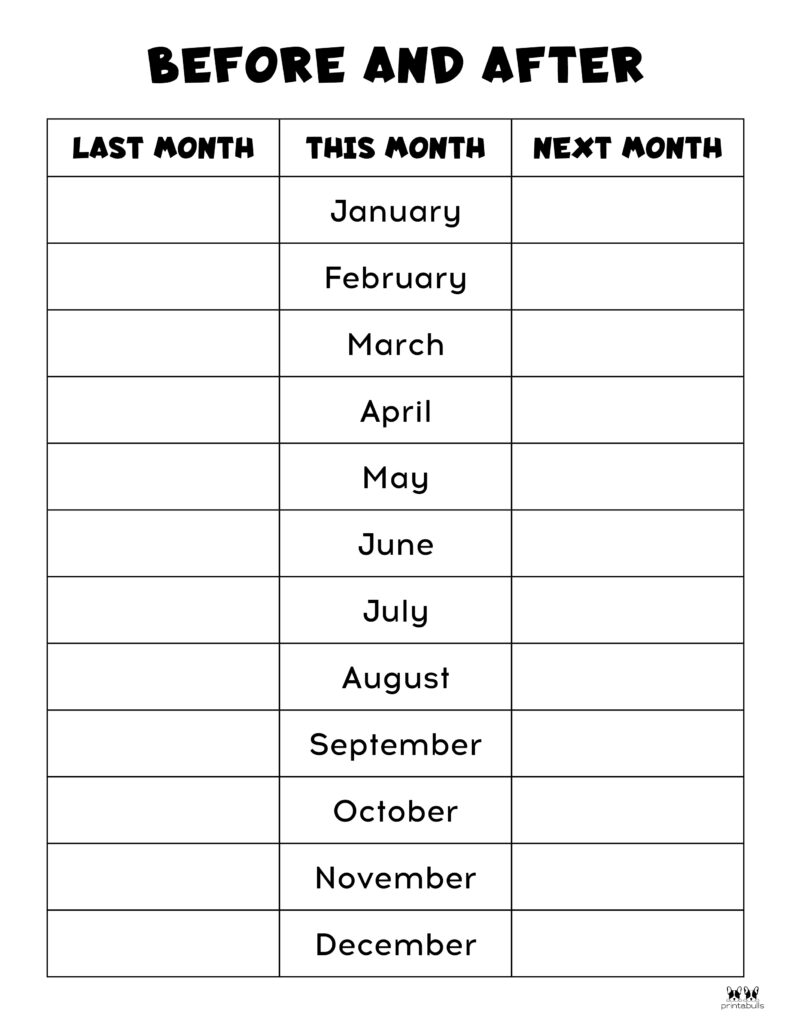
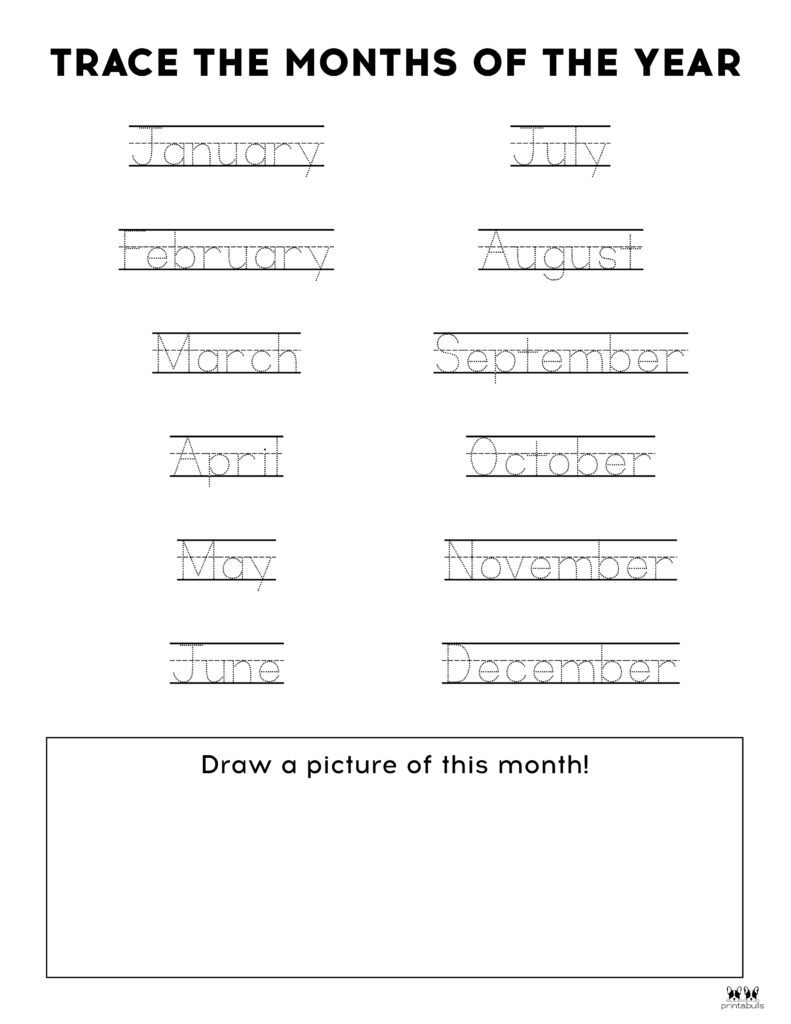
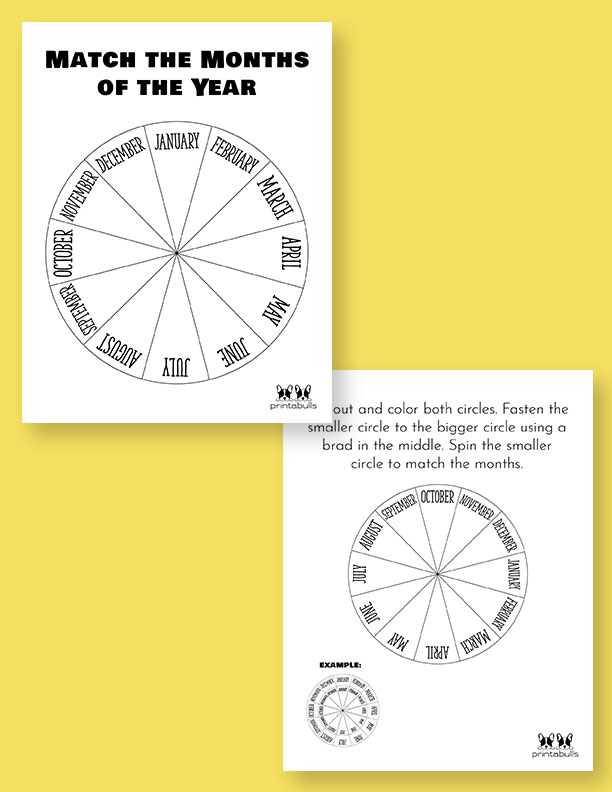
Months of the Year Printables
Use the months of the year printables below to decorate your own homeschooling room or the walls of your classroom. These are perfect for decor as well as teaching purposes. All of the printables are free! Pages with a yellow background are just to display multi-page downloads. The downloads themselves do not have a yellow background.
ESL Kids World
An ESL Children’s Resources Site!

ESL Resources
Worksheets
At ESL Kids world we offer high quality printable PDF worksheets for teaching young learners. These worksheets include among others: colouring sheets, crossword and wordsearch puzzles and much more. Designed by ESL professionals, the sheets will help teachers of kids in their lesson plans.
Phonics
For Young Learners of English, the teaching of phonics often takes centre-stage. This is why we have a whole section cramped with phonics materials and teaching resources. You will find printables, interactive materials and more.
Flashcards
With a rich collection of flashcards, properly arranged by topics, you are armed with more high quality materials for teaching kids. Our flashcards are in PDF format which makes for easy printing and use. This is in line with aim of our site which is to provide easy-to-use materials for teachers and students.
Games
The artistic nature of kids brains has them ready-made for games and fun activities. Our games easily appeal to young learners as they are based on real experiences in the classroom. Tested and proven to work, these games are a rich addition to your lesson plans.
Song Worksheets
Song relax and gets rid of negative emotions. We have all heard of the affective filter which describes the phenomenon in language learning that negative emotions greatly hamper learning. Songs have the magical effect of getting rid of these negative emotions. With our collection of songs you will be teaching lessons to students who are positively engaged.
Powerpoint PPT
Interactive
Some students learning by playing games and solving puzzles on the computer. With these fun quizzes, kids will do a lot of self-education.
Months of the Year: ESL Activities, Games, Worksheets & Lesson Plans
If you’re looking for some ESL games or activities for teaching months of the year, then you’re certainly in the right place. Keep on reading for the best of those, along with worksheets, lesson plans and online game recommendations for teaching the months to English learners.
Months of the Year ESL Activities
ESL Months of the Year Activities
Let’s get into the best activities for months of the year ESL.
#1: Dictogloss
This is a challenging ESL activity that covers a range of skills and lends itself well to just about any topic, including months. Find a passage (or write your own) about someone talking about their favourite and least favourite months.
Then, read it out at a faster than normal pace for the level of your students. They have to take some brief notes and then with a partner, attempt to recreate what they heard. Read it again and students do the same. Finally, they compare with the original.
#2: Months of the Year Chain Spelling
A fun way to review how to spell the months is to play this game. All the students stand up and you say a month. Students spell it out, saying a letter each. If someone misses, they must sit down and are out of the game. The last 1-2 people left standing are the winners.
This is a great activity to have in your back pocket because it requires absolutely nothing in the way of preparation or materials and can be used with any sort of vocabulary that you’re teaching. Check it out: Chain Spelling ESL Game.
#3: Running Dictation
A challenging TEFL activity for months is running dictation. Find a conversation between two people talking about their favourite activities or plans they have for certain months of the year (or write your own). Then, in pairs, students have to work together to dictate the conversation and once done, put the pieces in the correct order to make a coherent conversation.
It’s challenging, student-centred and covers a wide range of skills in a single activity. Kind of an ESL teacher’s dream come true! Learn how to do it: Running Dictation.
#4: Just a Minute
Consider using this simple speaking activity to have students talk about their favourite, or least favourite month of the year:
#5: ESL Board Games
In real life, I love to play board games. So, it’s natural that I’d play them in my classes too! It’s super easy to design your own based on whatever grammar or vocabulary you’re teaching, including the months. In this case, you’d want to fill the board with questions like the following:
Want to design one for your students? Learn how here: Board Games for English Learners.
#6: Telephone
A fun speaking game for kids is telephone or Chinese Whispers. I’m sure you played this as a kid. The way it works is that teams have to pass a message down the line. Then the person at the end compares with the original one. The results are usually so funny!
#7: Speaking/Listening Bingo
A fun way to reviews months is to play Bingo. However, just simply stating January, June, etc. doesn’t really have that much educational value. Instead, give some hints like the following:
#8: Dialogue Substitution
A common way that vocabulary is introduced in ESL textbooks is through a dialogue. However, it’s often the case that students just read through it very quickly and don’t pay attention to what they’re reading. Of course, it’s not their fault! It’s just that they don’t have a reason to pay attention.
A better way is to remove some key vocabulary words which turns it from simply a reading activity into one that’s focused on meaning as well. Check it out: ESL Dialogue Substitution Activity.
#9: Months of the Year Songs and Chants
If you teach pre-school or kindergarten kids, you’ll want to use some songs and chants in your classes. However, if you’re not musical, not to worry. There are lots of good ones on YouTube that will work for just about any age or level of students.
#10: ESL Surveys
I love to do surveys or questionnaires with my students. Just ask them and they’ll tell you the same thing! For months of the year, there are so many yes/no questions you could use. For example:
Find out more details about using this versatile ESL activity in your classes: Surveys for ESL.
#11: Picture Prompt ESL Warmer
A nice way to introduce the months and help activate prior knowledge that students may have is to show some pictures. 4 is ideal, one for spring, summer, fall and winter.
Then, elicit some information from the students:
#12: Word Association
A nice way to introduce the months is to use a brainstorming type of activity. Elicit some months, seasons, weather, activities from the students and organize them onto the board.
For example: you might have a cluster with summer, July, August, swimming, beach, sunny.
It’s a nice activity if your students already know a fair amount of vocabulary related to these things and you want to help them activate their prior knowledge.
#13: Speaking Lesson Plan for Months
It can seem a bit overwhelming to plan an entire speaking lesson from scratch. However, with a template, it’s easier than you might think and it’s possible to design engaging and interesting lesson plans for the months of the year.
#14: More Ideas for Teaching ESL
#15: Word Challenge Spelling Game
A fun way to review just about any vocabulary with beginners is to play the word challenge spelling game. All you need is a whiteboard and two markers and students have to race to spell the word you say correctly on the board.
#16: Months + Comparatives or Superlatives
The months, along with this grammar are a natural fit. Here are just a few of the possible sentences:
Here are more ideas: Comparatives and Superlatives.
#17: Dictation Practice
Dictation has kind of fallen out of favor since the communicative approach has kind of taken over. However, it’s a nice way to review spelling and things like punctuation.
For beginners, just say the month and have students write it down. For more advanced students, include the month in a sentence.
#18: Review Games and Activities
Teaching vocabulary is ALL about review, especially with months because the vocabulary is a bit tricky and doesn’t relate to any other words that students don’t know. I envy those people with languages where the month names translate to month 1, month 2, etc.!
The good news is that there are lots of ways you can help your students remember new words by doing review. Here are some of the top suggestions: ESL Review Activities.
#19: Months of the Year Listening Lesson
I love to use a listening lesson to teach just about anything. Check out this video for all the simple steps and see how easy it is to plan your own!
#20: Include Months in your Classroom Routine
With kids, it’s always useful to have a routine to start the class off with. I’ll generally include some things like:
You could also include months or seasons if you’ve recently taught this vocabulary. It’s a helpful review and can help students solidify this knowledge through repetition.
Try taking 2-3 minutes at the beginning of class to reinforce some of these key concepts. It’s easy to have a simple chat with your students in this manner and students will enjoy it, especially when they come to expect it.
#21: Weather and Months
Weather, seasons and months are a natural fit with each other and in some ESL textbooks at the high beginner or intermediate level, they are covered together. If they’re not, you can slip in some review of these things if your students have previously studied this vocabulary.
#22: Look at a Calendar
A nice way to introduce this vocabulary is to have students look at a calendar. They’ll already be familiar with this idea in their own language so it’s a nice way to bridge the gap. Point out each month and say the word. Have students repeat it,
#23: Me Too!
This is a simple activity that is great for teaching the months. Students can make true statements about themselves. For example:
If the other students in the class agree, they can stand up and say, “Me too! Check it out:
#24: Put the Months in Order
This is a nice activity for learning months of the year. Write down the months on a sheet of paper and laminate it. Cut out each month and then have students work together in groups to put them into the correct order.
#25: Wall Touch
Use these same laminated months cards and tape them to the wall at various points around the classroom. Have students stand up and then give a hint. For example:
Students have to touch the correct month on the wall.
ESL Months Activities and Games
Months of the Year ESL Lesson Plans
A huge time-saver for English teachers can be to use ready-made lesson plans. Here are some of the best ones to consider for this unit:
ESL Months of the Year Worksheets
If you’re a busy teacher, then you’re going to know that making your own ESL worksheets for practice or homework takes a ton of time. The good news is that there are lots of good ones on the Internet that you can just download, print off and and then take to class. Here are some of the best months of the year ESL worksheets:
Online Game Months of the Year
If your students want some additional practice with this key vocabulary, then you’ll need to refer them to the following online games. Have some fun while learning English!
Teaching Months of the Year FAQs
There are a number of common questions that people have about teaching this popular vocabulary to beginners. Here are the answer to some of the most popular ones.
How do you teach ESL months of the year?
To teach ESL months of the year, consider using some of the following games and activities:
What are the Months in English?
The months in English are as follows:
How do you explain months?
A nice way to explain months is to tell students that a month is 30 or 31 days (except for February). Explain each month is further divided into weeks and days. Then, point out the months on a calendar.
What months have 30 days?
September, April, June and November only have 30 days instead of 31. You can remember the saying, “30 days have September, April June and November.”
Did you like these ESL Activities for Months?
Yes? Thought so. Then you’re going to love this book over on Amazon: 101 ESL Activities for Kids. The key to better English classes for kids is a wide variety of interesting, engaging activities and games and this book will help you get there in style.
Keep a copy o n the bookshelf in your office to use as a handy reference guide. Or, consider taking a the digital version with you to your favourite coffee shop on your phone, tablet, or laptop for teachers for some lesson planning on the go.
Yes, it really is that easy to have better English classes. Head over to Amazon to pick yourself up a copy of the book today, but only if you want some serious ESL teaching awesome in your life:
ESL Months of the Year: Join the Conversation
Do you have any tips or tricks for teaching the months of the year to English learners? Please leave a comment below. We’d love to hear from you.
Also be sure to give this article a share on Facebook, Pinterest, or Twitter. It’ll help other busy English teachers, like yourself find this useful resource.
Last update on 2022-08-11 / Affiliate links / Images from Amazon Product Advertising API
About Jackie
Jackie Bolen has been teaching English for more than 15 years to students in South Korea and Canada. She’s taught all ages, levels and kinds of TEFL classes. She holds an MA degree, along with the Celta and Delta English teaching certifications.
Jackie is the author of more than 60 books for English teachers and English learners, including 101 ESL Activities for Teenagers and Adults and 1001 English Expressions and Phrases. She loves to share her ESL games, activities, teaching tips, and more with other teachers throughout the world.
Months of the Year Worksheets
Not surprisingly, one of my most requested sets is Months of the Year worksheets in the same type of style.
Today is finally the day to post those!
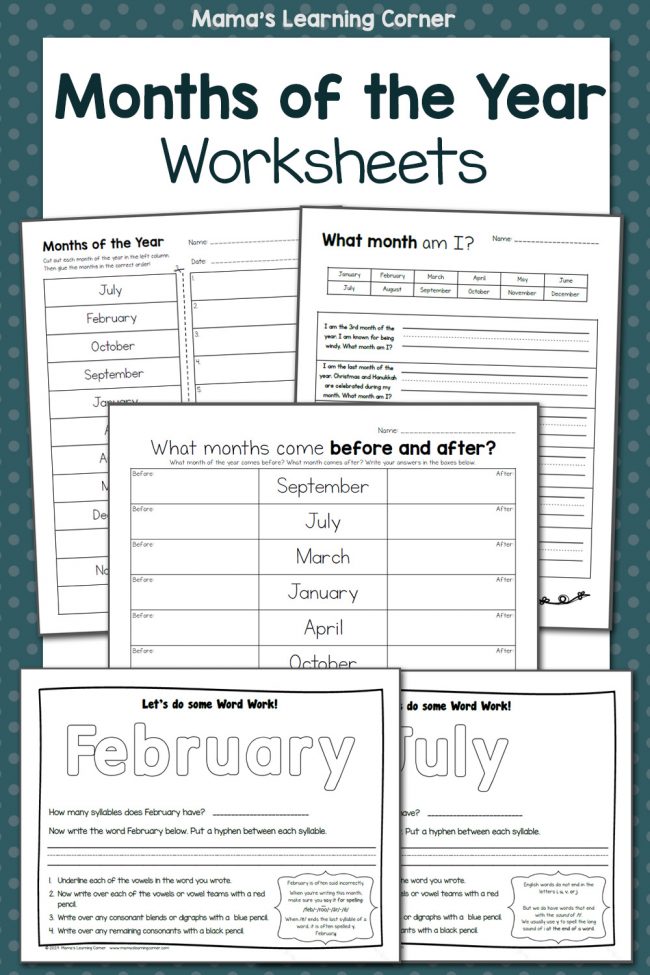
Months of the Year Worksheets
Remembering the months of the year in order and spelling the months are more difficult skills for students to master.
I have found that repeated, consistent work with memorizing the names of the months, as well as spiraling spelling review aids with mastery.
And this packet focuses on just that!
My younger girls (and sometimes my oldest girl when I can work it in) do recitation a few times each week. I would love for that to be daily, but our life has a lot of moving parts, and that just doesn’t happen.
I’m happy with 2-3 times each week.
The days of the week and the months of the year are always included in my 8 year old’s recitation because she needs that spiral review. Even though we’re past the half-way mark in our school year, I realized that she still needed that review when she began memorizing January Brings the Snow by Sara Coleridge.

Each stanza focuses on a month of the year, and she had a bit of trouble remembering the order while memorizing the poem.
So we carry on with recitation and these lovely worksheets that help her review.
I’ve included a sampling of these pages for you to download below. In the sample, you will find Months of the Year cut & paste, handwriting practice in manuscript, a word search, and the first page of Word Work for the month of February.

The new Word Work pages are so fun! Each page includes directions to manipulate the name of the month, identifying its consonants and vowels, syllables, blends & digraphs, and more.
You’ll also see a bubble in the corner of each month with few a phonics rules that pertain to the word. Phonics work focuses on soft c, y as a vowel, types of syllables, ways to spell the long a sound, r-controlled vowels, and more!
The phonics rules are written to the student, however, it’s always best to go over the rule with your child. Then brainstorm some other words that follow that rule and then write them on the whiteboard together.

For example, one of the phonics rules for February focuses on the letter y at the end of the word. Brainstorm other words with the long e sound at the end of the word and see if they’re spelled with a y.
Make a list and then place them in the correct column. Visuals are always helpful!
Download Months of the Year Worksheets
As I mentioned, you can download a sampling of these worksheets to use in your own home or classroom.
If you’re interested in purchasing the full packet, here are the details.
Included in this 25-page worksheet packet:
→ 12 word work pages, one for each month of the year
→ I Can Write the Months of the Year – 2 pages with 6 months per page
→ What months come before and after? – 2 pages
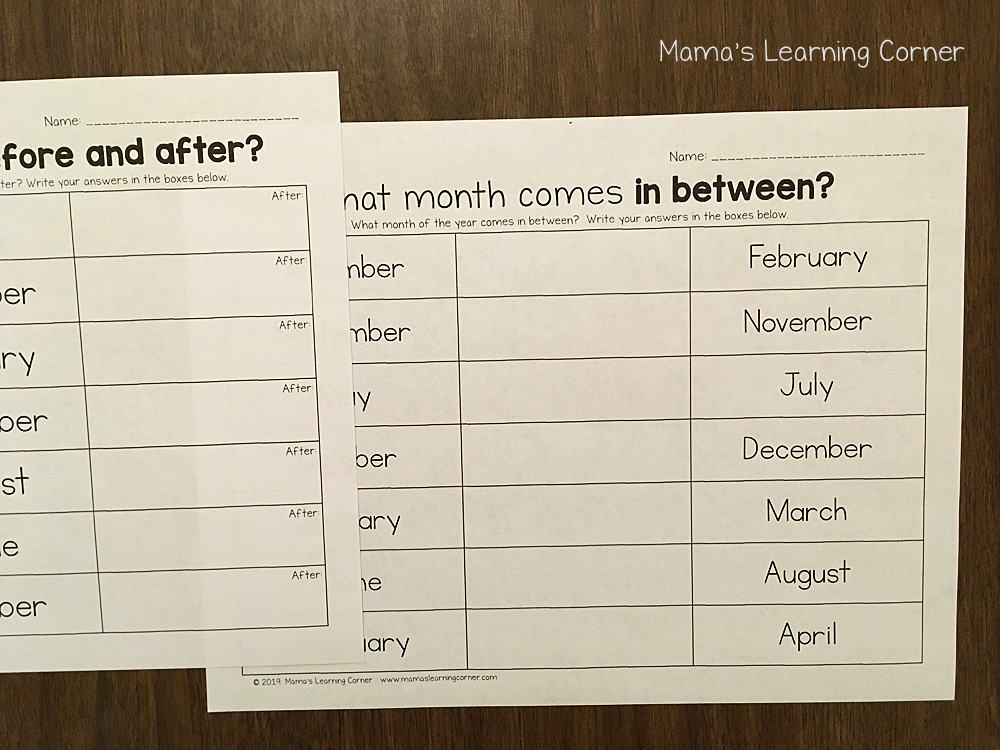
→ What months come in between? – 2 pages
→ Months of the Year cut & paste – 1 page with the whole month’s name, and 1 page with abbreviations only
→ What month am I? – 2 riddle pages with 6 months per page
→ Month Numbers – draw a line from the month to its associated number
→ Months of the Year Word Search – 2 different searches using the names of all 12 months
Months of the Year Worksheet Categories
Click the buttons to be transported to all the worksheets for that month.
January
Eyewear month, New Year’s Day, We explain why this month starts the year, The Importance of Ellis Island, The End of the Revolutionary War

February
Groundhog Day, Valentines Day, Presidents, All about Grapefruit, Clean out your computer day, How Does a Battery Work?, History of Kites, Children’s Dental Month, Brains, Weather People.
March
The Red Cross, Dr. Seuss, The Star Spangled Banner, Boston Massacre, The Dred Scott Decision, Telephones, The Eiffel Tower, Bubble Gum, National Peanut Month, and Coca Cola.
April
Topics of the worksheets include: April Fool’s Day, Autism Month, Stress, Rainbows, History of Libraries, Patent Day, The Titanic, Income Tax, Paul Revere, Arbor Day
A wide array of activities that include: Lewis and Clark, National Stuttering Awareness Week, History of Bicycles, Sports Month, Rhinoceros Week, What is the sun?, Cinco de Mayo, The Pulitzer Prize, Mother’s Day, and Memorial Day
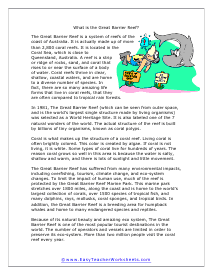
The topics include: The National Safety Council, The Great Barrier Reef, Farm to Table, Refugee Week, World Environment Day, Little League Baseball World Series, Paul Bunyan, The National Organization of Women, National Teacher’s Day, Road Safety Week
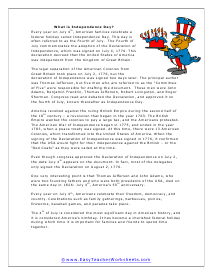
Students have a nice mix of reading worksheets that include the themes: Independence Day, National Hot Dog Eating Contest, National Mailman Day, Cloning Month, Duel Day, Bastille Day, The FBI Origination, NASA Day, The Greatest Show on Earth
August
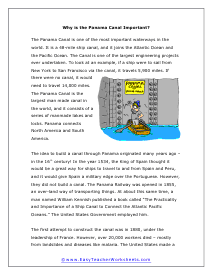
Elvis Presley, The History of Clowns, MTV (Music Television), The US Coast Guard, Why Are So Few People Left-handed?, History of Roller Coasters, Eye Sight, The First World War, The Berlin Wall, The Panama Canal
September
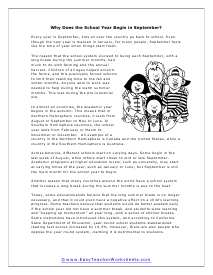
World War II, The Largest Skyscrapers, Uncle Sam, Who Invented the Pizza?, Labor Day, American Literacy, Nintendo, The Supreme Court, The Irish Potato Famine, Why Does the School Year Begin in September?
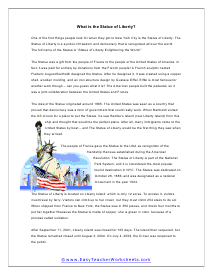
October
Topics for this month include: Dinosaur Week, Electricity Week, Health Weekend, The History of Denim, World Habitat Day, Captain Kangaroo, The Great Chicago Fire, The History of the Dictionary, United Nations Day, The Statue of Liberty
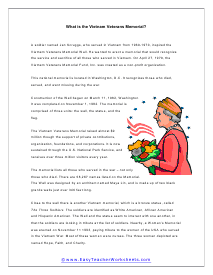
November
Who Invented Basketball?, X-ray machines, Remembrance Day, Veterans Day, Diabetes, Who Invented the Sandwich?, King Tut, The Gettysburg Address, William Tell, Vietnam Veterans Memorial
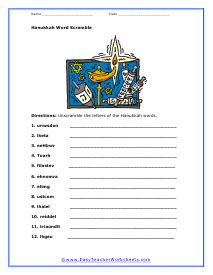
December
Walt Disney’s birthday, Hovercraft month, Cold places, Boxing Day, AIDS month, Quit Smoking month, Pearl Harbor, Many Different December Holidays, Christmas trees, the Louisiana Purchase,
Why Are There Twelve Months in A Year?
Months have been a part of this universe for a very long time. In different calendars or old civilizations, the months have been integral to the system. Why must they not be? These are a measure of time that has passed and the time that is yet to come.
The story starts with moon cycles which were used to divide a year. However, the moon cycle, an odd number, cannot divide a year evenly. In 738 BC, a ten-month calendar was taken from the Greeks.
The names of the original months were Martius (March), Aprilis (April), Maius (May), Junius (June), Quintilis ( July), Sextilis (August), September, October, November, and December. The last six months are just named after 5,6,7,8,9,10.
The concept of January and February
However, the major issue was that there were still 60 unaccounted days. The two months named Januarius and Februarius were added to the calendar. In 46 BC, Julius Ceaser omitted the moon concept and started the day calendar with 12 months with alternate 30 and 31 day months and giving February 28 days. However, the concept of a leap year was introduced to account for the odd number of days.
Quintilis and Sextilis
To honor Julius Ceaser after his untimely death, Quintilis was renamed July. Similarly, Sextilis was changed to August after Augustus Ceaser.
Conversion to Gregorian Calendar
The Julian Calendar was used until 1582, but it had many leap days. A new calendar with ten days less than the Julian Calendar was invented in Pope Gregory XIII’s reign. The leap day now occurred every four years, in which 29 days of February were kept.
The official adoption of the new calendar wasn’t done until 1927, when all the countries switched to Gregorian Calendar. The reason for this was the inability of the Julian Calendar to keep up with the changing seasons and lengths, which created more discrepancies. When Gregorian and Julian Calendar variations increased, many countries had to skip several days to switch to Gregorian.
Some countries skipped 11 days, like the US, Canada, and the UK, while some countries like Turkey had to skip 13 days.
Issues Due To Conversion
The Leap year system was deeply affected by the change. In 1712, Sweden and Finland had double leap years because both calendars could not fit in the days.
Here’s a fun fact! 1712 had an additional day in February. It happened only once, but the date said 30th February.
Since it took 300 years for the transition to happen, the world followed two different calendars.
Tip to Learn The Number of Days in Each Month
Children find it difficult to remember which month has how many days. You can count the months on knuckles and dips between them; a knuckle will represent a 31-day month while a dip will give the name of 30 day month.
Learning the history of time is confusing because a lot of changes occurred. You can still convert this date from Gregorian to Julian by subtracting 13 days.
How Did the Months of the Year Get Their Name?
We have different methods of measuring time. Seconds, minutes, hours, days, weeks, dates, years, and even months! We know that there are 12 months in a year, but do you know where they got their names from? Let’s take a look, shall we!
Like most of the things that have been handed down to own from our ancestors, most of the names of the months are the creations of the Romans and Greeks! Here’s a fun fact! Did you know that before a proper calendar was created, the Romans year started with March and ended in February! How weird is that! Thankfully, today our calendar goes the right way around! Let’s see where each month got its name from:
January gets its name from the Roman God, Janus.
February got its name from after an ancient Roman festival of purification called Februa.
The month of March is named after the Roman God, Mars.
April is originated from the Latin word, aperire, which means ‘to open.’
May is named after the Greek Goddess, Maia.
June got its name from the Roman God, Juno.
The months of July and August are named after the Roman empire’s most renowned statesman, Julius Caesar, and their first emperor, Augustus.
September, October, November, and December get their names from the Roman numbers 7, 8, 9, and 10.
Months of the Year Lesson Plan
Lesson Plans for ESL Kids Teachers
This lesson plan is FREE!
Sign up for accompanying:
 In this lesson students practice saying the months of the year. Students put months into the correct order, play fun games and activities, sing and march to a song, read a funny story and do a months writing worksheet.
Members get accompanying worksheets, song and classroom reader.
Lesson Materials:
Supplies:
Other Lesson Plans
Notes:
Learning all the months in their correct order is not the easiest task, but using the song in this lesson regularly helps a lot!
Lesson Procedure:
Warm Up and Maintenance:
New Learning and Practice:
1. Teach the months of the year vocab  Start off by looking at a calendar with everyone (and English one, if possible). Have some fun with the calendar first: ask students to point at holidays such as Christmas and to point out their birthdays. Ask what month their birthdays are in and point to the month word (e.g. January) at the top of each month. Start to teach / elicit the English words for months as you discuss their birthdays. Ask what month it is now as well as the following (using the calendar):
2. Play «Put the months in order» 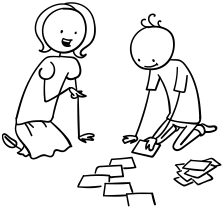 Before class, prepare some colored rectangles of card and write the months of the year in thick marker pen on each rectangle of card. You’ll be putting students in pairs so make enough sets for each pair. Also, if each month can be written on a different colored card it will help the students to quickly identify each month. Put your students in pairs and give each pair a set of mixed up cards. By referring to the calendar, have the pairs put the months in order on the floor or table. Then get everyone to touch each card and repeat after you as you chorus the months of the year paying special attention to the fist letter of each word (e.g. «J» for «January»). Run through a few times, getting faster and faster. Finally, get the pairs to mix up the cards and tell them they are going to race to see which pair can put their cards in order first. Say “Ready, steady, go!” and let the students put the cards in order.
3. Play «Wall Touch»
Give each pair some Blue-Tak or something to stick the cards on the wall with. Ask everyone to randomly stick their cards all over the walls around the room. Then bring everyone into the middle of the room. Shout out «January» and everyone has to race over to a January card and touch it. Then “February” and so on (in the correct order) until you make it through all the months. Play another round, this time faster.
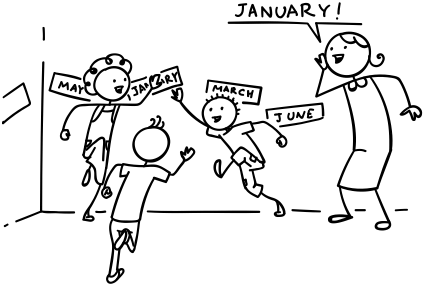
4. Sing the «Months March» song
Put one set of months cards on the board in the correct order (or use our song poster). Get everyone to stand to attention, like soldiers, and then follow the steps in the «Gestures for Months March» shown below. If this is the first time to sing the song, play it at least twice and let everyone enjoy marching around.
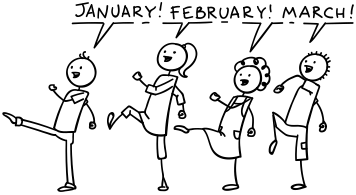 Lyrics for «Months March»
January (January)
February (February)
March (March)
April (April)
May (May)
June (June)
July (July)
August (August)
September (September)
October (October)
November (November)
December (December)
Everybody … Stop!
January, February, March, April, May, June, July, August, September, October, November, December.
Everybody … Stop!
Gestures for «Months March»
The actions are very simple for the song:
If you have a large room with plenty of space for everyone to march around:
If you only have a small room or don’t have much space:
Follow the same steps as above but get everyone to march on the spot.
We also have a video that you can stream in class to sing along with (Internet connection required):

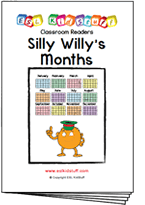 5. Read classroom reader «Silly Willy’s Months»
Let’s follow the song with a reader which uses the all of the months vocabulary. Before class, download and print off the reader «Silly Willy’s Months». As you go through each page, point to the pictures and elicit the months, as well as other vocab including weather and the things the characters are doing, for example:
Teacher: (pointing at the picture on page 3) Look at Silly Willy! What is he doing?
Students: Sunbathing!
Teacher: Yes, that’s right! But is it hot?
Students: No, it’s cold. It’s snowing.
Teacher: Yes, that’s right! Silly, Silly Willy! So, what month do you think it is when it’s snowing?
Students: January?
Teacher: Let’s check (reading) «Where Silly Willy lives, January and February are very cold. But Silly Willy likes to sunbathe!». So it’s January and February.
Get the students really involved in the story by asking lots of questions about the weather during different months and activities they do (and don’t do) in their country, for example:
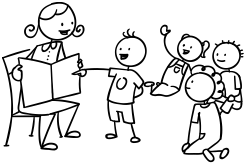 Teacher: Do you like to sunbathe in January and February?
Students: No!
Teacher: Why not? What is the weather like here in January and February?
Students: It’s cold and rainy.
Teacher: So, when do you like to sunbathe?
Students: In August.
etc.
After reading the story, give out a reader worksheet to each student and have everyone try to remember which months Silly Willy did the different things. В Then read through the story one more time (without stopping for questions, etc.) and check through the answers as a class.
Alternatively, watch our video version of the reader (Internet connection required):

6. Do «Months Order» worksheet
Give out the «Months Order» worksheet to each student. As your students are doing their worksheets, circulate and ask questions (e.g. “What month is it?”, etc.).

Wrap Up:
1. Assign Homework: «Months Scramble» worksheet.
2. Wrap up the lesson with some ideas from our «Warm Up & Wrap Up» page.
English Exercises:
English exercises >
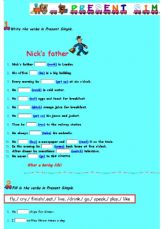 | Present Simple and Plural Activities Present Simple and Plural Activities./Grammar Online Test I hope you will like teaching these grammar topics with my online exercises. Have fun! |
Level: elementary
Age: 9-100
Author:Victoria-Ladybug
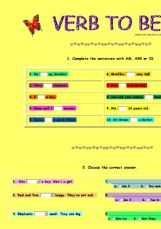
Some exercises to revise the verb to be in the three forms: affirmative, negative and interrogative.
Level: elementary
Age: 8-12
Author:Stefania
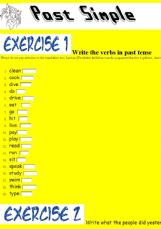
This material consists of 2 exercises and provides 59 examples of Past Simple to practice.
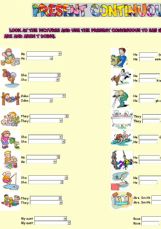
There are two types of exercises: multiple choice and gap-filling. In the first one, students choose the right option to build affirmative and negative sentences in the present continuous/ look at the pictures and fill in the gaps with the present continuous. In the second exercise, there are 24 sentences students have to complete with the present continuous or the present simple.
Level: intermediate
Age: 14-100
Author:Carlos Reis
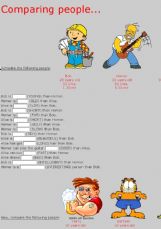
Students fill in the gaps with the information provided. Hope you like it!
Level: elementary
Age: 6-100
Author: Cynthia Wilkinson
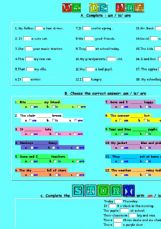
Online activity to revise the Verb to �be� : am/is/are. Have fun! Victoria
Level: elementary
Age: 6-10
Author:Victoria-Ladybug
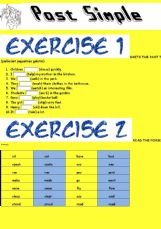
6 exercises to practice Past Simple.
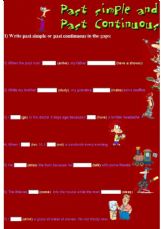
Well. this is my small contribution to the PAST SIMPLE and PAST CONTINUOUS. I hope you like it. I will use it on Monday.
Level: intermediate
Age: 14-100
Author: Eva S�nchez
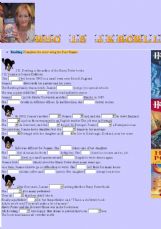
A reading and comprehension activities about J. K. Rowling-the famous author of «Harry Potter» Books. This OE is designed for elementary and intermediate level students. Enjoy! Have a great week! Victoria
Level: elementary
Age: 10-100
Author:Victoria-Ladybug
Days, Months and Seasons Worksheets
This page contains printable charts of days, months and seasons in different attractive themes. It also includes practice materials like filling the blank charts, partially filled charts, and calendar worksheets based on days of the week, months of the year and seasons of the year. Browse through some of these worksheets for free!
Printable Charts
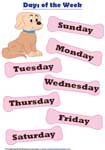
Days of the week
Kids can look through these colorful printable charts on days of the week. The charts are illustrated in three distinct themes.
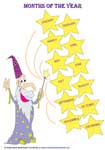
Months of the year
Print these unique and attractive charts on months of the year and paste them in a study room / classroom.
Seasons of the year
Seasons of the year are depicted in these charts in different tempting themes for kids.
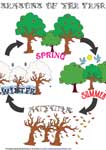
Blank and Partially Filled Charts
Kids may refer the above printable charts and work on these blank charts. They should fill the blank charts with days, months and seasons.
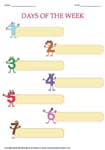
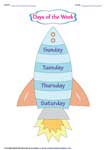
Days of the week: Partially Filled
Days of the week are partially filled in these pdfs. Complete this activity by filling in the missing days.
Months of the year: Partially Filled
Fill in the missing months of the year and complete the worksheets. This practice will make the kids thorough in knowing the months of the year.

Complete the blanks: Days and Months
Complete the blank charts by writing the seven days of the week and twelve months of the year.
Days, Months and Seasons Worksheets
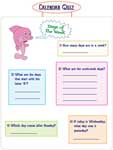
Days of the week
The kids may try these worksheets to test their knowledge on days of the week.
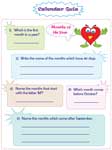
Months of the year
The students may check their understanding on months of the year by practicing these worksheets.
Seasons of the year
These pdf worksheets are exclusively based on the four seasons of a year.
Time Worksheets
Time and calendar worksheets
Choose your grade / topic:
Grade 1 time worksheets
Grade 2 time worksheets
Grade 3 time worksheets
Grade 4 time worksheets
Related topics


Sample Time Worksheet
K5 Learning offers free worksheets, flashcards and inexpensive workbooks for kids in kindergarten to grade 5. Become a member to access additional content and skip ads.
K5 Learning offers free worksheets, flashcards and inexpensive workbooks for kids in kindergarten to grade 5. Become a member to access additional content and skip ads.
Copyright © 2021 K5 Learning
Our members helped us give away millions of worksheets last year.
We provide free educational materials to parents and teachers in over 100 countries. If you can, please consider purchasing a membership ($24/year) to support our efforts.
Members skip ads and access exclusive features.
Months of the Year Worksheets, worksheet templates, board games
Make worksheets with images, text only or mixed text and images. You decide. Everything is 100% customizable so you can make worksheets and activities to fit your classroom needs.
Months of the Year Worksheet Templates

Reading Worksheets, Writing Worksheets and Spelling Worksheets
Make Spaghetti String Worksheet with Months of the Year: There are two versions of this worksheet. Students can read a short sentence or paragraph and connect the words or read a word, trace it, and connect it.
Make Free Writing Worksheet for Practice Using Days of the Week: Teachers can add vocabulary images and students make sentences using the vocabulary or practice spelling. You can add text to trace or just leave the lines blank.
Spelling Worksheet for Months, Days or Dates: Choose an image and give sample spellings of the word or three different words. Students read the words and choose the correct answer.
Reading Worksheet Template for Months of the Year: Write one sentence or a short paragraph using the vocabulary, about the vocabulary, or a definition. Students read the passage and select the correct image.
Spelling and Writing Worksheets for Days of the Week: Teachers choose an image and then list 3 words for that image. You can use spelling variations, write 1-3 related words, and more variations. Students would choose the correct words and then write using the words that they selected.
Printable Months, Days and Dates Game Templates
Printable handouts, vocabulary worksheets, and other materials
Months of the Year Vocabulary Library Worksheets: Make a handout with pictures at the top and the vocabulary at the bottom. Students match the vocabulary to the images.
Months of the Year Handouts: Make a handout with up to 15 words per page. These have slightly larger images and you should be able to use languages other than English for these and make handouts for other language classes.
Months of the Year Vocabulary List for These Worksheets:
I find this list a little hard to navigate because it has months, dates, and days of the week all mixed together in alphabetical order. Unfortunately, I haven’t found a good way to deal with this problem. When you are making your worksheets, it’s helpful to use your keyboard and type the first few letters of the word you are looking for. The makers will jump to that word in the list.
Ready to Print Months of the Year Worksheets that match these worksheets:
Months of the Year Flashcards Months of the Year Bingo Cards Months of the Year Game Cards
Other Vocabulary Categories:

End User License Agreement: You are free to use any resource created from this site as an end user and MES grants you an End User License with the following restrictions: You may not redistribute, copy, modify, transfer, transmit, repackage, re-engineer, charge for, or sell any of the materials from this site. You may use photocopies or printouts for the purposes of distributing them for free to your students. MES reserves the right to terminate or make changes to this agreement for any reason and without notice.
Months worksheets for kids
Practice writing the names of the season.
Worksheet 2: Four Seasons: When Do Kids Make Snowmen?
Asking when people do various activities with the fours seasons as answers.
Worksheet 3: Four Seasons: When Do Leaves Change Color?
Asking when people do various activities with the fours seasons as answers.
Worksheet 4: Season Spring
Practice writing spring and answer questions about spring.
Worksheet5: Season Summer
Practice writing summer and answer questions about summer.
Worksheet 6: Season Fall
Practice writing fall and answer questions about fall.
Worksheet 7: Season Winter
Practice writing winter and answer questions about winter.
Content Questions Unit: Wintertime
Many worksheets and activities that explore what happens in winter.
Content Questions Unit: Summertime
Many worksheets and activities that explore what happens in summer.
Content Questions Unit: Autumn
Many worksheets and activities that explore what happens in autumn.
Content Questions Unit: Spring
Many worksheets and activities that explore what happens in spring.
Content Questions Unit: Describe the Four Seasons
Many worksheets and activities that teach how to describe seasons using relative clauses.
Worksheet Generator 1: Seasons and Holidays Cloze
This is a simple cloze worksheet with seasons and holidays. The seasons and holidays are taken from a database at random so you can refresh to get an entirely new worksheet.
Months of the Year Worksheets
Once your child starts questioning the passage of time (for example birthdays or Christmas), our Months of the Year Worksheets will give your child plenty of practice to learn, write and recite the twelve months of the year.
See our Months of the Year Chart for an introduction to the names of the months.
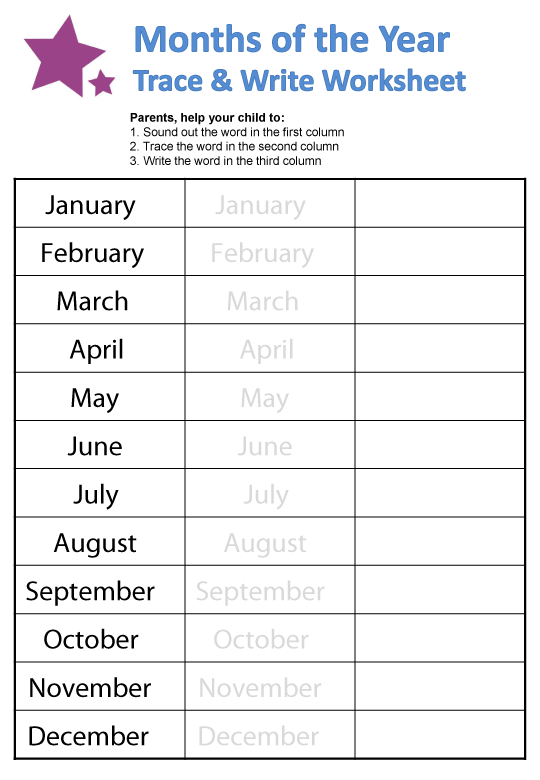
Download our free and printable months of the year worksheets.
Worksheet 1 – Trace and Write
On this first, simple worksheet your child can sound out the word, trace the word and then write it by themselves.
This worksheet reinforces our Months of the Year Chart with simple word recognition.
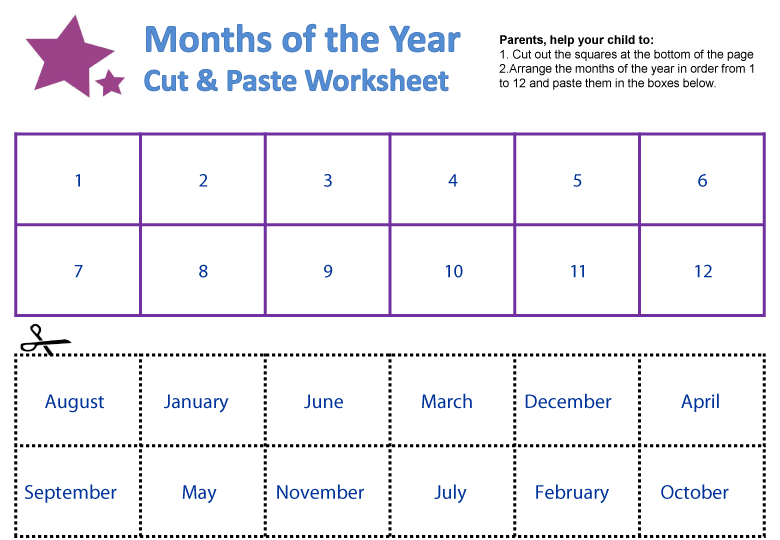
Worksheet 2 – Cut and Paste
This worksheet helps children learn and remember the order of the months of the year.
With your help, they can cut out the names of the months at the bottom of the page. Then place them in order and paste them in the purple boxes.
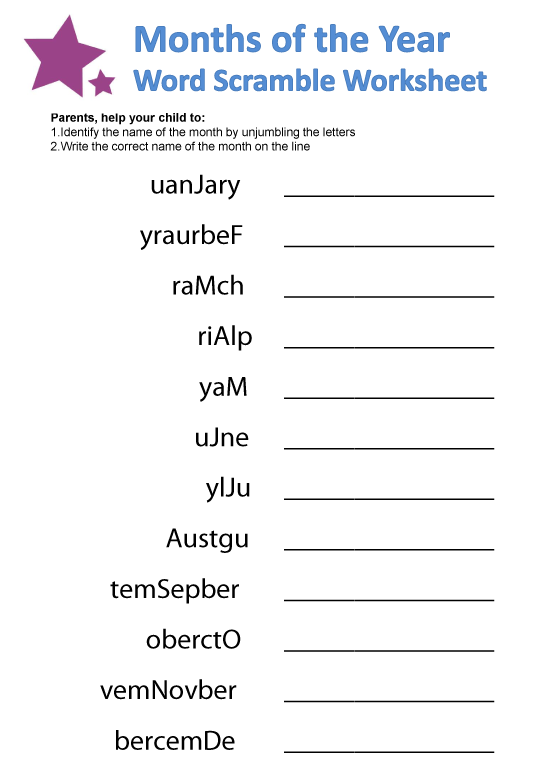
Worksheet 3 – Word Scramble
Unjumble the letters and write the correct name of the month on the line on the right.
Show your child how to check their spelling by crossing out the letters used on the left – this way, they can see if they used all the letters up!
If your child is struggling with this one, you can give them a clue – we’ve kept the first letter of each month a capital letter!
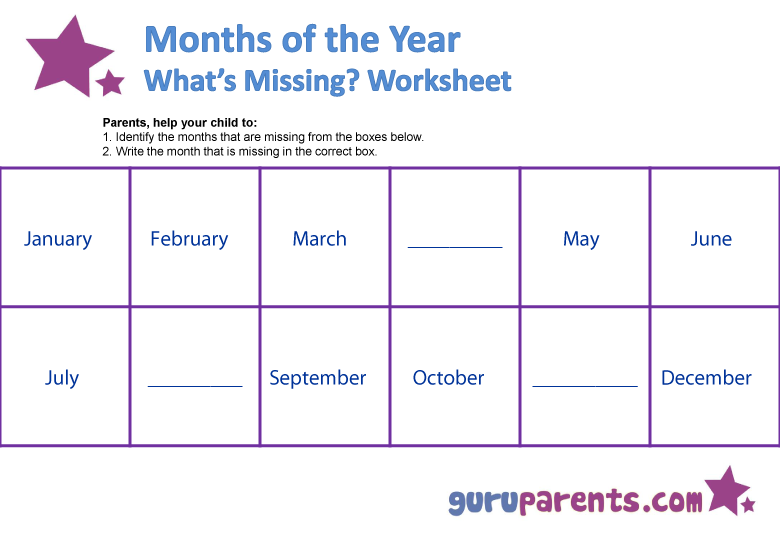
Worksheet 4 – What’s Missing?
There are three months that are missing in this worksheet.
This will test your child’s ability to recite the twelve months in order and correctly identify the missing month. Help your child to then sound out the word and write it on the line provided.
Months of the Year
lessons for kids learning everyday English expressions
Learn English through pictures, sounds and sentence examples! In this lesson you will learn useful vocabulary and phrases connected with the theme Months of the Year.
I can say the months!
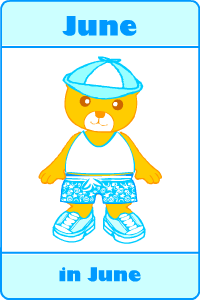
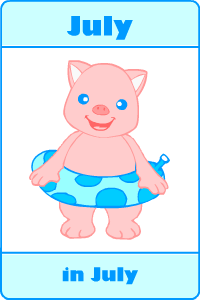
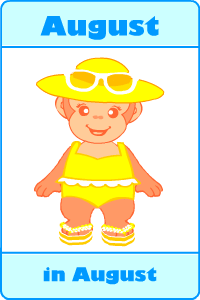
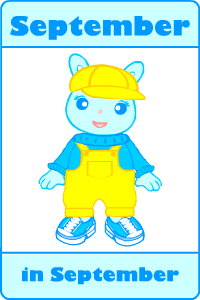
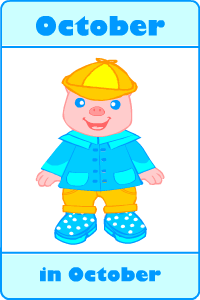
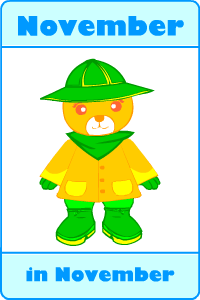
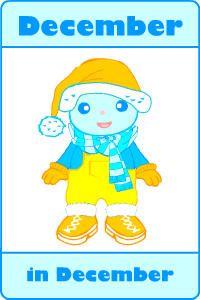
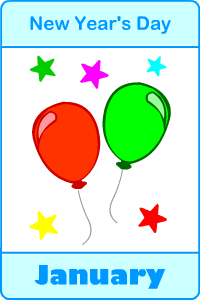
There are 12 different months. Each has a different name. 12 months together make one year.
Use in with months of the year. Use capital letters for the months of the year. Click on the pictures below to hear the sounds.
How to say the date
To say dates in English you must learn the ordinals. Ordinal numbers are those that are used to indicate the order of something in a series.
First, second, third, and thirty-first are all examples of ordinal numbers. We use on for dates. Here are some examples.

When is your birthday?
On the first of November.

When is Christmas?
On the twenty-fifth of December.

What date is it?
It’s the twenty-second of July.

What’s the date today?
It’s the third of August.
Practise your English!
Rhymes for learning English
There are lots of rhymes that should help you remember the months of the year. Here are some examples.
Play with these rhymes. Recite them in different ways, for example one line slowly, and one line quickly. Try to mime, make funny motions with your hands, or stamp, clap, knock. Just for fun!

January, February, March, and April,
May, June, July, August, and September,
October, November, and December.
These are the months of the year.
Now sing them together so we can all hear.
How many months are there in a year?
Twelve months in a year!

January, February, March, and April,
May, June, July, August, and September,
October, November, and December.
These are the months of the year.
January, February, March, April, May,
June, July, August. Hooray, hooray!
September, October, November, December.
These are the months that I can remember!

30 days has September,
April, June and November.
All the rest have 31
Except February alone,
Which has 28 days clear
And 29 in each leap year.

January, February, March, April,
May, June, July and August,
September is on its way,
October and November
And December is at the end.
Then we start all over again!
Online Worksheets For Kids
Online worksheets for kids is one of the biggest online platforms that offer worksheets for kids, adults, parents, and teachers. The online worksheet library comprises more than 1000 worksheets that can be accessed from any corner of the world. As we know, worksheets help kids with creativity and open the doors to be imaginative enough. Free worksheets also assist children of all ages to explore ideas and different concepts. Besides children, these worksheets tend to relax the minds of adults, including that it provides some time off from real world problems for a while. Browse through different categories and pages to find your true calling within online worksheets for kids.
Online Worksheets for kids
Online worksheets for kids is a hub of online printable worksheets for toddlers, preschoolers and even adults. We offer a large variety of online worksheets that come handy, moreover these free worksheets can easily be incorporated in any syllabus and curriculum. More than 100+ worksheets for everyone. These free printable worksheets are easy to access, safe for kids of all ages, and compatible with every device. Try these amazing free printable worksheets for kids and perk up the monotonous learning.
Printable Worksheets for Kids
Welcome to the land of 40,000+ printable worksheets in Math, English, Science, and Social Studies, aligned with the CCSS but universally applicable to students of grades K-12, complemented by a collection of self-correcting, digitally fillable worksheets. Keep classroom and homework activities generously assisted with vibrant charts, engaging activities, workbooks, practice drills, online quizzes with varying difficulty levels. Get started with our free sample worksheets and subscribe to get access to the entire treasure trove. The worksheets come along with answer keys, assisting in instant validation.
Sail through this vast expanse of printable math worksheets compilation for students of grades K-12, steering through topics like number sense, measurement, geometry, statistics, pre-algebra, algebra, and a multitude of high school topics.
The ELA worksheets help foster an understanding of foundational concepts in grammar. Comprehend texts with the reading comprehension passages and develop skills to creatively pen down and organize ideas with the writing prompt worksheets.
The science worksheets help build a cohesive understanding of physical science, life science, and Earth and space science. Engage in inquiry-based learning to build, deepen, and apply knowledge using charts, worksheets and activities to enhance skills.
The social studies worksheets comprise strands drawn from all the social science disciplines and help develop informed and reasoned decision-making skills. Learn about the continents, U.S. Constitution, U.S. presidents, the 13 Colonies and more.
Redefine practice with our digitally fillable math and ELA worksheets! Savor every moment of learning with a plethora of self-correcting practice tests chosen from a randomized pool of questions that can be digitally assigned to students.
If you are on a hunt for printable grade specific worksheets aligned with the CCSS, then be assured that you are in the right place. Whether it is English or Math, grade 3 or grade 8, you will find a collection of engaging resources.
Are you looking for a specific set of skills under each math topic for a particular grade? Our math workbooks aligned to the Common Core State Standards and classified grade-wise for students of kindergarten through grade 8 help big time.
Christmas or Halloween, President’s Day or Labor Day, celebrate every holiday and important event with our no-prep worksheets. Figure out the importance of each festival with themed art, craft, math and literacy activities keeping the fun quotient high.
Add some delight to math with these fun dot-to-dot printable themed worksheets and help kids learn to sequence alphabets and numbers. Kids find their aha moment when they connect the dots by skip counting to reveal the mystery pictures.
Are you looking for a reason to subscribe? These snippets will tell you why our subscribers chose us and how we gained the trust of millions of students, educators, homeschooling parents and became their most often go-to educational website.
Why become a member? Which membership plan is relevant to you? What are the exclusive benefits enjoyed by members? What are the secure payment options available? Find answers to these and many such queries in this section.
New Arrivals
Are you ready to “swing”, “kick” and “throw”? Enjoy a celebration of verbs that abound in action. Whether you’re looking for matching, coloring, or cutting and gluing action verbs, you won’t be let down. Hurray, there’s an identifying-action-verbs-in-sentences exercise too!
Is fruit your weakness? Do you wish to go big on proteins and dairy so you are forever at your healthiest? Demonstrate a relish learning the five major food groups. Experience how we advise you to eat well so you study well. Practice food group and nutrition with an ensemble of exercises and activities.
Give yourselves tons of renewed verve and enthusiasm as you determine the area of rectilinear shapes! Traverse through simple rectilinear figures composed of unit squares as well as complex figures like the L-shapes and rectangular paths. This is going to be your most-loved math time!
Months of The Year
There are twelve months in a year. Start on January and end on December. For us it just easy to know what month is now, but for kids its may difficult to remember because it feel strange. Why feel strange? cause they’re not learn it yet. So we provide months of the year to learn by the kids.
First train then to imitate the word

image via www.unitedstates-immigration.com
After finished above now try to tracing word below
 image via www.primarygames.com
Are the kids feel excited? So next train then to make the right order

image via www.blogspot.com
Now little difficult, find the name of the months on scramble words

image via www.iSLCollective.com
Below find the words on the scramble word again but more complex because must find months, day of the week and seasons

image via www.wordmint.com
Hope this will be help you to teach your kids about month.
Источники:
- http://eslkidsworld.com/worksheets/month-of-year-worksheets/months-year.html
- http://eslspeaking.org/months-of-the-year/
- http://www.mamaslearningcorner.com/months-of-the-year-worksheets/
- http://www.easyteacherworksheets.com/months.html
- http://www.eslkidstuff.com/lesson-plans/months-of-the-year.html
- http://www.englishexercises.org/buscador/buscar.asp?nivel=any&age=0&tipo=any&contents=months
- http://www.mathworksheets4kids.com/days-months-seasons.php
- http://www.k5learning.com/free-math-worksheets/topics/time
- http://toolsforeducators.com/months.php
- http://bogglesworldesl.com/kids_worksheets/seasons.htm
- http://www.guruparents.com/months-of-the-year-worksheets/
- http://anglomaniacy.pl/expressions-27-months-lesson.htm
- http://www.onlineworksheetsforkids.com/
- http://www.mathworksheets4kids.com/
- http://www.kidslearningactivity.com/months-of-the-year/