биография художника на английском
William Turner, a great romantic English landscape painter, was born in Devonshire in 1775. He lived with his uncle in Middlesex, where he began to attend school. His first drawings are dated 1787, when he was only twelve years of age. His childish sketch-books, filled with drawings, are still preserved in the British Museum.
When he was 21, he began to exhibit oil paintings as well as water-colours at the Royal Academy. The first, «Fishermen at Sea» is now in the Gate Gallery.
He traveled much in France, Germany, Switzerland, Italy. But he never lost his interest in his own country.
As a landscape painter Turner was interested mainly in light and colour effects. One of his famous paintings is even called «Light and Colour». His work is high praised by great critics.
Turner died in London in 1851. His pictures and drawings became the property of the British nation.
William Turner is considered to be one of the world greatest painters.
Британские художники (Джозеф Мэллорд Уильям Тернер) перевод
Уильям Тернер, великий английский художник-пейзажист эпохи романтизма, родился в Девоншире в 1775 году.
Он жил со своим дядей в Миддлсексе, где и начал ходить в школу. Его первые рисунки датируются годом, когда ему было всего 12 лет. Его детские альбомы с зарисовками и сейчас находятся в Британском музее.
Когда ему исполнился 21 год, он начал выставлять картины, написанные масляными красками, равно как и акварели в Королевской Академии. Первая, «Рыбаки на море», сейчас находится в Гейт-гэллери.
Он много путешествовал по Франции, Германии, Швейцарии и Италии. Но он никогда не терял интереса к своей родной стране.
Как пейзажист, Тернер больше всего интересовался световыми и цветовыми эффектами. Одна из его знаменитых картин так и называется — «Свет и цвет». Его работы были по достоинству оценены известными критиками.
Тернер умер в Лондоне в 1851 году. Его картины и рисунки стали достоянием британской нации.
‘ Уильям Тернер считается одним из величайших художников мира.

 (1 votes, average: 2,00 out of 5)
Van Gogh — топик по английскому
Рубрика: Биографии

Vincent Van Gogh was one of the greatest painters of the XIX century. Van Gogh was born in 1853 in Holland; however, he spent most of his life in France.
Van Gogh’s life could hardly be considered the happy one. He was mentally ill and was aggressive from time to time. During one of his fits of nerves he cut a part of his ear off. Although Van Gogh went into a mental hospital several times, his state didn’t become any better. Furthermore, the great artist lived a rather short life. In 1890 he shot himself after pronouncing his last words: “The sadness will continue”.
It is difficult to believe that the one who painted such bright puctures was so desperate and unhappy at the same time. All his masterpieces depicted beautiful fields, splendid flowers, and sunny regions of France in vibrant colours and interesting shapes. His painting was far from classical art but was still fascinating.
Van Gogh preferred working fast that’s why a specific movement is seen in his works. Even the moon and stars move in his magnificent pictures.
Today it is possible to see Van Gogh’s masterpieces in many galleries and museums all over the world. However, the most famous museum dedicated to his art is situated in Amsterdam. The exhibition tells about the life of the great painter and introduces the World’s biggest collection of his works.
Перевод:
Винсент Ван Гог был одним из величайших художников 19 века. Ван Гог родился в 1853 году в Голландии. Однако большую часть жизни он провел во Франции.
Жизнь Ван Гога едва ли можно назвать счастливой. Он был душевно больным и время от времени проявлял агрессию. Во время одного из своих нервных припадков он отрезал себе часть уха. Хотя Ван Гог несколько раз лечился в психиатрической больнице, это не улучшило его состояния. Более того, выдающийся художник прожил весьма непродолжительную жизнь. В 1890 году он застрелился, произнеся свои последние слова: «Печаль продолжится».
Сложно поверить, что человек, написавший такие яркие картины, был в то же время настолько отчаявшимся и несчастным. Все его шедевры изображают красивые поля, восхитительные цветы, солнечные регионы Франции в сочных цветах и интересных формах. Его живопись была далека от классической, но все же завораживала.
Ван Гог предпочитал работать быстро, поэтому в его работах заметно особое движение. Даже луна и звезды двигаются на его поразительных картинах.
Сегодня шедевры Ван Гога можно увидеть во многих галереях и музеях мира. Однако наиболее известный музей, посвященный его искусству, находится в Амстердаме. Выставка рассказывает о жизни великого художника и представляет крупнейшую в мире коллекцию его работ.
Слова и фразы по теме:
Биография Поля Гогена на английском (статья Энн Моррисон) | Gauguin’s Bid for Glory
Paul Gauguin did not lack for confidence. “I am a great artist, and I know it,” he boasted in a letter in 1892 to his wife. A painter, sculptor and writer, Gauguin stands today as one of the giants of Post-Impressionism and a pioneer of Modernism. He was also a great storyteller, creating narratives in every medium he touched. Some of his tales were true, others near-fabrications. Even the lush Tahitian masterpieces for which he is best known reflect an exotic paradise more imaginary than real.
“Gauguin created his own persona and established his own myth as to what kind of a man he was,” says Nicholas Serota, the director of London’s Tate. He dressed bizarrely, wrote self-serving critiques of his work, courted the press and even handed out photographs of himself to his fans. He was often drunk, belligerent and promiscuous.
Several self-portraits depict Gauguin in various guises: struggling painter in a garret studio; persecuted victim; even as Christ in the Garden of Olives. An 1889 self-portrait shows him with a saintly halo and a devilish snake (with Garden of Eden apples for good measure), suggesting just how contradictory he could be.
Gauguin’s life was interesting enough without all the mythologizing. He was born Eugene Henri Paul Gauguin on June 7, 1848, in Paris to a political journalist, Clovis Gauguin, and his wife, Aline Marie Chazal, the daughter of a prominent feminist. With revolutions sweeping Europe when Paul was barely a year old, the family sought the relative safety of Peru, where Clovis intended to start a newspaper. But he died en route, leaving Aline, Paul and Paul’s sister, Marie, to continue on to Lima, where they stayed with Aline’s uncle.
Жизнь Гогена была достаточно интересна и без всякого мифотворчества. Полное его имя Юджин Анри Пол Гоген, родился 7 июня 1848 года в Париже в семье политического журналиста Клови Гогена и его жены Алин Мари Шазал, дочери известной феминистки. Едва Полю исполнился год, как Европу охватили революции, и семья отправилась в Перу, где было спокойнее и где Клови собирался основать новую газету. Но в дороге он умер, и его жена Алин с детьми Полем и Мари приехала в Лиму без мужа и поселилась у своего дяди.
Five years later they returned to France. Gauguin was back on the high seas by the time he was 17, first in the merchant marine, then in the French Navy. When Gauguin’s mother died, in 1867, her close friend Gustave Arosa, a financier and art collector, became his guardian. Arosa introduced his ward to Paris painters, helped him get a job as a stockbroker and arranged for him to meet Mette Gad, the Danish woman he would marry in 1873.
Через пять лет они вернулись во Францию. Гоген с 17 лет начал плавать по морям, сначала в торговом, потом в военно-морском флоте. Когда в 1867 году умерла мать Гогена, её близкий друг Гюстав Ароза, финансист и собиратель произведений искусства, стал опекать Поля. Ароза ввёл своего подопечного в мир художников Парижа, помог устроиться брокером на биржу и познакомил с датчанкой Метт Гэд. В 1873 году Гоген женился на ней.
Though an admirer of Claude Monet, a collector of Paul Cézanne, a student of Camille Pissarro and a friend of Edgar Degas, Gauguin had long sought to go beyond Impressionism. He wanted his art to be more intellectual, more spiritual and less reliant on quick impressions of the physical world.
Будучи почитателем Клода Моне, собирателем картин Поля Сезанна, учеником Камилля Писсарро и другом Эдгара Дега, Гоген давно мечтал выйти за рамки импрессионизма. Он хотел сделать своё искусство более интеллектуальным и более духовным, менее зависимым от мимолётных впечатлений физического мира.
The Universal Exposition of 1889, for which the Eiffel Tower was built, marked a defining moment for Gauguin. He was particularly taken with the Exposition’s ethnographic displays, featuring natives from France’s colonies in Africa and the South Pacific. It was likely the Exposition that pointed him to Tahiti. As he prepared for his trip the following year, he wrote to a friend that “under a winterless sky, on marvelously fertile soil, the Tahitian has only to reach up his arms to gather his food.” The description comes almost word for word from the Exposition’s official handbook.
Arriving in French Polynesia’s capital, Papeete, in June 1891, Gauguin found it much less exotic than he had imagined—or hoped. “The Tahitian soil is becoming completely French,” he wrote to Mette. “Our missionaries had already introduced a good deal of protestant hypocrisy and wiped out some of the poetry” of the island. He soon moved to the village of Mataiea, where the locals, as well as the tropical landscape, were more to his liking because they were less Westernized.
Though Gauguin’s two years in Tahiti were productive—he painted some 80 canvases and produced numerous drawings and wood sculptures—they brought in little money. Discouraged, he decided to return to France, landing in Marseilles in August 1893 with just four francs to his name. But with help from friends and a small inheritance, he was soon able to mount a one-man show of his Tahitian work. Critical reception was mixed, but critic Octave Mirbeau marveled at Gauguin’s unique ability to capture “the soul of this curious race, its mysterious and terrible past, and the strange voluptuousness of its sun.” And Degas, then at the height of his success and influence, bought several paintings.
Gauguin turned his Montparnasse studio into an eclectic salon for poets and artists. Playing for recognition, he dressed in a blue greatcoat with an astrakhan fez, carried a hand-carved cane and enhanced his striking image with yet another young mistress, the teenage Anna the Javanese, and her pet monkey. She accompanied Gauguin to Pont-Aven, where Gauguin planned to spend the summer of 1894. But instead of enjoying the artistic stimulus of Brittany, Gauguin soon found himself in a brawl with Breton sailors, who were picking on Anna and her monkey, that left him with a broken leg. While he was recovering, Anna returned to Paris and looted his apartment, putting an emphatic end to their months-long relationship.
Feminists might see Anna’s action as payback for Gauguin’s long abuse of women. After all, he abandoned his wife and children, sought out underage lovers and lived a life of hedonism that ended in heart failure exacerbated by syphilis.
Возможно, женщины-феминистки сочли бы, что Анна отомстила Гогену за все его оскорбления женщинам. Ведь он бросил жену и детей, искал себе несовершеннолетних любовниц и наслаждался жизнью как мог, доведя себя до сердечной недостаточности и сифилиса в придачу.
Gauguin’s final residence was in the remote, French Polynesian Marquesas Islands, some 850 miles northeast of Tahiti. He went there at age 53 in September 1901 to find, he said, “uncivilized surroundings and total solitude” that will “rekindle my imagination and bring my talent to its conclusion.”
Последние годы Гоген прожил на далёких Маркизских островах во Французской Полинезии, примерно в 850 милях от Таити. Он уехал туда в сентябре 1901 года в возрасте 53 года и нашёл там, как он сам говорил, «отсутствие цивилизации и полное одиночество», которое «вновь возродит моё воображение и даст моему таланту осуществиться полностью».
Gauguin spent his last days battling colonial authorities over alleged corruption, as well as what he considered unwarranted regulations of alcohol and child morality. In native dress and bare feet, he also argued—in court—that he should not have to pay taxes.
В последние свои дни Гоген боролся с колониальными властями, обвиняя их в коррупции и слишком строгих правилах насчёт алкоголя и детской нравственности. Одетый в местном стиле и босой, он также доказывал в суде, что не должен платить налогов.
As his health deteriorated, Gauguin considered returning to Europe. His friend Daniel de Monfreid argued against it, saying the artist was not up to making the trip and that a return to Paris would jeopardize his growing reputation. “You are at the moment that extraordinary, legendary artist who sends from the depths of Oceania his disconcerting, inimitable works, the definitive works of a great man who has disappeared, as it were, off the face of the earth.”
По мере ухудшения здоровья Гоген стал думать о возвращении в Европу. Его друг Дэниэл Монфрейд не советовал этого делать, так как художник не выдержал бы такой поездки, а возвращение в Париж нанесло бы ущерб его растущей репутации. «В настоящий момент вы необычный, легендарный художник, которых присылает волнующие, неподражаемые работы из глубин Океании, настоящие шедевры, созданные великим человеком, будто исчезнувшим с лица земли».
Sick and near-penniless, Gauguin died at age 54 on May 8, 1903, and was buried in the Marquesas. A small retrospective was held in Paris that year. A major exhibition of 227 works followed in 1906, which influenced Pablo Picasso and Henri Matisse, among others. Gauguin was famous at last.
Больной и почти без средств, Гоген умер 8 мая 1903 года в возрасте 54 лет и похоронен на Маркизских островах. В год смерти в Париже устроили небольшую выставку его работ. Затем, в 1906 году, последовала крупная выставка из 227 работ, которая повлияла на Пабло Пикассо, Анри Матисса и других. Наконец, слава пришла к Гогену.
Великий живописец Валентин Серов
Some years later I happened to be in Abramtsevo, where these two pictures had been painted. It’s a very beautiful place. Abramtsevo belonged to Savva Mamontov, a well known patron of arts. Our guide told us about the people who had been invited there. It seemed that all artists, actors and writers of that period had stayed at Abramtsevo or at least visited it.
When I went to the Tretyakov Gallery after that and looked at the Girl with Peaches again, I suddenly remembered that day in Abramtsevo, and for the first time I noticed the play of light and shade in the picture, the atmosphere of a sunny summer day.
It’s surprising that Serov painted this picture when he was only 22 years old. I read somewhere that at the time he had not seen the works of French Impressionists, who tried to catch the sunlight and the air and transfer it to the canvas. But he managed to do it perfectly.
Serov was born in 1865. His father was a well-known composer and the boy grew up in the atmosphere of creative activity. His first art teacher was Repin, who noticed that the boy could catch the likeness of a model often more quickly and surely than older artists. Later Serov studied at the Academy of Fine Arts and graduated from it when he was 20.
Перевод
Несколько лет спустя я оказался в Абрамцеве, где эти две картины были написаны. Это очень красивое место. Абрамцево принадлежало Савве Мамонтову, известному меценату. Наш гид рассказал нам о людях, которые туда были приглашены. Казалось, что все художники, актеры и писатели того времени останаливались в Абрамцеве, или, по крайней мере, его посещали.
Когда я пошел в Третьяковку после этого и посмотрел на «Девочку с персиками» еще раз, я вдруг вспомнил, тот день в Абрамцево, и впервые я заметил, игру света и тени на картине, атмосферу солнечного летнего дня.
Удивительно, что Серов написал эту картину, когда ему было всего 22 лет. Я читал, что в то время он еще не видел работ французских импрессионистов, которые пытались поймать солнечный свет и воздух, и передать его на полотне. Но он сумел сделать это в совершенстве.
Серов родился в 1865 году. Его отец был известным композитором, и мальчик рос в атмосфере творчества. Его первым учителем искусств был Репин, который заметил, что мальчик мог уловить сходство модели зачастую быстрее и вернее, чем взрослые художники. Позже Серов учился в Академии изящных искусств, которую окончил, когда ему было 20.
Biography Online

Raphael Art, Biography and Quotes
Raphael (Raffaello Sanzio da Urbino) (1483 – April 6, 1520), was a famous Italian painter, admired for his beautiful, refined and graceful paintings. His perfection of form and technique is held up as an ideal for other painters, and he has become known as the “Prince of Painters.” He was also noted for his ability to convey grandeur, beauty and perfection. Together with Michelangelo and Leonardo da Vinci, Raphael makes up the great trinity of the High Renaissance period.
“When one is painting one does not think.”
Short Biography Raphael
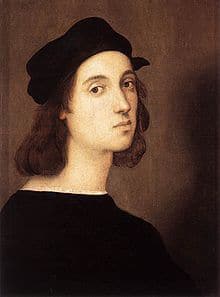
Raphael was born in 1483, in the city of Urbino, in the Marches area of Italy. His father was a court painter and Raphael followed in his father’s footsteps, helping with his father’s own work at the court. He also gained a wide education in the arts, literature and social skills. When he was 11 years old, he was orphaned and his formal guardian became Bartolomeo, a priest Around 1500, aged 17, he was apprenticed to the workshop of the painter, Pietro Perugino. Raphael was adept in learning new painting techniques and his wonderful technical capacity meant he could soon replicate the paintings of his master. His reputation for being a talented artist quickly spread.
By 1501, Raphael was held in high esteem and he gained important commissions, such as the Mond de Crucifixion in 1503. From about 1504, Raphael lived mainly in Florence, which was a burgeoning centre of the Renaissance. He became acquainted with Leonardo da Vinci and Michelangelo. (whom he fell out with on numerous occasions) He was inspired by their art and was quick to learn any new techniques and styles. For example, he often imitated Da Vinci’s style of painting figures in the formation of triangles.
Raphael became the pre-eminent painter in the Court of Medici, but in 1508, Pope Julius II summoned Raphael to the Vatican and gave him important commissions. Pope Julius II wished to see an artistic revival and recreate the prestige of ancient Rome. It was a fortuitous combination – the Pope’s patronage and the high Renaissance artists, such as Raphael. The pope asked Raphael to decorate a room in his residence with frescos. The pope was so impressed with Raphael’s work that he had other frescos removed so that he could have more space for Raphael.
Raphael painted figures from the Bible and also personalities of antiquity, such as the famous painting the School of Athens, which depicted Plato, Aristotle and other philosophers. It is considered the High Renaissance tribute to ancient Greek culture. He even gave it a contemporary touch by painting himself in a corner (wearing black cap on the far right)

The School of Athens by Raffael.
Raphael’s commission was at the same time as Michelangelo was painting the Sistine Chapel, and although the Sistine chapel overshadowed the work of Raphael, his paintings are still considered some of the finest of European art. Also, Raphael is said to have sneaked into the Sistine Chapel and created impressions of Michelangelo’s work. These were very popular, giving an insight into Michelangelo’s masterpieces and Raphael’s talent for reproducing what he saw.
Even when working for the Pope he made time for other commissions, such as the banker Agostino Chigi. Raphael also cared about Rome’s architecture and inscriptions from antiquity. In 1515, he was given legal powers to supervise the extraction of ancient stone. Raphael wished to make sure ancient inscriptions were preserved before the stone was reused. His early death was unfortunate in that he was never able to complete an archaeological map of the city.
Personality
Raphael was noted for his natural charm, cheerfulness and gentlemanly style. Compared to Michelangelo, Raphael was much more at ease in social circles; he didn’t have the same brusqueness that got Michelangelo into trouble. He was able to run a large workshop without discord – contemporaries record his ability to smooth over misunderstandings and arguments between painters and patrons. The combination of political, social and artistic skill was a rare combination.
Painting
Raphael occasionally suffers from the inevitable comparison to Da Vinci and Michelangelo – two of the most gifted artists in history, but he was an influential figure in his own right. He might not have the same inventive genius, but he had a supreme grace of painting and dedication to his art. He concentrated on a more classical interpretation of perfection but was still somewhat influenced by the contemporary Florence tradition. He was known for employing a technique of drawing his paintings in rough before beginning the painting properly. He used these drawings to work on composition and form. He might come up with several drawings per painting, showing different approaches to the same subject. As well as a painter, Raphael was also a noted architect, drawer, and with Raimondi a printmaker of his engravings.
Teacher and legacy
As well as being a great painter, Raphael was also a noted teacher, who could inspire his fellow pupils to greater standards. He had one of the largest art schools in Rome, with over fifty pupils. His enthusiasm and talent helped his school become a famous place of art. The strength of his school also enabled Raphael’s painting style to be defused across Italy. For many years, his style of perfect form and balance were taught in the great academies of art. The biography Vasari said of Raphael
“possessors of such rare and numerous gifts as were seen in Rafaello da Urbino, are not merely men, but mortal gods.”
Personal life

Raphael never married though he had several affairs. Vasari claimed: “He (Raphael) was a very amorous person, delighting much in women, and ever ready to serve them.” He got engaged in 1514 to Maria Bibbiena – the niece of a Cardinal, though he seems to have lost interest and never married.
He was financially secure due to his commissions from paintings and also income from being a Groom of the Chamber – an official papal position which gave him considerable status.
He died on April 6, 1570, aged only 37 (though some argue he died at 33 or 34. He passed away after a difficult, acute illness. There is uncertainty over the cause of death, although Vasari (who could be liberal with the truth) suggested that it was due to “excess of love.”
He was a practising Roman Catholic and before his death, he was able to make his confession and receive the last rites.
He left behind a considerable legacy and was celebrated even during his lifetime, thousands of people attended his funeral. He was buried at the Pantheon – where the inscription on his tomb read
“Here lies that famous Raphael by whom Nature feared to be conquered while he lived, and when he was dying, feared herself to die.”
Selected artwork

Mond Crucifixion (1502-03) an early painting influenced by his teacher Perugino.
Raphael depicted many religious paintings.
Madonna in the Meadow

Madonna in the Meadow (1506)
This is a classic example of Raphael’s art. The composition uses Da Vinci’s technique of painting figures using a triangle as the base. Raphael also drew many tender and compassionate images of the Madona. He infuses the painting with grace, tenderness and serenity. A contrast to the turbulent political times of the Renaissance.
The Entombment
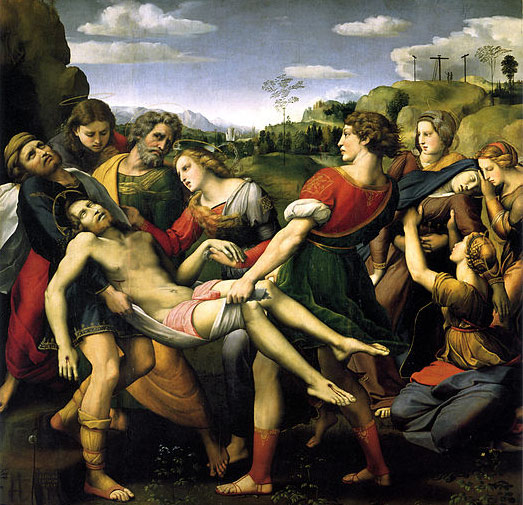
This commission was given by Atalanta Baglioni, whose son had been killed in factional fighting. Raphael worked on it over two years, drawing preparatory outlines of the figures before he was happy. The picture conveyed both the agony of death and the concern of those close to Christ as they carry his body from the cross to his tomb. Giogio Vasari writes of this painting.
“In this most divine picture there is a Dead Christ being borne to the Sepulcher, executed with such freshness and such loving care, that it seems to the eye to have been only just painted.”
Citation: Pettinger, Tejvan. “Biography of Raphael”, Oxford, UK – www.biographyonline.net. Published: 12th Jan 2014. Last updated 12 March 2020.
Raphael Taschen Series at Amazon
Related pages
Artists – A list of the great artists, including Leonardo da Vinci, Claude Monet, Vincent Van Gogh, Pablo Picasso, Michelangelo and Rembrandt.
Famous Italians – Italian composers, artists, politicians and authors. Includes Julius Caesar, Marcus Aurelius, St Francis of Assisi, Michelangelo, Giuseppe Garibaldi and Catherine of Sienna.
Greatest paintings of all time. Including the Mona Lisa by Leonardo da Vinci; Creation of Adam – Sistine Chapel by Michelangelo; and Poppies in a Field – Claude Monet
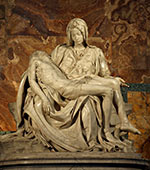
10 Greatest works of art of all time. Including The Pieta and The statue of David by Michelangelo; Ecstasy of St Therese by Bernini, and Sunflowers by Vincent Van Gogh.
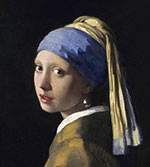
10 most famous paintings – Includes famous works such as; The Mona Lisa, The Last Supper, The Scream, The Girl with a Pearl Earring.