Bank for the uae
Bank for the uae
The best bank in UAE for your business

Nowadays, the United Arab Emirates is considered to be the world’s most important and rapidly developing financial and business hub.
The Government of the United Arab Emirates puts all the efforts to increase the attractiveness of the country to investors, businesspersons and entrepreneurs from all over the world. Besides, a lot of work is done with the purpose of creating the most favourable business-friendly environment for carrying out investment and business activities.
The UAE banking system provides representatives of the business sector with the numerous competitive opportunities and favourable advantages. In fact, many banks offer the utmost various financial tools and specialized business services for corporate clients.
In fact, there are numerous banks that provide specialized services for corporate clients. However, the list of the TOP-3 most popular and highly ranked banking institutions for carrying out business activities includes:
These banks are considered to be the best for opening business accounts in the United Arab Emirates. What are the features of these banking institutions?
Emirates NBD
Emirates NBD is the largest and the most reliable bank of the United Arab Emirates. Besides, it holds the top position among all the UAE banks regarding the quality of the corporate financial services.
Emirates NBD provides the full range of the corporate financial instruments and banking services for corporate clients. Such banking instruments include all the types of business bank accounts, business loans, mortgages, etc.
Emirates NBD is the best bank in the UAE for opening business bank accounts. This bank is ready to provide with the best bank accounts in the UAE that will meet all business and financial requirements. In fact, you can choose from:
Also, it should be noted that all the bank accounts are available in various currencies and have competitive interest rates.
Besides, there is an opportunity of obtaining an insurance certificate for various business purposes.
Mashreq Bank
Mashreq Bank is the oldest private bank in the United Arab Emirates. This bank has the long and vast experience of serving corporate clients.
Among the numerous business products and services the corporate client’s area offered are:
Besides, Mashreq Bank offers the most various business account solutions including:
Besides, there is an opportunity of making a Term Deposit with a period from 7 days to 1 year and a possibility of a premature withdrawal. The minimum required account balance amounts AED 10.000,-. However, it should be taken into consideration that this option is available only under the condition of having current or savings account with Mashreq.
All the business account holders get free access to the Online-Banking service and may take advantage of the numerous additional business products including Business Insurance, favourable investment programmes, etc.
Abu Dhabi Commercial Bank
Abu Dhabi Commercial Bank offers two major types of accounts for business purposes:
At the same time, each account is available in the various account options, which are designed for solving the most various business financial tasks. These account options differ both in the purpose and in the size of the minimum account balance.
Business Current Account is available in the following options:
Among the Commercial Banking Call Account options there are:
Both Business Current Account and Commercial Banking Call Account holders get free access to the Online-Banking, IVR, and Mobile Banking services. Services of the Dedicated Relationship Manager are also provided.
Conclusion
The United Arab Emirates banking system provides all the necessary financial tools and banking services for corporate clients. Emirates NBD, Mashreq Bank, and Abu Dhabi Commercial Bank are considered the best UAE banks for opening business bank accounts.
See also more details on:
Guide to banking in the United Arab Emirates
This guide to banking in the United Arab Emirates offers an overview of the sector, the different payment options for expats, and how to handle fraud.
As you might expect from a major global financial hub, the UAE boasts an advanced banking industry. Banks in the UAE are quick to embrace new developments, from blockchain to artificial intelligence. Expats living in the country naturally benefit from this proactive approach; it isn’t uncommon for bank officials to visit residents in their homes or offices to facilitate financial transactions. Digital and mobile banking are also popular, and there is a wide network of ATMs across the country.
This guide offers an introduction to banking in the UAE; including a primer on the currency and payment technologies in use across the desert nation. It includes the following sections:
An overview of banking in the UAE
As a tranquil investment destination in a troublesome neighborhood, people often refer to the Emirates as the Switzerland of the Middle East. This is largely due to the ease of banking in the UAE. Indeed, an increasing number of ultra-high-net-worth individuals now consider the country a safe haven. More of the world’s wealthiest could move their funds to the country over the next decade, according to New World Wealth and The Wealth Report.

Many analysts consider the onshore banking sector overcrowded, considering the size of the population. Some 52 local and foreign banks operate in the country and are members of the UAE Banks Federation; making for a robust financial sector. Of these, 22 are national banks. The UAE Central Bank monitors all banking activities in the country and regulates new business; as well as the adoption of new technologies.
Strong recovery and projection
The global financial crisis in 2008–2009 hit banks in the UAE badly, thanks to their exposure to foreign account holders. However, they have since recovered and rating agency Moody’s now rates the sector as stable on account of its resilient financial fundamentals. While primarily deposit funded, UAE banks boast strong liquidity buffers. Furthermore, the government’s willingness and capacity to support local banks remain high. Banks in the UAE posted strong profits in the first half of 2019; although government and semi-government entities were principally responsible for that performance. As of July 2019, gross bank assets stood at AED 2.9 billion, according to central bank statistics. In total, financial and insurance activities contribute approximately 8.6% of the UAE’s GDP.
UAE banks have adopted several global standards; such as the International Accounting Standard, the International Financial Reporting Standards, and most recently, the capital adequacy regulations in line with Basel III regulations. As of 2011, International Bank Account (IBAN) numbers have been mandatory for all account holders in the UAE to conduct any local or international transactions.
A range of services is available to those banking in the UAE. Between locally established and foreign financial institutions, there are four types of banks in the country:
Currency in the UAE
The seven constituent emirates use the UAE dirham as legal tender. The term dirham is officially abbreviated as AED, or more commonly, Dh or Dhs. Each dirham is subdivided into 100 fils. As with other Persian Gulf currencies, the dirham has been permanently pegged to the US dollar; at an exchange rate of AED 3.67 to US$1. Put another way, AED 1=US$0.272294 approximately. As of August 2019, the UAE was officially trading at AED 4.06 to €1 and 4.48 to £1.

The dirham dates to two years after the federation of the UAE. It was first introduced on 19 May 1973, replacing the Qatar and Dubai riyal at par. The Qatar and Dubai riyal had circulated since 1966 in all the emirates except Abu Dhabi, where the dirham replaced the Bahraini dinar at 1 dinar = 10 dirhams. Before 1966, the emirates that later became the UAE used the Gulf rupee, issued by the Reserve Bank of India, and equivalent to the Indian rupee.
The UAE Currency Board issues bank notes. These are currently available in denominations of 5 (brown), 10 (green), 20 (light blue), 50 (purple), 100 (pink), 200 (green/brown), 500 (navy blue) and 1,000 (greenish blue) dirhams. Coins are available in denominations of 25fils, 50fils and AED 1.
Some of the larger supermarkets and stores will accept the US dollar and the Saudi riyal as tender. In such cases, exchange rates are likely unfavorable to the customer.
Cash machines and ATMs in the UAE
As a trading economy, access to cash is readily available across the seven emirates. There were 5,261 ATMs in the UAE as of 2018, with a network that covers malls, shopping arcades, community centers, and local and side streets.
Most account holders can easily withdraw cash from any ATM on the local UAESwitch network when banking in the UAE. However, customers must pay AED 2 per withdrawal at another bank’s ATM. Most banks publish an ATM network map on their website. ATMs in the UAE typically dispense notes of AED 50 and above.
Banking in the UAE
As of April 2017, more than 85% of the total gross assets of the sector and 90% of the network of branches belong to the 22 licensed local banks. In fact, the five biggest banks in the UAE account for about 60% of the sector’s assets between them.
Customers can choose how to manage their money and finances with Emirati banks, whether over the counter or remotely via the internet. Nearly every bank in the UAE offers internet banking, while phone banking is commonplace and widely available. At the same time, customers who want to interact with a real person can do so either at a branch or service counters at prominent malls and other locations around the country. Banks in the UAE have a large footprint and are in a good position to serve the customer.
Banking hours are 08:00 to 15:00 from Saturday to Wednesday, and 08:00 to 12:00 on Thursday, and like other businesses, close on Fridays.
Major banks in the UAE
The most prominent local banks in the UAE are:
First Abu Dhabi Bank: The merger of the National Bank of Abu Dhabi and First Gulf Bank created the largest bank by assets. Its branches extend across the UAE, including the Saudi and Omani borders. Thanks to a relationship with Etihad Airways, some account holders can earn air miles with the Abu Dhabi-based airline on every FAB transaction.
Emirates NBD: The largest banking group in the Middle East has its headquarters in Dubai and currently manages 221 branches and 1,023 cash machines in the UAE and overseas. It operates through different business segments, including retail banking and wealth management, wholesale banking, Islamic banking, international, and information technology and operations. It is consistently among the first to embrace and launch innovative services such as robot assistants and a 60-second money transfer service.
Mashreq: As one of the oldest private banks in the UAE, Mashreq was founded in 1967 in Dubai. An associated company of the HSBC Group, the bank operates around 45 domestic branches and 20 international branches. Mashreq provides retail banking, commercial banking, investment banking, Islamic banking, brokerage services, and asset management services.
Islamic banking in the UAE
Given its strong focus on the global Islamic economy, the UAE’s Islamic banking sector is generally of a high standard. There are eight full-fledged Islamic banks in the UAE and 23 Islamic windows; conventional banks in the UAE run these. Collectively, these account for 19% of the total banking sector assets.
The major Islamic banks in the UAE are:
Dubai Islamic Bank: Established in 1975 and headquartered in Dubai, the bank serves approximately 1.7 million customers and has a network of 90 branches across the country. It operates and corporate banking division as well as real estate development, treasury, and other business segments. In July 2019, it acquired Noor Bank, another Islamic financial institution in the country, and is now the fourth-largest bank by assets in the UAE.
Abu Dhabi Islamic Bank: Although only set up in 1997, the Abu Dhabi-based bank has an international network that extends to Egypt, Iraq, Saudi Arabia, and the UK. The bank’s activities span global retail and wholesale banking, private banking, real estate, and the treasury business.
International banks in the UAE
In total, 26 foreign banks operate in the UAE. Many of these licenses date from before the establishment of the UAE Central Bank. Seven are from the UK, France, and the US, while the rest of the foreign banks are from the Middle East, North Africa, and South Asia. Among those that offer personal banking services are HSBC, Citibank, Standard Chartered, Bank of Baroda, and Habib Bank AG Zurich.
Others, such as Société Générale and Barclays, offer specialized services in other areas. All must comply with local regulations as laid down by the UAE Central Bank. As such, they follow common rules concerning operating hours, maximum fees, and safety procedures, but may have their own regulations about minimum balances.
Between them, foreign banks in the UAE operate 86 branches. This is largely because they are restricted to a maximum of eight branches each. They compensate for those limits with service counters at high-density locations such as popular shopping malls.
Investment banks in the UAE
Investment banking in the UAE is possible via several international and local financial institutions. The market for advisory and asset-management operations comprises a range of smaller international players operating alongside major local and global wholesale banks. These cater to retail and corporate customers, with varying minimum requirements.
The major investment banking players with operations or representative offices in the UAE include HSBC Financial Services, Emirates Investment Bank, Shuaa Capital, Allied Investment Partners, Credit Suisse, Morgan Stanley, Bank Julius Baer, Pictet & Cie, and UBS.
Digital banking in the UAE
Those banking in the UAE will find it easy to operate their accounts online or via smartphone apps. Nearly every major bank has an online presence, and some, such as Emirates NBD, offer virtual assistants to help with online transactions.

Banking in the UAE is also possible entirely within a digital ecosystem. Two mobile-only banks offer all their services within a smartphone app. They are Liv, backed by Emirates NBD, and Neo, powered by Mashreq. Both allow you to open accounts online within a few hours. Once you have downloaded the app, scanned your Emirates ID, and topped up the account, a local delivery service will contact you within a day and drop off your new debit card. You will also receive an IBAN account number and a Swift code; therefore transferring to and from any other bank account is possible almost immediately.
Banking services in the UAE
Expats banking in the UAE can expect to use the following services.
Hold an account
Current accounts: Most retail banks in the UAE offer a range of everyday accounts. These include standard accounts and products for students and young people, as well as joint accounts for families.
Savings accounts: Many expats in the UAE also hold savings accounts when banking there. These typically offer a higher interest rate but do not come with checkbooks.
Investments and loans
Loans and overdrafts: Customers banking in the UAE can take out personal loans easily, whether to buy a car or a home or to consolidate debt. Most banks also offer short-term and long-term overdrafts.
Mortgages: With the UAE’s property market largely oriented towards expats and foreigners, many banks offer mortgage loans including to first-time buyers who meet their criteria.
Investments: Retail banks in the UAE offer a range of different investments, including funds, bonds, shares, and insurance-linked pension plans. However, minimum balances apply.
Forms of banking
Digital and online banking: Internet banking is available through most banks to customers who want a more convenient way of keeping track of their finances.
Mobile banking: The main banks in the UK now offer mobile banking apps so that customers can access accounts and make payments from their mobile phones and tablets. There are also specific mobile-only banks.
Business banking: Banking solutions for those who have their own companies in the UAE are generally restricted to bank account services.
Money transfer: Thanks to relationships with correspondent banks, a range of banking providers in the UAE offer easy money transfer services between different countries.
Opening a bank account in the UAE
It is easy to open a bank account in the UAE. However, the process can take anything from a day to a couple of weeks, depending on the type of account. In general, once you’ve got your residence visa, you can log onto a bank’s website or call their hotline and request a new account. An agent will usually come over to your office or home within a day or two to enable the process.
It is also possible to open a UAE savings bank account before you arrive, but such accounts carry minimum balance requirements up to AED 100,000. It is therefore advisable to wait until you are in the UAE and have your residence visa stamped in your passport before opening a bank account. Our guide to opening a bank account explains the process in more detail.
Payment methods in the UAE
There is a range of different payment methods available to those banking in the UAE.
Cash: Still a popular way to pay in the UAE, cash remains essential for small purchases under AED 10 and minimum-fare taxi rides.
Checks: Checks remain an important payment instrument in the UAE. They are essential for new rental contracts and as security for credit cards and loans. Bounced checks are considered a criminal offense punishable by prison sentences.
Payment cards: Debit and credit cards appear to have taken over from cash in the UAE in recent years. Some 84% of respondents in a recent survey of shoppers said cards were a more secure way of paying for purchases. Debit and credit cards are now widely accepted, including at corner stores, gas stations, and in taxis.
Direct debits and standing orders: Those banking in the UAE can use direct debits and standing orders to pay bills, such as utility or mobile phone charges. As of 2018, banks in the UAE have enabled direct debits for rent payments. Although standing orders have been operational for some years now, their amounts can only be changed by first canceling a previous order and then creating a fresh one.

Online and mobile payments: When shopping or paying bills online in the UAE, payments are principally made using credit and debit cards, and the e-dirham (for government services). In recent years, services such as PayPal have become more popular.
Digital wallets: As a high-consumption economy, the UAE was one of the world’s first countries to embrace digital wallets such as Apple Pay, Google Pay, and Samsung Pay. These mobile payment platforms aim to streamline payments for consumers by combining cash, credit and debit cards, and gift cards in a single smartphone app. The UAE has a wide network of point-of-sale systems that support near-field communications for immediate, contactless transactions. Most are free to use.
Money transfers
Local money transfers: Local money transfers between UAE banks can be effected within a day or two once you have added a beneficiary to your account. Depending on where you are banking in the UAE, this process can take a day or two. Not all local transactions are free, and some banks may ask for recipients’ Emirates ID and passport copy to avoid money laundering.
International money transfers: With nearly 200 nationalities living in the country, most banks in the UAE offer international remittance services. To transfer money to overseas accounts using different currencies, you will need the IBAN (international bank account number) and the recipient’s SWIFT or BIC (bank identifier code). Many local banks have correspondent relationships with institutions in other countries, so depending on where you want to move your money, it’s worth checking about these. Free transfers to some countries, such as India, are considered the norm.
There are also alternative money transfer solutions to banks which can sometimes offer easier and cheaper international transfer options. Several money exchange companies, such as UAE Exchange, Al Ansari Exchange, and Lulu Exchange operate across the country, with branch counters at different malls.
In addition, there are several international online services. However, before using any transfer service, it is advisable to compare exchange rates and fees to find the cheapest option for your international money transfers. You can do this by using the website Monito.
The largest international money transfer companies used in the UAE are:
Bank account charges
Transaction fees when banking in the UAE are standardized to prevent financial institutions from overcharging their customers. In line with UAE Central Bank regulations, banks in the Emirates are also required to publish any charges levied on all corporate and retail-related products.
As of the most recent update in 2018, these fees are capped as follows:
| Account opening fees | None |
| Minimum balance | Maximum of AED 5,000 |
| Monthly minimum balance penalty | AED 50 |
| Using another (local) bank’s ATM in the UAE | AED 2 |
| New checkbook | AED 25 (the first one is free) |
| Manager’s check issue fee | AED 30 |
| Account balance letter | AED 50 |
| No liability certificate | AED 60 |
| Release letter | AED 50 |
| Bounced check fee | AED 100 (no charge if written to yourself) |
| Account closure fee | AED 100 |
Offshore banking in the UAE
As an expat haven, offshore banks from jurisdictions all over the world offer representations in the UAE, particularly in Dubai. Anyone with a valid residence visa in the UAE can open an offshore bank account to import and export funds.
There are several advantages to offshore bank accounts and depending on your circumstances, you might want to explore these further. Essentially, anyone that works abroad, spends a lot of time in more than one country, or frequently transfers money between countries can benefit from having an offshore account. Many offshore accounts also come with distinct financial and legal advantages, such as lower tax rates.
Offshore banking is generally considered to be stable, reliable, and secure. And in the UAE, it encompasses a range of services, including asset protection, private bank accounts, wealth management, portfolio management, tax consultation, inheritance planning, and company formation. Some of the major banks are HSBC Offshore, Abbey National Offshore, ABN Amro, Dresdner, and Barclays.
Banking security and fraud in the UAE
From smishing to phishing, the UAE has witnessed several types of bank fraud. In fact, there were over 800 cyberattack cases in Dubai in the three years to June 2019. Authorities and banks in the UAE have invested heavily over the years in numerous public awareness campaigns to educate customers about cyber fraud and strict laws to penalize cybercriminals have since been enacted.

Credit card fraud remains the most common issue in the UAE. More than a quarter of UAE residents reported being a victim over a five-year period, according to a 2016 study by ACI Worldwide.
Types of bank fraud
Most banks and payment technology companies, such as Visa and MasterCard, now issue chip-enabled payment cards that cannot be skimmed. An added layer of security prompts customers for a one-time password (OTP) that is sent to their mobiles when paying for goods and services online.
In January 2019, the UAE Banks Federation launched security improvements to the check verification process to tackle checkbook fraud. These include enhanced encryption technology and increasing the use of QR codes; where a unique code is printed on each leaf of newly issued checkbooks.
By and large, consumers bear the brunt of bank fraud in the UAE. Besides taking security measures such as strong passwords and security software, they are also advised to sign up for SMS and email alerts when banking in the UAE. That way, they can be alerted to unusual transactions within minutes of their occurrence.
Dealing with bank fraud in the UAE
Alert your bank as soon as you notice a fraudulent transaction. If you spot an erroneous transaction on your bank statement, you must report it within 30 days. The bank may ask you to fill in and fax them a form or letter and will then investigate the issue. The process may take up to 90 days. The bank may also ask for documents that will help your case, such as receipts, confirmation emails, or text messages related to the fraudulent transaction.
You should immediately change your bank passwords, and if the bank asks, file a police report.
Lost or stolen bank cards in the UAE
Banks in the UAE are well equipped to handle lost or stolen cards. Although it depends on the card provider, new cards are generally issued within two to five working days. Call your bank or credit card company as soon as you notice a lost card and ask for it to be blocked. You will in all probability need to file a police report, whether you are at home or abroad.
Some credit card providers and banks in the UAE offer insurance protection, but this usually only kicks in if you report the issue within 48 hours of discovery.
In the final analysis, resolving issues of frauds remains a lengthy and somewhat tedious process for those banking in the UAE. As the UAE newspaper The National reports, fraud victims must pay the disputed amounts, however large, until the issue is resolved and the money reimbursed.
Making a complaint about banks in the UAE
If you are unhappy with the service received when banking in the UAE, you should first try to resolve the issue directly through the bank’s complaints department. If the complaint is already in court, you will need to wait for the court’s decision before proceeding.
You may, however, sometimes wish to escalate matters to the UAE Central Bank. As the regulatory authority over banks and other financial institutions, it will oversee your complaint. A form is available on its website. On the other hand, you can complain in person by visiting any one of the Central Bank branches in Al Ain, Dubai, Sharjah, Fujairah, or Ras Al Khaimah. A third way to complain is by phone: the toll-free number for the UAE Central Bank’s Consumer Protection Unit is 800 CBUAE (800 22823). You will be given a reference number, and the Central Bank will update you via email or SMS once they have made a decision.
Alternatives to banking in the UAE
The UAE’s networked economy and transactional business environment make it easy to operate your finances via an international account.
You will find it easy enough to withdraw any cash you need from local ATMs using an international card. However, you will usually be charged for each transaction. Fees on international cards can range to AED 25. By contrast, paying directly for your shopping with an international credit or debit card is easier – if you are comfortable with the fees that your lender may levy. UAE retailers accept a wide range of card associations, including Visa, Mastercard, American Express, and China Union Pay. However, some transactions, such as short taxi fares or small purchases, are best done in cash.
Expats working for local companies or on contracts beyond a few months will benefit from banking in the Emirates. In addition, local creditors may not be willing to transfer money overseas because of the high fees involved. Over the longer term, banking in the UAE eases the process of obtaining credit cards and taking out a car loan or a home mortgage as compared to using an overseas account.
If you do want to use a bank account in another country, though, it’s entirely possible. Simply call your bank and ask them if there are limits to the amount of money you can transfer or withdraw within a day, and what other issues you may face. Chances are, there may not be any issues at all.
Banks in the United Arab Emirates
 |  |  |  |  |  |
| ADCB | Al Hilal Bank | Dubai Bank | NBAD | NBD | Union National Bank |
The UAE banking sector includes approximately 45 commercial banks of which over 50% are foreign banks.
First Abu Dhabi Bank (FAB) – The largest bank in the United Arab Emirates. It was formed through the merger of National Bank of Abu Dhabi (NBAD) and First Gulf Bank in 2017.
Abu Dhabi Commercial Bank (ADCB) – One of the biggest banks in UAE with a market share of around 10%-11% in deposits and loans. The company operates a network of about 50 offices and 310 ATMs nationwide. It also has two branches in India, offshore branch in Jersey, and representative offices in London and Singapore.
Citibank has been present in the United Arab Emirates since 1964 when it opened its branch in Dubai. The company provides a wide array of products and services to retail, corporate and institutional customers. Citi also operates in Bahrain, Egypt, Qatar, Kuwait, Lebanon, Jordan, Tunisia, Pakistan, Morocco and Algeria.
HSBC Bank Middle East (UAE Branch) is the largest and most widely represented international bank in the Middle East. The United Arab Emirates represents a key part of HSBC’s business.
Abu Dhabi Islamic Bank (ADIB) – The Shariah-compliant lender providing personal, business, private and corporate banking services. ADIB has international locations in Egypt, Iraq, Qatar and the United Kingdom. Recently, it acquired Barclays’s retail business in the UAE.
Al Ahli Bank of Kuwait has a presence in the UAE through two branches in Dubai and Abu-Dhabi.
Al Hilal Bank, founded on June 19, 2008, is a 100% government-owned Islamic bank with 20 branches and over 100 ATMs across the country. It was named “Best Islamic Financial Institution” in the UAE by Global Finance magazine and “Best Islamic Asset Management Company” by International Finance Magazine.
Al Khaliji France operates a network of branches across Abu Dhabi, Dubai, Sharjah, and Ras Al Khaima. It is a subsidiary of Al Khalij Commercial Bank, one of Qatar’s leading financial institutions.
ABN Amro Bank N.V. has provided business and private banking services in the UAE since 1974.
Arab Bank for Investment & Foreign Trade (Al Masraf), headquartered in Abu Dhabi, offers a full range of financial services through 11 branches.
Arab African International Bank offers the following products and services: depository and retail asset products, remittances, safe boxes, trade finance and credit facilities.
Arab Bank PLC (Dubai) is a subsidiary of Arab Bank plc, a global Arab banking group headquartered in Amman, Jordan.
Bank of Baroda (UAE Branch) was established in 1974 and is located in Dubai.
Banque Du Caire has four branches in Dubai, Abu Dhabi, Ras al Khaima and Sharjah.
Bank Melli Iran (U.A.E.) has offices in Dubai, Abu Dhabi, Sharjah, Fujairah, Al Ain and Ras Al Khaimah.
Bank Saderat Iran has 8 branches and one regional office in the United Arab Emirates. The Bank’s profit is one of the highest among foreign banks in the UAE.
Bank of Sharjah – A publicly listed Islamic financial services company. It operates through 5 branches located in the Emirates of Sharjah, Dubai, Abu Dhabi and City of Al Ain.
Barclays Bank PLC (Dubai International Financial Centre Branch)
Blom Bank France offers corporate and retail banking services in the UAE including trade finance, project financing, current accounts and term deposits.
BNP Paribas operates the full-service commercial branches in Dubai and Abu Dhabi as well as BNP Paribas Wealth Management (DIFC) Ltd in Dubai.
Commercial Bank International (CBI) provides standard banking services. The company’s shares are listed on the Abu Dhabi Securities Exchange.
Commercial Bank of Dubai operates through a network of approximately 30 branches and more than 200 ATMs nationwide.
Doha Bank, one of the largest commercial banks in Qatar, operates two branches and 23 ATMs in Dubai and Abu Dhabi.
Dubai Bank, established in 2002, was an Islamic bank providing corporate and personal banking services through more than 20 branches across the country. It was acquired by Emirates Islamic Bank.
Dubai Islamic Bank (DIB) – A public joint stock company and one of the largest sharia-compliant lenders in the United Arab Emirates. As of March 15, 2018, it had a market capitalization of US$7.5 billion.
Emirates Investment Bank (formerly known as Arab Emirates Investment Bank) provides private and investment banking services.
Emirates Islamic bank – The second-largest Shariah-compliant lender in Dubai. It offers retail and corporate banking services through over 60 branches and 100 ATMs. It operates as a subsidiary of Emirates NBD PJSC.
Emirates NBD Bank – One of the largest banking groups in the Middle East and the second largest bank in the UAE. As of September 30, 2017, it had total assets of AED 461 billion (US$126 billion).
First Gulf Bank (FGB), founded in 1979, completed the merger with National Bank of Abu Dhabi in April 2017.
Habib Bank AG Zurich (HBZ UAE) is one of the top five foreign banks in the United Arab Emirates.
ICICI Bank Ltd (Abu Dhabi Representative Office, Dubai Representative Office)
Invest bank – A premier commercial bank offering a comprehensive range of products and services to corporate and retail customers. It is the first UAE bank to open a branch in Lebanon.
Mashreq Bank is the largest private sector bank in the UAE with a growing retail presence in the region including Qatar, Kuwait, Egypt and Bahrain. As of March 14, 2018, it had a market capitalization of US$3.7 billion.
National Bank of Abu Dhabi (NBAD), established in 1968, merged with First Gulf Bankin in 2017.
National Bank of Bahrain (Abu Dhabi Branch)
National Bank of Fujairah (NBF) is a corporate bank operating through about 20 branches in Fujairah, Abu Dhabi, Sharjah, Dibba, Deira, Dubai, Jebel Ali, Mussafah, Masafi, Qidfah, Ajman, Tawian, Al Ain, Fujairah Free Zone and Fujairah City Centre.
National Bank of Oman – The only Omani bank licensed to operate in Dubai.
National Bank of Umm Al-Qaiwain (NBQ) operates through around 30 branches across the seven Emirates. As of March 15, 2018, it had a market of AED 5.5 billion.
Noor Bank (formerly Noor Islamic Bank) – A Shari’a compliant commercial bank, established in 2007. It is owned by Emirates Investment Authority and Noor Investment Group.
RAKBANK – The trading name of the National Bank of Ras Al-Khaimah. It provides retail and corporate banking services through a network of more than 30 branches. The company was founded in 1976 and is based in the emirate of Ras Al-Khaimah. Rakbank is 52.8% owned by the Government of Ras Al-Khaimah.
Scotiabank offers precious metals products and services in the UAE. It is the first Canadian bank to operate in Dubai.
Standard Chartered operates the most extensive branch network among foreign banks in the UAE, with more than 10 branches, 5 electronic banking units and over 100 ATMs.
Sharjah Islamic Bank (SIB) – An Islamic bank providing a diverse range of Sharia’a compliant retail, commercial, corporate, investment and international banking services. As of September 30, 2017, the company had total assets of AED 37.8 billion.
UBS Group, a Swiss global firm, has a representative office in Abu Dhabi as well as UBS AG Dubai branch.
Union Bancaire Privée, a family-owned Swiss private bank, has a subsidiary (Union Bancaire Privée (Middle East) Ltd) and representative office in Dubai.
Union National Bank – One of the leading local banks in the UAE with 110 retail branches and business offices, 257 ATMs and over 1,840 employees. It also has overseas branches in Egypt, Qatar and Kuwait as well as a representative office in China. UNB was founded in 1982 and is headquartered in Abu Dhabi.
United Arab Bank (UAB) was founded in 1975 and is based in Sharjah. It provides commercial and retail banking services through a network of over 30 offices across the Emirates. It was named Most Innovative SME Bank and Best Retail Bank in the United Arab Emirates.
Biggest Banks in the UAE
Following are the largest banks the United Arab Emirates ranked by total assets.
* First Abu Dhabi Bank was created through the merger of National Bank of Abu Dhabi and First Gulf Bank in 2017.
All data and information provided on this site is for informational purposes only.
Best Banks in UAE (and Dubai) for Expats
With top marks in global business competitiveness, happiness, quality of life and innovation, the UAE continues to attract expats from around the world. In fact, the expat concentration in the UAE is one of the highest worldwide, with about 80% non-Emirati.
Choosing a bank is among the first things to do as an expat when moving to a new country, so we’ve compiled a banking guide with a list of the best banks in the UAE for expats.
Opening a bank account in Dubai and the UAE for expats
Before opening a bank account in the UAE, you need to prove your residence & employment status. Here are the standard documents required to open a UAE Bank Account:
Things to consider when selecting a bank in the UAE
If you’ve got all your documents ready, we’ll discuss things you need to consider when choosing a bank in the UAE.
Competitive rates
It should go without saying that finding competitive savings and loan rates are important in your search for a bank in the UAE. However, rates may not be the most important consideration for an expat, especially as the UAE bank market is extremely competitive. The difference in rates (savings and loans) among banks is mostly within basis points (0.01%) of each other.
Bank & employer relationship
The relationship between your employer and your bank isn’t usually a consideration in most countries. But, in the UAE, you may receive recommendations from your employer to use certain banks. These banks may offer quicker salary receipts, lower minimum balance requirements and cheap rates on international transfers. If your employer has such a relationship, it might be in your financial interest to bank there as well.
Branch & ATM network
Getting your bearings right in a new country is tough. Don’t make it any harder by choosing a bank with branches far from your home or office in UAE. I’d recommend you select the bigger banks with larger footprints and ATM networks to save on charges from using other bank ATMs. However, with technology, this might be less of a consideration especially if you use Apple, Google or Samsung Pay. Thankfully, most places in the UAE take cards, maybe except some souks, which prefer cash.
International transfer fees
As an expat, you may come alone or with your family to the UAE. Usually, you will still need to pay bills at home or even send money to your loved ones back home. Thus, it is important to check out international transfer fees to your home country as this may be a significant expense in your annual budget.
Minimum balance requirements
Loan options
Generally, UAE banks offer loans that are 10 – 20 times your monthly salary. You will also need to show sufficient proof of employment and satisfactory work history to qualify. On the other hand, mortgages are more accommodating. A home mortgage loan of 50 – 70 times your monthly salary is common in the UAE. Local banks tend to offer better rates than international banks in terms of loan size and interest rate. Always compare banks for the specific type of loan you are interested in.
Top Banks in UAE
An overview of UAE’s leading financial institutions
Overview of Banks in the UAE
The UAE Central Bank is the primary financial regulatory authority in the country. There are 22 local and 30 foreign banks in the UAE. Larger banks dominate the country’s banking industry, with the five biggest banks accounting for about 60% of the sector’s assets.
Islamic banking includes eight full-fledged Islamic banks and 23 Islamic windows set up by conventional banks in the UAE, collectively accounting for 19% of the total banking sector assets.
There are four types of banks in the UAE:

For anyone considering a career in banking in the UAE, this list of top banks in the UAE is a helpful guide on where to start. To learn more, see our lists of financial institutions.
The Top Banks in UAE are:
First Abu Dhabi Bank (FAB)
First Abu Dhabi Bank (FAB) is the largest banking group by assets in the UAE. It is headquartered in Dubai and employs 5,451 staff. T ogether with its subsidiaries, FAB provides various banking products and services in the United Arab Emirates, Europe, the Americas, the Middle East, Africa, and the Asia Pacific.
The company operates through Corporate and Investment Banking and Personal Banking Group segments. FAB acquired First Gulf Bank in December 2016.
Net income: AED 10.56 billion (2020)
Total assets: AED 940.75 billion (3/2021)
Emirates NBD
Emirates NBD is the second-largest banking group by assets in the UAE. It is headquartered in Dubai and employs 9,000 staff. The bank currently manages 915 branches and 4,029 ATMs and SDMs in UAE and overseas. It operates through different business segments: Retail Banking and Wealth Management, Wholesale Banking, Islamic Banking (IB), International, and Information Technology and Operations.
Net income: AED 6.96 billion (2020)
Total assets: AED 695.06 billion (3/2021)
Abu Dhabi Commercial Bank
Founded in 1985, Abu Dhabi Commercial Bank provides retail, commercial, Islamic banking, and other financial services. The bank operates through the following business segments: Consumer Banking, Wholesale Banking, Investments and Treasury Banking, and Property Management.
The bank employs 5,000 staff and is headquartered in Abu Dhabi. It serves customers through a network of 72 branches and approximately 450 ATMs in the United Arab Emirates. It merged with Union National Bank in 2019.
Net income: AED 3.81 billion (2020)
Total assets: AED 395.82 billion (3/2021)
First Gulf Bank
First Gulf Bank was established in 1979 and is headquartered in Abu Dhabi. The bank‘s business segments include Wholesale Banking Group, Treasury and Global Markets, Consumer Banking, Real Estate, and Other Operations. It employs around 1,400 individuals and is present in 19 countries, including Kuwait, China, the UK, France, Malaysia, Bahrain, Sudan, Hong Kong, Switzerland, Lebanon, Labuan, Oman, Egypt, USA, Jordan, Brazil, and India.
In 2016, the bank’s total assets amounted to US$66 billion and net profit reached US$1.65 billion.
Dubai Islamic Bank
Dubai Islamic Bank came into existence in 1975 and is headquartered in Dubai. The bank operates through its Consumer Banking, Corporate Banking, Real Estate Development, Treasury, and Other business segments. It serves around two million customers and maintains 66 branches across the UAE.
Net income: AED 3.29 billion (2020)
Total assets: AED 291.71 billion (3/2021)
Mashreq Bank
Headquartered in Dubai, Mashreq Bank was founded in 1967, making it one of the oldest banks in the UAE. The bank is a joint-stock company and is an associated company of the HSBC Group. It provides retail banking, commercial banking, investment banking, Islamic banking, brokerage services, and asset management services.
The bank operates around 45 domestic branches and 20 international branches and is present in Egypt, Qatar, Kuwait, and Bahrain. It currently employs around 4,000 staff.
Total assets: AED 162.25 billion (3/2021)
Abu Dhabi Islamic Bank
Established in 1997, Abu Dhabi Islamic Bank is headquartered in Abu Dhabi. It operates through the following segments: Global Retail Banking, Global Wholesale Banking, Private Banking, Treasury, Real Estate, and Others. It is present in Iraq, Qatar, and Sudan.
Net income: AED 1.60 billion (2020)
Total assets: AED 130.69 billion (3/2021)
Commercial Bank of Dubai
The Commercial Bank of Dubai was founded in 1969 and is headquartered in Dubai. The bank offers corporate banking, commercial banking, personal banking, Islamic banking, and support services. It employs around 1,200 individuals.
Net income: AED 1.12 billion (2020)
Total assets: AED 102.47 billion (3/2021)
RAKBANK
Established in 1976, RAKBANK is headquartered in Ras Al-Khaimah, UAE. It is also known as the National Bank of Ras Al Khaimah (P.J.S.C). The bank provides retail and commercial banking services to individuals and businesses in UAE.
The business operates through five segments: Retail Banking, Wholesale Banking, Business Banking, Treasury, and Insurance Business. It manages a network of 27 branches and serves around 700,000 customers.
Net income: AED 505.38 million (2020)
Total assets: AED 52.8 billion (2020)
Careers in Investment Banking
To break into investment banking, there are several important things to focus on. These include networking, resume, experience, and financial modeling skills. To learn more, explore our interactive career map:

For banking careers, you will have a significant edge over the competition with our financial modeling courses.
Additional Resources
Thank you for reading CFI’s guide to Top Banks in UAE. For anyone looking for a career in banking, this list is a great place to start your networking. Please also see these additional resources:
Banks in UAE


Overview of Banks in UAE
The Central Bank of UAE is the primary regulator of the banking system in UAE, responsible for formulating and implementing the banking, credit, and monetary policies Monetary Policies Monetary policy refers to the steps taken by a country’s central bank to control the money supply for economic stability. For example, policymakers manipulate money circulation for increasing employment, GDP, price stability by using tools such as interest rates, reserves, bonds, etc. read more across the UAE. It maintains the gold and foreign currency reserves and acts as the bank of banks operating in the UAE. The Central Bank serves as the state’s financial agent.
The Commercial Banks in UAE are of two major categories: –
There are 46 commercial, locally incorporated banks in the UAE. The banks in UAE are dominated by the local banks owned by the governments of various Emirates.
Table of contents

You are free to use this image on your website, templates, etc, Please provide us with an attribution link How to Provide Attribution? Article Link to be Hyperlinked
For eg:
Source: Banks in UAE (wallstreetmojo.com)
Top 10 Banks in UAE
Here is the list of the top 10 banks in UAE: –
#1. First Abu Dhabi Bank:
#2. Emirates NBD:
#3. Abu Dhabi Commercial Bank (ADCB):
#4. Dubai Islamic Bank:
Dubai Islamic Bank was founded in 1975. It was the first Islamic Bank with the principles of Islam in its banking practices. Also, the largest Islamic bank in the UAE. The bank is headquartered in Dubai. The first Islamic bank acts as a torchbearer for Shariah-compliant banking provided by other banks worldwide. It promotes an innovative range of products per Shariah law. The bank has many business segments, including consumer banking, corporate banking, real estate Real Estate At its most basic principle, Real Estate can be defined as properties that comprise land and its tangible attachments. The land includes the actual surface of the earth and any permanent natural objects such as water, dirt, or rock and any minerals or particulars under the surface. read more development, treasury, etc.
#5. Union National Bank:
#6. Abu Dhabi Islamic Bank:
#7. National Bank of Ras Al- Khaimah (RAKBANK):
National Bank of Ras Al- Khaimah or known by its trading name RAKBANK. The bank was founded in 1976 and is headquartered in the Emirate of Ras Al-Khaimah. The government of Ras Al-Khaimah owns 52.8% of the bank. The bank provides retail and commercial services to individuals and businesses in the UAE. The bank was awarded ‘SME Bank of the Year’ by the Arabian Business StartUp Awards 2016 and the best internet banking product of the year award in the Middle East by The Asian Banker.
#8. National Bank of Fujairah:
The National Bank of Fujairah is a commercial bank founded in 1982 and headquartered in Fujairah, UAE. The Bank and its subsidiary received the following recognitions at the 2017 Banker Middle East UAE Product Award: –
#9. Mashreq Bank:
#10. Commercial Bank of Dubai (CBD):
Commercial Bank of Dubai was founded in 1969 and is headquartered in Deira, Dubai. The bank provides various services like corporate banking, commercial banking, personal banking, Islamic banking, and other financial support services.
Recommended Articles
We hope you liked this guide to an overview of the Top 10 Banks in UAE. We discuss two major categories and the financial status of the banks in the UAE. If you are looking forward to making a career in banking, then you can check out some of the awesome resources: –
Top banks in Dubai
Commercial and investment banks in Dubai form the backbone of economic activity in the emirate. Facilitating economic transactions with a broad range of banking and investment services, the banking sector in Dubai is a robust pillar of the national economy.
With all major banks in Dubai providing similar everyday financial solutions to citizens, expatriates and small businesses – it could be difficult to choose the one that is right for you. To help you out with that, here is a list of private banks in Dubai which can cater to your banking needs.
Best Banks in Dubai, UAE
The banking sector in Dubai is a mix of local and international banks that cater to different financial segments and consumer niches. These organisations offer banking services that facilitate lives and businesses in the emirate. The best local and foreign banks in Dubai include:
Emirates NBD
When you talk about the top 5 banks in Dubai, Emirates NBD is likely to the first option that comes to mind for most people. Established in the year 2007, Emirates NBD was the result of a merger between Emirates Bank and National Bank of Dubai – the second and fourth-largest banks in the UAE, respectively.
Prominent Services
Emirates NBD offers a comprehensive range of services for individuals and businesses. The bank has a reliable internet banking system that allows you to access their banking system and services on the go. The services most appreciated by their clients include:
Bank Information
Emirates NBD branches are located in various parts of the UAE. The ones in Dubai can be found in Dubai Investments Park, JBR and the DIFC. The details for the main Emirates NBD branch in Dubai are listed below.
First Abu Dhabi Bank
The First Abu Dhabi Bank was a merger between the First Gulf Bank and National Bank of Abu Dhabi (NBAD). Established in 2016, this merger led to the creation of one of the top banks in Dubai, Abu Dhabi and other cities of the UAE.
Prominent Services
Out of all banks in Dubai, the First Abu Dhabi Bank is distinguished by its retail banking services. The bank provides customers with the best credit card offers in the UAE and is known for managing a comprehensive house financing program. The bank also offers several Shari’a compliant banking services.
Apart from that, First Abu Dhabi Bank is popular for its:
Bank Information
The bank has several branches in Dubai, Abu Dhabi and the rest of the UAE.
Other branches in Dubai can be found in Mirdif, Deira and Emirates Hills.
Dubai Islamic Bank
Dubai Islamic Bank (DIB) is counted among the best banks in Dubai and the UAE. This bank was inaugurated on September 15, 1975, by His Highness Sheikh Rashid bin Saeed Al Maktoum, former Vice-President and 2nd Prime Minister of the United Arab Emirates and Ruler of the Emirate of Dubai.
Prominent Services
Serving more than 1.9 million customers across the UAE, Dubai Islamic Bank offers Shari’a compliant services. These services are available to all clients, regardless of their beliefs and religions – serving the UAE’s greater vision of coexistence and social solidarity. The bank offers a range of services to individuals and corporate clients, including:
Bank Information
You will find a branch of the Dubai Islamic Bank wherever you are in the UAE. Popular DIB branches in Dubai can be found in Jumeirah, Karama and Oud Metha.
Mashreq Bank
One of the top local banks in Dubai, Mashreq Bank has offered its innovative banking services to a large number of individuals, companies and institutions since 1967. It is one of the UAE’s best-performing banks for more than five decades now. The success of its operations can be surmised from the bank’s increasing network of branches across the UAE and nine other countries across the world.
Prominent Services
Mashreq Bank’s global expansion has led to the creation of regional offices in Europe, Asia, Africa and the USA. Often dubbed as the best bank in Dubai, Mashreq Bank offers a wide range of banking and e-banking services and solutions, including unique bank accounts and services for residents in the UAE. Their most appreciated services include:
Bank Information
If you don’t prefer to use the bank’s e-services, you can use the comprehensive mobile banking option or visit one of its branches on Sheikh Zayed Road, the Dubai Festival City Mall, Al Qusais and Dubai Internet City.
Commercial Bank of Dubai
Commercial Bank of Dubai (CBD) was established in 1969. The bank offers Shari’a compliant banking services and has several branches in Dubai including Al Quoz, Deira and Karama. There are 15 branches of the bank across the UAE as well.
Prominent Services
One can enjoy personalised banking solutions as a customer of CBD, via their carefully selected relationship managers. Their most prominent services include:
Bank Information
Emirates Investment Bank
If you’re looking for investment banks in Dubai, the Emirates Investment Bank (EIB) provides you with some of the best investment services in the UAE. This bank offers attractive facilities to local and expat investors with a flexible approach towards wealth management and creation.
Prominent Services
This bank is characterised by ease of services and speed of transactions. Emirates Investment Bank provides wide-ranging electronic services to its customers in a bid to save time and effort. These services include:
The bank also offers a range of personal-financing services to customers that comprise:
Bank Information
Union National Bank
Union National Bank (UNB) is one of the leading banks in the United Arab Emirates, catering to a diverse customer base ranging from individuals and small businesses to popular names in the corporate sector.
What differentiates this bank from its competitors is its constant effort to improve through innovation. The Union National Bank expands the range of services using feedback and ideas obtained directly from its customers. They employ a two-way process whereby every service they provide is open to customer criticism (if any) and the room for continuous improvement.
Prominent Services
Union National Bank offers a variety of banking services and solutions to customers. The bank is most known for its:
Bank Information
The Union National Bank has its branches located in various areas of Dubai, including Downtown Dubai, Al Barsha, Business Bay, Dubai Marina and more.
Open an Account
Start your journey with us today
Opening an account with us became a lot easier. Use your UAE Pass credentials to auto-fill your application and enjoy a banking relationship that’s packed with services and product offers.
Save time with UAE Pass
No Branch visits required
Hassle free document submission
Easy Online Application
IBOR transition
Preparing for benchmark interest rate reform.
Find out more about LIBOR and global benchmark reforms
Secure your account with flexible Cash through OVERDRAFT
Multi Protect Insurance
Plan for tomorrow and
stay protected today
Free, fast 60 second transfers now available round-the-clock
Discover the best of Sharjah with these exclusive offers!
Travel & Hotel – 0% Installment Offers
Explore the places of your interest with interest-free installments
Over a million Dirhams in prizes
Get the chance to win the Grand prize of AED 250,000 cashback every month or one of 50 smartphones
 1 USD
1 USD
3.685
 1 EUR
1 EUR
3.794
 1 GBP
1 GBP
4.509
 1 EGP
1 EGP
0.194
 1 INR
1 INR
0.046
 1 PHP
1 PHP
0.066
 1 SGD
1 SGD
2.717
 1 AUD
1 AUD
2.650
 1 JPY
1 JPY
0.028
 1 PKR
1 PKR
0.017
 1 XAU
1 XAU
6495.480
Promotions
Get the best promotions and offers on shopping, travel, dining and much more

Dnata staycation offer
Make your holidays worthwhile at amazing discounts

Gear up for savings on your car rental

iSports – Offer
Pick your game and get your discount with your Emirates NBD Card

School Fee
Education payments made easy all year round!
Deals. Deals. Deals.
With Emirates NBD Cards, there’s always a great deal waiting for you.
THE WAREHOUSE GYM
Get a free 3-day trial, a flat 10% discount on a 6-month membership plan, and a 15% discount on an annual membership plan when you sign up for a membership.
Asian Dine Restaurant & Café
Enjoy 15% Discount at Asian Dine Restaurant
Основные банки ОАЭ. Открытие счетов в банках ОАЭ в 2020 году
В этой статье мы рассмотрим особенности открытия банковских счетов в ОАЭ, возможности банков ОАЭ, различные способы оплаты в ОАЭ, а также способы борьбы с мошенничеством.

Как и следовало ожидать от крупного мирового финансового хаба, ОАЭ могут похвастаться развитой банковской отраслью. Банки в ОАЭ быстро осваивают новые разработки, начиная от блокчейна до искусственного интеллекта. Экспаты, живущие в ОАЭ, естественно выигрывают от это активного подхода.
Иногда банковские служащие даже могут посещать резидентов ОАЭ в их домах или офисах для содействия в проведении финансовых операций. Цифровой и мобильный банкинг сейчас особенно популярны в ОАЭ. Кроме этого, в Эмиратах существует широкая сеть банкоматов по всей стране.

по подбору зарубежных счетов для предпринимате-
лей от экспертов по работе с международными
банками и счетами для нерезидентов
с опытом 20+ лет.
по подбору зарубежных счетов для предпринимателей от экспертов по работе с международными банками и счетами для нерезидентов с опытом 20+ лет.
Свяжемся с вами в течение 10 минут
Свяжемся с вами в течение 10 минут
Особенности банков ОАЭ
Люди часто называют ОАЭ Швейцарией Ближнего Востока, относясь к стране как к спокойному инвестиционному направлению в беспокойном мире.
Фактически все большее число людей со сверхвысоким капиталом теперь считают ОАЭ безопасным убежищем.
В ближайшем десятилетии значительное количество из самых состоятельных людей мира, вероятно, переведут свои средства в ОАЭ.
Многие аналитики считают оншорный банковский сектор ОАЭ перенаселенным, учитывая численность населения. Около 50 местных и иностранных банков работают в стране и являются членами Федерации банков ОАЭ, создавая надежный финансовый сектор. Из них чуть больше 20 банков являются национальными банками. Центральный банк ОАЭ контролирует всю банковскую деятельность в стране, регулирует новый бизнес, а также внедряет новые технологии.
Глобальный финансовый кризис в 2008-2009 года сильно ударил по банкам ОАЭ из-за их подверженности иностранным держателям счетов. Однако, они с тех пор восстановились, и рейтинговое агентство «Moody’s» сейчас оценивает сектор как стабильный из-за его устойчивых финансовых основ. Банки ОАЭ могут похвастаться сильными буферами ликвидности. Кроме того, готовность и способность правительства поддерживать местные банки остаются высокими. Банки ОАЭ показали высокую прибыль в первой половине 2019 года, хотя основную ответственность за это несут правительственные и полуправительственные структуры. По состоянию на середину 2019 года валовые банковские активы составляли 2.9 миллиарда дирхамов (790 миллионов долларов США). В общей сложности на финансовую и страховую деятельность приходится около 8.6% ВВП ОАЭ.
Банки ОАЭ ввели несколько глобальных стандартов, таких как Международный стандарт бухгалтерского учета, Международные стандарты финансовой отчетности, а недавно, нормативы достаточности капитала в соответствии с положениями «Базеля III».
С 2011 года Международные номера банковских счетов («IBAN») стали обязательными для всех владельцев счетов в ОАЭ для проведения любых местных или международным операций.
Тем, кто выбрал банки ОАЭ, доступен целый ряд услуг. Среди местных и иностранных финансовых учреждений в ОАЭ существуют четыре типа банков:
Валюта в ОАЭ
Все семь эмиратов ОАЭ используют в дирхам ОАЭ в качестве законного платежного средства. Термин «дирхам» имеет официальную аббревиатуру «AED», либо «Dh» или «Dhs». Каждый дирхам делится на 100 филсов. Как и другие валюты стран Персидского залива, дирхам имеет постоянную привязку к доллару США, 1 доллар равен 3.67 дирхама. Дирхам был введен на два года позже создания федерации ОАЭ. Первоначально он был введен 19 мая 1973 года, заменив катарский и дубайский риал. Катарские и дубайские риалы использовались с 1966 года во всех эмиратах кроме Абу-Даби, где дирхам заменил бахрейнский динар по курсу 1 динар за 10 дирхамов. До 1966 года эмираты, ставшие впоследствии ОАЭ, использовали рупию персидского залива, выпущенную Резервным банком Индии и эквивалентную индийской рупии.
Банкноты выпускает Валютный совет ОАЭ. В настоящее время они доступны в номиналах 5, 10, 20, 50, 100, 200, 500 и 1,000 дирхамов. Монеты выпускаются с номиналов в 25 филсов, 50 филсов и 1 дирхам.
Некоторые крупные супермаркеты и магазины принимают доллары США, а также саудовский риал. В таких случаях обменные курсы, обычно, неблагоприятный для клиентов.
Аппараты по принятию наличных и банкоматы в ОАЭ
Легкий доступ к наличным денежным средствам имеется на всей территории ОАЭ. В настоящее время в ОАЭ установлено более 5 тысяч банкоматов, сеть которых охватывает торговые центры, торговые ряды, центры сообществ и другие места.
Большинство владельцев банковских счетов могут легко снять наличные деньги в любом банкомате местной сети «UAESwitch». Однако, клиенты должны платить 2 дирхама (0.54 доллара США) за снятие, если это банкомат другого банка. Большинство банков публикуют карту своей сети банкоматов на web-сайте.
Банкоматы в ОАЭ, как правило, выдают банкноты номиналом 50 дирхамов и выше.
Банковские счета в ОАЭ
Более 85% от общих активов сектора и 90% филиалов принадлежат примерно 20 с небольшим лицензированным местным банкам ОАЭ.
Фактически на долю пяти крупнейших банков ОАЭ приходится около 60% активов сектора.
Клиенты могут выбирать, как управлять своими деньгами и финансами в банках ОАЭ – можно управлять через интернет, а можно и путем личного посещения банковских отделений. Почти каждый банк в ОАЭ предлагает интернет-банкинг, а также приложения для смартфонов. В то же время клиенты, которые желают взаимодействовать с «живым человеком» могут сделать это в филиале, либо на сервисных стойках, расположенных в торговых центрах и других местах. В целом банки в ОАЭ, обычно, находятся в удобных для клиентов местах.
Банковские часы в ОАЭ длятся с 8 утра до 15 часов дня с субботы по среду и с 8 утра до 12 часов в четверг, и, как и другие организации, банки ОАЭ закрыты в пятницу.

Крупнейшие банки ОАЭ
Наиболее известными местными банками в ОАЭ являются:
«First Abu Dhabi Bank»: Банк является объединением «Национального банка Абу-Даби» и «First Gulf Bank», в результате чего банк стал крупнейшим по размеру активов. Филиалы банка открыты на всей территории ОАЭ, в том числе на Саудовской и Оманской границах. Благодаря отношениям с авиакомпанией «Etihad Airways» некоторые владельцы банковских счетов могут зарабатывать авиамили в базирующейся в Абу-Даби авиакомпании.
«Emirates NBD»: Крупнейшая банковская группа на Ближнем Востоке, имеет штаб-квартиру в Дубае и в настоящее время управляет более чем 220 филиалами и более чем 1,000 банкоматов в ОАЭ и за границей. Группа работает в различных сегментах бизнеса, среди которых розничный банкинг и управление активами, оптовый банкинг, исламский банкинг, информационные технологии и другие. Группа входит в число первых, кто принимает и запускает инновационные услуги, такие как роботы-помощники и сервис 60-секундных денежных переводов.
«Mashreq»: Один из старейших частных банков в ОАЭ, «Mashreq» был основан в 1967 году в Дубае. Являясь ассоциированной компанией «HSBC Group», банк имеет более 40 внутренних и около 20 международных филиалов. «Mashreq» предоставляет розничные банковские услуги, коммерческие банковские услуги, инвестиционные банковские услуги, исламские банковские услуги, брокерские услуги и услуги по управлению активами.
Исламский банкинг в ОАЭ
Учитывая сильную ориентацию ОАЭ на мировую исламскую экономику, исламский банковский сектор ОАЭ в целом находится на высоком уровне. В ОАЭ действуют восемь полноценных исламских банков и более 20 исламских отделов, которыми управляют обычные банки. В совокупности это составляет 19% от общего объема активов банковского сектора.
Крупнейшими исламскими банками в ОАЭ являются:
«Dubai Islamic Bank»: Банк основан в 1975 году со штаб-квартирой в Дубае. Банк обслуживает около 1.7 миллиона клиентов и имеет сеть из 90 филиалов по всей стране. Банк работает и в сфере корпоративного банкинга, а также в сфере строительства и в других сегментах бизнеса. В 2019 году банк приобрел «Noor Bank», еще одно исламское финансовое учреждение в ОАЭ, и теперь является четвертым по величине банком по активам в ОАЭ.
«Abu Dhabi Islamic Bank»: Хотя банк был создан лишь в 1997 году, этот, основанный в Абу-Даби, банк имеет международную сеть, которая распространяется на Египет, Ирак, Саудовскую Аравию и Великобританию. Деятельность банка охватывает глобальный розничный и оптовый банкинг, частное банковское обслуживание, операции с недвижимостью и казначейский бизнес.

Международные банки в ОАЭ
Всего в ОАЭ работает 26 иностранных банков. Многие из их лицензий были выданы еще до создания Центрального банка ОАЭ. Семь из них – из Великобритании, Франции и США, а остальные иностранные банки – из стран Ближнего Востока, Северной Африки и Южной Азии. Среди тех, кто предлагает персональные банковские услуги – «HSBC», «Citibank», «Standard Chartered», «Bank of Baroda» и «Habib Bank AG Zurich».
Другие, такие как «Société Générale» и «Barclays», предлагают специализированные услуги в других областях. Все они должны соответствовать местным правилам, установленным Центральным банком ОАЭ. Таким образом, они следуют общим правилам, касающимся часов работы, максимальных сборов и процедур безопасности, однако они могут иметь свои собственные правила о минимальных остатках на счетах.
В ОАЭ работают 86 филиалов иностранных банков. Это объясняется тем, что они ограничены максимум восемью филиалами каждый.
Банки компенсируют эти ограничения сервисными стойками в местах с высокой плотностью населения, таких как популярные торговые центры.
Инвестиционные банки в ОАЭ
Инвестиционный банкинг в ОАЭ доступен через несколько международных и местных финансовых учреждений.
Рынок консультационных услуг и операций по управлению активами включает в себя ряд мелких международных игроков, действующих наряду с крупными местными и глобальными оптовыми банками. Они обслуживают розничных и корпоративных клиентов с различными минимальными требованиями.
Основными игроками инвестиционного банкинга, ведущими операции или имеющими представительства в ОАЭ, являются «HSBC Financial Services», «Emirates Investment Bank», «Shuaa Capital», «Allied Investment Partners», «Credit Suisse», «Morgan Stanley», «Bank Julius Baer», «Pictet & Cie» и «UBS».
Цифровой банкинг в ОАЭ
В ОАЭ легко управлять своими банковскими счетами онлайн или через приложения для смартфонов.
Почти каждый крупный банк имеет онлайн-присутствие, и некоторые, такие как «Emirates NBD», предлагают виртуальных помощников, чтобы помочь с онлайн-транзакциями.
Фактически все банковские операции в ОАЭ возможно вести полностью в рамках цифровой экосистемы. Два мобильных банка в ОАЭ предлагают все свои услуги в приложении для смартфонов.
Это «Liv», поддерживаемый «Emirates NBD», и «Neo», работающий на базе банка «Mashreq».
И то, и другое позволяет открывать счета онлайн в течение нескольких часов.
В случае, если банк одобрит открытие счета (а для этого очень рекомендуется иметь резидентскую визу ОАЭ), процесс будет выглядеть следующим образом.
После того как человек загрузил приложение, отсканировал свой «Emirates ID» и пополнил счет, местная служба доставки свяжется с ним в течение дня и передаст новую дебетовую карту.
Виза ОАЭ при учреждении компании в Эмиратах!
Человек также получит номер счета «IBAN» и Swift-код, поэтому перевод на любой другой банковский счет (и наоборот) возможен практически сразу.
Банковские услуги в ОАЭ
Экспатам, живущим в ОАЭ, доступны следующие банковские услуги.
Открытие личного банковского счета в ОАЭ
Текущий счет: Большинство розничных банков в ОАЭ предлагают широкий спектр повседневных «текущих счетов». К ним относятся стандартные счета и продукты для студентов и молодежи, а также совместные счета для семей.
Сберегательный счет: Многие экспаты в ОАЭ также имеют сберегательные счета. Такие счета, обычно, предлагают более высокую процентную ставку, но не предоставляют возможность получить чековую книжку.
Открытие корпоративного банковского счета в ОАЭ
Многие банки предлагают открытие корпоративного банковского счета в ОАЭ для тех, кто имеет свои собственные компании в Эмиратах.
Инвестиции и кредиты в ОАЭ
Кредиты и овердрафты: Клиенты банковских учреждений в ОАЭ могут легко получить личные кредиты, как для покупки автомобиля или дома, так и для консолидации долга. Большинство банков также предлагают краткосрочные и долгосрочные овердрафты.
Ипотечный кредит: Поскольку рынок недвижимости ОАЭ в основном ориентирован на экспатов и иностранцев, многие банки предлагают ипотечные кредиты, в том числе для покупающих недвижимость впервые, при условии, что они отвечают критериям банков.
Инвестиции: Розничные банки в ОАЭ предлагают широкий спектр различных возможностей для инвестирования, в том числе фонды, облигации, акции и связанные со страхованием пенсионные планы. Однако, обычно, есть требования к минимальной сумме инвестирования.
Формы банковского обслуживания в ОАЭ
Цифровой и онлайн банкинг: Интернет-банкинг доступен у большинства банков для тех клиентов, которые хотят иметь более удобный способ отслеживания своих финансов.
Мобильный банкинг: Основные банки в ОАЭ предоставляют мобильные банковские приложения, чтобы клиенты могли получать доступ к счетам и совершать платежи со своих мобильных телефонов и планшетов.
Имеются также банки, которые работают только через мобильные приложения.
Денежные переводы в ОАЭ
Благодаря связям с банками-корреспондентами, целый ряд банков в ОАЭ предлагает услуги легкого перевода денег между разными странами.
Открытие банковского счета в ОАЭ
Тем, у кого есть резидентская виза ОАЭ, достаточно легко открыть банковский счет в ОАЭ. Однако, этот процесс может занять от одного дня до нескольких недель, в зависимости от типа счета. Как правило, после получения резидентской визы ОАЭ человек может обращаться в банк для открытия счета.
Также можно открыть сберегательный счет в ОАЭ тем, у кого нет резидентской визы ОАЭ, но на таких счетах требования к минимальному среднемесячному балансу составляют от 100,000 долларов США. И в целом открыть счет нерезиденту очень сложно.
Поэтому рекомендуется подождать, пока человек не окажется в ОАЭ и не получит резидентскую визу, прежде чем открывать банковский счет.
Способы совершения платежей в ОАЭ
В ОАЭ существует целый ряд различных способов совершения платежей.
Оплата наличными в ОАЭ
Оплата наличными – это все еще популярный способ оплаты в ОАЭ. Наличные деньги по-прежнему необходимы для небольших покупок до 10 дирхамов и поездок на такси с минимальным тарифом.
Оплата чеками в ОАЭ
Чеки остаются важным платежным инструментом в ОАЭ. Они необходимы для новых договоров аренды и в качестве обеспечения для кредитных карт и кредитов. Выдача необеспеченных деньгами чеков считается уголовным преступлением, караемым тюремным заключением.
Оплата платежными картами
В последние годы для оплаты в ОАЭ вместо наличных денег все чаще используются дебетовые и кредитные карты. Около 84% респондентов в недавнем опросе покупателей заявили, что карты являются более безопасным способом оплаты покупок. Дебетовые и кредитные карты теперь широко принимаются, в том числе в мелких магазинах, на заправках и в такси.
Прямое перечисление средств и установка автоматических периодических платежей
В ОАЭ используется как прямое перечисление средств, так и установка автоматических периодических платежей для оплаты счетов, например, за коммунальные услуги или за услуги мобильной связи. С 2018 года банки ОАЭ разрешили прямое перечисление средств при оплате аренды. Хотя возможность установки автоматических платежей действует уже несколько лет, сумму можно изменить только путем отмены предыдущей настройки и последующего создания нового автоматического платежа.
Онлайн-платежи и мобильные платежи в ОАЭ
В ОАЭ при совершении покупок или оплате счетов через интернет, расчеты в основном производятся с помощью кредитных и дебетовых карт, а также через «e-dirham» (для государственных услуг). В последние годы такие сервисы, как «PayPal», стали также более популярными.
Электронные кошельки
Будучи страной с высоким уровнем потребления, ОАЭ стали одной из первых стран в мире, которая поддержала цифровые кошельки, такие как «Apple Pay», «Google Pay» и «Samsung Pay». Эти мобильные платежные платформы нацелены на оптимизацию платежей для потребителей путем объединения кредитных и дебетовых карт, а также подарочных карт в одном приложении для смартфонов.
Банковская безопасность в ОАЭ и защита от мошенничества
В ОАЭ распространены различные виды банковского мошенничества от смишинга до фишинга. Фактически, за три года до середины 2019 года в Дубае было зарегистрировано более 800 случаев кибер-атак. Власти и банки ОАЭ на протяжении многих лет вкладывали значительные средства в многочисленные кампании по информированию общественности о кибер-мошенничестве, и с тех пор были приняты строгие законы о наказании кибер-преступников.
Мошенничество с кредитными картами остается самой распространенной проблемой в ОАЭ. Более четверти жителей ОАЭ сообщили о том, что они стали жертвами за пятилетний период, согласно исследованию, проведенному в 2016 году.
Виды банковского мошенничества
Фишинг: Электронные письма, которые выглядят как будто они от банка или продавца, запрашивающие конфиденциальную информацию.
Смишинг: Текстовое сообщение, эквивалентное фишингу, когда мошенники фальсифицируют свой номер телефона, чтобы он выглядел подлинным.
Вишинг: Мошенники звонят по телефону, притворяясь сотрудниками банка, полиции или государственными служащими. Они, обычно, желают узнать личные данные или желают совершить перевод средств.
«SIM Swap»: Мобильная SIM-карта человека дублируется без его ведома для проведения финансовых операций с его банком.
Кража персональных данных: Получение и незаконное использование конфиденциальной информации, например, через социальные сети или с выписок по счетам.
Призовые аферы: Мошенники притворяются, что представляют банки, коммунальные службы или местные организации, и связываются с жертвами с «новостями» о денежном призе. Они сообщают, что для его получения требуется конфиденциальная банковская информация или «плата за транзакцию».
Большинство банков и платежных технологических компаний, таких как «Visa» и «MasterCard», теперь выпускают платежные карты с поддержкой чипов, которые нельзя скопировать. Дополнительный уровень безопасности предполагает введение клиентами одноразового пароля, который отправляется на их мобильные телефоны при оплате товаров и услуг в интернете.
В январе 2019 года Федерация банков ОАЭ приступила к повышению безопасности процесса проверки чеков для борьбы с мошенничеством с чековыми книжками. К таким мерам относятся усовершенствованная технология шифрования и расширение использования QR-кодов, когда уникальный код печатается на каждом листе вновь выпущенных чековых книжек.
Фактически, потребители несут основную тяжесть банковского мошенничества в ОАЭ. Помимо принятия мер безопасности, таких как надежные пароли и программное обеспечение для обеспечения безопасности, им также рекомендуется подписаться на SMS и e-mail оповещения при пользовании банковскими услугами в ОАЭ. Таким образом, они могут быть предупреждены о необычных операциях в течение нескольких минут после их совершения.
Борьба с банковским мошенничеством в ОАЭ
Если клиент заметит мошенническую операцию, он должен немедленно предупредить свой банк. Если клиент обнаружил ошибочную транзакцию в банковской выписке, он должен сообщить об этом в течение 30 дней. Банк может попросить заполнить и отправить по факсу форму или письмо, затем он изучит этот вопрос. Этот процесс может занять до 90 дней. Банк также может запросить документы, такие как квитанции, электронные письма с подтверждением или текстовые сообщения, связанные с мошеннической операцией.
Клиенту следует немедленно изменять свои банковские пароли, а если банк попросит — подать заявление в полицию.
Потерянные или украденные банковские карты в ОАЭ
Банки в ОАЭ хорошо подготовлены для реагирования при случаях потери или кражи карт. Хотя это зависит от поставщика карт, новые карты, как правило, выдаются в течение двух-пяти рабочих дней. Как только клиент заметит потерю карты, он должен немедленно позвонить в банк и попросить заблокировать ее. При этом, скорее всего, придется подать заявление в полицию.
Некоторые поставщики кредитных карт и банки в ОАЭ предлагают страховую защиту, но она, обычно, срабатывает только в том случае, если клиент сообщает о проблеме в течение 48 часов после ее обнаружения.
В конечном счете, решение проблем с мошенничеством остается длительным и несколько утомительным процессом.
Жертвы мошенничества все равно должны выплатить спорные суммы, какими бы крупными они ни были, до тех пор, пока вопрос не будет решен и деньги не будут возвращены.
Подача жалобы на банки в ОАЭ
Если вы недовольны услугой, полученной при банковском обслуживании в ОАЭ, вам следует сначала попытаться решить вопрос непосредственно через отдел жалоб банка. Если жалоба уже находится в суде, вам нужно будет дождаться решения суда, прежде чем приступить к разбирательству.
Тем не менее, иногда клиент может пожелать довести жалобу до Центрального банка ОАЭ. Как регулирующий орган над банками и другими финансовыми учреждениями, он будет контролировать вашу жалобу.
Мы готовы помочь Вам с открытием банковского счета в ОАЭ, а также с получением визы ОАЭ и открытием компании в ОАЭ! Обращайтесь к нам на e-mail info@offshore-pro.info.

Как можно удаленно открыть компанию в Дубае не посещая Эмираты?
Учреждение компании в ОАЭ без визита в Эмираты возможно в свободной экономической зоне DMCC.Открытие компании в ОАЭ в СЭЗ DMCC имеет следующие важные преимущества:
Фирма в DMCC предоставляет право оформить сотрудникам и владельцам резидентскую визу ОАЭ. Виза ОАЭ также может быть оформлена для членов их семей.
Иностранные владельцы могут владеть 100% акций компании.
Компания в DMCC для целей экономии вместо физического офиса может арендовать совмещаемое рабочее место.
Отсутствуют налоги. Отсутствуют ограничения на вывод капитала и прибыли.
Кто может открыть банковский счет в ОАЭ?
Резидентам ОАЭ достаточно легко открыть банковский счет в Эмиратах. Однако, в зависимости от типа счета, этот процесс может занять от одного дня до нескольких недель. Нерезиденты Арабских Эмиратов также могут открыть сберегательный счет в ОАЭ. Требования к минимальному среднемесячному балансу на таких счетах составляют от 100 тысяч долларов США. Однако открыть счет без резидентской визы ОАЭ достаточно сложно.
Поэтому, прежде чем открывать банковский счет в ОАЭ, рекомендуется подождать пока вы не окажитесь в Арабских Эмиратах и не получите резидентскую визу ОАЭ.
Способы совершения платежей в ОАЭ
Способы совершения платежей в Арабских Эмиратах:Оплата наличными.
Оплата чеками. Чеки требуются для новых договоров аренды, а также в качестве обеспечения для кредитов и кредитных карт.
Оплата платежными картами. Кредитные и дебетовые карты используются для расчетов в такси, магазинах, заправках.
Установка автоматических периодических платежей и прямое перечисление денежных средств — для оплаты счетов за услуги мобильной связи, коммунальные услуги, аренду.
Мобильные и онлайн-платежи – применяются при совершении покупок либо оплате счетов через интернет.
Электронные кошельки.
Читайте другие интересные статьи портала InternationalWealth.info:
Обладатели Золотой визы Арабских Эмиратов смогут воспользоваться значительными преимуществами от банка «First Abu Dhabi Bank» («FAB»). Недавно запущенные преимущества для обладателей Золотой визы ОАЭ стали…

В этой статье мы рассмотрим, что нужно учитывать при открытии банковского счета в ОАЭ, как открыть банковский счет в ОАЭ, какие документы нужны для открытия…


Предлагаем Вам зарегистрировать местную коммерческую компанию в ОАЭ! В этой статье мы рассматриваем особенности работы и правила регистрации местных коммерческих компаний в ОАЭ. Отметим, что…

Для открытия бизнеса в ОАЭ существует большое число вариантов, а также большой выбор доступных юрисдикций внутри страны. Открыть бизнес в ОАЭ можно в специальных лицензирующих…

Если вы решили открыть банковский счет в ОАЭ и развивать свой бизнес, мы с уверенностью можем вам сказать, что это верное решение. Банковская система ОАЭ…

Многие предприниматели выбирают для себя регистрацию компании в ОАЭ, однако, Эмираты предлагают различные типы компаний. В этой статье мы рассмотрим какие типы компаний можно зарегистрировать…

Наши специалисты предлагают Вам помощь по открытию банковского счета в ОАЭ. Однако, чтобы снизить вероятность отказа в открытии счета, клиенту стоит заранее учитывать требования банков.…
Opening a UAE Bank Account from Abroad

Whether you’re planning to move to the United Arab Emirates for work, going to set up a company or make an investment, a bank account will be crucial to navigating the relocation of part of your life. There are many factors that go into where you commit to banking. What are the factors you’ll need to consider when choosing the right bank for you if you’re currently overseas? From the number of branches, the benefits you can gain from saving, income requirements, extensive documentation needed and other common criteria and schemes of note, here are the details you need for managing the process of finding the right home for your finances.
Can a foreigner open a bank account in the UAE?
With expatriates making up the majority of the Emirati population, there are pathways for foreigners to open their bank accounts. The short answer to this question is yes, but there is a critical distinction that will determine where you can bank and what types of accounts you can open. That is your residency status in the UAE.
Why does the question of residence apply in the choice of setting up a suite of financial products? That’s because most banks will require you to present your passport (along with copies of your passport photo) and a no-objection letter from either your employer or the person sponsoring your visa. The second of these requirements implies that you must have residency to open an international or offshore bank account in the UAE. Still, as you’ll see, some financial products are limited to residents.
Requirements for Opening a Bank Account in the UAE
Along with your passport and the no-objection letter we just mentioned, different banks will require other documents for resident ex-pat accounts. These can include your visa if you are a new arrival to the UAE and your Emirates ID card (or the copy of your application if you’re still waiting for it). You’ll also need a document that states your employer or sponsor and your salary and proof of address in the form of a utility bill or rental agreement. Banks may also request a letter of recommendation from another bank; you can easily procure this from the bank you use in your country of origin or residence. Every bank will also require you to hold a minimum amount every month and the amount will depend on the specific institution and the products offered.
Can I have a bank account in Dubai without a residence visa?
If you have not considered moving to the UAE yet, there are a series of options for you to consider. Most banks in Dubai only allow non-residents or tourists to open savings accounts. That means the restrictions imposed imply that current accounts or other services are only open to residents. While as a non-resident, you will not receive a cheque book, non-resident accounts receive debit cards that you can use to withdraw or deposit funds at ATMs. A caveat to non-resident accounts for UAE banks is that many institutions will require a minimum balance or even enforce a maximum balance you can carry in your account at a time. Some banks will allow their non-resident account holders to choose the currency for the money in their account, whether it be dirhams (AED) or another major currency. For those not interested in having to exchange dirhams for GBP, dollars, or another currency, this option can be attractive.
Requirements for Opening a Bank Account as a Non-Resident
What should you expect when you want to register yourself for a bank account with non-resident status for either yourself or businesses? Here’s what you need to stay aware. To open a personal bank account in the UAE as a non-resident, the following documents are mandatory:
As for a corporate bank account, the requirements differ for business accounts, and the Ministry of Foreign Affairs will need you to certify some of your documents. The documents that banks may request include proof of address, the overview of your corporate structure, identity documents, certificate of incorporation/company licence, and sometimes they may want projections of future profits and transactions for your business.
If you are from a country where the official language is not English, it’s best to get all of your documents translated. Lastly, the Central Bank in the UAE mandated a Know Your Customer (KYC) policy for all banks to ensure that they remain compliant with international standards. Bank tellers or other representatives may ask you questions about transactions before or after opening the account.
Main banks in the UAE
What are some of the financial institutions you can find in the UAE? Here are some of the names, both national and global players, you may find as you consider who should be your banking partner.
Some options for international bank accounts in the UAE include
Local banks in the UAE popular among expats and locals include
There are a total of 20 local banks in the UAE to choose from if you prefer to go with a local partner. With the larger global banks entering the Emirati market, the local players have come up with attractive new bank account offers for UAE locals and expatriates.
Can I open a bank account in the UAE from abroad?
The applicant, whether an expatriate or visitor, must be physically present to confirm the opening of the account because a bank officer must witness your signing of the application and other documents. In some cases, you can enlist the help of a financial advisor like us at Europe Emirates Group to serve as your representative to help you open your account remotely.
If you need help in making this crucial decision with a wealth of local banks and a rising international presence, our team has expertise in opening non-resident accounts for both personal and corporate purposes. We can offer you a detailed comparison and work to prepare the listed documents you need on your behalf, as well as process any financial transaction you need. We have availability for you to consult with us on what companies are the right fit in the sector based on the features they have on offer. If you wish to speak with one of our financial advisors, don’t hesitate to contact us today.
Written by
Adrian Oton 
Bank Accounts in the UAE for Non-residents
Last updated on 30 March 2022
There can be plenty of reasons why a non-resident of UAE wants to open a bank account in the UAE like if they spend a significant amount of time in the UAE or if they get paid in dirhams quite often, or it can also be a part of their savings plan. Despite the various reasons, banks in the UAE provide a facility to open a savings account in their banks for non-residents as well.
Here’s the list of banks in UAE that offer Non-resident savings accounts
Mashreq
Mashreq offers a different savings account to the non-residents.
Features and Benefits of the account
Emirates NBD
Non-residents can avail two different accounts at Emirates NBD.
Features and Benefits of the account
FAB (First Abu Dhabi Bank)
Non-residents of the UAE can get a Personal Savings Account at the First Abu Dhabi Bank.
Features and Benefits of the account
Documents required
There are certain mandatory documents that need to be provided by the bank account applicants who are not UAE residents. Like,
Apart from these, banks may request further documents depending on the applicant’s profile.
Things to be noted
While getting a bank account in the UAE, a non-resident applicant must be aware of certain things like,
The account opening process in the UAE is very simple and hassle-free. The accounts come with various benefits that attract applicants. Other than savings accounts, non-residents are eligible for offshore business accounts as well to run the business transactions smoothly. Finally, the applicant needs to make sure they have all documents to open the account which will help in finishing the account opening process at ease.
Bank Account Opening in the UAE
RESIDENT BANK
ACCOUNT
After setting up a company in the UAE you can apply for a personal and corporate Bank Account opening as a UAE Resident.
Such Bank Accounts are the most beneficial for foreign investors because they are non-reportable and provide many opportunities to bank account holders.
Non-reportable bank account
Any bank facilities
Debit and credit cards
Dedicated Account Manager
NON-RESIDENT
BANK ACCOUNT
If you did not obtain UAE Residency and are willing to open a UAE Bank Account for yourself or your business, then there will be certain restrictions which you will face after opening a Non-resident Bank Account in UAE.
It should be mentioned that such a bank account will be:
Reportable to the jurisdictions of the owners’ tax residency
Takes more time to open
Limited in bank facilities
Limited in online banking
Not allowed for issuing credit or debit cards
OFFSHORE
BANK ACCOUNT
If you want to open an Offshore Bank Account in UAE here are the benefits and restrictions of such Bank Accounts:
Extra secured and have the highest privacy level
Allow 100% repatriation of capital and profits
Can be opened without UAE Residence Visa
Have no currency or funds transfer restrictions
Have user-friendly online banking system
Not eligible for cheque books, credit or debit cards and ATMs
HOW WE CAN HELP YOU
OPEN YOUR BANK ACCOUNT IN UAE
At My Business Consulting DMCC we are proud to leverage over 13 years’ experience in opening all types of personal and corporate Bank Accounts in UAE, strong connections with the TOP UAE Banks, and serve our Clients to meet all the requirements for a successful opening of a Bank Account in the UAE.
Our hyper-personalized approach to all Clients resulted in 100% Bank Account Opening Success Rate in 2018 and 98% Success Rate in 2017.
WITH US YOU WILL GET:

Follow-up of Bank Account opening
Regular updates on the status of your application
Introduction to your official Relationship Manager
Scheduling the meeting with Relationship Officer of a chosen bank
Full assistance during UAE Bank Account opening application and interview
Coordination with Relationship Officer before account opening application meeting
Assessment of individual/corporate background
Preparation of required documents with a company profile specially crafted for banks
SERVICE FEES FOR UAE BANK ACCOUNT OPENING:
| TYPE OF SERVICE | SERVICE FEE (AED) | TIME FOR EXECUTION |
|---|---|---|
| Personal Resident Bank Account Opening | Starting from AED 925 | 3-7 working days |
| Personal Non-Resident Bank Account Opening | Starting from AED 3,699 | 5-10 working days |
| Corporate Bank Account Opening for UAE Offshore company in UAE Bank | Starting from AED 9,200 | 4 weeks |
| Corporate Bank Account Opening UAE Free Zone/LLC Company | Starting from AED 7,500 | 3 weeks |
| Corporate/Individual Bank Account Closing | Starting from AED 1,850 | 4-10 working days |
| General Consultation on Bank Account Opening | Starting from AED 1,850 | Cost per 1 hour |
| Assistance in Bank Account Opening (full guidance on how to open a UAE Bank Account yourself) | Starting from AED 1,850 | Cost per 1 hour |
* All fees are subject to an additional 5% VAT charge.
SERVICE FEES FOR UAE BANK ACCOUNT OPENING:
| TYPE OF SERVICE | FEE & TIMEFRAME |
|---|---|
| Personal Resident Bank Account Opening | Starting from Starting from Starting from Starting from Starting from Starting from Starting from |
* All fees are subject to an additional 5% VAT charge.
WHY TO CHOOSE UAE BANKS
These days, the vast majority of offshore jurisdictions are facing serious problems due to implementation of the Common Reporting Standard (CRS), under which all your financial data is reported to the country of your tax residency (in a CRS participating jurisdictions). Today, even Swiss and Singapore banks can’t ensure 100% secrecy of their customers’ data.
In this spotlight, UAE banks are the best option as the UAE Resident bank account information is non-reportable. Aside from that UAE banks have a strong economic performance and autonomy from international financial organizations what makes UAE a highly desired destination for foreign businessmen and investors to park their monetary assets.
Bank for the uae
Find anything about our products, search our faqs, and more.
Type your query in the search above and press enter to see the results
Try typing «Card activation»
Customer Login

Choose your language
Emirates NBD International
Get the Emirates NBD Mobile App
Open your account instantly.
Scan this QR code to start



Use UAE Pass to submit your application faster.
You must be more than 18 years old and have:
An active UAE mobile number
A minimum salary of AED 5,000

Get up to AED 10,000 discount
on Tradeling.com
Business purchases just got more rewarding. Enjoy a discount of AED 100 on every AED 1,000 spent using Emirates NBD Business and Commercial cards, on Tradeling.com.
Business Banking
Inspiring you to
explore opportunities
We are passionate about what we can do for you,
which is why we are the UAE’s leading bank for businesses.
Getting you started
We have a full range of packages and accounts tailored for any size business, together with credit and debit cards to enable quick and easy payments on your terms.

We are committed to helping you explore opportunities, and our suite of value-enhanced business banking packages are designed to help you and your business stay ahead of the curve.
We offer three distinct Business Banking packages, designed around the services businesses seek most from us.
All our packages provides you with
How to Open a Bank Account in the UAE for Non-Residents

How to open a bank account in the UAE for non-residents is one of the most common questions that we get asked from entrepreneurs and investors, especially those living or doing business in the Middle East.
The UAE is popular, thanks in part to the country’s perceived stability (and secrecy) and relatively lenient banking environment.
And while the UAE is “small” compared to many other financial centers, it punches above its weight in terms of privacy, financial services, and of course, banking.
As the epicenter of stability in an otherwise turbulent Middle Eastern region, several of the emirates may offer the type of stable banking options you’re looking for.
That said, banking in the UAE as a non-resident comes with restrictions. It can be tedious to navigate, and in many cases, opening an account will require a personal visit.
In today’s article, we’ll explore whether the UAE could be a suitable banking hub for you. We’ll look at the three most important UAE emirates for banking, the account opening processes, challenges and pitfalls, and how you can start opening accounts.
If you haven’t already downloaded your free copy of the Non-Resident Banking Starter Guide, grab yours below. It’s free. And, it will help you choose banks, select bankers, and open accounts around the world.
Before diving in, it’s worth noting that the UAE is no longer on the EU’s list of non-cooperative jurisdictions. In fact, the UAE was removed in October 2019. Likewise, the country also doesn’t appear on any FATF lists, so it’s not considered a high-risk jurisdiction, nor is it defined as a country under increased monitoring by FATF standards.
And, that’s a good thing.
It means that the UAE has taken the necessary steps to become a decently transparent country and has successfully met the international standards imposed by regulators and other quasi-government bodies.
But should you bank here as a non-resident?
Well, that’s a big question. And, the answer depends on your specific banking objectives and reasons for wanting to bank in the UAE.
To start, let’s look at banking in the UAE followed by the three emirates that are most popular for non-residents to open accounts in.
After that, we’ll share how you can open a bank account in the UAE for non-residents. We’ll also highlight some important (and often overlooked) non-resident-specific restrictions and account opening challenges.
What to Expect When Banking in the UAE as a Non-Resident

Banking in the UAE can be attractive for a few different reasons, namely secrecy, stability, and diversification.
But it’s important to note that all UAE banks comply with FATCA and CRS. In fact, the UAE started participating in the automatic exchange of information (AEOI) in 2019. So if you bank here, expect your information to be automatically shared with tax authorities in your home country or country of residence.
Additionally, non-residents are drastically limited in the types of accounts and products they can access in the UAE. And, these restrictions are mandated by the Central Bank, so they’re something you can negotiate your way out of.
On a positive note, the UAE banks have IBANs. This means you can easily manage transactions to and from partners in Europe. Simply having a bank with an IBAN can offer huge savings in terms of time and money. IBAN access, therefore, makes the UAE significantly more attractive than other international banking jurisdictions.
Lastly, bank account opening in the UAE will almost always require an in-person visit. We’ll discuss this in more detail below. But ultimately, if you’re in search of a remote account opening option, you’ll have better luck elsewhere.
Where to Open a Bank Account in the UAE for Non-Residents?
The UAE is home to seven different emirates. But from a banking perspective, there are three emirates that attract non-residents and expats, which include:
While banks are regulated nationally by the UAE central bank, not all banks are present in every emirate. So you may find that the bank selection is better in one emirate over the others.
Additionally, depending on your specific objectives and why you want to bank in the UAE, one emirate may better meet your needs.
How to Open a Bank Account in the UAE for Non-Residents in Dubai

When most people ask how to open a bank account in the UAE for non-residents, they’re really asking about Dubai.
One of the main reasons for this is that Dubai is home to some of the most established free trade zones (FTZs) in the world, making it an ideal place for non-resident entrepreneurs and investors to consider doing business. Though, if you’re just getting started, you’ll likely find Ras al-Khaimah more accommodating and affordable.
Additionally, while not as affordable as Ras al-Khaimah, Dubai is less conservative than Abu Dhabi and can be easier to access from a banking perspective.
With this in mind, Dubai is often best suited to individuals and companies who do business in the region, have UAE companies, or regularly visit the country.
How to Open a Bank Account in the UAE for Non-Residents in RAK

Alternatively, Ras al-Khaimah (or RAK), is a popular destination for setting up international companies in a tax-free environment. So, it’s an interesting jurisdiction for anyone looking to register a new company.
Like other popular tax havens known for secrecy such as Anguilla, Bahamas, Cayman, Panama, Seychelles, or Vanuatu, RAK offers entrepreneurs and investors strong privacy. But unlike these other countries, RAK also offers access to relatively stable banking.
Unfortunately, bank account opening for RAK companies isn’t as straightforward as most business owners would like. Plus, all the typical challenges of opening a UAE non-resident account, still apply. We’ll discuss these in the next section.
But first, let’s look at the third emirate that many foreigners consider for non-resident banking in the UAE: Abu Dhabi.
How to Open a Bank Account in the UAE for Non-Residents in Abu Dhabi

If Dubai is the business and shopping center of the UAE, Abu Dhabi is a more conservative, more reputable, financial center. So, it’s no surprise that the account opening process in Abu Dhabi can sometimes be more difficult than Dubai or RAK.
Similar to UAE’s other emirates, Abu Dhabi banks often attract non-residents and their UAE companies thanks to the perceived stability of the banking sector. And in the case of Abu Dhabi, this reputation is well earned. In fact, on several occasions, the Abu Dhabi government had to step in to save Dubai from collapse.
That said, if you eventually intend on opening a company in the UAE, Abu Dhabi will be a more expensive option than both Dubai and RAK. But, if you plan on having a true physical presence with meaningful economic substance, Abu Dhabi is worth exploring.
How to Open a Bank Account in the UAE for Non-Residents?
If you don’t plan on obtaining residency in the UAE, your account opening options will be limited. The reason for this is that non-resident accounts are for individuals that have already started the process of obtaining residency or a visa.
However, depending on the bank, branch, and the banker you approach, there are still several account opening options available for non-residents that don’t intend on establishing ties in the UAE.
In addition, there are also several restrictions and limitations that non-residents need to be aware of when banking here. For example, most non-residents can’t open checking accounts (or current accounts), aren’t allowed to have checkbooks, and sometimes have restrictive minimums and maximum rules for account balances.
Requirements to Open a Bank Account in the UAE for Non-Residents
Restrictions aside, non-residents can still open a savings account and receive a debit card.
Additionally, UAE banks do offer multi-currency accounts with most major currencies available. However, these aren’t always available and you’ll want to confirm if the bank offers your desired currencies before opening.
You’ll also want to calculate fees for international transfers in certain currencies. For example, if you plan on converting AED to USD to invest in ETFs in Ireland via your European broker, you could face higher fees if you choose the wrong UAE bank.
Overview Available Bank Products for Non-Residents
Bottom line: With the right information, knowing which banks are most open to accepting non-residents, and what their account opening quirks are, non-residents can open bank accounts in the UAE without too much hassle.
How to Open a Bank Account in the UAE for Non-Residents Remotely?
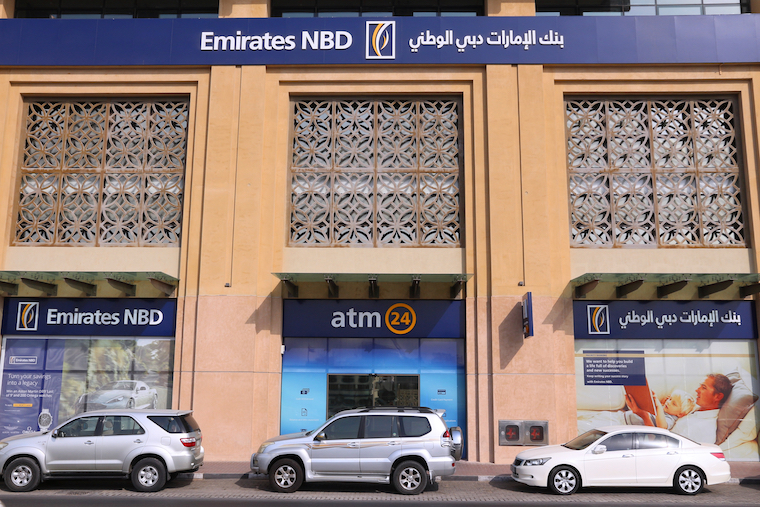
Unfortunately, most people still need to visit the UAE in person to open a bank account. This requirement is from the UAE’s central bank, which makes the UAE one of a handful of countries where an in-person visit for bank account opening is almost always necessary. For private banking, exceptions can be made, depending on the bank and banker.
However, there are certain situations where some groups can open an account in the UAE without visiting a bank. But such opportunities are rare and require the applicant to meet specific parameters. We share these options (and what the requirements are) with our premium members, GlobalBanks Insiders.
To get immediate access to GlobalBanks Insider, just follow the link at the end of the article.
Risks of Opening a Non-Resident Bank Account in the UAE
Obviously, there are risks anytime you open a non-resident bank account anywhere in the world. The UAE is no exception.
UAE banks are particularly susceptible to the economic outcome in the local property market and oil industry. So, it’s no surprise that during times of global economic turmoil, bank stability becomes a concern.
However, during times of economic uncertainty in the past, like the 2008 financial crisis, the UAE government has insured 100% of depositor accounts. That’s certainly one major benefit to having a savings account in the UAE as a non-resident instead of other jurisdictions that offer little to no deposit insurance.
Beyond the economy, there are more basic operational account risks to take into consideration as well. For instance, UAE banks sometimes charge high non-resident fees and high penalties if your balance drops below a certain threshold.
Lastly, a warning for anyone that intends to become a resident of the UAE:
If you plan on acquiring credit cards, lines of credit, car loans, or mortgages, there are severe penalties for late-payments and default. In fact, many expats have found themselves in prison, literally, for missing credit card payments. So, be careful. Otherwise, you might be parking your Ferrari next to the others left behind by fleeing expats at the Dubai airport.
How You Can Start to Open a Bank Account in the UAE for Non-Residents Today…
Whether you want to know which banks will accept you, which account opening strategies to use, or you just don’t know where to begin, we can help.
If you’re ready to take action and start opening international accounts now, you can access GlobalBanks IQ, our dedicated international banking intelligence platform.
GlobalBanks IQ gives you everything you need to start finding and opening accounts for you or your business today.
When you join GlobalBanks IQ, you immediately unlock the GlobalBanks Database of international banks — home to 250+ banks in 50+ countries.
And, you get access to our library of premium (members-only) reports, including proven account opening strategies, country-specific banking options, and lists of banks for specific client types.
Plus, you unlock our account opening checklists, dedicated account opening alerts, and much more.
To get started, click here to see if GlobalBanks IQ is the right choice for you to start accessing the benefits of international banking today.
Bank for the uae
She brings over 20 years of experience in communications, marketing, sales and business development with an outstanding track record with leading payments and financial institutions in the region.
Mashreq Achieves 17% Increase In Operating Profit And Posts AED 1.4 Billion Net Profit For 1H 2022
Mashreq, today has reported its financial results for the first half ending 30th June 2022.
Invitation for the Annual General Assembly Meeting of Mashreqbank P.S.C.
The Board of Directors of Mashreqbank psc has the honor to invite the shareholders to attend the annual general assembly meeting which shall be held electronically/remotely on Wednesday, 20th April, 2022 at 1.00 pm.
Mashreq Bank and Visa collaborate to revolutionize how businesses track and trace expenses
Mashreq has collaborated with Visa to develop a new digital reconciliation platform for real-time tracking, tracing and analysis of company expense accounts.
Mashreq becomes first regional bank to launch an API developer portal
Mashreq has become the region’s first bank to launch an active Application Programming Interface (API) developer portal to encourage the development of new and innovative digital journeys and experiences for consumers.
Assistance with opening a bank
account in the UAE

The UAE’s safe banking system, stable local currency, absence of currency controls, reliable lending institutions and convenient account operation from any part of the world make it one of the most attractive countries in which to arrange your banking services. By contacting SORP Group you will be able to get prompt, courteous, efficient assistance to open your corporate account as well as follow-up support in operating your account and in dealing with the bank’s officers.
Reasons why you need to open a corporate account with a UAE bank
Economic stability
of the UAE and the
country’s image
Zero inflation, absolute stability of the banking system, credibility it provides to business partners by not being included on any OECD or FATF blacklist.
Integration into
the global
financial system
Branches of the world’s major financial institutions are located in the United Arab Emirates and UAE banks are represented all over the globe.
Settlements in any
global currency without
currency conversion
A UAE bank account provides facilities for transactions in Dollars, Euros, Pounds Sterling, Yuans and many more, including settlements within the country.
Simplified KYC when
making settlements in
the national currency
In case the settlements with counterparties are made in the local currency (dirham), the bank’s due diligence procedure is performed with minimum requirements
Offsetting operations
not subject to any
restrictions
Day-to-day company activities often require third party payments, so it is worth noting that such transactions are not viewed as suspicious by UAE banks.
UAE residents not
subject to exchange of
tax information
The UAE Central Bank policy is that banks of the country do not provide information about all financial operations of accounts within the automatic data exchange.
Get a tailor-made solution for successfully opening a UAE bank account
When opening a bank account in the UAE you might need the following SORP Group solutions
Registration of an onshore company in the UAE
Incorporation of a mainland (local) or free-zone (FTZ) company to open a corporate account and perform all the banking transactions required.
Comprehensive support for opening a bank account
Collating all necessary documents and preparing for KYC procedure, accompanying you to the meeting with an officer of the bank.
Company office mandatory to pass the bank’s KYC
SORP Business Center offers office spaces for rent to prove to the bank that the company has a physical office when opening an account.
Support in dealing with the bank
Communication provision so that the bank’s officers can easily make contact as required when dealing with transactions on a corporate account.
Justification for your banking transactions
Preparation of contracts, acts of acceptance etc., justifying the transactions, as well as auditor’s opinions to confirm the rationale of operations on the account.
Confirmation of your tax resident status
Meeting the legal requirements and completing procedures necessary to be fully protected against automatic exchange of financial information as provided by CRS.
We have numerous contacts and an excellent working relationship with leading UAE banks. It means we fully understand their compliance requirements and banking procedures. SORP Group experts have also built up a wealth of experience in a great number of business sectors and activities. It all adds up to a set of highly professional capabilities that are ready and waiting to support your ongoing banking needs.
Types of accounts offered by UAE banks
Depending on the residency status of the account holder, UAE banks provide a range of corporate account types (resident and non-resident versions) that have different requirements and conditions for opening and servicing.
Resident Bank Account
Non-resident Bank Account
To open a corporate bank account, UAE banks ask you to provide:
Proof that the real center of the company operating the account is in the UAE
The bank needs to understand who the company is managed and controlled by, and where all banking transactions are performed from.
Confirmation of the account signatory’s resident status
Tax residency of the account signatory must be confirmed to avoid banking data disclosure under international automatic data exchange agreements.
A mandatory set of supporting documents needed to pass through KYC procedure
The bank’s KYC process requires applicants to confirm the source of funds, submit a business profile of the company and provide the account signatory’s CV.
Get the best solution for organizing investment and financial activities in the UAE
Bank for the uae
Single account, twin advantage Current and savings account in one! Know more.
Premium Salary Account
Premium Salary account tailor made for you Open your Premium Salary account today!
Salary-Account-ADE
Savings account tailor made for you Open your special savings account today!
Salary-Account-RAK
Savings account tailor made for you Open your special savings account today!
Advance Against Property to Individuals
Age- Individual- Min. 21 Years Max. Salaried- 65 years Non salaried – 70 years including loan tenor
Advance Against Property to Non Individuals
Car Loan
Flexible repayment options up to 48 months(new cars) & 36 months (used cars)
Home Loans
Baroda home Loans offer you the flexibility for acquiring ready to occupy house/flat from developers or by choosing re-sale properties and takeover of from other banks.
Welcome to
Bank of Baroda UAE!
It’s simple, we’re here to make banking simple.
Welcome to
Bank of Baroda UAE!
It’s simple, we’re here to make banking simple.
Welcome to
Bank of Baroda UAE!
It’s simple, we’re here to make banking simple.

About Us
A saga of vision and enterprise
It has been a long and eventful journey of almost a century across 25 countries. Starting in 1908 from a small building in Baroda to its new hi-rise and hi-tech Baroda Corporate Centre in Mumbai, is a saga of vision, enterprise, financial prudence and corporate governance. It is a story scripted in corporate wisdom and social pride. It is a story crafted in private capital, princely patronage and state ownership. It is a story of ordinary bankers and their extraordinary contribution in the ascent of Bank of Baroda to the formidable heights of corporate glory.
Corporate Banking
Choosing the right corporate banking service provider for your entity is a critical decision, and there is a broad range of local and international banks to choose from in the UAE or any country you wish to operate.
Each institution has individual requirements when it comes to minimum deposits, bank charges and scope of services, and the application process can be stringent.
Requirements for opening an account usually include identity documents, signatories list, company structure overview and proof of address.
A certificate of incorporation/trade licence is often also requested as well as details of company directors.
Most banks will also want to see a projection of company transactions, future profits and information clarifying the nature of the business.

For those looking to open non-resident accounts in the UAE, the Ministry of Foreign Affairs will need to certify documents.
When establishing banking arrangements in the UAE, you will be required to physically sign for verification of your company bank account in the presence of the Banking Officer. Europe Emirates Group also advises on which bank will best serve your company requirements and will assist you with all administrative processes.
From Wikipedia, the free encyclopedia
Tell your friends about Wikiwand!
Gmail Facebook Twitter Link
Suggest as cover photo
Would you like to suggest this photo as the cover photo for this article?
Thank you for helping!
Your input will affect cover photo selection, along with input from other users.
Thanks for reporting this video!

This browser is not supported by Wikiwand 🙁
Wikiwand requires a browser with modern capabilities in order to provide you with the best reading experience.
Please download and use one of the following browsers:
An extension you use may be preventing Wikiwand articles from loading properly.
If you’re using HTTPS Everywhere or you’re unable to access any article on Wikiwand, please consider switching to HTTPS (https://www.wikiwand.com).
An extension you use may be preventing Wikiwand articles from loading properly.
If you are using an Ad-Blocker, it might have mistakenly blocked our content. You will need to temporarily disable your Ad-blocker to view this page.
HSBC Premier Bank Account
Our premium bank account, with no monthly account fee 1
New to HSBC? Open and fund a Premier Account and get AED 2,000 cashback. Plus an AED 300 Amazon.ae Gift Card when you apply online. Terms & Conditions apply. *
New to HSBC? Open and fund a Premier Account and get AED 2,000 cashback. Plus, you’ll also get an AED 300 Amazon.ae Gift Card when you apply online.
Terms & Conditions apply. *
Unlock a world of benefits with an HSBC Premier bank account
HSBC Premier is here to help you and your family live a life full of life, whether you’re buying a new home, investing in your future, caring for loved ones, or simply looking to enjoy the benefits of all your hard work.
Join HSBC Premier
Find out how you can enjoy all that HSBC Premier has to offer.
Discover the quickest way to apply.
HSBC Premier is much more than just a bank account
Experience a premium bank account, with priority services, global support and no monthly fees. 1
Unlock Premier status across 29 markets, with a unique range of global services and solutions.
Be confident your finances are in good hands, with preferential rates and access to our expert wealth advisors.
Look after those that mean the most, with savings solutions for your child and complimentary family travel insurance.
Unlock everything HSBC Premier has to offer
Get much more from your banking with a range of exclusive benefits and privileges. From priority services to preferential rates and credit limits, you’ll enjoy a faster and more convenient experience:


Unlock Premier in one country, and you can live, work and travel the Premier way across 29 markets.
Premier – for your family
A family that banks together moves forward together.

Our premium account, with Premier benefits
Everything you expect from a premium account and more, with no monthly account fee 1
Unlock even more with your Premier account
HSBC Premier gives you, and your loved ones, access to more rewards, benefits and exclusive offers than ever before.
Enjoy complimentary travel insurance, airport transfers and access to 1000+ airport lounges. Plus you’ll have access to a 24-hour concierge service and fraudulent card misuse protection.
Earn 1 Air Mile for every AED 1 spent on your card, and even trade them up with Emirates Skyward, all while enjoying a range of retail, dining and entertainment offers with our HSBC ENTERTAINER app.
How you can unlock HSBC Premier
Whether you’re new to HSBC, or looking to upgrade your existing account, you can unlock everything HSBC Premier has to offer if you meet one of the following criteria:
Option 1: deposit your salary
Deposit an on-going individual monthly net income of at least AED 40,000 into your account.
Option 2: your savings and investments
Maintain a Total Relationship Balance (TRB) with us of AED 350,000 in deposits and/or investments. 6
What is a Total Relationship Balance (TRB)?
Your TRB consists of any other investments or products you hold with us, such as:
Option 3: your HSBC mortgage
Hold a mortgage with us with a drawdown of AED 3,000,000 or above for the first 24 months, after which one of our other eligibility criteria will have to be met.
Option 4: international Premier
Already hold, and qualify for, an HSBC Premier account in another country or region.
Option 5: Premier by family
Give your spouse and children, your Premier benefits by providing a marriage or birth certificate to your Relationship Manager.
Additional information
Required documents
Sole account
Joint account
Both you and your joint applicant(s) need to complete the current account opening process by personally visiting any of our branch or customer service centres, with the following documents:
Please note, that we may request further information or documentation from you, in order to comply with the Foreign Account Tax Compliance Act (FATCA).
Things you should know
An HSBC account comes with a debit card and monthly statements. Please refer to our Schedule of Services and Tariffs for a complete list of services along with any fees and charges associated with them.
If you are a salaried customer and your salary is transferred to HSBC UAE, you will not be required to maintain a minimum balance or a relationship balance with us for any account that you open with us. If you stop transferring your salary to HSBC UAE, then a fee may be applied as per the Schedule of Services and Tariffs.
If you are a non-salary transfer customer, a lower cost option for you to consider is to have a personal banking proposition, and open a Flexi or E-saver account, as you will not be required to maintain a minimum balance in those accounts. If you choose a different proposition or open a different account type, then a fee may be applied for not maintaining a minimum balance as per the Schedule of Services and Tariffs.
Not sure if this account is right for you?
This product/service may be affected by changes in foreign currency exchange rates.
Correspondent and receiving banks may charge additional fees when they process the transaction.
Penalties and Fees may be applied if there is a customer error or omission in providing correct or incomplete remittance information and may cause a rejection of, or delays in, the transfer. The exchange rate used for the refund of money paid by you may differ from the original rate used for the transfer. We shall not be held liable for any potential exchange rate loss.
The actual time to complete a transaction may differ from estimates due to increased scrutiny of transactions by the correspondent bank/financial institution or entity providing financial services to the beneficiary of remittances.
For recall of payments, please contact us as soon as possible on 800 4525 (Within UAE) or +971 4 227 4310 (Outside UAE). We may charge payment recall fee and the exchange rate used for the refund of money paid by you may differ from the original rate used for the transfer. We cannot guarantee that we’ll be able to recall the payment successfully.

Dedicated Relationship Manager, Multiple Currencies, Free Cheque Book, Free Credit/Debit Card, Relationship Manager Services, Priority access, Premium Account, Wealth management services
Multiple Currencies, Free Cheque Book, Free Credit/Debit Card, Savings Account, Free Cash Withdrawals, Internet banking
Free Cheque Book, Islamic Banking

ENBD Islamic Current Account
Multiple Currencies, Free Cheque Book, Islamic Banking

Islamic Finance, Multiple Currencies, Free Cheque Book, Islamic Banking, Free Credit/Debit Card, Internet banking
ENBD Special Current Account
Phone Banking, Multiple Currencies, Free Cheque Book

Islamic Finance, Multiple Currencies, Free Cheque Book, Islamic Banking
ENBD Standard Current Account
Multiple Currencies, Free Cheque Book

Multiple Currencies, Free Cheque Book
Compare Current Accounts
In need of a current account? Whether new to the UAE or simply trying to change your current bank account, there are extensive bank account options available today with varying features to suit your needs.
Working alongside the UAE’s leading banks, we do all the hard work for you, scouring the market for the leading current, savings and deposit accounts, taking into account things like; minimum monthly income, transfer fees, overdraft facilities, incentives and rewards. With our help you can find the account that best suits your pocket and your lifestyle.
Let us do all the hard work and find you the best deal!
✓ Use the filter to highlight the features you would most like your current account to have
✓ Refine your search further by clicking what’s most important to you, whether it be provider, minimum balance required or currencies
✓ Still need more details? You can always read more info about each product by clicking ‘view more details’
List of Banks in Dubai and UAE
Coronavirus in the UAE: Some information on this website is out of date as a result of measures taken in the UAE to deal with the coronavirus crisis. Confirm with official or authoritative sources.
Banks in Dubai and the UAE
Check with your company if they have any special arrangements with a particular bank in Dubai. Sometimes you may get preferential rates on money transfers, or lower minimum balance requirements. You may also see your salary a day or two earlier if you’re at the same bank as the one your company uses.
Most people will eventually collect a story or two about poor customer service. What seems to happen is that you open an account at a bank (based on where your company banks, location, or what someone else suggests). Eventually you’ll get annoyed with something they’ve done, close your account and repeat the process at another bank. Usually this only happens once every couple of years or so, so it’s unlikely you’ll run out of banks for this procedure.
The UAE Central Bank issued a statement detailing new borrowing limits and caps on fees charged by banks in the UAE. According to the document, «These regulations shall be published in the Official Gazette in both Arabic and English, and shall come into effect one month after date of its publication,» but publication date was not supplied. The new rules replace Circular No 12/93 dated 23/2/1993, Central Bank clarifications ref. DMM/1263/93 dated 6/7/1993, and any other related notices except for Notice No 1850/2004 dated 14/6/2004 regarding Armed Forces Personnel. Some details of the new fee limits are:
As of end February 2011, the UAE has 23 local and 28 foreign banks (total 51 banks). Total value of outstanding personal loans rose 3.9% in 2010 to AED 247 billion dirhams ($67 billion). Personal loans made up 24% overall loan amount (which implies a figure of AED 1,030 billion (AED 1.03 trillion) (Bloomberg 28 February 2011).
PDF download of new Central Bank rules and fees at www.centralbank.ae/en/pdf/notices/RegulationsRegardingBankLoans.pdf.
How many banks and branches in Dubai and UAE?
Other boring banking statistics for the UAE and the Financial Access 2010 report
Best banks in Dubai and UAE 2009
Ethos Consultancy released their 5th annual UAE banking survey results on 14 November 2009, covering 27 retail banks in the UAE. Ethos researchers visited bank branches 675 times, made 405 calls to call centers, and made 270 online enquires through bank websites. Best overall bank was RAK Bank (for the 4th year in a row), ahead of Dubai Bank in second place, and First Gulf Bank in third place.
| Category | First place winner 2009 | First place 2008 |
|---|---|---|
| Best Overall Bank | National Bank of Ras Al Khaimah (RAK Bank) | RAK Bank |
| Best International Bank | Lloyds TSB Dubai (also in 2006-2008) | Lloyds TSB Dubai |
| Best Sharia Compliant (Islamic) Bank | Dubai Bank | Emirates Islamic Bank |
| Best Branch Visit Performance | RAK Bank | |
| Best Call Center Performance | First Gulf Bank | Dubai Islamic Bank |
| Best Website Performance | First Gulf Bank (also in 2008) | First Gulf Bank |
| Most Improved Bank | Dubai Bank (was in 21st place in 2008) | |
| Best New Bank | Al Hilal Islamic Bank |
Best banks in Dubai and the UAE 2008
Everyone has different opinions about whether a bank is any good or not, and any comments here should be regarded as subjective opinions only, but there is an organisation called Ethos Consultancy that surveys UAE banks. Results for their 4th annual survey were released in November 2008 (based on 1500 visits to 29 banks by Ethos researchers) and RAK Bank took the award as the best overall bank (for the 3rd year in a row). Both RAK Bank and First Gulf Bank scored highly on many of the individual survey criteria used by Ethos. But who surveys the consultants? Best and worst banks in some categories according to Ethos were:
Overall UAE bank rankings (out of 29 banks surveyed by Ethos Consultancy):
Checks (Cheques) in Dubai
Cash or credit cards are usually used for day to day transactions such as buying a few shawarmas, filling up the car (note that as of mid-2007, EPPCO, ENOC, and EMARAT service stations do not accept credit cards), or going to the furniture shop for a new sofa. Cheques are more likely to be used for bill payments and annoyingly, to secure credit cards and loans. A couple of important points to note about using checks in the UAE.
Opening a bank account in Dubai
You’ll usually need a residency visa first before you can do this although some banks will accept a letter from your employer saying that your residency visa has been applied for (your employer should be able to tell you which banks) or even a letter of introduction from a bank in your home country. HSBC is one bank apparently that does not require a residency visa to open an account (but you have to pay a fee of several hundred dhs). And NBAD UAE says on their FAQs page that non-residents can open an account as long as they appear in person with their passport «at any of our branches«. But normally, you’d go to the bank of your choice with:
Bank Loans in Dubai
Online Banking in Dubai and online banking security
Most, if not all, banks by now offer online banking. The usual security risks apply and you should probably be a little more wary in Dubai than in other countries where the online banking industry is more established.
Bank Charges in the UAE (typical or average figures)
Sometimes fees are reduced if you have a higher minimum balance in your account, or have salary transferred to your account, or pay a set fee per month to become a VIP / Privilege / Status customer (about 100 dhs for economy level VIP status).
List of Foreign Banks with ‘branches’ in Dubai and the UAE
See below the local bank section for representative offices of foreign banks (not the same as a bank).
Local and Foreign Banks planning to open in Dubai and UAE
Other banks with connections to the UAE
List of representative offices of overseas and foreign banks in the UAE
This list may overlap with the list of foreign banks in the UAE eg HSBC has a bank presence with branches in most emirates, and also has a representative office on Jumeirah Beach Road in Dubai not connected with the UAE branches. You cannot do your normal UAE based banking activities at a representative office (representative offices cannot handle cash and teller transactions) but they might have an ATM.
Credit Cards in the UAE
Banks will fall over themselves to try and give you a Visa or Mastercard credit card and they’re relatively easy to obtain but you do need:
Be careful of hidden or obscure fees and charges, and opt-in services where you are opted in by default. For example things like personal accident insurance, credit card repayment insurance. The UAE credit card market is not regulated in the same way as in the US or Europe so banks can get away with less consumer-friendly and more profitable-for-shareholders activities. Credit card limits will usually be 1-3 times your monthly salary. Late payment fees will usually be 50-100 dhs for each month payment is late.
Outdated information, needs update
Last update Tuesday 15-Jul-2014
Related pages
Related websites (new window)
Sponsored links
www.dubaifaqs.com/banks-in-dubai.php (PDF and print version).
Abu Dhabi AUH ABD ADB, Ajman AJM, Al Ain AAN, Dubai DXB, Fujairah FUJ, Ras Al Khaimah RAK, Sharjah SHJ, Umm Al Quwain UAQ
Welcome to
the New Era of Online Banking!
Emirates NBD Online Banking provides you with a wide range of transactions, recommendations tailored to your lifestyle and a Digital Store for all your banking needs. It is also compatible with your laptop, tablet or mobile devices with all functionalities!*
Change the way you bank online.
The future of online banking is here
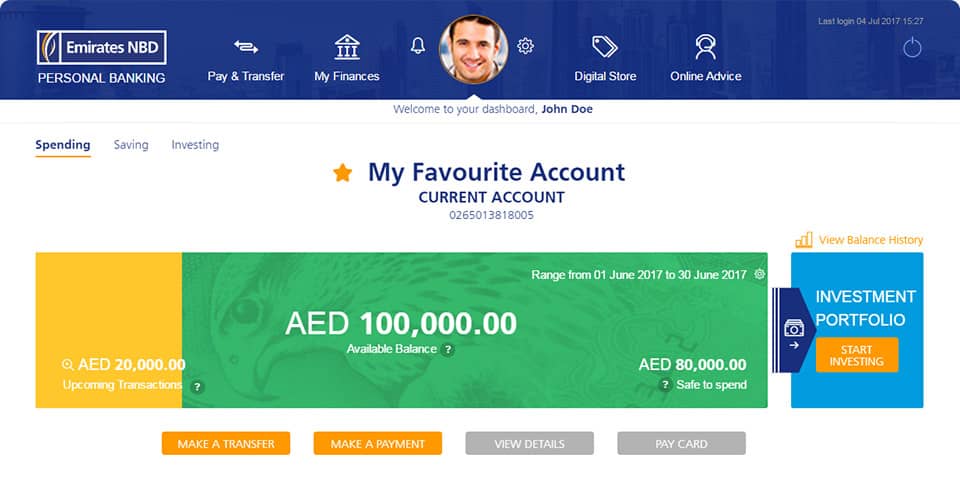
All-New Dashboard with Smart Insights
Create Saving Goals for your Aspirations
Create your own Online Banking Experience
Payments and Transfers in 30 seconds!
Or even shorter with the new Beneficiary Book
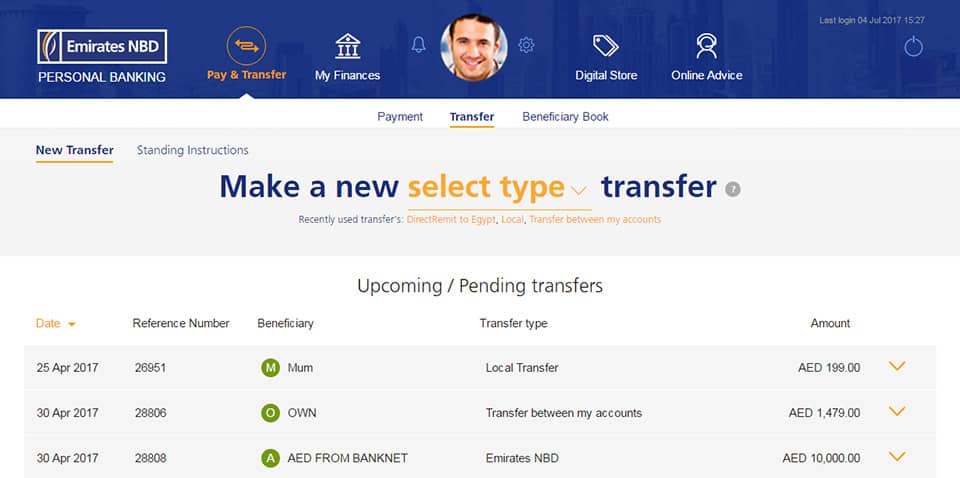
Available Transfers and Payments
Bill Payments
Other Payments
Local Transfers
International Transfers
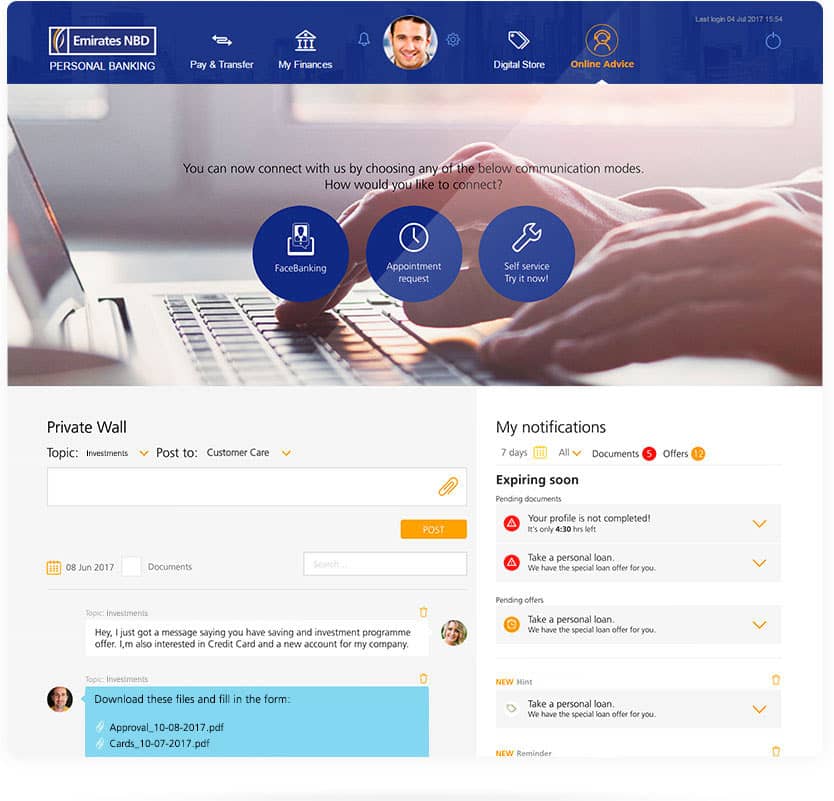
Our Communication Hub
Online Advice
Reach us on your own terms. You can use Private Wall for messaging, you can get in touch with your Relationship Manager* and schedule an appointment or be notified about all important things through Notification Centre.
*This function is available only for customers who have a Relationship Manager assigned.
Digital Store
The One-Stop-Shop for all your banking needs.
Application Tracking
Track your Applications at Each Step
Track your product applications and requests. Enjoy a real omni-channel experience which provides you with convenience. This means that for the first time ever, you could start applying for a loan in a branch, and upload the required documents later from the comfort of your home via Online Banking.
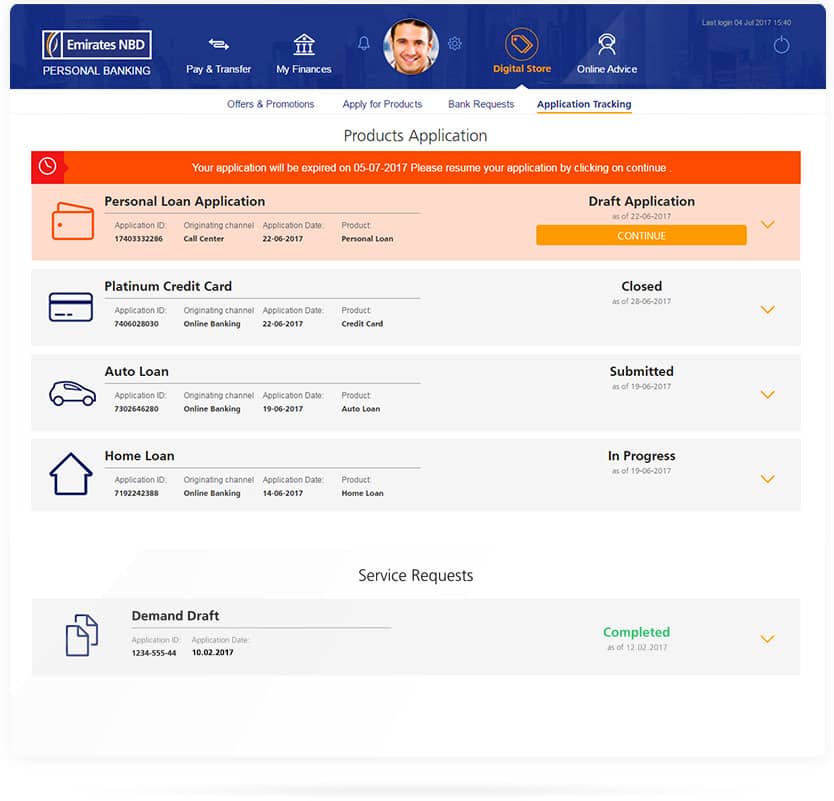
Payments
Transfers
Are you ready to experience the future of online banking?
Start now
How to reset your online or mobile banking password
How to activate
Emirates NBD Online Banking

How to recover your Online
User ID
WHAT OUR CUSTOMERS SAY
«Hats off to the new Online Banking. I loved the personalization!»
What are people asking?
On the Emirates NBD website, kindly click on ‘Customer Login’ and select «Register for Online/Mobile Banking»
You have two options for registration:
If you have both account and credit card with the bank, you will Register using account and debit card only. If you only have a credit card, you will ‘Register with credit card’
Once the above mentioned process is completed, you will then receive an authentication code through SMS on your registered mobile number. Please enter this code on the specific fields on the Online Banking registration screen. Now you can specify your preferred user name and click on ‘Confirm’ to proceed. You will be requested to select secret questions and determine answers for each, after which you set your password. That’s it!
You can now directly login to your Online or Mobile banking using the User Name and Password you have specified.
In case you want to reset your Online Banking password, kindly click on ‘Forgot Password’ on the login page and select ‘Reset’.
You can either reset your password by selecting Reset with Account or Reset with Credit Card:
Post this step, you will receive an authentication code through SMS on your registered mobile number. Please enter this code on the specific fields on the screen. Subsequently, you will need to enter your existing User Name and click on ‘Confirm’ to proceed and specify your new password. Your password is now reset and you can directly login to Online or Mobile banking.
On the Online Banking login page, kindly click on ‘Forgot User Name’ option and select ‘Retrieve’.
You can either retrieve your Online Banking User Name by selecting ‘Retrieve with account’ or ‘Retrieve with Credit card’.
Post this step, you will receive an authentication code through SMS on your registered mobile number. Please enter this code to the specific fields on the screen. After answering the secret questions, your Online Banking User Name will be displayed on the screen. You can now directly login to Online or Mobile banking.
All the information on Online Banking is updated immediately except for the following:
Dashboard page is displayed once you log in to your Online Banking account. You can also access this page anytime by clicking on your profile picture on Main Menu.
We have endeavored to provide a dashboard page through which you will be able to see your overall financial status and products at a glance.
You have the option to customize the page, to enable you to track what is important for you.
There you will see the following tabs:
Under these you can view your available balance with upcoming payments, saving accounts and investment portfolio, respectively.
On your first login, we will ask you to select a Budget period and Favorite Account. The Money Bar at your dashboard page will work according to these selections.
The star symbol next to the Account Name means this is your favorite account. Considering your scheduled payment and transfers together with your monthly balances, we will show your Available Balance, Upcoming Transactions and Safe-to-Spend amount, which is the amount that can be spent safely after performing upcoming payments.
You can switch the view to see the bar chart of balance history for the last 6 months. Once you scroll down, you will be able to see the 360 degree view. This view will show ‘What I Own’ along with possible new products which you can apply for.
Under ‘Recent Transactions’, on the bottom of the page, the last 5 transactions performed through Online or Mobile banking are listed. If you click to «See Account History», your statement will be displayed.
On the Emirates NBD website, kindly click on ‘Customer Login’ and select «Register for Online/Mobile Banking»
You have two options for registration:
If you have both account and credit card with the bank, you will Register using account and debit card only. If you only have a credit card, you will ‘Register with credit card’
Once the above mentioned process is completed, you will then receive an authentication code through SMS on your registered mobile number. Please enter this code on the specific fields on the Online Banking registration screen. Now you can specify your preferred user name and click on ‘Confirm’ to proceed. You will be requested to select secret questions and determine answers for each, after which you set your password. That’s it!
You can now directly login to your Online or Mobile banking using the User Name and Password you have specified.
In case you want to reset your Online Banking password, kindly click on ‘Forgot Password’ on the login page and select ‘Reset’.
You can either reset your password by selecting Reset with Account or Reset with Credit Card:
Post this step, you will receive an authentication code through SMS on your registered mobile number. Please enter this code on the specific fields on the screen. Subsequently, you will need to enter your existing User Name and click on ‘Confirm’ to proceed and specify your new password. Your password is now reset and you can directly login to Online or Mobile banking.
On the Online Banking login page, kindly click on ‘Forgot User Name’ option and select ‘Retrieve’.
You can either retrieve your Online Banking User Name by selecting ‘Retrieve with account’ or ‘Retrieve with Credit card’.
Post this step, you will receive an authentication code through SMS on your registered mobile number. Please enter this code to the specific fields on the screen. After answering the secret questions, your Online Banking User Name will be displayed on the screen. You can now directly login to Online or Mobile banking.
All the information on Online Banking is updated immediately except for the following:
Dashboard page is displayed once you log in to your Online Banking account. You can also access this page anytime by clicking on your profile picture on Main Menu.
We have endeavored to provide a dashboard page through which you will be able to see your overall financial status and products at a glance.
You have the option to customize the page, to enable you to track what is important for you.
There you will see the following tabs:
Under these you can view your available balance with upcoming payments, saving accounts and investment portfolio, respectively.
On your first login, we will ask you to select a Budget period and Favorite Account. The Money Bar at your dashboard page will work according to these selections.
The star symbol next to the Account Name means this is your favorite account. Considering your scheduled payment and transfers together with your monthly balances, we will show your Available Balance, Upcoming Transactions and Safe-to-Spend amount, which is the amount that can be spent safely after performing upcoming payments.
You can switch the view to see the bar chart of balance history for the last 6 months. Once you scroll down, you will be able to see the 360 degree view. This view will show ‘What I Own’ along with possible new products which you can apply for.
Under ‘Recent Transactions’, on the bottom of the page, the last 5 transactions performed through Online or Mobile banking are listed. If you click to «See Account History», your statement will be displayed.
Private Wall enables you to reach us through sending messages for any subject. The answers sent by our support team will be displayed on the same screen.
You can access to a variety of products including accounts, cards, loans, investment products and bank requests through Digital Store and view the offers that we recommend to you according to your needs.
It is also possible to track and view your product applications and service requests from Online/ Mobile channels through application tracking page. You can also upload documents for your personal loan application, regardless of the application channel. Your requests and applications initiated within 30 days will be listed on this page.
There is a wide range of services available through Online Banking for making your online banking experience better.
Below mentioned are the services and transactions which are available.
Through Online Banking you can edit your personal information and contact details except mobile number and email address through Profile Settings tab under Settings. Moreover you can also update your latest documents through Online Banking.
Please login to Online Banking, go to Settings and click on Security Settings.
You can change your Daily limit of your Account or Credit Card. You can also change the limit of more than one user who is linked to your profile.
Please login to Online Banking, select ‘Pay & Transfer‘ and click on ‘Beneficiary Book‘. You will be able to add, or delete any beneficiary to perform any types of transfers or payments. You can also select to add a beneficiary to Beneficiary Book after completing a payment or transfer. Please note that beneficiary addition for transfers have a 24 hour waiting period.
Please login to Online Banking and select ‘My Finances‘. You will be able to view the balances of all your accounts and credit cards. If you would like to see additional details and statements, simply select one of the Accounts or Credit Cards and click on ‘Statement’ option.
You will be able to view and retrieve your updated Account Statements immediately after you perform any Debit Card transactions or any transfer and payment is completed. However, the updated Credit Card Statements will only be available to view 24 hours after you perform any Credit Card related transactions.
Please login to Online Banking, select ‘Pay & Transfer‘ and click on ‘Transfers‘. You will be able to select Transfer Type, Resource Account and Beneficiary to complete your transfer.
Please login to Online Banking and select ‘Pay & Transfer‘. You will be able to select Payment Institution, Resource Account or Credit Card and Beneficiary to complete your transfer.
To convert credit card purchases into installments, you need to view your credit card statement through your Online Banking and search for that specific transaction. Next to the transaction, you will see a link that says «Convert to Installment Payment Plan?» When you click on that link, you will be requested to select the Tenor period to convert the purchase amount in installments. The interest rate, the monthly installment amount, and the total amount payable will automatically be generated before you confirm. The first installment will be debited from your account at the end of the same month that you apply for the service.
To redeem your Credit Card points through Online Banking, kindly select ‘My Finances’ and click on ‘Cards’. You will need to select a credit card and scroll down to see your points balance and make redemption.
You will no longer be able to view your Emirates Islamic credit card on the Online Banking platform. However, you can still make a payment to your Emirates Islamic credit card by adding it as a beneficiary.
We urge you to protect your information at all times be it over the internet or during your normal banking activities by following these simple tips:
Protect your Password and Personal Information:
Protect your Computer and Internet session:
Please contact our Customer Service Helpdesk on +97143160316 in case you receive fraudulent emails or require any assistance using our Online Banking service.
Top Banks In UAE
By  Madhuri Thakur
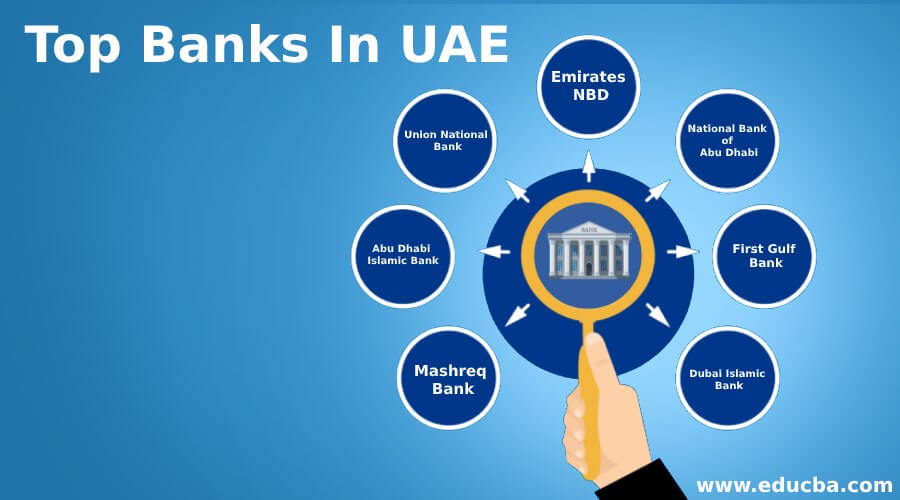
Overview of Top Banks in UAE
The UAE Central Bank is the banking regulatory body in the country. There are 26 foreign banks and 23 local banks in the UAE. Even though there are 49 total banks in the country, the five largest banks account for about 60% of the banking sector assets. This picture clearly shows large banks dominates the industry in the country. Islamic banks are also an integral part of top banks in UAE; collectively, it accounts for 19% of the total banking sector. There are a total of 8 full-fledged Islamic banks and 23 Islamic windows set up by other traditional banks in the UAE region.
Top Banks in the UAE can be divided into four categories: –
Download Corporate Valuation, Investment Banking, Accounting, CFA Calculator & others
As per Moody’s, the banking system in the UAE is stable. A banking system is at resilient capital levels and has enough liquidity buffers to absorb the shock.
Top 10 Banks in UAE
Here are the list of Top 10 Banks in the UAE
1. Emirates NBD
The Emirates NBD is the largest banking group in the Middle East region. It was headquartered in Dubai. Bank has a total of 225 branches, 1,079 Automated Tailor Machines (ATMs) & SDMs in the UAE and overseas market and a total of around 9,500 employees. Emirates NBD operates through different business segments: Retail Banking and Wealth Management, Islamic Banking (IB), Wholesale Banking, International, and Operations and Information Technology.
2. National Bank of Abu Dhabi
Founded in 1968, the National Bank of Abu Dhabi is the largest lending bank amongst the banks in UAE. It lends to retail as well as corporate clients. It has private banking, investment, and Islamic banking services. The bank was headquartered in Abu Dhabi, and it operates in 19 countries across the globe.
3. Abu Dhabi Commercial Bank
Established in 1985, Abu Dhabi Commercial Bank operates in retail, commercial, Islamic banking, and other financial services. The bank offers the following banking services: Consumer Banking, Investments, and Treasury Banking, Wholesale Banking, and Property Management. It was headquartered in the Abu Dhabi.

4. First Gulf Bank
First Gulf Bank was founded in 1979 and headquartered in Abu Dhabi. The bank ‘s business operates into Wholesale Banking Group, Consumer Banking, Treasury and Global Markets, Real Estate, and Other Banking Operations. It has around 1,400 employees, and it is present in the 19 countries, including Kuwait, the UK, China, France, Bahrain, Malaysia, Sudan, Switzerland, Lebanon, Hong Kong, Oman, Labuan, Egypt, Jordan, USA, India, and Brazil.
5. Dubai Islamic Bank
Dubai Islamic Bank was established in 1975, and it was headquartered in Dubai. The bank has its Consumer Banking, Real Estate Development, Corporate Banking, Treasury, and Other business segments. It has 90 branches across the county, and it serves nearly 1.7 million clients and customers Across UAE.
6. Mashreq Bank
Mashreq Bank was established in 1967; it is one of the older banks in UAE country and headquartered in Dubai. The Mashreq Bank is an associated company of the HSBC Group and Joint Stock Company. It provides retail banking, investment banking, commercial banking, Islamic banking, asset management services and brokerage services. The bank has around 46 domestic branches and 21 international branches, and it is present in Egypt, Kuwait, Qatar, and Bahrain. It has 4,000 employees.
7. Abu Dhabi Islamic Bank
The Abu Dhabi Islamic Bank was founded in the year 1997, and it was headquartered in the Abu Dhabi. It operates through the following segments: Global Retail Banking, Private Banking, Global Wholesale Banking, Real Estate, Treasury, and Others. Abu Dhabi Islamic Bank is present in Egypt, Saudi Arabia, Iraq, and the UK.
8. Union National Bank
Established in the year 1982, Union National Bank provides investment and commercial banking services to salaried individuals, high net worth individuals, self-employed individuals and business entities in the UAE and other countries. It has Headquarter in the Abu Dhabi. The Union National Bank has a network of 76 branches around the globe. It operates through its International, Treasury, Financial Institutions division and Investments division.
9. Commercial Bank of Dubai
The Commercial Bank of Dubai was established in 1969, and it was headquartered in Dubai. The bank offers corporate banking, personal banking, commercial banking, support services, and Islamic banking. It is the 36 th largest bank in the region.
10. RAK Bank
Founded in 1976, RAK Bank has headquartered in Ras Al-Khaimah, UAE. It is also known as the National Bank of Ras Al Khaimah (P.J.S.C). The bank provides retail and commercial banking services to businesses and individuals in the UAE. The business operates through five segments: Retail Banking, Business Banking, Wholesale Banking, Treasury, and Insurance Business. It has a total network of 39 branches, and it serves around 700,000 customers.
Recommended Articles
This has been a guide to Top banks in UAE. Here we have discussed the 10 topmost banks in UAE with their financial structure. You may also look at the following articles –
All in One Financial Analyst Bundle (250+ Courses, 40+ Projects)
Opening an account abroad
All you need to know about getting your account and finances ready for your new adventure
Need to open an account in another country or region?
Make the most of your finances, no matter where life takes you. Whether you are an expat moving to a new country or region or looking to manage your commitments back home, we can help.
International banking support
Talk to your Relationship Manager for your international banking needs.
Opening an account in another country or region
Whether you are moving to a new place, or have financial commitments in your home country or region we are here to help you set up your account in advance.
The process is easy and simple. You will have contacts from International Services who would support you with the end to end journey of account opening, guide you with the required documents and deliver account tools to you.
Managing of worldwide HSBC account with one single log-on and instant transfers between the accounts in a range of currencies with no transfer fees.
If you are a premier customer, you can automatically be eligible for Premier account in other countries or regions where premier is offered.
Find out how HSBC Premier can help you.
When you open a Premier Account, you open the door to a range of prestigious Premier services. And you can access them and our support any time, from anywhere in the world
Opening an account in the UAE as a foreign national
Before you get here
To make your move to the UAE as easy as possible, we can set up your account before your arrive. This means we’ll:
Once you arrive
We’re here to help from the moment you set foot in the UAE. It starts with our complimentary ‘meet and greet’ service at Dubai International Airport. Then we’ll:
Your account can be fully utilized as soon as you get your Emirates ID.
You might be interested in

Global Money Account
The multi-currency digital account that lets you manage, send and receive money in different currencies across the world.

Thinking internationally
Find out more about our international services in other countries and regions.

Egyptian expat services
Staying connected to home is what matters most, so we have made banking more convenient and efficient for you.
Additional information
2 Applies to countries and regions where HSBC Premier is available.
Contact us
In today’s increasingly connected world, it’s more important than ever to ensure your security – especially when it comes to banking. Please ensure you access your phone banking service with your 12-digit account number or 16-digit card number and always verify yourself either by using Phone Banking Pin or Voice ID. If you are not registered to Voice ID please call 800 86423.
Our phone numbers are changing
From 01 October 2022 our phone numbers are changing, and a standard tariff will apply to our new phone numbers.
What would you like to contact us about?
Need help? Chat with us now!
Ask us about applications and discuss personal bank details safely and securely in our digital chat channels.
For general enquiries, Chat with us through the ‘CHAT’ icon located on the bottom right of the page. No need to log on.
For account-related enquiries, you can chat with us via HSBC Online Banking Web Chat or HSBC UAE app.
HSBC Online Banking
So we can answer your account queries securely, log on to online banking then select the ‘CHAT’ icon at the bottom right of the page.
HSBC UAE app
You can also chat with us in the HSBC Mobile Banking app. Simply log on, select ‘Profile’ then select ‘Chat with us’.
Complaints and Feedback
If something goes wrong, we’ll do everything we can to put things right. Learn how our complaints process works, and how to escalate your complaint if you’re unhappy with our response.
Activate your HSBC card
Set Your PIN on your HSBC Debit or Credit Card
Lost or stolen card: block and unblock your card
If you can’t find your debit or credit card or you think it’s been lost or stolen, you can use the HSBC UAE app to temporarily block your card.
Issue with a transaction (Unauthorised transactions, credit and debit card disputes)
We’ll aim to get back to you within 2 working days.
Product queries
Mortgages
Car loans
Loans
Within and outside UAE: +9714 3314496
Insurance
Investments
More ways to get in touch
Call Us
HSBC Jade
HSBC Premier
HSBC Advance and HSBC Personal Banking
For help with online banking technical issues:
Within and outside UAE: +971 42274310
Visit us
Go to your nearest branch or customer service unit (CSU) and we’ll be happy to help.
Social media
We’re always looking for ways to provide you with the best service. Which is why we’ve created a new customer care page on Twitter.
It doesn’t matter if you bank with us or not. If there’s something you need to know, just drop us a tweet and we’ll respond to all genuine banking queries between 9:00 to 17:00, Monday to Friday.
If your query requires a personal response, our customer care team will follow up with you offline. We’ll only ever ask for your name, email address and contact number via email, so don’t share any personal account information.
We’re always looking for new ways to support you and make it easier to stay in touch. So why not visit us at facebook.com/HSBCUAE
Community rules
We’d love to interact and hear from you on the HSBC Bank Middle East limited social media channels. If you have any customer service enquiries, please send us a tweet on the dedicated Twitter account.
Kindly remember to follow these simple rules; else we will be forced to delete your tweet/ post. Don’t post or upload any content:
You also agree not to:
Individuals breaking any of these rules may have their access to the HSBC Social Media channel suspended or terminated.
In addition, please note:
We do not use any automation tools to post content. We update and monitor our Twitter & Facebook accounts from Monday to Friday, 9:00 to 17:00.
We welcome feedback and ideas from all our followers and fans, and endeavour to join the conversation where possible. However, please note that we might not be able to reply to all the messages we receive via Social Media and in the event that your tweet/ post is not responded to, please do not hesitate to get in touch with us through our regular banking channels.
All replies/ comments and direct messages are read and any emerging themes or helpful suggestions are passed to the relevant people at HSBC.
HSBC strongly recommends you to not share any personal data like your name, address, date of birth, bank account number, credit card number etc. on social media channels. Sharing any such information will be at your own risk. HSBC will never ask you to post any personal data via social media.
We do not automatically follow back new followers. Being followed back does not imply endorsement of any kind from HSBC.
We, at HSBC Bank Middle East limited, reserve the right to remove any content that violates our terms and conditions. We are not legally responsible for any content that may be posted or uploaded by third parties.
Terms & conditions
HSBC Bank Middle East Limited («HSBC») operates channels, pages and accounts on some social media sites to inform, assist and engage with customers. Unless stated otherwise, these are intended for UAE customers and designed for use in the UAE. We monitor and record comments and posts made on these channels about HSBC so that we can improve our services.
HSBC is not responsible for any information posted on those sites other than information we have posted ourselves. We do not endorse the social media sites themselves, their products or services, or any information posted on them by third parties or other users. The terms of use and policies of the social media sites used by HSBC (e.g. Twitter, Facebook) also apply to your use of HSBC’s channels and pages, and you should ensure that you follow these terms of use and policies as well as those of HSBC.
HSBC doesn’t give investment, tax or other professional advice via social media sites. You should always seek independent advice before making such decisions. Staff at our branches or in our Customer Service Units can advise you in relation to HSBC products.
When you engage with HSBC via social media your personal data may be stored on that social media site’s servers, which are outside the control of HSBC and may be in the US or elsewhere outside the UAE. For further information about how we use your personal data, please see our Privacy Policy. Any information posted to such sites may be accessed and read by the general public. It is not an appropriate forum to discuss customers’ products or financial arrangements. HSBC will not ask you to share personal, account or security information via social media sites, and you should not post such information on those channels.
You are permitted to share and comment on content that we post to our social media sites, provided that you do not alter it and that you cite us as the source of that content. All content that we post on our social media sites is the copyright of HSBC and any HSBC trademarks, logos or designs are HSBC intellectual property.
HSBC regularly updates and monitors our social media accounts and welcomes feedback and ideas submitted via these channels. HSBC endeavours to join the conversation whenever possible, however must not guarantee to read or reply to all messages sent to official HSBC social media accounts. We will work hard to remove any content that is defamatory, offensive or otherwise in breach of HSBC’s rules. However, we are not legally responsible for any content posted by third parties. HSBC must not guarantee the accuracy of any information that is not posted by us.
Emerging themes and helpful suggestions are passed to the relevant people within HSBC for consideration, but no guarantee is made that any proposals will be acted upon.
HSBC operates the following official Twitter stream(s) in the UAE: @HSBC_UAE
HSBC operates the following official Facebook page(s) in the UAE: www.facebook.com/hsbcUAE
If any of the HSBC streams above follow another user, or if any tweets or other content posted by HSBC refer to any specific third party products or services, then this does not imply endorsement of any kind.
БАНКИ В ОАЭ

Банки в ОАЭ
При ведении международного бизнеса, бизнеса в ОАЭ или регистрации компании в Дубае для расчетов вам понадобиться счет в одном из банков ОАЭ. В этом разделе мы расскажем о банках Дубая и банковской системе ОАЭ
Банковская система ОАЭ является одной из самых развитых и насчитывает несколько десятков банков, многие из которых входят в том 50 крупнейших банков мира. Все истории о том, что банковская система Эмиратов и банки Дубая работаю только по правилам исламского банкинга не вполне соответствует действительности.
Банки в Эмиратах действительно предлагают банковские продукты, основнанные на ценностях исламского банкинга, но большинство из них предлагают традиционные и понятные нам банковские услуги.
Исламский банкинг не предполагает получение процентов за выданные взаймы деньги, так как по закона Шариата проценты брать запрещено. Такие кредиты, как правило, выдаются за долю в бизнесе.
Однако большинство банков в названии которых отсутствует слово исламский (Dubai Islamic Bank) ведут традиционную банковскую деятельность. Открывают счета, Переводят платежи, выдают кредиты.
Чем выгодны банки ОАЭ?
В банках ОАЭ вы можете получить кредит под ставку гораздо ниже, чем предлагают российские банки. Так ипотечный кредит выдается по ставке от 3,9% – 5,7% годовых. Кредиты для бизнеса, как правило выдаются под 4-5% годовых, а кредит на покупку машины можно получить под 1-2% годовых.
Консультанты WHITESTANDARD помогут вам зарегистрировать компанию в Дубае и открыть счет в одном из банков ОАЭ. Мы также поможем вам подготовить все документы для получения кредитов в банках ОАЭ для развития вашего бизнеса, докупи офиса или жилья.
Преимущества открытия счета в банках ОАЭ
Минимальный остаток по счету Обратите внимание, что почти все банки ОАЭ требуют от своих клиентов наличие минимального остатка по счету. Перед открытием счета уточните у нас эту информацию. Так в основном для физических лиц банки требуют не снижаемый остаток около 3000 AED – это примерно 800 долларов США. Для юридических лиц не снижаемый остаток как правило составляет 5000 долларов США. Однако. банк Emirates NBD требует для юридических лиц не снижаемый остаток более 50000 долларов США Кому в банках ОАЭ может быть открыт счет В ОАЭ без проблем открывают счет компаниям, зарегистрированным в ОАЭ. Это компании, открытые в свободных экономических зонах (FZE) и компании, которые ведут деятельность внутри ОАЭ (LLC) Иностранным компаниям в банках ОАЭ счета не открывают. Однако, если вы зарегистрируете представительство, – то счет будет открыт без проблем. Офшорным компаниям, зарегистрированным в ОАЭ также счета. в местных банках не открывают. В большинстве случаев физическим лицам, не имеющим резидентской визы также будет тяжело открыть счет в банке ОАЭ. Однако, если вы получили резидентскую визу в Эмиратах, то счет вам откроют в любом банке. Требуется ли личное присутствие? Для открытия личного счета и счета компании требуется личное присутствие и интервью в банке. Мы поможем вам заполнить все необходимые формы и документы для открытия счета, а также подготовим к прохождению интервью С какими странами банки ОАЭ не работают? Банки ОАЭ работают практически со всеми странами – особенно Европой, США и Азией. Сложности вызывают банки Сирии и Израиля. Кроме того в ОАЭ не работают с банками Ирана. Также последние два года в связи с разрывом дипломатических отношений с Катаром – банки ОАЭ не работают с этой страной. Снятие и внесение наличных В ОАЭ нет налогового и валютного контроля, поэтому нет запретов на снятие июли внесение наличных. Если вы вносите или снимаете деньги через кассу в банке, то суммы снятия практически не ограничены. Вы также можете вносить или снимать деньги через банкомат. Лимит зависит от вашей банковской карты: в день можно вносить на счет от 40.000 до 100.000 дирхам, а снимать до 50,000 дирхам в сутки.
International Banks in Dubai, the UAE

The influence of the UAE in financial matters of the region and worldwide is permanently growing. The government of the UAE strives to turn Dubai into a truly global financial hub providing best business opportunities, world-class services, and infrastructure. Partners, investors, and entrepreneurs from all over the globe are attracted by the transparency and efficiency of the UAE banking sector.
Many of the banks in Dubai, both local and international, are situated in Dubai International Financial City, a district of Dubai with a set of residences, business facilities, and tourist attractions. Banks located in Dubai International Financial City include such banks as Deutsche Bank, Citibank BNP Paribas, etc.
Dubai International Financial Centre plays a vital role in the state’s financial life. It is an independent financial zone managed by the government of the UAE. DIFC is a recognized financial hub of the Middle East, Africa and South Asia headed by the governor and consisting of the Higher Board, Board of Directors and several management teams. DIFC houses hundreds of international financial institutions and offers a variety of services including commercial and investment banking, project and infrastructure funding, trade and export finance. Companies and banks in Dubai International Financial Centre enjoy a 50-year tax-free environment on corporate income and 100% foreign ownership. The majority of the largest international banks in Dubai are situated in Dubai International Financial Centre.
The UAE has attracted a great number of internationally recognized banks due to its tax-free environment, diversification of the economy. Legal framework and attitude to innovation.
The list of top 10 largest international private and most influential banks in Dubai includes:
International banks in Dubai, the UAE, provide a number of services including private, corporate, consumer, retail, and investment banking services, wealth management and transaction services. They give loans and credit cards, offer online banking. Besides, you can open an international bank account in one of the international banks in Dubai.
The influence of the UAE as a financial center and Dubai, in particular, is constantly increasing. Major international banks have already established their branches in Dubai. The others are under the consideration of making their presence as well. The role of the UAE as a Middle East financial hub is becoming more and more significant in the region and globally.
Bank for the uae
Your digital-only bank
Open an account with Neo, pick a dream that’s close to your heart and enter the lucky draw to win it.
Welcome to Mashreq Neo
Your digital-only bank
Open an account with Neo and instantly send money to 40 countries, earn up to AED 2,500 cashback on salary transfers, and much more.

Neo NXT – digital banking for Generation NXT
Neo NXT – digital banking for Generation NXT
Neo NXT offers a safe digital banking experience for Generation NXT, introduces them to smart money management, and gives them a cool way to become financially independent. It is a fun and rewarding experience.
Get up to AED 500 welcome bonus with Neo Cashback Credit Card
Get up to AED 500 welcome bonus with Neo Cashback Credit Card
Enjoy cashback of up to AED 500 on making a minimum spends of AED 1,500 monthly for the first four months on your Neo Cashback Credit Card
A chance to become a millionaire!
A chance to become a millionaire!
Simply purchase Mashreq Millionaire Certificates to participate in our draws. Each certificate is valued at AED 1,000. The more you purchase, the better your chances. And if you don’t win, you’ll get your money back.
AED 350 Early Bird Cashback
AED 350 Early Bird Cashback
Get cashback on all first transactions (debit card, quick remit, insurance etc.) done within first 90 days.
1.2% interest with MaxSaver
1.2% interest with MaxSaver
Don’t just settle for less. Max your life! Save your money digitally with MaxSaver to earn 1.2% interest.
Bank & invest from the same app
Bank & invest from the same app
Mashreq Neo enables you to instantly open a gold, forex, or stock trading account and manage all your investments from the same app.
Mashreq Neo, a bank for a brilliant new age!
Digital Card Management
Go digital for easy card management
Manage your Debit and Credit Card with Mashreq Neo App. It’s easy to lock/unlock or block/unblock your Neo Debit and Credit Card by country, merchant, category and more.
Mobile Banking Security
Bank securely with Neo
Security is our priority and we continuously upgrade our mobile security features so that you’re always protected. Our multi-level transaction limits, instant alerts and face biometrics add extra peace of mind.
All your questions answered
At Mashreq Neo, we value your time. That’s why all your requests are taken care of online through the FAQs on the website and the Mashreq Neo App.
How to Open Bank Account in Dubai for Expats
INSIGHTS & TIPS
Opening A Bank Account in Dubai for Expats
Opening A Bank
Account in Dubai
To date, having a bank account is an essential financial instrument for both private individuals and for corporations. Many people who have just moved to Dubai face the necessity of setting up an account for day-to-day needs, for saving or investment purposes, and of course, so their salary can be deposited. As for corporations, it is simply impossible to run a business legally without a bank account. Lured by the credibility of the UAE’s banking system, more and more foreign entrepreneurs and individuals are making their money deposits with UAE banks, but not everybody knows the particularities. In this article, we will explain how to open a bank account in Dubai if you are both a resident/non-resident, what types of accounts you can choose from and the general outlines of the procedure for business entities.
To begin with, laws in the UAE allow opening accounts either for residents or non-residents, though with serious limitations for the latter. Both categories may use the accounts for personal purposes, as well as allowing companies to run international or local business. Note that, business owners, entrepreneurs or all those who intend to get dividends should opt for corporate accounts. Since personal accounts used for business are not allowed, they should establish and register a legal entity and open a subject account after the process has been finalised.
Advantages of The UAE’s Banking System
Advantages of The
UAE’s Banking System
The services provided by the UAE banks are highly ranked in the international financial scene. Having the most powerful and advanced banking infrastructure in the Middle East, with built-in processes, Dubai can even compare to the long-established financial hubs like Singapore, Switzerland and Hong Kong. Backed by the well-balanced state economics, the UAE banking system ensures free-floating of capital, a high level of confidentiality and low rates of bank processing payments. What’s more, cross-border investments is the key priority area for the UAE Government which is why banking policy is favorable for foreigners in terms of transparency, reliability and straightforwardness.
It is important to know that the state actively supports anti-money laundering and all its banks have high records. The Emirati banks invest in sound assets that guarantee stable yields.
The banking sector in Dubai is represented by a great variety of local private and state-owned banks, branches of international banks and rep offices. Local establishments such as Mashreq Bank, Noor Bank, Emirates NBD or international Standard Chartered offer an impressive advantage over the banks outside the UAE. This includes adequate document requirements, a high quality of service and advanced internet banking.
Sign Up Now
and Stay Informed
Join over 7000 members to get weekly updates on new off-plan launches in Dubai and latest news & tips
Zero spam. Unsubscribe at any time
Sign Up and Stay Informed 
Join over 7000 members to get weekly updates
on new off-plan launches and latest news & tips
Zero spam. Unsubscribe at any time
Types of Personal Bank Accounts in Dubai
Types of Personal Bank
Accounts in Dubai
A private individual may opt for current, savings or an investment account in the banks of Dubai. These are the most popular and most in demand types of accounts among expats and non-residents. The characteristics of each account type are specified by its designation. Though the terms of minimum deposit, period, special benefits, rates and perks all differ from bank to bank, we have tried to compile the data and provide the general outlines of personal bank accounts.
If you are a UAE resident, you will be provided wider opportunities for your personal account compared to non-residents. These main benefits include:
Foreign depositors interested in exclusive terms with the bank may consider a Priority Banking membership, which opens an array of privileges: personal manager, preferential currency exchange, a loan up to AED 1M with competitive rates, free ATM money withdrawal worldwide and more. For instance, Standard Chartered offers this service for current and saving accounts, term deposits and investments with an average monthly balance of no less than USD 100,000 or the equivalent of any other currency (across one or all accounts).
Current Accounts
Current accounts are the most commonly used and most familiar to the majority of bank users, not only in the UAE, but worldwide. These accounts are used to settle day-to-day money transfers and payments, including receiving salary. In addition, current accounts are useful when settling bill payments to DEWA, Salik, traffic fines and recharging your NOL-card. Current accounts may be available in multiple currencies such as AED, USD, GBP, and the Euro, although these options vary from bank to bank. The minimum opening balance required by banks starts from AED 3,000 (USD 820).
Once you have opened a current account, you’ll benefit from:
Some banks may provide interest rates on special current accounts: for instance, Emirates NBD offers rates up to 0.10% which are calculated on the daily closing balance.
Visa and MasterCard credit or charge cards may be issued as well if requested by the client, though these cards usually have spending limits and demand separate coordination with the provider.
This type of account is subdivided into standard and current accounts with additional benefits. The latter implies various promotions (discounts on dining, shopping), travel insurance and so on. Each bank creates its own package of special privileges.
Savings Accounts
Savings accounts are purposed for accumulating money and generating certain dividends. This type of personal account is particularly popular among both citizens, expats and foreigners, since this financial option is convenient to save either a monthly or lump sum for major purchases such as a car, education or housing. The account holder has limited access to the funds, restricted separately within each package. Some banks do not issue debit cards and cheque books so that this money remains safe. One of the most popular offers for savings accounts is the Dubai Smart Saver Account by Emirates NBD which implies this very scheme: you transfer funds online or via cash deposit machines and can receive up to 1.25% on interest rates p.a. and have no means to withdraw the money earlier.
Interest rates on savings are higher than on current accounts and the trend is, the longer a holder keeps the money in the account, the higher the interest rate. Long tenure is perceived as exceeding 6 months up to several years. For example, Emirates NBD’s Steady Saver Deposit allows you to receive up to 3% on your balance paid upon account maturity. An important addition: the minimum balance required to maintain an account will be AED 10,000.
Generally, interest rates on savings lie in the range of 0.20%-1.75%. The rates are divided into fixed or variable, and interest will be calculated on the daily closing balance. These accounts may be kept in AED, USD, GBP, as well as EUR.
However, other banks may offer different package options. The United Arab Bank Ultra Savings account allows unlimited withdrawals and offers free debit cards, but at the same time, interests are earned on the account balance. So, it becomes essential to keep the balance high in order to gain the highest possible interest from the rate on offer. Keep in mind that the minimum balance should not fall behind a certain limit stated in the bank terms.
It’s also worth mentioning that there is no age limitation for a savings account. Which means parents/guardians can open these accounts on behalf of minors and control all transactions on the account, until the child reaches 18 years.
Salaried Accounts
Salaries can be placed into both current and savings accounts. As was mentioned above, current accounts are best suited for day-to-day needs. Though the difficulty can be with the minimal salary amount: some banks require AED 3,500 as a minimum, others – no less than AED 5,000. So, if you are a business owner and plan to open accounts for your employees, we recommend doing your research beforehand, and looking into which banks would be more suitable to you and your business. If the size of wages still lies under the minimum amount required by banks, then it is advisable to use savings accounts.
The most preferable option for employees working for a company, would probably be to open a current account with the same bank as the company. For the first instance, salary enters the account the day it is paid (otherwise an employee has to wait for a couple of days or so) and for the second, banks offer additional privileges for a family of accounts. If you have a salaried account with the bank, it will significantly simplify the process in obtaining a personal loan. In this case an applicant avoids the task of having to confirm their source of income once again and saves processing time. Additionally, charges and commissions on salary accounts may be reduced or nominal, though this depends on the bank. For example, Emirates NBD charges around AED 60-90 for funds transfer to another country, while HSBC international transfer fee amounts to around AED 42.
Investment Account
An investment account is opened on the basis of an exclusive agreement with the bank. This agreement presumes that an investor puts money into an account and a bank uses the funds to buy stocks, bonds and a variety of assets which allows it to earn short-term and long-term profits. Dividends coming from investment accounts are higher than from savings accounts and vary from 3% to 7% annually.
Each bank defines the entry capital amount separately. Some banks demand a certain amount to be deposited into the account at the beginning of each year, while the others claim monthly installments. The term of the contract is usually no less than one year, commonly longer, between 5-10 years or more. Within this period, there is either no leeway in withdrawing money or withdrawals may be possible with limitations. So, the main purpose of this account is to accumulate and invest money rather than to spend it.
An investment account is an intra bank account, which is not reflected in internet banking of personal current or savings accounts. The account is only managed by the bank, which in turn will send you a statement of your account at the end of each quarter.
Non-Resident Account
It is important for foreigners to know, the UAE complies with FATCA, CRS and participates in the automatic exchange of information AEOI. This means, if your bank is included in the list, your data will be automatically shared with tax authorities of the country you reside in.
If you don’t plan to obtain an Emirates ID, you’ll be very limited in the types of accounts and access to banking products that will be available to you. Interestingly, even a non-resident account is designed to support persons who have just started the process of applying for a visa or residency.
The majority of banks in the Emirates, in Dubai, namely, allow non-residents or tourists to open savings accounts rather than current ones. The fact is, to open a current account, a citizen must provide an array of documents confirming their resident status, which you can read about further in the article.
To date, a non-resident can open a personal savings account if he/she agrees with the bank to invest a certain amount of funds in shares, bonds and other financial instruments. Thus, the bank opens a savings account for an individual on the basis of an investment agreement.
Having opened a savings account, non-residents receive debit cards to withdraw and deposit funds via ATMs. Additionally, their customers also have access to online banking. These accounts are generally offered in multiple currencies, which is convenient for foreigners, who need to exchange AED to USD, GBP, etc. However, a debit card is assigned to an AED-account only.
As a rule, banks impose certain requirements to savings accounts, held by non-residents. Firstly, the physical presence of an applicant is obligatory. Secondly, it is necessary to maintain a definite balance on an account. Some providers define the maximum amount a holder may deposit on the account at the same time without confirmation of its source. For comparison, ADIB requires USD 20,000, other banks may mandate higher sums. A cheque book is unavailable for non-residents.
Opening a Bank Account: Step by Step
Opening a Bank
Account: Step by Step
Since expats take up a significant share of Dubai’s population, there are established pathways for foreigners to open accounts in local banks. Despite the extensive documentation needed and rather hefty income requirements, it is still a fairly simple process.
Requirements & Documents
It is no secret that banking standards in the UAE are on par with international requirements and increase with each passing year. An individual opting for a personal or corporate account should be prepared that banks will thoroughly research their personal background along with professional activity and sources of income and/or dividends. This is why it is crucial to enlist the help of a financial advisor and do your homework properly.
As previously stated, a citizen of almost any country has the right to set up an account in a UAE bank. The range of documents and requirements differs depending on the financial type of the applicant’s status and the type of account to be opened.
Here below we have rounded up the most common documents requested for UAE residents:
Non-residents applying for savings account should prepare to submit:
Since the official language of paper flow in the UAE is English, take care to make sure all documents are written or translated accordingly. You need to be personally present in the bank only when opening an account (you may come to the UAE on a tourist visa), and then you can perform all transactions remotely via the internet banking service or contact your personal bank manager via phone.
Important: when getting ready to apply for account opening, bear in mind that there are certain points that are negatively treated by the UAE banks. For example, they are not loyal to the countries where armed conflicts are currently taking place. These bank transfers are blocked altogether. Also, Emirati banks still do not work with Iran-based businesses and Iranian nationals. In addition, extra reports are required when dealing with U.S. companies. Operations with states, which are included on the sanction list: Syria, Afghanistan, Cuba, North Korea, etc. are considered especially scrupulous.
Procedure
The procedure of opening an account comprises the following steps:
It will take 1-3 weeks to open an account with the UAE banks in total. The processing time really depends on how well you have prepared for the application.
About Offshore Bank Account
About Offshore
Bank Account
Offshore accounts in Dubai are popular in terms of the highest level of security and privacy, transparent jurisdictions and better regulations than some other countries can provide. Because of this many private individuals and companies choose Dubai’s banks as the best place to manage personal assets and protect corporate capital.
Before opening a corporate offshore account, the legal entity should be established under a designated jurisdiction. In Dubai, offshore can be registered in Jebel Ali Free Zone. What’s more, you will need to contact a registration agent to conduct the procedure. It is impossible to open an offshore remotely, as all banks insist on the physical presence of founders upon application. The list of necessary documents is very extensive and includes the founder’s personal data and the company’s financial and registration documents. The value of all costs for the founders ranges between AED 3,670-11,020 (USD 1,000-3,000).
Note: Offshore activities in the UAE will be limited. Also, an individual cannot get a residence visa and won’t be able to use the status of a tax resident of the country, etc.
Only a few banks offer non-residents the opening of offshore bank accounts, usually only for investment customers.
About A Company Account
About A Company
Account
If you own any type of legal entity such as LLC, Free Zone or Offshore, or a registered branch in the UAE, you can always apply to local banks to open a corporate account. A large advantage of opening an account in the UAE is that corporate bank accounts are tax-free, which undoubtedly attracts foreign entrepreneurs to the country.
Salaried current or savings accounts are opened for employees, meaning that each month a certain amount will be deposited into the account. For day-to-day financial transactions, a company can open a current account. The main corporate account is kept in dirhams, however some banks provide the opportunity to have up to two more sub-accounts in dollars and euros.
Each provider defines privately the minimal amount of an average daily or monthly balance and offers several categories: Low, Medium and High, with a minimum balance of AED 37,000 (USD 10,100) to AED 550,000 (USD 150,000). In relation to the arrangement you choose, the client will receive a package of privileges from the bank. For example, a personal manager, reduced interest rates on transactions, the ability to negotiate currency conversion rates and much more.
Note: The bank penalties for failing to keep the essential amount on the corporate account range in the brackets of USD 100-200.
The required documents for a legal entity should comprise:
To minimize time and efforts when opening accounts and to steer the process in the right direction from the very beginning, it is advisable to consider the following: the place of company registration and type of license.
Best Banks for Opening Accounts for Residents
Best Banks for
Opening Accounts
There are a lot of banks in Dubai, with both local and international branches to choose from. Probably, the most familiar to foreigners would be the ones with a worldwide presence such as City Bank, HSBC and Standard Chartered. To date, branches of 9 foreign banks are present in the UAE.
There are many local banks, including Emirates NBD, Mashreq Bank, Dubai Islamic Bank, Commercial Bank of Dubai, and First Gulf Bank, as well as many more. The main difference between these two groups is that the UAE national banks offer more adequate conditions in terms of lower entry barriers and offer Islamic banking. Strictly speaking, there is a separate category – Islamic banks, which operate under Sharia’s laws. These principles exclude interest charges and investments in prohibited fields, such as alcohol, gambling etc. In fact, all local banks may offer this kind of service.
Below we have selected the most reputable and popular banks to compare their main features:
Useful tip: Currently, two banks allow residents to open an account online through a smartphone app: Liv, provided by Emirates NBD and Neo, offered by Mashreq.
The majority of Emirati banks do not charge for opening an account or claim an annual maintenance fee, you should pay for these services separately instead. The account holder will have to pay for the use of ATMs of other financial branded banks which is around AED 2 (USD 0.5), cheque issuance is AED 30 (USD 8) and obtaining a bank statement can cost AED 50 (USD 14).