Art for art s sake
Art for art s sake
Victorian Era
From Georgian to Edwardian
Follow us
Art for Art’s Sake
In the early nineteenth century, French philosopher Victor Cousin coined a French slogan “l’art pour l’art”, which has the English meaning ‘Art for art’s sake’. Although writer Théophile Gautier did not use the exact words, he wrote in the preface of his novel ‘Mademoiselle de Maupin’ of 1835, the idea that art should be valued as art only. The artistic pursuits should have their own justification. This slogan became a bohemian slogan later on.
What is art for art’s sake movement in 19th Century?
The concept that art does not need any clarification or justification, that it does not need to serve any purpose, and that the beauty of the art itself is sensible enough for pursuing them was highly adopted by leading British and French writers and artists such as Oscar Wilde, Walter Pater, and Samuel Taylor Coleridge. This group of artist pioneered a rebellious movement against Victorian moralism which is known as the Aesthetic Movement.
English Aesthetic Movement
The slogan ‘art for art’s sake’ is associated with this movement in history, which advocated that art should be kept separated from any social, political and economic influence. Famous Poet Edgar Allan Poe mentioned in his essay a very similar argument, ‘this poem written only for the poem’s sake’.
The slogan appeared in two works published simultaneously in 1868, one was in Pater’s review of William Morris’s Westminster Review and other in the Algernon Charles Swinburne’s William Blake. Walter pater mentioned in his most influential text of the Aesthetic Movement ‘Studies in the History of the Renaissance’ in 1873.
The writers and artists of the Aesthetic Movement advocated that there was no connection between morality and art. The art should provide refined sensuous pleasure, rather than convey a sentimental or moral message. The art should only show what the artist wants to show from the beauty of art.
Art and the Industrial Revolution
The slogan ‘art for art’s sake’ was a European social construct. It was largely a product of the Industrial Revolution. In most of the cultures from the fifteenth to the nineteenth century, the artistic image was a religious practice. In medieval Europe, art was primarily used to decorate religious places and churches. Later the rise of the middle class initiated a demand for the ornamental art, portraits, illustrations, paintings, and landscapes for their home and offices. However, the industrial revolution created a void in the social structure where a large number of people had to leave in urban slums. This change of equation raised the question for the traditional value of the art and rejected romanticism.
During the same time, the academic painters felt a responsibility to improve society by presenting art, paint or images that reflect conservative moral values, such as Christian sentiments or virtuous behavior. However, the modernists rebelled against this thought and demanded the freedom to choose the style and subject of the art themselves. They felt that the religious and political institutions were influencing the artist’s work area and restricting individual artist’s liberty.
These progressive modernists challenged the conservative middle-class’s demand for art and adopted an antagonist attitude to stand at the forefront of the modern age of art and culture.
Latin Version and MGM Logo
The slogan is used commercially as well. The Latin meaning of the slogan ‘Art for art’s sake’ is “ARS GRATIA ARTIS’. This phrase is used by Metro-Goldwyn-Mayer, majorly known as MGM’s logo. The phrase is used as motto which appears in the logo of MGM behind the head of Leo the Lion.
Post-Modernism and Art for Art’s Sake
A failure of tradition was signified in the First World War and demonstrated that technological and scientific progress would not create a better world alone. This created a new cultural movement ‘Dadaism’ which declared that modernist art had rejected all prevailing artistic standard by imposing anti-art cultural work.
The concept of ‘art for art’s sake’ remained significant in a discussion about the importance of art and censorship. Art increasingly became a part of public life, in the form of film media, print media, and advertising. Later the art became a mechanical rather than manual art and lost the control of an individual artist.
However, as the modern era emerged, Art falls in the hands of civic institutions and government bodies. This institutions which have no ability to appreciate art themselves impose restrictions on artistic expression and limited the individual’s liberty to create the art to show the beauty of the art itself. In today’s world, the slogan becomes significant again where the art should be for art’s sake only.
Art for Art’s Sake






Summary of Art for Art’s Sake
Taken from the French, the term «l’art pour l’art,» (Art for Art’s Sake) expresses the idea that art has an inherent value independent of its subject-matter, or of any social, political, or ethical significance. By contrast, art should be judged purely on its own terms: according to whether or not it is beautiful, capable of inducing ecstasy or revery in the viewer through its formal qualities (its use of line, color, pattern, and so on). The concept became a rallying cry across nineteenth-century Britain and France, partly as a reaction against the stifling moralism of much academic art and wider society, with the writer Oscar Wilde perhaps its most famous champion. Although the phrase has been little used since the early twentieth century, its legacy lived on in many twentieth-century ideas concerning the autonomy of art, notably in various strains of formalism.
Key Ideas & Accomplishments
The Important Artists and Works of Art for Art’s Sake
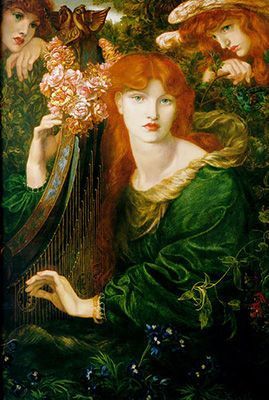
La Ghirlandata
A woman delicately plays a harp while two angels circle pensively above her head. The rich velvet of the woman’s green dress flows into the luxurious vegetation that surrounds her, her striking red hair echoed by the garland of flowers and the angels’ auburn locks. William Michael Rossetti, the brother of the artist, translated this work’s as «The Garlanded Lady» or «Lady of the Wreath,» with Alexa Wilding, the model depicted in the center of the work, portrayed as the ideal of love and beauty.
This is a painting by Dante Gabriel Rossetti, a British artist associated with both Aestheticism and the Pre-Raphaelite brotherhood, and known for his tempestuous and often exploitative romantic relationships with female models and artists. This work’s title, along with the idealized treatment of subject matter, may be intended to evoke the spirit of Leonardo da Vinci’s Mona Lisa (c. 1503-19), then often known as La Giaconda («the happy one» or «the jocund one»), and revered by critics associated with Art for Art’s Sake such as Theophile Gautier and Walter Pater. In effect, Rossetti may have meant his idealized beauty to become an icon for the Aesthetic movement just as the Mona Lisa had become an icon of Renaissance art.
In its guide to the work, the Guildhall Art Gallery notes that the painting ushered in «a new aesthetic of painting,» as every element contributed to the elevation of beauty. William Michael Rossetti wrote that his brother’s intent was to «to indicate, more or less, youth, beauty, and the faculty for art worthy of a celestial audience, all shadowed by mortal doom.» In this respect, the painting summed up the «Cult of Beauty» for which the Pre-Raphaelites stood, and represents an important contribution to the principles of Art for Art’s Sake.
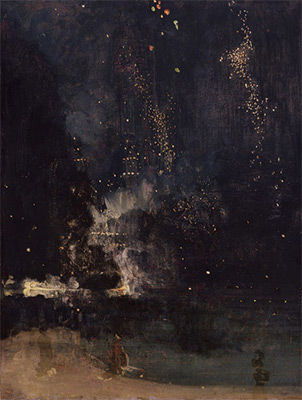
Nocturne in Black and Gold: The Falling Rocket
Artist: James Abbott McNeill Whistler
This iconic painting depicts a firework display at Cremorne Gardens in London. A few shadowy figures can be discerned in the foreground, depicting the shore of the Thames River, but most of the canvas is given over to the black night sky, lit up by the rocket’s falling gold sparks and the explosive smoke from the firework battery on the horizon. With its dreamy wash of color and abstracted figures, this painting represented the emergence of a new approach within painting which emphasized the artist’s freedom to represent a mood or emotion at the expense of representational accuracy.
No work is a better example of Whistler’s artistic stance. Perhaps for that reason, it became the subject of legal dispute after Whistler sued the noted critic John Ruskin for attacking the painting as worthless and poorly executed. While Whistler won the case, he received only a single farthing in settlement, and his legal fees contributed to his subsequent bankruptcy. Despite this Pyrrhic victory, Whistler’s defense played a key role in establishing the principles of art as an entirely liberated pursuit disconnected from all conventions of society, politics, or morality, which would be important to the development of modernism. Art critic James Jones notes that Whistler described a painting as «an arrangement of light, form and colour,» an emphasis which predicts, for example, the movement of Abstract Expressionism in the mid-twentieth century.

Harmony in Blue and Gold: The Peacock Room
The concept of Art for Art’s Sake, via the Aesthetic movement, had a transformative effect on interior design and architecture. As art critic Fiona MacCarthy writes, «[o]ne of the main tenets of aestheticism was that art was not confined to painting and sculpture and the false values of the art market. Potential for art is everywhere around us, in our homes and public buildings, in the detail of the way we choose to live our lives.»

The Peacock Skirt
Aubrey Beardsley’s stylish ink sketch depicts the Biblical figure of Salome, whose failed seduction of John the Baptist leads to his beheading. Salome was the subject of Oscar Wilde’s eponymous one-act tragedy, written in French in 1891. When the English translation was published in 1894, it contained ten woodblock illustrations based on ink sketches by Beardsley, of which The Peacock Skirt is the second. Depicting the figure of Salome to the left in a long, elaborately patterned dress, with a peacock veil and headdress, the work embodies the qualities of elaborate beauty and luxury which Beardsley and other Art-for-Art’s-Sake artists promoted. At the same time, the sinister figure to the right, whose made-up face and feminine dress contrasts with their hairy legs, embraces the ideas of androgyny and sexual fluidity with which the movement was (often disapprovingly) associated.
The origins of Beardsley’s Salome series are in a single illustration depicting the anti-heroine kissing the severed head of John the Baptist, printed in 1893. Upon seeing the image, Wilde recognized an artistic affinity and invited Beardsley to illustrate the entire narrative. The illustration was heavily influenced by Whistler’s decorations for the peacock room, as well as the stylized lines of Japanese woodblock prints; the resultant long, sinuous depiction of bodies anticipates the work of Gustave Klimt and other Art Nouveau artists.
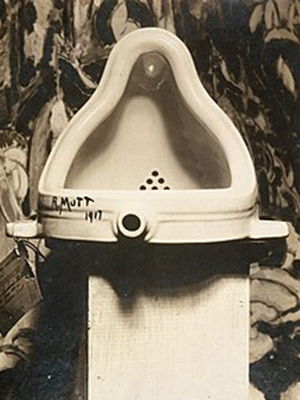
Fountain
Paradoxically, however, the work’s supporters did employ a version of the notion of Art for Art’s Sake to defend the object, arguing that Duchamp’s mere presentation the urinal imbued it with special significance, as an artwork which he had created. So, if the controversy demonstrated the fading importance of Art for Art’s Sake in the 20th century, it also showed the concept’s tenacity, as it became part of the foundation of modern art.
As contemporary art historian Peter Bürger wrote, «the autonomy of art is a category of bourgeois society. The relative dissociation of the work of art from the praxis of life in bourgeois society thus becomes transformed into the (erroneous) idea that the work of art is totally independent of society.» Bürger noted how «Duchamp’s provocation not only unmasks the art market where the signature means more than the quality of the work; it radically questions the very principle of art in bourgeois society according to which the individual is considered the creator of the work of art.»

Full Fathom Five
Full Fathom Five was among the first drip paintings Jackson Pollock completed. Its surface is clotted with an assortment of detritus, from cigarette butts to coins and a key. The uppermost layers were created by pouring lines of black and shiny silver house paint, though a large part of the paint’s crust was applied by brush and palette knife, creating an angular counterpoint to the weaving lines. Pollock’s drip paintings have been interpreted in numerous ways, some seeing them as inventing a new abstract language for the unconscious, others suggesting that they evoke the night sky, or in this case, the depths of the ocean.
In effect, while the idea of Art for Art’s Sake had nominally fallen out of fashion by the early twentieth century, it continued to inform trends in modern art, and its emphasis on the value of art as disconnected from all thematic concerns, became the grounds for Greenberg’s concepts of medium specificity, as well as his definition of the avant-garde and his arguments in favor of abstract art. As Lovatt adds, «[b]y emphasizing the opacity and autonomy of each ‘medium’, Greenberg disengaged the word from its relational and communicative connotations. Thus isolated, the modernist ‘medium’ was objectified and reified as a thing-in-itself, abstracted from the broader conditions of artistic production and reception.»
Beginnings
The Literary World and Théophile Gautier

Gautier had first studied painting before turning to literature and, subsequently, he became a leading art critic, so that he influenced both the literary and visual-art worlds. The poet Charles Baudelaire, a famous art critic in his own right, dedicated his groundbreaking poetry collection Les Fleurs du Mal (1857) to Gautier, whom he called «a perfect magician of French letters.» In 1862 Gautier was elected chairman of the Société Nationale des Beaux-Arts (National Society of Fine Arts) by a board that included Édouard Manet, Eugène Delacroix, and Gustave Doré among others. Gautier’s view that aesthetic beauty was central to the value of art, and that thematically suggestive or didactic work often lacked this quality, became widely influential in securing the reputation of the Aesthetic movement.
James Abbott McNeill Whistler
Whistler’s assertion that visual art should not promote any particular subject-matter led him to compare it to the purely abstract domain of music. With reference to his «nocturnes,» such as Nocturne in Blue and Gold: Old Battersea Bridge (c. 1872-75), he described painting as «pure music,» noting that «Beethoven and the rest wrote music [. ] they constructed celestial harmonies [. ] pure music.»
In emphasizing the value of art for its own sake, Whistler helped to establish both the Aesthetic movement and Tonalism, the former movement having great currency in Britain, the latter in North America. In 1893, the critic George Moore, in his book Modern Painting, wrote that, «[m]ore than any other painter, Mr. Whistler’s influence has made itself felt on English art. More than any other man, Mr Whistler has helped to purge art of the vice of subject and belief that the mission of the artist is to copy nature.»
Aesthetic Movement

By 1860 the Aesthetic movement had emerged, coalescing around the influential idea of Art for Art’s Sake, with its base in the United Kingdom. Informed by Whistler’s pioneering work and Gautier’s criticism, the movement became associated particularly with images of female beauty set against the decadence of the classical world, as exemplified by the work of artists such as Albert Joseph Moore and Lawrence Alma-Tadema.
The canonical art critic Walter Pater became a leading proponent of Aestheticism. In his influential book The Renaissance: Studies in Art and Poetry (1873) he stated that «art comes to you proposing frankly to give nothing but the highest quality of your moments as they pass, and simply for these moments’ sake.» In so doing, he extended the concept of Art for Art’s Sake to define the kind of experience that a viewer should derive from a particular artwork, rather than merely applying it to the artist’s intentions.
Decadent Movement

The Decadent movement, which began in the 1880s, developed alongside the Aesthetic movement and shared roots in the mid-nineteenth, with Beardsley a significant figure in both schools. The Decadent movement, however, was particularly associated with France, notably with the work of the French-based Belgian artist Félicien Rops. Rops was a peer of Charles Baudelaire, who had proudly declared himself a «decadent» in his Les Fleurs du Mal («The Flowers of Evil») (1857), after which time the term became synonymous with a rejection of nineteenth-century banality, puritanism, and sentimentality. In 1886, the publication of the magazine Le Décadent in France gave the Decadent movement its name.

Tonalism

The art of Tonalism, mainly based in North America, held no truck with the scandal-seeking decadence of Beardsley and his peers. However, with their glowing, mist-filled, atmospheric landscapes, the Tonalists pioneered a style that was, in its own way, equally committed to the notion of Art for Art’s Sake.
Whistler was a lodestar for these artists. As the art historian David Adams Cleveland notes, Tonalism’s «emphasis on balanced design, subtle patterning, and a kind of otherworldly equipoise came directly out of the Aesthetic movement and the work and artistic philosophy of Art for Art’s Sake promoted by its greatest exponent, James McNeil Whistler.» In works such as Nocturne: The River at Battersea (1878), Whistler emphasized mood and atmosphere while exploring a simplified, almost abstract landscape in terms of its color tonalities.
Art critic Grace Glueck describes Tonalism as «not really a movement, but a mix of tendencies that began to drift together around 1870.» «[I]t remained a style without a name,» she adds, «until the mid-1890s.» Tonalism became a touchstone within US art, associated in particular with the North-American painters George Inness and Albert Pinkham Ryder, as well as the photographer Edward Steichen.
Whistler vs. Ruskin

Many of the principles of Art for Art’s Sake were publicly exclaimed by James Abbott McNeill Whistler during a famous libel case, which pitted his views against those of the Victorian art critic John Ruskin. The roots of the dispute were in the founding of the Grosvenor gallery in London in 1877. The gallery promoted the Aesthetic movement, and, as Fiona MacCarthy notes, became a «fashionable talking shop. The gallery’s proximity to the Royal Academy polarized opinion about the techniques and purposes of art.»
It was this polarization of opinion which led Ruskin, a proponent of more traditional technical and moral values within art, to dismiss Whistler’s Nocturne in Black and Gold: The Falling Rocket (1875), shown in the first Grosvenor exhibition, as the equivalent of «flinging a pot of paint in the public’s face.» Never shy of publicity, Whistler sued Ruskin for libel, and the case came to court in 1878.
During the legal proceedings, Ruskin used a portrait of Vincenzo Catena’s Portrait of the Doge, Andrea Gritti (1523-31), then thought to be painted by Titian, as an example of «real art» meant to counter Whistler’s painting. By arguing his right to freedom from pre-imposed artistic standards, Whistler won the case. However, he was awarded only a single farthing in damages, and his legal expenses and the public controversy which the episode had caused severely impacted on his career, to the extent that he was forced to declare bankruptcy, subsequently moving to Paris.
Oscar Wilde and the Aesthetic Movement Teapot

Following Whistler’s trial, the British public, as well as a number of powerful cultural figures, turned against the Aesthetic movement, and what they perceived as the indulgence and immorality of Art for Art’s Sake. In 1881, the English dramatist W.S. Gilbert premiered Patience, a musical satirizing the leading Aesthetes, while cartoons lampooning Aestheticism appeared frequently in Punch, the leading British magazine of satire and humor.
Oscar Wilde, by this time already an established writer and a cultural celebrity, was often the target for attacks with homophobic overtones. As the art historian Sally-Anne Huxtable writes, he was «the most famous Aesthete of them all [. ] at that time dressing in velvet breeches, lecturing on the topic of Art and supposedly quipping that he was ‘finding it harder and harder every day to live up to my blue and white china’.» In 1882, playing off the success of W.S. Gilbert’s Patience, which had included a character based on Wilde called Bunthorne, the designer James Hadley, employed at the famous Royal Worcester Porcelain Factory, created his so-called Aesthetic Movement Teapot.
This said, the artistic debate that Hadley alluded to, masked an uglier hostility towards the homosexual tendencies seen to be wrapped up in ideas of Art for Art’s Sake. Presenting a young man on one side and a young woman on the other, the teapot suggests the erosion of the traditional masculine and feminine qualities, encapsulating what Huxtable calls «the hysterical fears circulating in the 1880s about the effects that effeminacy and the blurring of gender roles might have on the future British population.» These fears placed figures like Wilde in the spotlight, and in 1895, after two trials and much public scandal, he was sentenced to prison and two years’ hard labor after being convicted of «gross indecency» for homosexual acts.
Concepts and Trends
Philosophy
The idea of aesthetic experience that informed Art for Art’s Sake arguably has its roots in the work of eighteenth-century philosopher Immanuel Kant, who held that the true appreciation of art was a process disconnected from all worldly concerns. Subsequent eighteenth- and nineteenth-century artists and thinkers, including Johann Wolfgang von Goethe, Friedrich Schiller, and Thomas Carlyle, built upon Kant’s ideas. Schiller’s Briefe über die ästhetische Erziehung des Menschen (1795) («On the Aesthetic Education of Man»), inspired by Kant, developed the idea that appreciating art took the viewer away from social, political, or otherwise ‘non-artistic’ concerns: «beauty cajoles from [man] a delight in things for their own sake.» As a result, when Benjamin Constant first used the phrase «art for art’s sake» in 1804, he was coining a memorable phrase that captured an already important philosophical trend.
Art Criticism
A number of nineteenth-century art critics, particularly Théophile Gautier and Walter Pater, did much to establish the ideas of Art for Art’s Sake. Pater famously described the possession of an artistic sensibility as meaning «[t]o burn always with [a] hard, gem-like flame, to maintain this ecstasy, is success in life.» As art historian Rachel Gurstein writes, «[s]uch an elevated, if extravagant, ideal of art demanded a new kind of criticism that would match, and even surpass, the intensity of the impressions that a painting evoked in the sensitive viewer, and the aesthetic critic responded with ardent prose poems of his own.» She adds that «proper Victorians thought such a view of art and criticism immoral and irreligious. They were appalled by what they perceived as its decadence.»
Effect on Art History

With their passionate criticism, Gautier and Pater influenced the evaluation not just of contemporary art but also of the Renaissance and classical work that influenced it. Rejecting the story-telling style and moral subject-matter of classical history painting, exemplified by Raphael and favored by the traditional academies, these two critics rediscovered the work of artists such as Botticelli. Additionally, as Rochelle Gurstein writes of Leonardo da Vinci’s Mona Lisa (c. 1503-19), «[a]lthough many writers associated with the art-for-art’s sake movement in France and England paid enthusiastic tribute to the painting, Theophile Gautier and Walter Pater are now best known for launching it on its modern path to what is now inelegantly called ‘iconicity.'»
Opponents of Art for Art’s Sake
From the beginning, the idea that art should be judged solely on a set of isolated aesthetic or formal criteria was opposed by a range of creatives and thinkers. Academic painters rejected the work associated with Art for Art’s Sake as frivolous, lacking the moral purpose offered by the classical subjects which the Academy favored. Ruskin’s criticism of Whistler’s work encapsulates some aspects of this position.
Just as it was criticized by traditionalists, Art for Art’s Sake also gradually fell afoul of emerging avant-garde trends in the arts. Gustave Courbet, the pioneer of Realism, generally seen as the first modern art movement, consciously distanced his aesthetic approach from Art for Art’s Sake in 1854, while also rejecting the standards of the academy, presenting them as two sides of the same coin: «I was the sole judge of my painting [. ] I had practiced painting not in order to make Art for Art’s Sake, but rather to win my intellectual freedom.»
Courbet’s position anticipated that of many forward-thinking artists who felt, as the novelist George Sand wrote in 1872, that «Art for art’s sake is an empty phrase. Art for the sake of truth, art for the sake of the good and the beautiful, that is the faith I am searching for.» Modernism and Avant-Garde trends in art increasingly became associated not with a mere decadent rejection of academic and Victorian morals, but with the proposition of alternative social, political, and ethical ideals.
Later Developments
According to the Victoria and Albert Museum, «[t]he Aesthetic project finally ended following the scandal of the trial, conviction and imprisonment of Oscar Wilde for homosexuality in 1895. The fall of Wilde effectively discredited the Aesthetic Movement with the general public, though many of its ideas and styles remained popular into the 20th century.» With the decline of the Aesthetic movement, the phrase «art for art’s sake» fell out of fashion, though it continued to exert a presence, often notably, in other countries.
In St. Petersburg in 1899 Sergei Diaghilev, along with Léon Bakst and Alexandre Benois, founded the magazine Mir iskusstva («World of Art»). The magazine was allied with a group of young artists in St. Petersburg which had formed the World of Art movement the preceding year. Promoting Art for Art’s Sake and artistic individualism, the group had perhaps its greatest impact through the formation of the groundbreaking Ballets Russes, which Diaghilev founded in 1907, and which operated until 1927.
The idea of Art for Art’s Sake had a profound if somewhat paradoxical influence on avant-garde art. As art historian Doug Singsen notes, «the avant-garde was not simply a negation of l’art pour l’art but rather both a negation and continuation of it.» Many leading twentieth-century artists dismissed it. Pablo Picasso stated «[t]his idea of art for art’s sake is a hoax,» while Wassily Kandinsky wrote that «[t]his neglect of inner meanings, which is the life of colours, this vain squandering of artistic power is called ‘art for art’s sake.'» Nonetheless, the concept was often met with ambiguity. Kandinsky empathized with the concept to a limited extent, describing it as «an unconscious protest against materialism, against the demand that everything should have a use and practical value.»
The leading art critic Clement Greenberg, who promoted Abstract Expressionism in the post-World War II era, build his concepts of medium specificity and formalism upon the groundwork of Art for Art’s Sake. As art historian Anna Lovatt writes, «Greenberg expanded the concept of art’s autonomy as he developed his concept of medium specificity.» Contemporary art historian Paul Bürger described the concept of Art for Art’s Sake as fundamental to the evolution of the avant-garde and modernism in his influential 1974 text Theory of the Avant-Garde: «the autonomy of art is a category of bourgeois society. It permits the description of art’s detachment from the context of practical life as a historical development.»
Social historian Rochelle Gurstein notes that «Pater’s style was a harbinger of modernity.» His influence continued into the twentieth century, particularly among noted critics and writers. Contemporary critic Denis Donoghue describes Pater’s influence as «a shade or trace in virtually every writer of significance from [Gerard Manley] Hopkins and [Oscar] Wilde to [John] Ashbery.» During the era of postmodernism in literary studies, many critics also took an interest in Pater’s worldview as a precursor to modern ideas of «deconstruction.» In 1991, scholar Jonathan Loesberg argued in Aestheticism and Deconstruction: Pater, Derrida, and de Man that aestheticism and modern deconstruction produced similar forms of philosophical knowledge and political effect through a process of self-questioning or «self-resistance,» and through the internal critique and destabilization of hegemonic truths.
In 2011 the Victoria & Albert Museum held The Cult of Beauty exhibition on the aesthetic movement. As curator Stephen Calloway noted, «the idea of looking at an art movement where, consciously, beauty and quality are central ideas, seems to me extraordinarily timely,» suggesting that Art for Art’s Sake is an idea with ongoing currency in the information and opinion-saturated contemporary world.
‘art for art’s sake’
Смотреть что такое «‘art for art’s sake’» в других словарях:
art for art’s sake — a slogan translated from the French l art pour l art, which was coined in the early 19th century by the French philosopher Victor Cousin (Cousin, Victor). The phrase expresses the belief held by many writers and artists, especially those… … Universalium
art for art’s sake — Any of several points of view related to the possibility of art being independent of concerns that order other disciplines. The term is primarily used regarding artists and artwriters of the second half of the nineteenth century, especially… … Glossary of Art Terms
art for art’s sake — noun Art with no function, whose only purpose is beauty … Wiktionary
art for art’s sake — used to convey the idea that the chief or only aim of a work of art is the self expression of the individual artist who creates it … Useful english dictionary
Poetry for Poetry’s Sake — Poetry for Poetry’s Sake was an inaugural lecture given at Oxford University by the English literary scholar Andrew Cecil Bradley on June 5, 1901 and published the same year by Oxford at the Clarendon Press. The topic of the speech is the role of … Wikipedia
art for art’s sake — artistic movement justifying artistic creation that serves no social or political purpose … English contemporary dictionary
Raised on Rock/For Ol’ Times Sake — Raised On Rock Студийный альбом … Википедия
Art and Anarchy — is a collection of essays by Edgar Wind, a distinguished twentieth century iconologist, historian, and art theorist. In 1960, Wind gave several lectures for the BBC as part of the Reith Lectures series; these lectures were collected, revised, and … Wikipedia
Art for charity — refers to the convergence between art and charitable giving. Artists may produce works specifically to be sold for charity or creators or owners of artistic works might donate all or part of the proceeds of sale to a good cause. Such sales are… … Wikipedia
Art School Confidential (comics) — For the film see Art School Confidential (film) Art School Confidential is a four page black and white comic by Daniel Clowes. It originally appeared in issue #7 (November 1991) of Clowes comic book Eightball and was later reprinted in the book… … Wikipedia
art for arts sake
1 art
искусство;
Faculty of Arts отделение гуманитарных и математических наук
мастерство;
industrial (или mechanical, useful) arts ремесла
умение, мастерство, искусство;
military art военное искусство
фотографии разыскиваемых преступников
(обыкн. pl) хитрость;
he gained his ends by arts он хитростью достиг своей цели
attr. художественный;
art school художественное училище
is long, life is short посл. жизнь коротка, искусство вечно
attr. художественный;
art school художественное училище
вчт. иллюстративные вставки
искусство;
Faculty of Arts отделение гуманитарных и математических наук
and part in быть причастным (к чему-л.), быть соучастником (чего-л.)
(обыкн. pl) хитрость;
he gained his ends by arts он хитростью достиг своей цели
мастерство;
industrial (или mechanical, useful) arts ремесла
is long, life is short посл. жизнь коротка, искусство вечно
вчт. штриховая графика
умение, мастерство, искусство;
military art военное искусство
пат. ограничительная часть формулы изобретения prior
вчт. полутоновые иллюстрации
2 art
graphic art — графическое искусство, графика
environmental art — «пространственное искусство» (форма искусства, которая вовлекает зрителя в представление, выставку)
to practise an art — заниматься каким-л. видом искусства
Dance is an art. — Танец – это вид искусства.
Bachelor of Arts — бакалавр искусств (обладатель степени бакалавра по одной из гуманитарных или математических наук в университетах)
Work, in which they have taken a great deal of pains, and used a great deal of art. — Работа, которая принесла массу страданий, но в которую было вложено много мастерства.
He gained his ends by arts. — Он хитростью достиг своей цели.
to have / be art and part in smth. — быть причастным к чему-л., быть соучастником чего-л.
Art is long, life is short. — посл. Жизнь коротка, искусство вечно.
art film / movie — некоммерческий фильм
Dust thou art, and unto dust shalt thou return. ( Bible) — Прах ты и в прах возвратишься. (Библия, книга Бытия, гл. 3, ст. 19)
3 искусство
а work of art;
драматическое
у do* smth. for its own sake.
См. также в других словарях:
Art and Anarchy — is a collection of essays by Edgar Wind, a distinguished twentieth century iconologist, historian, and art theorist. In 1960, Wind gave several lectures for the BBC as part of the Reith Lectures series; these lectures were collected, revised, and … Wikipedia
Culture for the Masses — The Goodies episode Episode no. Series 2 Episode 13 (of 76) Produced by Starring … Wikipedia
Culture for the Masses (Goodies episode) — Infobox The Goodies episode name = Culture for the Masses number = 13 airdate = 5 November, 1971 (Friday mdash; 10.10 p.m.) director = producer = guests = Julian Orchard as the Minister of culture Tommy Godfrey as the Auctioneer Ray Marlowe as… … Wikipedia
arts, East Asian — Introduction music and visual and performing arts of China, Korea, and Japan. The literatures of these countries are covered in the articles Chinese literature, Korean literature, and Japanese literature. Some studies of East Asia… … Universalium
Art — This article is about the general concept of Art. For the categories of different artistic disciplines, see The arts. For the arts that are visual in nature, see Visual arts. For people named Art, see Arthur (disambiguation). For other uses, see… … Wikipedia
Art and Revolution — BackgroundWagner had been an enthusiast for the 1848 revolutions and had been an active participant in the Dresden Revolution of 1849, as a consequence of which he was forced to live for many years in exile from Germany. Art and Revolution was… … Wikipedia
Art Renewal Center — The Art Renewal Center (ARC) is an organization led by Fred Ross dedicated to classical realism in art, as opposed to the Modernist developments of the 20th century. It exists primarily as an online art gallery.Edwards, Alun.… … Wikipedia
art — <<11>>art (adj.) produced with conscious artistry, as opposed to popular or folk, 1890, from ART (Cf. art) (n.), possibly from influence of Ger. kunstlied art song (Cf. art film, 1960; art rock, 1968). <<12>>art (n.) early 13c., skill as a result … Etymology dictionary
Art of Noise — Infobox musical artist Name = Art of Noise Img capt = Img size = Landscape = Background = group or band Alias = Origin = London, England Genre = Synthpop, Avant garde, Ambient, New Wave Years active = 1983 1990, 1998 2000 Label = ZTT China… … Wikipedia
Art Renewal Center — Le Art Renewal Center est une organisation américaine s intéressant au réalisme classique dans les arts, en opposition aux courants modernistes du XXe siècle. C est avant tout un Musée des Beaux Arts en ligne. Ce centre a été créé en 2000… … Wikipédia en Français
‘art for art’s sake’
1 art for art’s sake
2 art for art’s sake
3 ‘art for art’s sake’
4 sake
ради;
do it for Mary’s sake сделайте это ради Мэри;
for our sakes ради нас sake: for God’s
ради бога, ради всего святого (для выражения раздражения, досады, мольбы) ;
for conscience’ sake для успокоения совести sake: for God’s
ради бога, ради всего святого (для выражения раздражения, досады, мольбы) ;
for conscience’ sake для успокоения совести sake: for God’s
ради бога, ради всего святого (для выражения раздражения, досады, мольбы) ;
for conscience’ sake для успокоения совести for old
в память прошлого;
for the sake of glory ради славы for the
ради;
do it for Mary’s sake сделайте это ради Мэри;
for our sakes ради нас for the
ради;
do it for Mary’s sake сделайте это ради Мэри;
for our sakes ради нас for the
ради;
do it for Mary’s sake сделайте это ради Мэри;
for our sakes ради нас for old
в память прошлого;
for the sake of glory ради славы for the
of making money из-за денег;
sakes alive! амер. вот тебе раз!, ну и ну!;
вот это да! for the
of making money из-за денег;
sakes alive! амер. вот тебе раз!, ну и ну!;
вот это да!
5 sake
6 art
graphic art — графическое искусство, графика
environmental art — «пространственное искусство» (форма искусства, которая вовлекает зрителя в представление, выставку)
to practise an art — заниматься каким-л. видом искусства
Dance is an art. — Танец – это вид искусства.
Bachelor of Arts — бакалавр искусств (обладатель степени бакалавра по одной из гуманитарных или математических наук в университетах)
Work, in which they have taken a great deal of pains, and used a great deal of art. — Работа, которая принесла массу страданий, но в которую было вложено много мастерства.
He gained his ends by arts. — Он хитростью достиг своей цели.
to have / be art and part in smth. — быть причастным к чему-л., быть соучастником чего-л.
Art is long, life is short. — посл. Жизнь коротка, искусство вечно.
art film / movie — некоммерческий фильм
Dust thou art, and unto dust shalt thou return. ( Bible) — Прах ты и в прах возвратишься. (Библия, книга Бытия, гл. 3, ст. 19)
7 art
искусство;
Faculty of Arts отделение гуманитарных и математических наук
мастерство;
industrial (или mechanical, useful) arts ремесла
умение, мастерство, искусство;
military art военное искусство
фотографии разыскиваемых преступников
(обыкн. pl) хитрость;
he gained his ends by arts он хитростью достиг своей цели
attr. художественный;
art school художественное училище
is long, life is short посл. жизнь коротка, искусство вечно
attr. художественный;
art school художественное училище
вчт. иллюстративные вставки
искусство;
Faculty of Arts отделение гуманитарных и математических наук
and part in быть причастным (к чему-л.), быть соучастником (чего-л.)
(обыкн. pl) хитрость;
he gained his ends by arts он хитростью достиг своей цели
мастерство;
industrial (или mechanical, useful) arts ремесла
is long, life is short посл. жизнь коротка, искусство вечно
вчт. штриховая графика
умение, мастерство, искусство;
military art военное искусство
пат. ограничительная часть формулы изобретения prior
вчт. полутоновые иллюстрации
8 искусство
а work of art;
драматическое
у do* smth. for its own sake.
9 an ivory tower
Throughout the nineteenth century we find the artist engaging in a vain effort to deny the world which imposes upon him standards he can never accept. Some do so by building their ivory tower and hoisting from its summit the silken banner of art for art’s sake. (R. Fox, ‘The Novel and the People’, ch. IV) — Мы видели, как в течение всего XIX века художники тщетно пытались отгородиться от мира, навязывающего им нормы, которые они не могут принять. Некоторые для этого уединялись в «башню из слоновой кости», вывешивая знамя искусства ради искусства.
10 интерес
к искусству interest in art;
в
ах in smb.`s interests;
это в ваших
be* of the utmost interest, be* of great interest.
См. также в других словарях:
art for art’s sake — a slogan translated from the French l art pour l art, which was coined in the early 19th century by the French philosopher Victor Cousin (Cousin, Victor). The phrase expresses the belief held by many writers and artists, especially those… … Universalium
art for art’s sake — Any of several points of view related to the possibility of art being independent of concerns that order other disciplines. The term is primarily used regarding artists and artwriters of the second half of the nineteenth century, especially… … Glossary of Art Terms
art for art’s sake — noun Art with no function, whose only purpose is beauty … Wiktionary
art for art’s sake — used to convey the idea that the chief or only aim of a work of art is the self expression of the individual artist who creates it … Useful english dictionary
Poetry for Poetry’s Sake — Poetry for Poetry’s Sake was an inaugural lecture given at Oxford University by the English literary scholar Andrew Cecil Bradley on June 5, 1901 and published the same year by Oxford at the Clarendon Press. The topic of the speech is the role of … Wikipedia
art for art’s sake — artistic movement justifying artistic creation that serves no social or political purpose … English contemporary dictionary
Raised on Rock/For Ol’ Times Sake — Raised On Rock Студийный альбом … Википедия
Art and Anarchy — is a collection of essays by Edgar Wind, a distinguished twentieth century iconologist, historian, and art theorist. In 1960, Wind gave several lectures for the BBC as part of the Reith Lectures series; these lectures were collected, revised, and … Wikipedia
Art for charity — refers to the convergence between art and charitable giving. Artists may produce works specifically to be sold for charity or creators or owners of artistic works might donate all or part of the proceeds of sale to a good cause. Such sales are… … Wikipedia
Art School Confidential (comics) — For the film see Art School Confidential (film) Art School Confidential is a four page black and white comic by Daniel Clowes. It originally appeared in issue #7 (November 1991) of Clowes comic book Eightball and was later reprinted in the book… … Wikipedia
art for art’s sake
Смотреть что такое «art for art’s sake» в других словарях:
art for art’s sake — a slogan translated from the French l art pour l art, which was coined in the early 19th century by the French philosopher Victor Cousin (Cousin, Victor). The phrase expresses the belief held by many writers and artists, especially those… … Universalium
art for art’s sake — Any of several points of view related to the possibility of art being independent of concerns that order other disciplines. The term is primarily used regarding artists and artwriters of the second half of the nineteenth century, especially… … Glossary of Art Terms
art for art’s sake — noun Art with no function, whose only purpose is beauty … Wiktionary
art for art’s sake — used to convey the idea that the chief or only aim of a work of art is the self expression of the individual artist who creates it … Useful english dictionary
Poetry for Poetry’s Sake — Poetry for Poetry’s Sake was an inaugural lecture given at Oxford University by the English literary scholar Andrew Cecil Bradley on June 5, 1901 and published the same year by Oxford at the Clarendon Press. The topic of the speech is the role of … Wikipedia
art for art’s sake — artistic movement justifying artistic creation that serves no social or political purpose … English contemporary dictionary
Raised on Rock/For Ol’ Times Sake — Raised On Rock Студийный альбом … Википедия
Art and Anarchy — is a collection of essays by Edgar Wind, a distinguished twentieth century iconologist, historian, and art theorist. In 1960, Wind gave several lectures for the BBC as part of the Reith Lectures series; these lectures were collected, revised, and … Wikipedia
Art for charity — refers to the convergence between art and charitable giving. Artists may produce works specifically to be sold for charity or creators or owners of artistic works might donate all or part of the proceeds of sale to a good cause. Such sales are… … Wikipedia
Art School Confidential (comics) — For the film see Art School Confidential (film) Art School Confidential is a four page black and white comic by Daniel Clowes. It originally appeared in issue #7 (November 1991) of Clowes comic book Eightball and was later reprinted in the book… … Wikipedia
На странице представлены текст и перевод с английского на русский язык песни «Art for Art’s Sake» из альбома «Clever Clogs» группы 10cc.
Текст песни
Gimme your body Gimme your mind Open your heart Pull down the blind Gimme your love gimme it all Gimme in the kitchen gimme in the hall Art for arts sake Money for Gods sake Art for Arts sake Money for Gods sake Gimme the readys Gimme the cash Gimme a bullet Gimme a smash Gimme a silver gimme a gold Make it a million for when I get old Art for arts sake Money for Gods sake Art for Arts sake Money for Gods sake Money talks so listen to it Money talks to me Anyone can understand it Money can’t be beat Oh no When you get down, down to the root Don’t give a damn don’t give a hoot Still gotta keep makin the loot Chauffeur driven Gotta make her quick as you can Give her lovin’ make you a man Get her in the palm of your hand Bread from Heaven
Перевод песни
Демонстрируйте свое тело Демонстрируйте свой ум Открой свое сердце Потяните вниз Дай мне всю свою любовь Подавать на кухне в зале Искусство ради искусства Деньги ради Бога Искусство ради искусства Деньги ради Бога Дайте мне Дайте деньги Дай мне пулю Дай мне Дай мне серебро, золото Сделать миллион, когда я старею Искусство ради искусства Деньги ради Бога Искусство ради искусства Деньги ради Бога Деньги разговаривают, так что слушай. Деньги разговаривают со мной. Каждый может понять. Деньги нельзя бить. О нет. Когда ты спускаешься, до корня Не наплевать, не кричите Все еще нужно держать добычу Управляемый шофером Надо сделать ее как можно быстрее Дай ей любовь, сделай тебя мужчиной Подними ее на ладони Хлеб с небес
For Art’s Sake
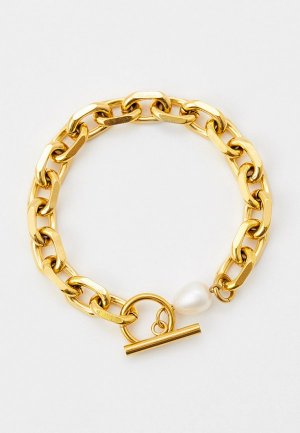
Браслет For Art’s Sake. Цвет: золотой. Сезон: Осень-зима 2022/2023.
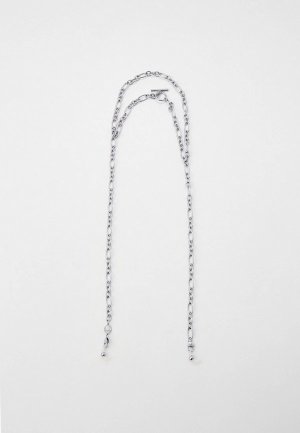
Цепочка для очков For Art’s Sake. Цвет: серебряный. Материал: металл. Сезон: Осень-зима 2022/2023.
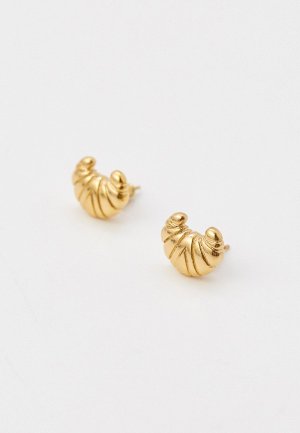
Серьги For Art’s Sake. Цвет: золотой. Сезон: Осень-зима 2022/2023.
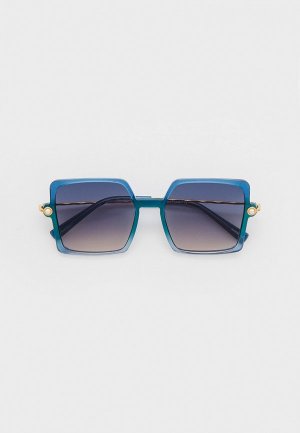
Очки солнцезащитные For Art’s Sake. Цвет: голубой. Сезон: Осень-зима 2022/2023.
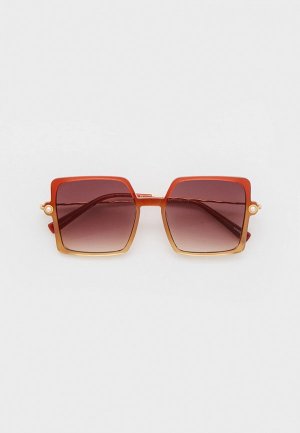
Очки солнцезащитные For Art’s Sake. Цвет: коричневый. Сезон: Осень-зима 2022/2023.

Очки солнцезащитные For Art’s Sake. Цвет: черный. Сезон: Осень-зима 2022/2023.
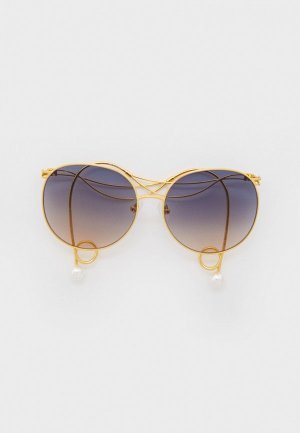
Очки солнцезащитные For Art’s Sake. Цвет: золотой. Сезон: Осень-зима 2022/2023.

Очки солнцезащитные For Art’s Sake. Цвет: черный. Сезон: Осень-зима 2022/2023.
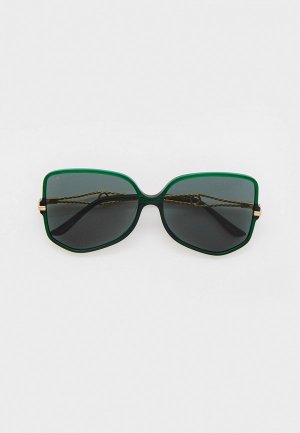
Очки солнцезащитные For Art’s Sake. Цвет: зеленый. Сезон: Осень-зима 2022/2023.
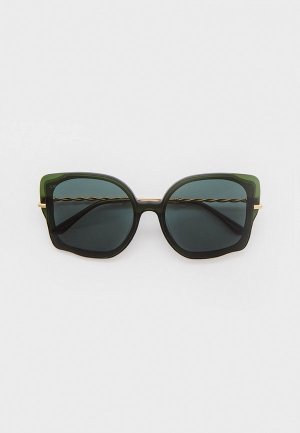
Очки солнцезащитные For Art’s Sake. Цвет: зеленый. Сезон: Осень-зима 2022/2023.
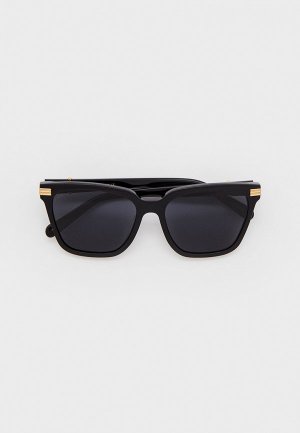
Очки солнцезащитные For Art’s Sake. Цвет: черный. Сезон: Осень-зима 2022/2023.

Очки солнцезащитные For Art’s Sake. Цвет: коричневый. Сезон: Осень-зима 2022/2023.
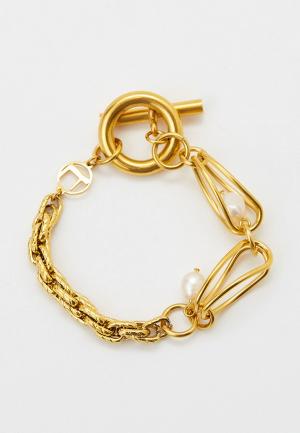
Браслет For Art’s Sake. Цвет: золотой. Сезон: Весна-лето 2022.
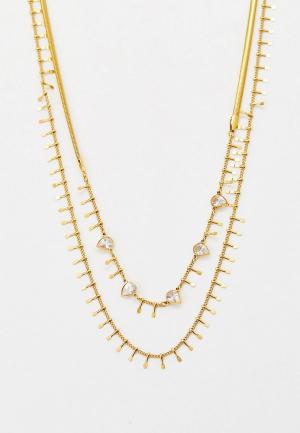
Колье For Art’s Sake. Цвет: золотой, прозрачный. Сезон: Весна-лето 2022.
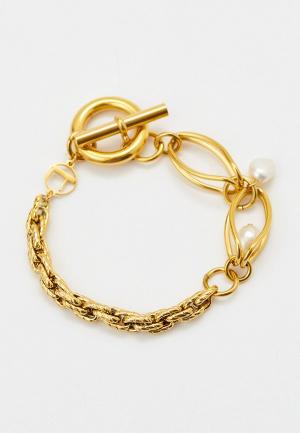
Браслет For Art’s Sake. Цвет: золотой. Сезон: Весна-лето 2022.
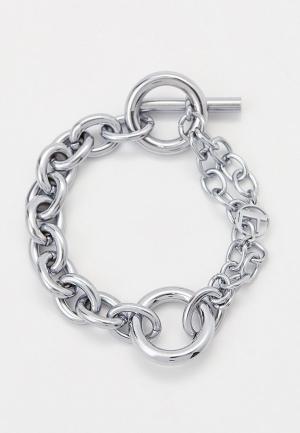
Браслет For Art’s Sake. Цвет: серебряный. Сезон: Весна-лето 2022.

Цепь For Art’s Sake. Цвет: серебряный. Сезон: Весна-лето 2022.

Серьги For Art’s Sake. Цвет: серебряный. Сезон: Весна-лето 2022.
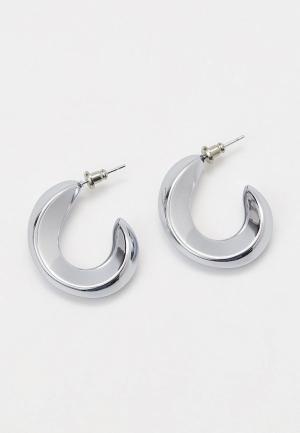
Серьги For Art’s Sake. Цвет: серебряный. Сезон: Весна-лето 2022.
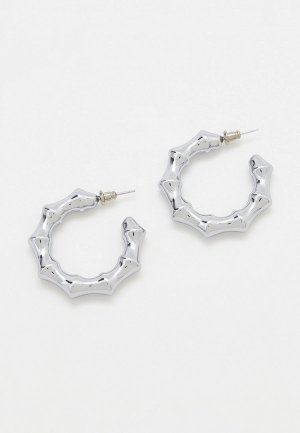
Серьги For Art’s Sake. Цвет: серебряный. Сезон: Весна-лето 2022.

Браслет For Art’s Sake. Цвет: серебряный. Сезон: Весна-лето 2022.
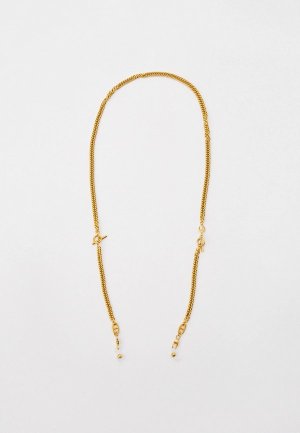
Цепочка для очков For Art’s Sake. Цвет: золотой. Материал: металл. Сезон: Весна-лето 2022.
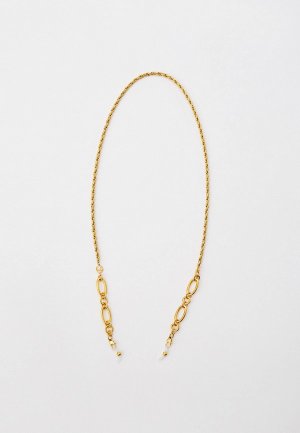
Цепочка для очков For Art’s Sake. Цвет: золотой. Сезон: Весна-лето 2022.
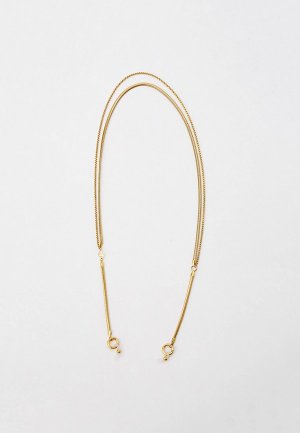
Цепочка для очков For Art’s Sake. Цвет: золотой. Сезон: Весна-лето 2022.
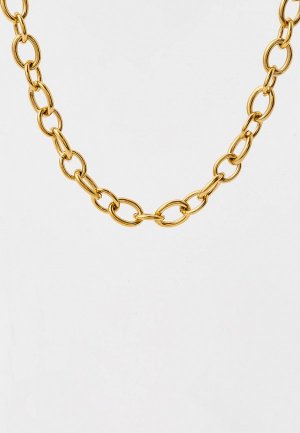
Цепь For Art’s Sake. Цвет: золотой, розовый. Сезон: Весна-лето 2022.
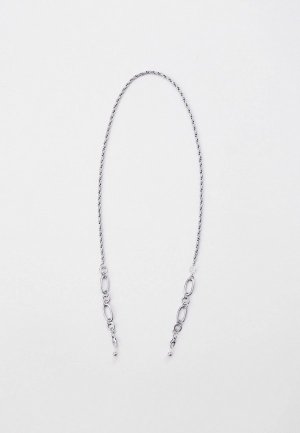
Цепочка для очков For Art’s Sake. Цвет: серебряный. Сезон: Весна-лето 2022.
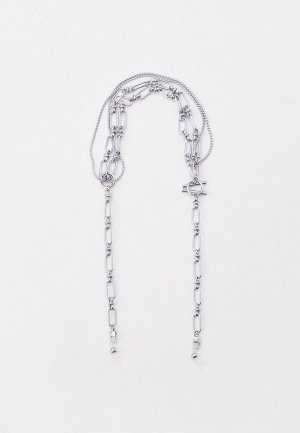
Цепочка для очков For Art’s Sake. Цвет: серебряный. Материал: металл. Сезон: Весна-лето 2022.
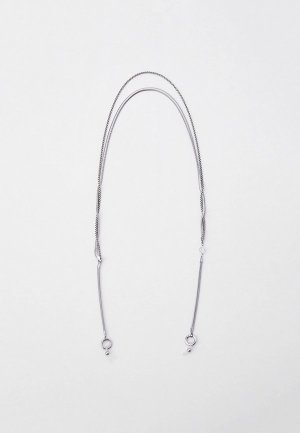
Цепочка для очков For Art’s Sake. Цвет: серебряный. Материал: металл. Сезон: Весна-лето 2022.
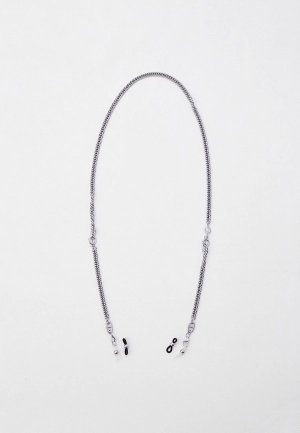
Цепочка для очков For Art’s Sake. Цвет: серебряный. Материал: металл. Сезон: Весна-лето 2022.
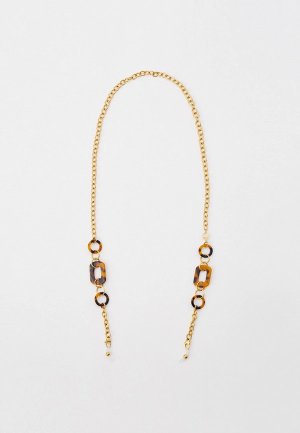
Цепочка для очков For Art’s Sake. Цвет: золотой, коричневый. Материал: металл, полимер. Сезон: Весна-лето 2022.
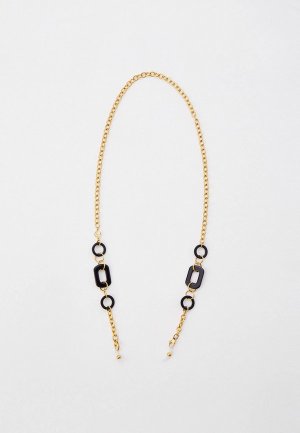
Цепочка для очков For Art’s Sake. Цвет: золотой, черный. Сезон: Весна-лето 2022.
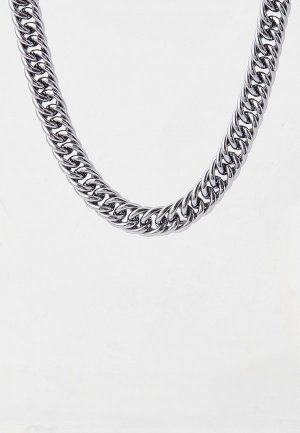
Цепь For Art’s Sake. Цвет: серебряный. Сезон: Весна-лето 2022.
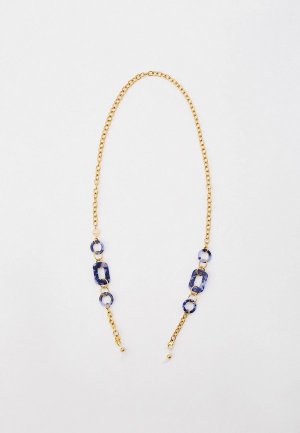
Цепочка для очков For Art’s Sake. Цвет: золотой. Сезон: Весна-лето 2022.
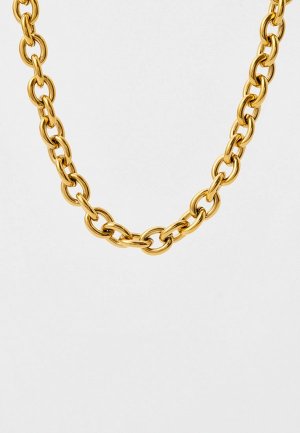
Колье For Art’s Sake. Цвет: золотой, мультиколор. Сезон: Весна-лето 2022.
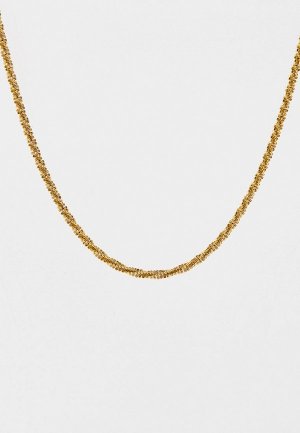
Колье For Art’s Sake. Цвет: золотой. Сезон: Весна-лето 2022.
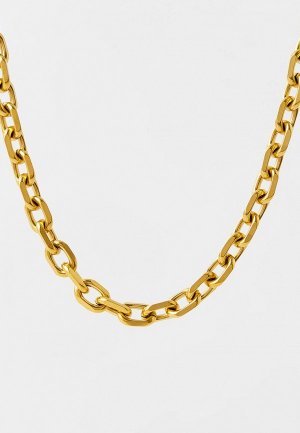
Цепь For Art’s Sake. Цвет: золотой, белый. Сезон: Осень-зима 2021/2022.

Браслет For Art’s Sake. Цвет: серебряный. Сезон: Весна-лето 2022.
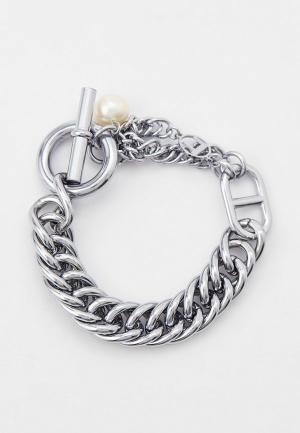
Браслет For Art’s Sake. Цвет: белый, серебряный. Сезон: Весна-лето 2022.
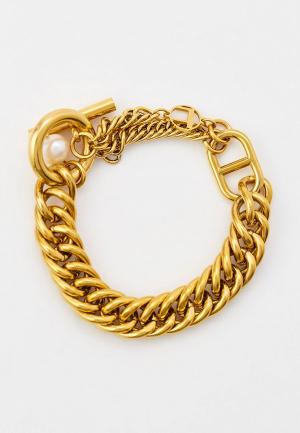
Браслет For Art’s Sake. Цвет: белый, золотой. Сезон: Весна-лето 2022.
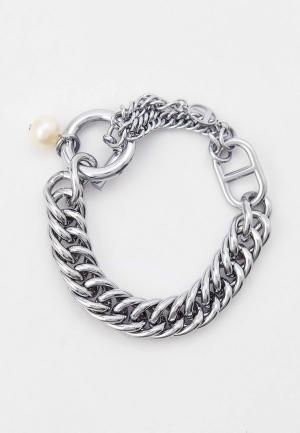
Браслет For Art’s Sake. Цвет: белый, серебряный. Сезон: Весна-лето 2022.

Очки солнцезащитные For Art’s Sake. Цвет: черный. Сезон: Весна-лето 2022.

Очки солнцезащитные For Art’s Sake. Цвет: коричневый. Сезон: Весна-лето 2022.

Очки солнцезащитные For Art’s Sake. Цвет: бордовый. Сезон: Весна-лето 2022.
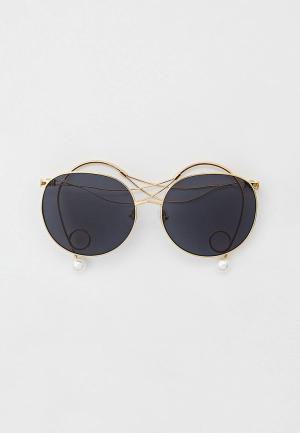
Очки солнцезащитные For Art’s Sake. Цвет: золотой. Сезон: Весна-лето 2022.

Очки солнцезащитные For Art’s Sake. Цвет: черный. Сезон: Весна-лето 2022.

Очки солнцезащитные For Art’s Sake. Цвет: серебряный. Сезон: Весна-лето 2022.
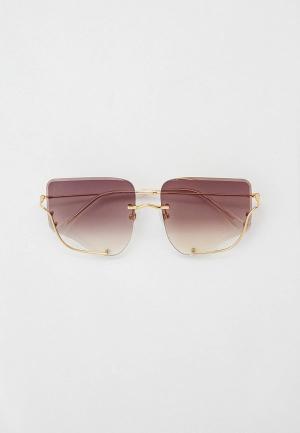
Очки солнцезащитные For Art’s Sake. Цвет: золотой. Сезон: Весна-лето 2022.
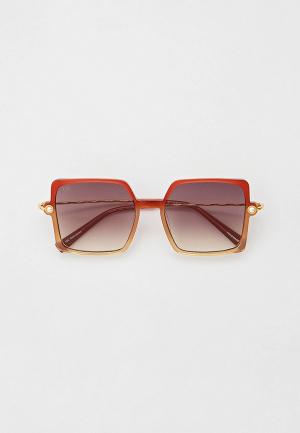
Очки солнцезащитные For Art’s Sake. Цвет: мультиколор. Сезон: Весна-лето 2022.

Очки солнцезащитные For Art’s Sake. Цвет: коричневый. Сезон: Весна-лето 2022.

Очки солнцезащитные For Art’s Sake. Цвет: черный. Сезон: Весна-лето 2022.

Очки солнцезащитные For Art’s Sake. Цвет: коричневый. Сезон: Весна-лето 2022.

Очки солнцезащитные For Art’s Sake. Цвет: золотой. Сезон: Весна-лето 2022.

Очки солнцезащитные For Art’s Sake. Цвет: зеленый. Сезон: Весна-лето 2022.
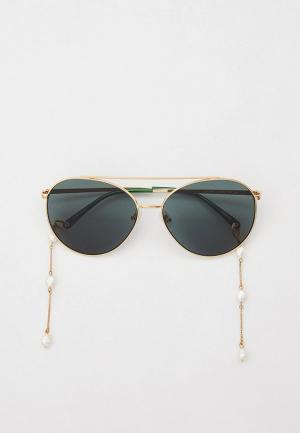
Очки солнцезащитные For Art’s Sake. Цвет: золотой. Сезон: Весна-лето 2022.

Очки солнцезащитные For Art’s Sake. Цвет: коричневый. Сезон: Весна-лето 2022.
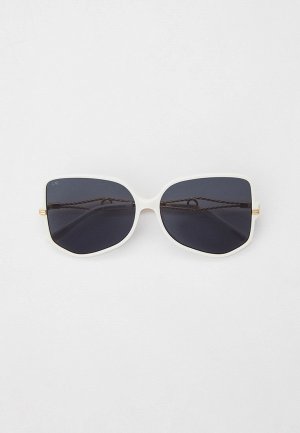
Очки солнцезащитные For Art’s Sake. Цвет: белый. Сезон: Весна-лето 2022.
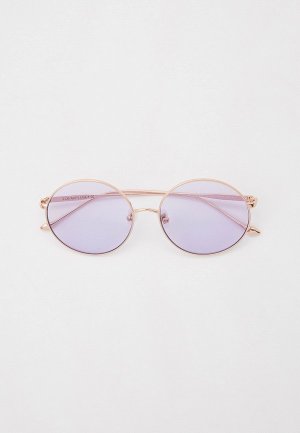
Очки солнцезащитные For Art’s Sake. Цвет: золотой. Сезон: Весна-лето 2022.
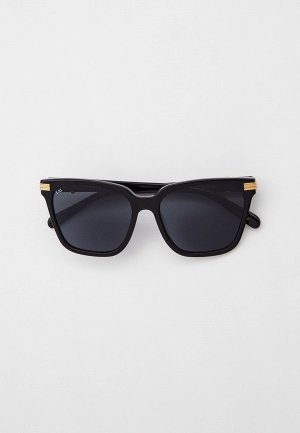
Очки солнцезащитные For Art’s Sake. Цвет: черный. Сезон: Весна-лето 2022.
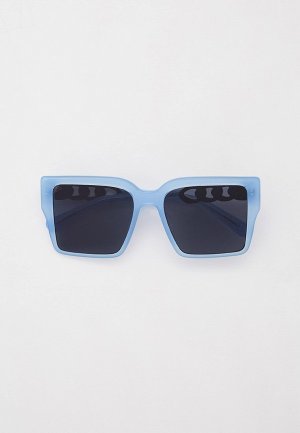
Очки солнцезащитные For Art’s Sake. Цвет: голубой. Сезон: Весна-лето 2022.
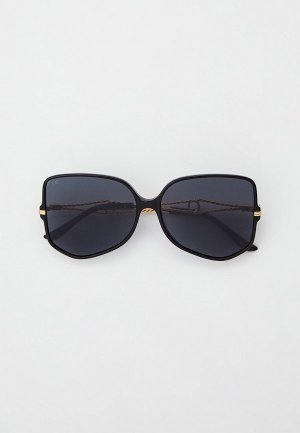
Очки солнцезащитные For Art’s Sake. Цвет: черный. Сезон: Весна-лето 2022.
Art For Art S Sake
Art For Art S Sake 10cc Live
10cc Art For Arts Sake
10cc Art For Art S Sake Later With Jools Holland BBC Two
Art For Arts Sake By 10cc REMASTERED VISUAL
10 CC Art For Art S Sake
10cc Art For Art S Sake Promo Clip
Art For Arts Sake By 10cc REMASTERED
10cc Art For Art S Sake Vinyl
10cc Art For Arts Sake 1975 Vinyl
Art For Art S Sake Live
10cc Art For Art S Sake Live In Scheveningen
10cc Art For Art S Sake 1976 Unique Extended Version
10CC Art For Art S Sake Live
Art For Art S Sake Single Edit
10cc Art For Art Sake 1982 Live Wembley Guitar Cover
10cc Art For Art S Sake Live 1975
10cc Art For Arts Sake
10cc Art For Arts Sake
Art For Art S Sake Live 1982
10cc Art For Art S Sake Live Sofiero Aug 10th 22
Art For Art S Sake 10cc
ART FOR ARTS SAKE 10CC 2015
10cc Art For Art S Sake
10cc Art For Art S Sake Director S Cut
10cc Art For Art S Sake
10CC Art For Art S Sake
Art For Art S Sake 10 CC Live
10cc I M Mandy Fly Me Art For Art S Sake Live In London 2007
10cc Art For Arts Sake
10cc Art For Art S Sake On Vinyl With Lyrics In Description
10cc Art For Art S Sake
10cc Art For Arts Sake
Art For Arts Sake 芸術こそ我が命 10cc Audio Only
10CC Art For Art S Sake Live May 2018
Art For Art S Sake 10cc
10CC Art For Art S Sake Live Ottawa Bluesfest 2012 07 14
10cc ART FOR ARTS SAKE BOOTIK MOOSIK
10CC Art For Arts Sake Live 2013
10cc Art For Arts Sake Fairfield Halls 2011
10cc Art For Arts Sake THE WOLF HUNTERZ Jon And Dolly Reaction
10 Cc ART FOR ART S SAKE BOOTIK MOOSIK
Art For Art Sake 10CC
10cc Art For Art S Sake Single Version
10CC ART FOR ARTS SAKE ON 7 INCH VINYL
Rory Smith Drumming Cover Art For Art S Sake By 10cc
The Truth Art For Art S Sake
10CC Art For Art S Sake Live Hvalstrandfestivalen 2017
10cc Art For Art S Sake
10cc Art For Art S Sake LIVE
Для вашего поискового запроса 10Cc Art For Art S Sake мы нашли 50 песен, соответствующие вашему запросу. Теперь мы рекомендуем загрузить первый результат Art For Art S Sake который загружен 10cc Topic размером 7.90 MB, длительностью 6 мин и битрейтом 192 Kbps.
Слушают сейчас
10Cc Art For Art S Sake
С Днем Рождения Любимый Повалий
Scotch Money Runner Original
Unut Beni Unuttugum Gibi Seni
The Jinx The Life And Deaths Of Robert Durst Trailer Official Hbo Uk
All Eyes Are On You Fnaf Speed Up
Куда Хуяришь Блять
Хуршид Расулов Отажон
Пародия На Шнурова От Однажды В России
Stranger Things Recap Jimmy Fallon On Yt
Новогодний Фитнес Микс
Uzmir Va Mira Qo Shiqlari
Salam Olsun Hüseynə
Ислам Итляшев Султан Лагучев Сборник Лучших Песен 2021
Желтые Розы Казаченко
Dschinghis Khan Moskau Bassboosted
Eddie Amador Do You
Ibuki Mioda From Me To You Too
Зульфия Чотчаева Буду Тебя Ждать
Diversant 13 Glamur I Pafos Remix By Zweifelhaft
Neon Genesis Evangelion Opening Ringtone For Ios Update
Uzeyir Mehdizade Heyatimiz Yeni Klip 2022
Safe And Sound Capital Cities Lyrics Remix Tiktok Song
Kokichi Version Mind Brand Male English Cover
Топ 10 Атмосферных Фонк Треков
Эльбрус Джанмирзоев Чародейка
Парень Из Торжка На Юбилее Надежды Бабкиной Надя Под Гармонь Театр Русская Песня
Jaloliddin Ahmadaliyev Ketsam Meni Topolmaysan Audio 2022
Клава Кока Бумеранг Премьера Клипа 2022
Eng Sara Qo Shiqlari To Plami 2022 Remix Yangi Uzbek Xit Qo Shiqlar 2022
Басы Пишите Песни С Басами Буду Делать
Доктор Ливси Самый Главный Оптимист
Мы В Школе Христа Фонограмма
Топ Шазам 2022 Самое Популярное Хиты 2022 Русская Музыка 2022 Лучшие Песни 2022
Яна Бир Бор Сочим Майда Уринг Ота Бахтимизга Доимо Сог Булинг Ота
Copyright ©Mp3crown.cc 2019
Все права защищены
На нашем музыкальном сайте вы можете бесплатно прослушать и скачать любимые, новые и популярные mp3 песни в хорошем качестве. Быстрый поиск любой композиции!
Почта для жалоб и предложений: [email protected]
art for art’s sake
Смотреть что такое «art for art’s sake» в других словарях:
art for art’s sake — a slogan translated from the French l art pour l art, which was coined in the early 19th century by the French philosopher Victor Cousin (Cousin, Victor). The phrase expresses the belief held by many writers and artists, especially those… … Universalium
art for art’s sake — Any of several points of view related to the possibility of art being independent of concerns that order other disciplines. The term is primarily used regarding artists and artwriters of the second half of the nineteenth century, especially… … Glossary of Art Terms
art for art’s sake — noun Art with no function, whose only purpose is beauty … Wiktionary
art for art’s sake — used to convey the idea that the chief or only aim of a work of art is the self expression of the individual artist who creates it … Useful english dictionary
Poetry for Poetry’s Sake — Poetry for Poetry’s Sake was an inaugural lecture given at Oxford University by the English literary scholar Andrew Cecil Bradley on June 5, 1901 and published the same year by Oxford at the Clarendon Press. The topic of the speech is the role of … Wikipedia
art for art’s sake — artistic movement justifying artistic creation that serves no social or political purpose … English contemporary dictionary
Raised on Rock/For Ol’ Times Sake — Raised On Rock Студийный альбом … Википедия
Art and Anarchy — is a collection of essays by Edgar Wind, a distinguished twentieth century iconologist, historian, and art theorist. In 1960, Wind gave several lectures for the BBC as part of the Reith Lectures series; these lectures were collected, revised, and … Wikipedia
Art for charity — refers to the convergence between art and charitable giving. Artists may produce works specifically to be sold for charity or creators or owners of artistic works might donate all or part of the proceeds of sale to a good cause. Such sales are… … Wikipedia
Art School Confidential (comics) — For the film see Art School Confidential (film) Art School Confidential is a four page black and white comic by Daniel Clowes. It originally appeared in issue #7 (November 1991) of Clowes comic book Eightball and was later reprinted in the book… … Wikipedia
Art for art s sake
The phrase “art for art’s sake” expresses both a battle
cry and a creed; it is an appeal to emotion as well
as to mind. Time after time, when artists have felt
themselves threatened from one direction or another,
and have had to justify themselves and their activities,
they have done this by insisting that art serves no
ulterior purposes but is purely an end in itself. When
asked what art is good for, in the sense of what utility
it has, they have replied that art is not something to
be used as a means to something else, but simply to
be accepted and enjoyed on its own terms.
The explicit and purposive assertion of art for art’s
sake is a strictly modern phenomenon. The phrase itself
begins to appear only in the early years of the nine-
teenth century, and it is some time after that before
a recognizable meaning and intention can be said to
emerge. This is quite as would be expected. For before
there can be any need and reason to assert that artistic
activity is self-sufficient and works of art are ends in
themselves, a certain intellectual and cultural climate
must occur. The essential catalyzing agent in this
process can be identified in a few words: it consists
in the tendency of the human career toward com-
plexity, specialization, and fragmentation. So long as
the structure of life—individual and social, economic
and functional, theoretical and practical—is relatively
compact and cohesive, there is little occasion for the
emergence of private groups with a strong sense of
their own interests and tasks as opposed to those of
other groups. Men had obviously all along filled differ-
ent roles requiring different skills and directed toward
different purposes; and their respective duties, respon-
sibilities, and powers had varied across a wide spec-
trum. But both the actual structure of society and the
attitude of men towards society, were largely holistic
and organismic. Consequently, the pursuits that we
now distinguish quite sharply, such as religion, moral-
ity, politics, law, science, technology, art, etc., were
not formerly regarded or practiced in such a separatist
manner. The same individuals were often engaged in
several of these activities, which were viewed as as-
pects of a single undertaking rather than as distinct
endeavors. Though men had certainly practiced art,
they had not, with certain exceptions, been highly
conscious of themselves as artists.
Beginning with the Renaissance, this cohesive cul-
tural and intellectual unity starts to crumble, and the
end of the eighteenth century sees it thoroughly disin-
tegrated. By then, divergent and divisive tendencies
are at work throughout the social fabric, finding ex-
pression in what we call the religious, political, scien-
tific, and industrial revolutions. Men’s newly awakened
interests contrast with their old habits and commit-
ments. Inspired by an intense dedication to specific
values and purposes, they are drawn together into
various groups, each with a strong sense of its own
identity and mission. As the result of this broad social
and cultural movement, men begin to think of them-
selves as scientists, ministers, politicians, financiers, or
artists; and they assert that as such they have a function
of particular importance and so require particular
privileges.
The more precise intellectual matrix of the doctrine
of art for art’s sake can most plausibly be located in
the philosophical system of Immanuel Kant, though
it must at once be added that Kant certainly did not
intend this outcome and would have repudiated it
vehemently. But he still made it possible and even
inevitable. Through the three Critiques, of Pure Rea-
son, Practical Reason, and Judgment, Kant established
a triadic division of man’s mental capacities and func-
tions. To paraphrase somewhat loosely Kant’s formida-
ble terminology, man is endowed with understanding
or cognition, with a sense of duty or conscience, and
with aesthetic taste or sensibility. Kant’s interest was
focused on the first two of these; he was anxious to
place science and morality on a firm foundation, and
so to avoid the drift toward relativism and skepticism
that had reached a climax in the work of Hume. The
third Critique, that of Judgment, plays a more ancillary
role, with its significance deriving from architectonic
considerations rather than from the intrinsic interest
of its subject matter.
Even if this was true of Kant, and the question is
highly debatable, it was certainly not true of his imme-
diate converts and followers in German Idealism. For
what Kant had done was establish the aesthetic as an
autonomous domain, coordinate with man’s cognitive
and moral faculties and playing a distinct role of its
own in the life of the mind. The Idealists were quick
to see the possibilities that this schema offered them.
Revolting more or less consciously against Rationalist
tradition, with its emphasis upon balance and propor-
tion, its insistence upon strict adherence to rules of
composition, its exaltation of reason and science, and
its morality of detachment and calculation, the Ro-
mantics were anxious to find a way to escape from
the confinement of this creed and to justify those other
aspects of human nature and existence that rationalists
neglected or denigrated.
Friedrich Schiller was the first to exploit Kant’s
doctrine of the aesthetic for this purpose. But he was
followed in rapid succession by Friedrich Schelling,
Hegel, and Schopenhauer; and then, at only a slight
remove, by the wave of Romanticism that swept over
France and England as well as Germany, propelled on
First, and more generally, there was the common
conviction that art played a serious and significant role
in life, that it exercised a human faculty that nothing
else could touch, and that it made a unique contri-
bution to man’s understanding of the world. Before this,
the value of works of art had been primarily regarded
as either utilitarian or ornamental; art was thought of
as a subsidiary and derivative phenomenon. Now the
aesthetic life was raised to a position of high dignity
and importance. Second, and more specifically, art was
now defined by reference to a particular human faculty
and need that brought it into being. Interpretations
of this aesthetic source varied, but it was always local-
ized in the sensuous, emotional, and perceptual aspect
of man’s nature. It was held that artists grasped reality
in an immediate and intuitive manner, embodied it in
a material form, and so made it available to direct
apprehension. In short, art yields concrete insight into
the reality that reason can present only in the guise
of abstract concepts.
The stage was thus set for the appearance of the
idea of art for art’s sake. But its actual entrance still
required two further developments. Artists had to ac-
quire a strong sense of their identity as artists, of the
intrinsic significance of the art they created, and of
their need to create freely without interference and
harassment. And other established social groups and
institutions had to become afraid of the threat that such
free artistic expression might pose to their conventional
values, beliefs, and practices. Once these conditions
existed, censorship, though already widely imposed on
literature since the Renaissance, was now directed
against many forms of art, both by the church and the
state, in an effort to control and direct art, or keep it
subservient to special uses and standards. Artists replied
by asserting that art was an end in itself, to be created
and judged in terms of purely aesthetic criteria.
The idea of art for art’s sake is thus to be seen as
partly a declaration of artistic independence and partly
an expression of the alienation of the artist from soci-
ety. It is at once a claim and a complaint. Insofar as
artists are men, their rejection by society causes them
to suffer psychically as well as economically; insofar
as they are artists, they glory in it as a proof of their
uniqueness. So the alienation that the artist expresses
when he dedicates himself to art for art’s sake is a
compound of protest and pride. In this guise, the idea
serves chiefly to sustain the artist’s ego.
As a declaration of artistic independence, the idea
plays a far more significant and constructive role. For
here it becomes a device by which artists justify them-
selves in the paths they follow and protect their work
against attack from an outraged society. So the history
of art for art’s sake is essentially a history of the various
attempts that are made to subvert art, as the artists
envisage it, by subordinating art to other purposes and
demands; the idea takes shape gradually and errati-
cally, as the threat comes now from one quarter now
from another. Although there is very little continuity
and development to be found in this history, it can
be seen as containing four major chapters, each con-
sisting of a counterattack against a different enemy.
These enemies can be conveniently labeled as conven-
tional morality and religion, utility and didacticism,
science, and subject matter.
Apparently the first to use the phrase L’art pour l’art
was Benjamin Constant in an entry in his Journal intime
for February 11, 1804. It is introduced quite casually
to refer to the aesthetic doctrines of Kant and Schell-
ing, which Constant finds “very ingenious.” The idea
then occurs with increasing frequency in the writings
of the Romantics and of all those who, like the Roman-
tics, felt the special calling of the artist and the aliena-
tion and lack of understanding under which artists
suffered: this list would include particularly Baudelaire,
Gautier, Hugo, Flaubert, and Mallarmé in France;
Whistler, Pater, and Oscar Wilde in England. In the
course of time, the phrase accretes around itself a large
but miscellaneous body of passions, convictions, com-
mitments, complaints, and especially antipathies.
In accord with the pattern suggested above, these
artistic attitudes and purposes can be seen as clustered
around four poles. Artists inveigh against conventional
bourgeois morality, with its prudery and hypocrisy, and
against all of the measures through which the govern-
ment, the church, and the press seek to impose this
morality and suppress any deviations from it. They
repudiate with equal vehemence and scorn the spirit
of utility, which asks of everything what practical
purpose it serves and is incapable of accepting and
enjoying anything as simply good in itself. In a similar
vein, they reject the claims of didacticism, refusing to
acknowledge that their art should proclaim any moral
truths or lessons. Artists also express an intense anxiety
about the inroads of science and the spread of the
scientific mentality, with its emphasis on material
things and mechanical processes, and its worship of
brute facts. Finally, artists reproach the sentimentality
of the public, which looks not at their works of art
but merely at the objects, scenes, and events that these
depict; that is, they resent the slavery of subject matter.
The tone and content of these complaints can best
People have acquired the habit of looking, as who should
say, not at a picture, but through it, at some human fact,
that shall, or shall not, from a social point of view, better
their mental or moral state. Alas! Ladies and gentlemen,
Art has been maligned. She has nought in common with
such practices. Purposing in no way to better others,
. having no desire to teach. Nature contains the
elements, in colour and form, of all pictures, as the keyboard
contains the notes of all music. To say to the painter,
that Nature is to be taken as she is, is to say to the player,
that he may sit on the piano
Théophile Gautier urges a similar doctrine, insisting
particularly upon the necessity for an absolute divorce
between man’s artistic and practical pursuits. His
argument is brief and pointed: “Only those things that
are altogether useless can be truly beautiful; anything
that is useful is ugly, for it is the expression of some
need, and the needs of man are base and disgusting, as
his nature is weak and poor” (Gautier [1834], p. 22).
Walter Pater puts the case in a more philosophical
way, seeking not only to extol art but also to explain
and justify its preeminent importance. His argument
rests upon the contrast between the richness and fleet-
ingness of immediate experience and the bare abstract
concepts to which analytical thought seeks to reduce
it. And he insists that the entire meaning and value
of life reside in the wealth and intensity of experiences.
The highest wisdom lies in explaining things, much less
in using them, but simply in sensing and feeling them.
He concludes in these terms: “Of such wisdom, the
poetic passion, the desire of beauty, the love of art
for its own sake, has most. For art comes to you pro-
posing frankly to give nothing but the highest quality
of your moments as they pass, and simply for these
moments’ sake” (Pater [1873], pp. 238-39).
In the twentieth century the idea of art for art’s sake
undergoes a rather radical transformation, generating
a more serious and systematic doctrine, and exerting
a more positive influence upon artistic creation. It now
appears in new interpretations of such concepts as
“pure poetry,” “significant form,” “plastic form.” The
significance of this movement lies in the insistence that
the work of art is an autonomous and self-contained
entity; its meaning and value are exhaustively con-
tained in its material and formal being. Works of art
do not need to borrow significance from biographical,
psychological, historical, or sociological sources; their
significance lies in the formal structures that they real-
ize in a material medium. These ideas had already
found eloquent expression as early as 1854 in Eduard
Hanslick’s book, The Beautiful in Music; they were
forcefully restated for the context of literature by
A. C. Bradley in his Oxford Lectures on Poetry (1909);
they received their most incisive advocacy in Clive
Bell’s Art (1919) and Roger Fry’s Vision and Design
(1920). Since then, this doctrine has become a com-
monplace of artistic creation and criticism, and has
served as the theoretical source and justification of
such important—and divergent—contemporary devel-
opments as those of abstract, nonobjective, non-
representational, and constructivist art, as well as
Dada, Surrealism, and Cubism.
So the idea of art for art’s sake has now ceased to
be an instrument of protest and defense, and has be-
come one of the central tenets of official aesthetic
dogma. It is not he who does or praises art for art’s
sake who must justify himself, but rather he who would
assign to art any values, or judge art by any standards,
other than those that are intrinsic to it. Yet the ad-
herents of art for art’s sake seem to be as uneasy in
their new security as they were in their former aliena-
tion. At the same time that they proclaim the auton-
omy of the artist and his art, their freedom from any
extrinsic purpose or obligation, they also insist that the
artist is a seer and a prophet, and that through his art
he makes available both a truth and a mode of existence
that are essential to human well-being. The most star-
tling illustration of this ambivalence occurs in Clive
Bell’s Art, where, within the brief span of forty pages,
Bell first urges a rigid doctrine of pure art and then
proclaims that art makes us aware “of the God in
everything, of the universal in the particular, of the
all-pervading rhythm” (Bell [1914], p. 54). But similar
conflicts of intention crop up on virtually every occa-
sion when contemporary artists write about their art.
The truth of the matter seems to be that the idea
of art for art’s sake is one of that numerous class of
important half-truths whose validity and vitality are
dependent upon the effective presence of their com-
plementary half-truths. This idea is necessary to pre-
serve the independence of the artist and the integrity
of the artistic enterprise. But its other half, which is
the idea of art for life’s sake, is equally necessary to
guarantee the integration of the artist into his society
and hence the meaningfulness of his art.
BIBLIOGRAPHY
Albert C. Barnes, The Art in Painting, 2nd ed. (New York,
1928). Monroe C. Beardsley, Aesthetics from Classical
Greece to the Present (New York, 1966). Clive Bell, Art
(London, 1914). A. C. Bradley, Oxford Lectures on Poetry
(Oxford, 1909). Albert Cassagne, La Théorie de l’art pour
l’art en France (Paris, 1906). Rose Egan, The Genesis of the
Theory of Art for Art’s Sake (Northampton, 1921; 1924).
Roger Fry, Vision and Design (London, 1920). Théophile
Gautier, Mademoiselle de Maupin (Paris, 1834). Edmund
Gurney, The Power of Sound (London, 1880). Eduard
Hanslick, The Beautiful in Music (London, 1891). Hilaire
Hiler, Why Abstract? (New York, 1945). José Ortega y
Gasset, The Dehumanization of Art (Princeton, 1948).
Walter Pater, The Renaissance (Oxford, 1873). Louise
Rosenblatt, L’Idée de l’art pour l’art dans la littérature
anglaise pendant la période victorienne (Paris, 1931). Irving
Singer, “The Aesthetics of ‘Art for Art’s Sake,’” JAAC, 12,
3 (1954), 343-59. James A. McNeill Whistler, The Gentle
Art of Making Enemies (London, 1890). John Wilcox, “The
Beginnings of L’art pour l’art,” JAAC, 11 (1953), 860-77.
[See also Romanticism in Literature; Romanticism
in Post-Kantian Philosophy.]
Art for art s sake
2. Art for Art’s Sake
| 2. Art for Art’s Sake Conservative modernists, though, the so-called academic painters of the 19th and early 20th centuries, believed they were doing their part to improve the world. In contrast to the progressive modernists, conservative modernists presented images that contained or reflected good conservative moral values, or served as examples of virtuous behaviour, or offered inspiring Christian sentiment. Generally, conservative modernists selected subject matter that showed examples of righteous conduct and noble sacrifice that was intended to serve as a model which all good citizens should aspire to emulate. Jean-Paul Laurens’s painting, Last Moments of Maximilian, Emperor of Mexico (1882; Hermitage, St. Petersburg), for example, shows the puppet emperor before his execution by firing squad in Querétaro, Mexico, on 19 June 1867. In contrast to Manet’s broadly painted, ‘unfinished’ picture, which depicts the event in unheroic terms and in a way that was construed by conservatives as critical of Napoleon III’s foreign policy (the painting drew official censorship as well as the disdain of conservative critics), Laurens presents the emperor as a noble hero, calmly consoling his distraught confessor while a faithful servant on his knees clings to his left hand. His Mexican executioners stand waiting at the door in awe of the emperor’s dignity and composure. | Édouard Manet Execution of the Emperor Maximilian 1867, oil on canvas (Kunsthalle, Mannheim) | Jean-Paul Laurens Last Moments of Maximilian, Emperor of Mexico 1882, oil on canvas (Hermitage Museum, St. Petersburg) |
Such treatment was seen by the progressives as uncritical and as merely supportive of the status quo; it offered a future that was little more than a perpetuation of the present. Conservatives generally wished to maintain existing institutions; any change would be brought about gradually. Progressives, on the other hand, were critical of institutions, both political and religious, because they were restrictive of individual liberty; they wanted radical change. Progressives placed their faith in the goodness of humankind, a goodness which they believed, starting with Rousseau in the 18th century, had become corrupted by such things as the growth of cities.
Others would argue that the rapid rise of industrial capitalism in the 18th century had turned man into a selfish, competitive animal whose inhumanity was increasingly apparent in the blighted landscape of the industrial revolution. Rousseau had glorified Nature, and a number of modernists idealized the country life. Thomas Jefferson lived in the country close to nature and desired that the United States be entirely a farming economy; he characterized cities as ‘ulcers on the body politic.’
In contrast to conservative modernism, which remained fettered to old ideas and which tended to support the status quo, progressive modernism adopted an antagonistic position towards society and its established institutions. In one way or another it challenged all authority in the name of freedom and, intentionally or not, affronted conservative middle-class values.
Generally speaking, progressive modernism tended to concern itself with political and social issues, drawing attention to troubling aspects of contemporary society, such as the plight of the poor and prostitution, which they felt needed to be addressed and corrected. Through their art, the progressives repeatedly pointed out political and social ills which an increasingly complacent and comfortable middle class preferred to ignore.
Fundamentally, the intention was to educate the public, to keep alive in the face of conservative forces the Enlightenment ideals of freedom and equality through which the world would be made a better place.
The position taken by progressive modernism came to be referred to as the avant-garde (a military term meaning ‘advance-guard’). In contrast to the conservative modernists who looked to the past and tradition, the avant-garde artist consciously rejected tradition. Rather than existing as the most recent manifestation of a tradition stretching back into the past, the avant-garde artist saw him- or herself as standing at the beginning of a new tradition stretching, hopefully, into the future. The progressive modernist looked to the future while the conservative modernist looked to the past.
Today, we would characterize progressive modernism, the avant-garde, as politically liberal in its support of freedom of expression and demands of equality. Since the 18th century, the modernist belief in the freedom of expression has manifested itself in art through claims to freedom of choice in subject matter and to freedom of choice in style in terms of choice of brushstroke and colour. It was in the exercise of these rights that the artist constantly drew attention to the goals of progressive modernism.
As the 19th century progressed, the practice of artistic freedom became fundamental to progressive modernism. Artists began to seek freedom not just from the rules of the Academy, but from the expectations of the public. It was claimed that art possessed its own intrinsic value and should not have to be made to satisfy any edifying, utilitarian, or moral function. In editorials in the influential review L’Artiste, the progressive French novelist and critic Théophile Gautier believed the idea that art should be independent, and promoted the slogan ‘l’art pour l’art.’ It was claimed that art should be produced not for the public’s sake, but for art’s sake.
Art for Art’s Sake was a rallying cry, a call for art’s freedom from the demands that it possess meaning and purpose. From a progressive modernist’s point of view, it was a further exercise of freedom. It was also a ploy, another deliberate affront to bourgeois sensibility. In his book, The Gentle Art Of Making Enemies, published in 1890, the progressive modernist painter James Abbott McNeill Whistler, proposed that ‘Art should be independent of all claptrap – should stand alone, and appeal to the artistic sense of eye and ear, without confounding this with emotions entirely foreign to it, as devotion, pity, love, patriotism, and the like. All these have no kind of concern with it.’
In his essay ‘The Soul of Man Under Socialism,’ published in 1891 in the Pall Mall Gazette, Oscar Wilde wrote:
A work of art is the unique result of a unique temperament. Its beauty comes from the fact that the author is what he is. It has nothing to do with the fact that other people want what they want. Indeed, the moment that an artist takes notice of what other people want, and tries to supply the demand, he ceases to be an artist, and becomes a dull or an amusing craftsman, an honest or a dishonest tradesman. He has no further claim to be considered as an artist.
However, Art for Art’s Sake was a stratagem that backfired. The same middle class whose tastes and ideas Whistler was confronting through his art, quickly turned the call of ‘Art for Art’s Sake’ into a tool to further neutralize the content and noxious effects of progressive modernist art. From now on, art was to be discussed in formal terms — colour, line, shape, space, composition — which effectively removed the question of meaning and purpose from consideration and permitted whatever social, political, or progressive statements the artist had hoped to make in his or her work to be conveniently ignored or played down.
This approach became pervasive to the extent that artists, too, certainly the weaker ones, and even some of the strong ones as they got older or more comfortable, lost sight of their modernist purpose and became willy–nilly absorbed into this formalist way of thinking about art. In defense of this attitude, it was argued that, because the function of art is to preserve and enhance the values and sensibilities of civilized human beings, art should attempt to remain aloof from the malignant influences of contemporary culture which was becoming increasingly coarse and dehumanized.
Eventually there emerged the notion that modernist art is to be practiced entirely within a closed formalist sphere that was necessarily separated from, so as not to become contaminated by, the real world. The formalist critic Clement Greenberg, in an article first published in 1965 entitled ‘Modernist Painting,’ saw modernism as having achieved a self–referential autonomy. The work of art came to be seen as an isolated phenomenon governed by the internal laws of stylistic development. Art stood separate from the materialistic world and the mundane affairs of ordinary people.
The underlying assumptions at work here first of all posit that the visual artist, by virtue of special gifts, is able to express the finer things of humanity through a ‘purely visual’ understanding and mode of expression. This ‘purely visual’ characteristic of art made it an autonomous sphere of activity, completely separate from the everyday world of social and political life.
The self–determining nature of visual art meant that questions asked of it could be properly put, and answered, only in its own terms. Modernism’s ‘history’ was constructed through reference only to itself. Impressionism, for example, gains much of its art historical significance through its place within a scheme of stylistic development that has its roots in the preceding Realism of Courbet and Manet, and by its providing also the main impetus for the successive styles of Post-Impressionism.
In the hands of the conservative establishment, formalism became a very effective instrument of control over unruly and disruptive art. Many of the art movements spawned in the first half of the 20th century can be seen as various attempts to break the formalist grip on progressive modernism. The system, though, articulated by the more academic art historians and critics, operating hand–in–hand with the art market which was only interested in money and not meaning, effectively absorbed all attempts at subversion and revolt into a neutral, palatable, only occasionally mildly offensive history of art of the kind encountered today in art history textbooks.
Unfortunately for the history of art, in the process of neutralizing progressive modernism, art historians had to neutralize also all other art from earlier periods and from elsewhere in the world. The same reductionist approach was employed across the board creating a history of art largely devoid of any real meaning original to the artwork. It was generally agreed that aesthetic quality would have priority in deciding the function of art instead of its social or political relevance.
Formalism, though, could also be turned to the advantage of the progressives who were able to use it in defense of modernism, abstraction in particular, which has been especially open to criticism. Formalism also neatly dovetailed in the early 20th century with another goal of progressive modernism: universalism.
For art to be an effective instrument of social betterment, it needed to be understood by as many people as possible. But it was not a matter of simply manipulating images, it was the ‘true’ art behind the image that was deemed important. Art can be many things and one example may look quite different from the next. But something called ‘art’ is common to all. Whatever this ‘true’ art was, it was universal; like the scientific ‘truth’ of the Enlightenment. All art obviously possessed it.
Some artists went in search of ‘art.’ From an Enlightenment point of view, this was a search for the ‘truth’ or essence of art, and was carried out using a sort of pictorial reasoning. The first step was to strip away distracting elements such as recognizable objects which tended to conceal or hide the common ‘art’ thing.
An example of this approach would be the Russian painter Wassily Kandinsky who, in his Composition VII, for example, painted in 1913 and now in the Tretyakov Gallery, Moscow, reduced his compositions to arrangements of colours, lines, and shapes. He believed colours, lines, and shapes could exist autonomously in a painting without any connection to recognizable objects.
| Wassily Kandinsky, Composition VII 1913, oil on canvas (Tretyakov Gallery, Moscow) |
A more radical approach was to reduce the non-recognizable to the most basic colours, lines, and shapes. This was the approach of the Dutch painter Piet Mondrian in his Composition with Yellow, Blue, and Red, for example, painted in 1921 and now in the Tate Gallery, London, in which three colours plus black and white are arranged as rectangular shapes in a grid.
| Piet Mondrian, Composition with Yellow, Blue, and Red 1921, oil on canvas (Tate Gallery, London) |
However, it is sometimes overlooked that for the artists who undertook this search, there was more at stake than the discovery of the ‘truth’ of art. For some, abstraction was a path to another goal. Both Mondrian and Kandinsky were keenly interested in the spiritual and believed that art should serve as a guide to, or an inspiration for, or perhaps help to rekindle in, the spectator the spiritual dimension which they and others felt was being lost in the increasingly materialist contemporary world. Abstraction involved a sort of stripping away of the material world and had the potential of revealing, or describing, or merely alluding to the world of the spirit.
New approaches to form and content were also being explored in music and literature. The French composer Claude Debussy explored unconventional harmonies in short compositions such as Prélude à l’après–midi d’un faune (influenced by Stéphane Mallarmé’s Symbolist poem), first performed in 1894, in which emphasis is placed on musical sound and tonal quality. In 1912, Debussy’s piece was made the basis for a ballet choreographed and performed by the Russian dancer Vaslav Nijinsky for the Ballets Russes in Paris. The following year, Nijinsky choreographed and danced in the ballet Le Sacre du Printemps by the Russian composer Igor Stravinsky, which, in its complex rhythmic structures and use of dissonance, together with Nijinsky’s radically unconventional choreography, shocked and scandalized both conservative critics and the public. The event, though, established the basis for developments of modernism in music.
As in the visual arts, music also became less ‘representational’ and evocative (that is, associated with real–world themes, events, places, people, objects, ideas, or emotions) and more abstract and expressive. The Austrian composer Arnold Schönberg pioneered atonality, in which music is composed without a tonal centre or key, and later, in the early 1920s, developed the dodecaphonic or twelve–tone technique of composition.
By this time, the supporters of progressive modernism had triumphed over the forces of conservative modernism. For the next fifty years, the ideals and practices of progressive modernism dominated European and American history.
Should Art have a Purpose?
“Art for art’s sake is an empty phrase. Art for the sake of truth, art for the sake of the good and the beautiful, that is the faith I am searching for (Ratcliffe, 2011, p.29).” This phrase from Victorian writer George Sand was a response to the trend in the romantic era to celebrate art that does not have or need a purpose. It is a rendering in English of l’art pour l’art, a phrase coined by philosopher Victor Cousin (Encyclopædia Britannica, 1999). This idea continued well into the 20th century and became the basis for formalism, although in recent years the belief that art must have a purpose and an artist must justify what they do has become prevalent. So does art really need a purpose, and what exactly do we mean by purpose?
To understand this idea one must go back prior to the 1800s, when artists were not free as such and required patronage by wealthy people to produce artworks that were specifically commissioned. Art in those days was created specifically to serve a function. A lot of artworks were religious in nature as the most available commissions were the decoration of churches (Bohn & Saslow, 2012, p.65).
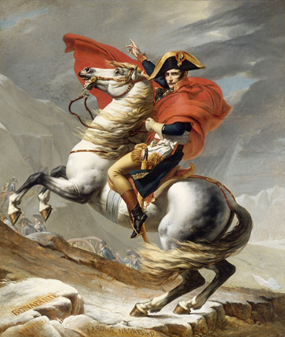
Portraits of important people were also being produced, as they were another common commission. These were often heavily embellished to make the subject appear more powerful, or attractive that they actually were, leading sometimes to blatant fabrication of details. Jacques-Louis David’s Bonaparte Crossing the Grand Saint-Bernard Pass (Figure 1) is a good example of this.
Napoleon is pictured leading his troops across the Alps astride a bucking horse. Unperturbed, he confidently points the way. In reality, he did not lead his troops across the Alps but followed them up the next day on a donkey. He also never posed for the painting. David used a sketch of his head and modelled the body on that of his son climbing a ladder (Cunningham et al., 2016, p.640).
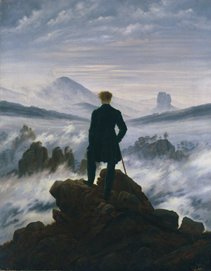
By the 1800s artists started to adopt a new image of being independent and figures of greatness. Photography would eventually make mere reproduction easier and freed art to be more expressive, and the rise of industry led to the arrival of the Romantic Movement, which was characterised by a deepened appreciation of the beauty of nature and an adoration of emotion over reason and intellect (Encyclopædia Britannica, 2019).
Walter Pater, one of the foremost art critics of the era, disseminated the belief that art should provide sensual pleasure rather than convey a meaning or message, an ideology that inspired painters like Whistler and even writers such as Oscar Wilde (Nunokawa & Sickels, 2005, p.5). He wrote in the conclusion of his most successful book The Renaissance, that “To burn always with this hard, gem-like flame, to maintain this ecstasy, is success in life” (Pater, 1928, p.221), an idea he developed further in the aptly-named Marius the Epicurean. He goes on to push “the love of art for its own sake” (Pater, 1928, p.223).
In contrast to Pater’s view, John Ruskin and later advocates of socialist realism believed that art should serve a moral or didactic purpose. Ruskin declared that “the entire vitality of art depends upon its being either full of truth, or full of use” (Ruskin, 1996, p.140).
Caspar David Friedrich was a painter of the Romantic Movement and, Der Wanderer über dem Nebelmeer (The Wanderer above the sea fog) (Figure 2), is one of his best-known works. It displays a young man with a walking stick shown from behind, standing on a rocky precipice looking out across a rough sea. In the far distance, there is a faint appearance of mountains and the fog and clouds seem to blend. As the man’s face cannot be seen, it is impossible to know whether his experience is “exhilarating, or terrifying, or both” (Gaddis, 2004, p.1).
Friedrich once said “the artist’s feeling is his law” (Wiedmann, 1986, p.46). This quotation is rather apt as he really captures the raw power and beauty of nature and the feeling of the individual in the midst of it in this work.
Towards the end of the Victorian era, a less optimistic, more honest and raw art movement appeared. Expressionism featured harsh colours, jagged edges, more violent brushwork and dark subject matter. Influenced by Friedrich (Gariff et al., 2008, p.140), Edvard Munch was a key figure of this movement.
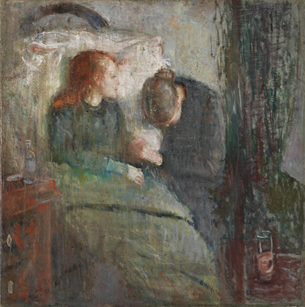
Munch’s life was tortuous at best. His mother died from tuberculous during his fifth Christmas, he caught it seven years later and eventually watched his sister die from it (Høifødt, 2012, p.7). In Munch’s own words, “The illness followed me all through my childhood and youth — the germ of consumption placed its blood-red banner victoriously on the white handkerchief” (Prideaux, 2005, p.66).
Det syke barn (The Sick Child) (Figure 3), is a portrait of Munch’s sister Sophie made a decade later. He used a girl called Betzy Nielsen, described as “consumptively beautiful with a blue-white skin turning yellow in the blue shadows” as a model for his dying sister in the painting. Described as “consumptively beautiful with a blue-white skin turning yellow in the blue shadows”. He proceeded to paint her while sitting in the wicker chair in which Sophie had died (Prideaux, 2005, p.86).
In this painting and many of Munch’s subsequent renditions of it, a frail girl is seen propped up in bed. Her head is turned to face an older woman who is holding her hand and hanging her head in profound sadness. One can feel a strong sense of anticipatory grief from the older woman at the thought of losing the child, who conversely appears to have accepted her fate. In the girl’s path of sight is a long dark curtain which could be interpreted as a symbol of her imminent death. This painting was referred to as his first sjælemaleri, or “soul paintings” (Prideaux, 2005, p.84).
Munch once said “I paint not what I see but what I saw” (Høifødt, 2012, p.7). Much like Friedrich, Munch’s feeling was his law and he used painting as a way to resolve troubling past events in his life like his sister’s death.
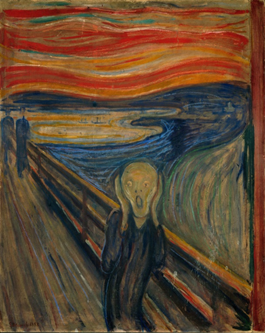
It was also certainly true of his most famous work, Skrik (The Scream) (Figure 4), which was inspired by a memorable evening when he was walking with friends during a sunset. The sky turned “blood red”, and “Trembling with anxiety” he “sensed an infinite scream passing through nature” (Lowis, 2009, p.119).
This painting features a distraught white figure, its hands raised to hold its face, screaming with large open eyes. There is an unforgettably ghastly expression on the face of the individual, who represents Munch during his experience of the sunset.
Through a post-modernistic lens the approach of the expressionism been criticised for its “very hermeneutic model of the inside and the outside” (Harrison & Wood, 2002, p.1049). Theorist Fredric Jameson, in a text about “the waning of affect in postmodern culture” said of The Scream, it “deconstructs its own aesthetic of expression, all the while remaining imprisoned within it.” (Harrison & Wood, 2002, p.1050).
It would appear that as art for art’s sake waned in the 20th century, audiences became more discerning. He goes on to say, “concepts such as anxiety and alienation (and the experiences to which they correspond, as in The Scream) are no longer appropriate in the world of the postmodern”. The purpose behind this painting is no longer relevant, as it is self-indulgent. It must be more accessible by others, according to theorists like Jameson.
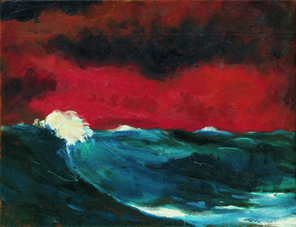
Emil Nolde, another expressionist artist perhaps also influenced by Friedrich (Schmied, 1995, p.40), carried on the expressionistic style of painting into the 20th century. Meer (I) (Figure 5), or Sea in English, is one of his works produced shortly after the Second World War ended.
Nolde was banned from making art by the Nazis, and had more of his works confiscated than any other artist, on the basis that his work was “degenerate” (Staatliche Museen zu Berlin, 2019). Yet he was a member of the Nazi party, and remained a supporter until the end of the war.
This work features a blood red sky traversed by thick black clouds. Beneath it is a restless sea painted in blue and green shades. It seems very appropriate for an immediate post-war expressionist painting. Perhaps, the red sky with black clouds signifies an anger or fear concerning the end of the war. The restlessness of the sea may represent the restless feelings of Nolde, who had lost his wife Ada to a heart attack the previous year. He in fact painted many images of the sea due a memorable crossing of the Kattegat strait in a violent storm in 1910 (Selz, 1963, p.72).
Despite his ban from painting, he still managed to quietly paint many watercolours during the war which he referred to as “Unpainted Pictures” (Selz, 1963, p.70). Perhaps the need to express his self was too great for even the Nazis to totally prevent. The purpose of his art is similar to Friedrich’s, in that he painted many seascapes and landscapes because he felt a need to paint them. Those things held significance for him, in much the way Munch’s sister’s death was significant to him.
Moving on to the 60s, art was becoming yet more abstract. Pop art was at its height but there were also many avant-garde artists such as Ad Reinhardt producing works that question how far the boundaries of art could be pushed. This pushing of boundaries was nothing new. In the 1910s artists like Marcel Duchamp were doing precisely that. His infamous Fountain, an inverted urinal inscribed with “R. Mutt” in indelible marker, was refused entry and considered not a work of art due its association with bodily waste by the Society of Independent Artists (Howarth, 2015).
Reinhardt’s Abstract Print (Figure 6) is an almost entirely black screen print with a faint white mixed in. The image might be seen by theorists like Pater as lacking in aesthetic quality but may have also been viewed as lacking in social purpose by Ruskin. This new form of art that started with the Dadaists goes beyond painting enigmatic landscapes and edgy screaming figures. It is an attempt to push boundaries of art as a medium.
One of the issues with “art for art’s sake” is the tendency for the art market to prosper heavily from these ever changing styles or fashions in art, which are merely stylistic and challenge nothing. Artist and writer Ian Burn believed that this helped to prop up capitalism, especially in 1970’s New York (Harrison & Wood, 2002, p.936). Artists like Salvador Dalí, whose dream-like imagery and style have become very well-known, is an artist that the art market clearly loves, as his Portrait de Paul Éluard sold for nearly £13.5 million in 2011 (Sotheby’s, 2011). Yet the work is adored its style not for its meaning.
Burn’s argument is based partly on the ideas of theorists like Ruskin, that art should be used for the social good, which has become a prevalent in the modern era. A lot of artists focus on social or political issues, and those that produce works that do not challenge anything, especially in a troubled country are sometimes seen as upholding the status quo. Artist Christian Jankowski produced a live stream called Kunstmarkt TV (Figure 7), or Art Market TV in English, which features two presenters that sell artworks in the style of a teleshopping TV station (Frost, 2013). This was his way of critiquing the art market and how it undermines the social value of such art.
Lawrence Abu Hamda’s After SFX (Figure 8) is a work that is certainly compatible with Ruskin’s view of Art. It is based in a large dark room with a set of speakers that surround the viewer playing eerie noises, while a large screen displays text explaining that the sounds are those heard by prisoners in a Syrian regime prison.
Hamda is an audio investigator for Amnesty International and Forensic Architecture and this work represents crimes that are heard but not seen (Tate, 2019). It seeks to inform the audience of the critical work done by audio investigators Like Hamda while immersing the audience into the frightening experience of the prisoners, which emphasises the urgency of his work. This would be seen by writer Marshall McLuhan as the artist fulfilling their duty by provoking discussions and forcing people to engage with real world issues (Harrison & Wood, 2002, p.756).
Proponents of aestheticism in the 19th century like James McNeil Whistler however, would view the work as confounded by “claptrap” (Sutherland, 2014, p.155), and politically and emotionally loaded. To produce that deals with socio-political themes and is quite directly linking to real world events is to an extent a modern concept, and one that is influenced much by proponents of art with a social purpose, like Ruskin.
From the analyses of the artworks, one can deduce that the older works by Friedrich, Munch, and Nolde, are about expression of emotions, resolving of traumatic events and painting for pleasure. Their work serves the needs of the artists and may be seen by some as self-indulgent. Artist Mel Ramsden once complained of “indulgent individual freedom” in artistic practices in 1970s New York. These “insular and boring” fads that he complained of, were examples of artistic freedom that, as Ian Burn feared, were subservient to the art market (Harrison & Wood, 2002, p.933).
In the case of Duchamp and Reinhardt, their work is very abstract and is intended to challenge what can be considered art. Both proponents of aestheticism and socio-political art would perhaps dislike this art even though it has a clear purpose.
For later artists like Jankowski and Hamda, the work serves to raise awareness of issues in the world and bring attention to the necessity for socio-political change. Theorists like Ruskin and McLuhan would have approved of Hamda’s work, as it theoretically improves society by promoting awareness of social issues.
My own work varies from mere abstract or symbolic expressions of my feelings, like the expressionists, to humorous demonstrations of socio-political issues via exaggeration, like Jankowski. The German concept of Weltschmerz, a lamenting of the human condition, prominently features in my work, heavily influenced by philosophers Schopenhauer, Wittgenstein and Kierkegaard, and the artists Munch and Nolde.
This view that art should be beautiful or produced entirely without a specific purpose is seen as wasteful in the modern era but in reality it could be just as valid as the philosophy of Ruskin that art should serve a social purpose. Friedrich believed that “nothing is incidental in a picture” (Friedenthal, 1963, p.33), and Nolde said similarly that the “soul of the painter lives within” paintings (Miesel, 2003, p.37). Both of these phrases are a way of saying the same thing, that any artist will leave parts of their identity in their work, even if completely unintentionally. By this logic, all art automatically expresses the artist’s identity and feelings, and therefore has a purpose from the start, even if it is not the artist’s intention. This renders the main question being investigated somewhat invalid, as perhaps the question should be which purpose is best for Art.
Even if art is used by some artists as a form of self-therapy, it is still a valid purpose, and no doubt there are many other people that have shared or similar life experiences to artists like Munch or Nolde, and therefore the work may strike a chord with them. Sometimes art has to be self-indulgent in order to project the very complex and specific feelings that an individual might have, and those of a similar disposition may find that work much stronger than work portraying a more political or social issue. This quickly becomes an argument about minorities versus majorities, and whether or not the individual is most important or large social groups.
Much of this debate rests on the definition of purpose. If we consider purpose to be the ultimate effect on the viewer, regardless of the artist’s intentions, then art could be considered to have absolutely no purpose by some and exceedingly purposeful by others. If we consider purpose to be the artist’s reason for creating the work, whatever that motivation might be, by that definition any artwork will automatically have purpose. Even if it is only to bring pleasure, it is still fulfilling a fundamental human need.
Whatever the purpose or function of art, it is also necessary to define Art. The latter definition of purpose would appear to mark everything one can create as a work of art, even if it is the carbon dioxide we breathe out. This is somewhat reminiscent of Fluxus artist Joseph Beuys’ view that everyone is an artist (Harrison & Wood, 2002, p.905).
Revisiting the Victorian era, Ruskin believed that art and culture could become a replacement for religion after increasing secularisation was inevitable (Cheeke, 2016, p.24). Indeed art theorist André Malraux believed that this has already happened. In Les voix du silence (The Voices of Silence), he said that “modern masters paint their pictures as the artists of ancient civilisations carved or painted gods” (Malraux, 1974, p.616). The agenda for Art delineated in Art as Therapy by philosopher Alain de Botton and art history John Armstrong, is that art should “assist mankind in its search for self-understanding, empathy, consolation, hope, self-acceptance and fulfilment” (de Botton & Armstrong, 2019, p.230).
Ultimately art has become a new faith, and while there is certainly room for aesthetic beauty and intriguing imagery, there is also a firmly established culture of art providing socio-political commentary. It is perhaps not surprising that in a war-torn country, for example, an artist might be seen as a sell-out for producing art that is beautiful, yet in a successful country, it may be a bit more acceptable. Art reflects greatly the time and location in which it was produced, and adapts to the needs of different societies, so the best purpose for art is subjective therefore it seems myopic to restrict what art should be.
As discussed earlier, any art will have a purpose by the latter definition, and following the first, only certain pieces would have a purpose. Is this just arguing over semantics and groups arguing past each other? Wittgenstein said that “if a lion could speak, we could not understand him” (Hofstadter, 1980). That is because the lion’s culture is so vastly different to ours that, even if we understood the words, they will not mean the same thing as in our language. Perhaps the real purpose of art should be to listen to the proverbial lion, forgetting about the words and grammar, and accept its vocalisations as one of many valid commentaries on life.
Bibliography
a-n, 2019. Lawrence-Abu-Hamdan-After-SFX-2018.-Turner-Prize-2019-at-Turner-Contemporary-Margate-2019.-Photo-by-Stuart-Leech-2 — a-n The Artists Information Company. [Online] Available at: https://www.a-n.co.uk/media/52568843/ [Accessed 29 November 2019].
Artsy, 2018. Caspar David Friedrich | Wanderer above the Sea of Fog (ca. 1817) | Artsy. [Online] Available at: https://www.artsy.net/artwork/caspar-david-friedrich-wanderer-above-the-sea-of-fog [Accessed 18 November 2018].
Artsy, 2018. Edvard Munch | The Scream (1893) | Artsy. [Online] Available at: https://www.artsy.net/artwork/edvard-munch-the-scream [Accessed 18 November 2018].
Bohn, B. & Saslow, J.M., 2012. A Companion to Renaissance and Baroque Art. Chichester: John Wiley & Sons.
Cheeke, S., 2016. Transfiguration: The Religion of Art in Nineteenth-century Literature Before Aestheticism. Oxford: Oxford University Press.
Cunningham, L.S., Reich, J.J. & Fichner-Rathus, L., 2016. Culture and Values: A Survey of the Humanities, Volume 2. Boston: Cengage Learning.
de Botton, A. & Armstrong, J., 2019. Art as Therapy. London: Phaidon.
Dewald, J., 2004. Europe 1450 to 1789: Absolutism to Coligny. New York: Charles Scribner’s Sons.
Encyclopædia Britannica, 1999. Encyclopedia Britannica | Britannica.com. [Online] Available at: https://www.britannica.com/topic/art-for-arts-sake [Accessed 01 November 2019].
Encyclopædia Britannica, 2019. Romanticism | Britannica. [Online] Available at: https://www.britannica.com/art/Romanticism [Accessed 28 November 2019].
Friedenthal, R., 1963. Letters of the Great Artists: From Blake to Pollock. New York: Random House.
Frost, A., 2013. Art takes on capitalism: but what’s at stake? | Art and design | The Guardian. [Online] Available at: https://www.theguardian.com/artanddesign/australia-culture-blog/2013/aug/28/art-capitalism-financial-report [Accessed 10 December 2019].
Gaddis, J.L., 2004. The Landscape of History: How Historians Map the Past. Oxford: Oxford University Press.
Garbrecht, J., 2008. Emil Nolde: Mein Wunderland von Meer zu Meer (My Wonderland from Sea to Sea). In M. Reuther, ed. Emil Nolde: Mein Wunderland von Meer zu Meer (My Wonderland from Sea to Sea). Köln: DuMont. pp.17–43.
Gariff, D., Denker, E. & Weller, D.P., 2008. The world’s most influential painters and the artists they inspired. London: A & C Black.
Google Art Project, 2019. Bonaparte Crossing the Grand Saint-Bernard Pass, 20 May 1800 — Jacques Louis David — Google Arts & Culture. [Online] Available at: https://artsandculture.google.com/asset/QwEFHqZhgW6ulw [Accessed 29 November 2019].
Harrison, C. & Wood, P.J., 2002. Art in Theory 1900–2000. Oxford: Blackwell.
Hofstadter, D.R., 1980. Gödel, Escher, Bach: An Eternal Golden Braid. London: Penguin.
Høifødt, F., 2012. Edvard Munch. London: Tate.
Howarth, S., 2015. ‘Fountain’, Marcel Duchamp, 1917, replica 1964 | Tate. [Online] Available at: http://www.tate.org.uk/art/artworks/duchamp-fountain-t07573 [Accessed 25 March 2018].
Jankowski, C., 2008. Kunstmarkt TV / Art Market TV — Christian Jankowski. [Online] Available at: https://christianjankowski.com/works/2008-2/kunstmarkt-tv-art-market-tv/ [Accessed 12 December 2019].
Lowis, K., 2009. 50 Paintings You Should Know. Munich: Prestel.
Malraux, A., 1974. The Voices of Silence. Translated by S. Gilbert. St Albans: Paladin.
Miesel, V.H., 2003. Voices of German Expressionism. New York: Harry N. Abrams.
Nasjonalmuseet, 2015. Edvard Munch, Det syke barn — Nasjonalmuseet — Samlingen. [Online] Available at: http://samling.nasjonalmuseet.no/no/object/NG.M.00839 [Accessed 27 November 2019].
Nunokawa, J. & Sickels, A., 2005. Oscar Wilde. Philadelphia: Chelsea House Publishers.
Pater, W., 1928. The Renaissance: Studies In The Art And Poetry. London: Jonathan Cape.
Prideaux, S., 2005. Edvard Munch: Behind the Scream. New Haven: Yale University Press.
Ratcliffe, S., 2011. Oxford Treasury of Sayings and Quotations. Oxford: Oxford University Press.
Ruskin, J., 1996. Lectures on Art. New York: Allworth Press.
Art for Heart’s Sake
«Here, take your pineapple juice,» gently persuaded Koppel, the male nurse.
«No!» said Collis P. Ellsworth firmly.
«But it’s good your you, sir.»
«It’s the doctor’s orders.»
Koppel heard the front door bell and was glad to leave the room. He found Doctor Caswell in the hall downstairs. «I can’t do a thing with him,» he told the doctor. «He won’t take his pineapple juice. He doesn’t want me to read to him. He hates the radio. He doesn’t like anything.»
Doctor Caswell received the information with his usual professional calm. He had done some thinking since his last visit. This was no ordinary case. The old gentleman was in pretty good shape for a man of seventy-six years. But he had to be prevented from buying things. He had suffered his last heart attack after his disastrous purchase of that small railroad out in Iowa. The attack before that came from the excitement caused by the failure of the chain of grocery stores which he had previously bought at a very high price. All of his purchases of recent years had to be liquidated at a great sacrifice both to his health and his pocketbook. Though he was still very wealthy, his health had begun to show serious effects from these various business operations.
Collis P. Ellsworth sat in a huge armchair by the window. He looked around as Doctor Caswell asked, «Well, how’s the young man today?»
«Umph!» said the figure in the chair in a rather disagreeable tone.
«I hear that you haven’t been obeying orders,» the doctor said.
«Who’s giving me orders at my time of life?»
The doctor drew up his chair and sat down close to the old man. «I’ve got a suggestion for you,» he said quietly.
Old Ellsworth looked suspiciously over his eyeglasses. «What is it, more medicine, more automobile rides, more foolishness to keep me away from my office?»
«How would you like to take up art?» The doctor had his stethoscope ready in case the suddenness of the suggestion proved too much for the patient’s heart.
But the old man’s answer as a strong «Foolishness!»
«I don’t mean seriously,» said the doctor, relieved that nothing had happened. «Just play around with chalk and crayons. It’ll be fun.»
«All right.» The doctor stood up. «I just suggested it, that’s all.»
Collis P. paused a moment. The wrinkles in his forehead deepened a little. «Where’d you get this crazy idea, anyway?»
«Well, it’s only a suggestion—«
«But, Caswell, how do I start playing with the chalk—that is, if I’m foolish enough to start?»
«I’ve thought of that, too. I can get a student from one of the art schools to come here once a week and show you. If you don’t like it after a while, you can throw him out.»
Doctor Caswell went to his friend, Judson Livingston, head of the Atlantic Art Institute, and explained the situation. Livingston had just the young man—Frank Swain, eighteen years old and an excellent student. He needed the money. He ran an elevator at night to pay for his schooling. How much would he get?» Five dollars a visit. Fine.
The next afternoon young Swain was shown into the big living room. Collis P. Ellsworth looked at him suspiciously. «Let’s try and draw that vase over there on the table,» he suggested.
«What for? It’s only a bowl with some blue stains on it. Or are they green?»
«Try it, Mr. Ellsworth, please.»
«Umph!» The old man took a piece of crayon in a shaky hand and drew several lines. He drew several more and then connected these crudely. «There it is, young man,» he said with a tone of satisfaction. «Such foolishness!» Frank Swain was patient. He needed the five dollars. «If you want to draw you will have to look at what you’re drawing, sir.»
Ellsworth looked. «Gosh, it’s rather pretty. I never noticed it before.»
Koppel came in with the announcement that his patient had done enough for the first lesson.
«Oh, it’s pineapple juice again,» Ellsworth said. Swain left.
When the art student came the following week, there was a drawing on the table that had a slight resemblance to a vase. The wrinkles deepened at the corners of the old gentleman’s eyes as he asked, «Well, what do you think of it?»
«Not bad, sir,» answered Swain. «But it’s not quite straight.»
«Gosh,» old Ellsworth smiled, «I see. The halves don’t match.» He added a few lines with a shaking hand and colored the open spaces blue like a child playing with a picture book. The he looked towards the door. «Listen, young man,» he whispered, «I want to ask you something before old pineapple juice comes back.»
«Good. Let’s make it Monday, Wednesday, and Friday. Four o’clock.»
Kopple entered and was gently surprised when his patient took his pineapple juice without protest.
As the weeks went by Swain’s visit grew more frequent. He brought the old man a box of water colors and some tubes of oils.
When Doctor Caswell called, Ellsworth would talk about the graceful lines of the chimney. He would mention something about the rich variety of color in a bowl of fruit. He proudly showed the various stains of paint on his dressing gown. He would not allow his servant to send it to the cleaner’s. He wanted to show the doctor how hard he’d been working.
The treatment was working perfectly. No more trips downtown to his office for the purpose of buying some business that was to fail later. No more crazy financial plans to try the strength of his tried old heart. Art was a complete cure for him.
The doctor thought it safe to allow Ellsworth to visit the Metropolitan Museum, the Museum of Modern Art, and other exhibitions with Swain. An entirely new world opened up its mysteries to him. The old man showed a tremendous curiosity in the art galleries and in the painters who exhibited in them. How were the galleries run? Who selected the pictures for the exhibitions? An idea was forming in his brain.
When the late spring began to cover the fields and gardens with color Ellsworth painted a simply horrible picture of which he called, «Trees Dressed in White.» Then he made a surprising announcement. He was going to exhibit the picture in the summer show at the Lathrop Gallery.
For the summer show at the Lathrop Gallery was the biggest art exhibition of the year—in quality, if not in size. The lifetime dream of every important artist in the United States was a prize for this exhibition. Among the paintings of this distinguished group of artists Ellsworth was now going to place his «Trees Dressed in White,» which resembled a handful of salad dressing thrown violently against the side of the house.
«If the newspapers hear about this, everyone in town will be laughing at Mr. Ellsworth. We’ve got to stop him,» said Kopple.
«No,» warned the doctor. «We can’t interfere with him now and take a chance of ruining all the good work which we have done.»
To the complete surprise of all three—and especially Swain—»Trees Dressed in White» was accepted for the Lathrop show. Not only was Mr. Ellsworth crazy, thought Koppel, but the Lathrop Gallery was crazy, too.
Fortunately the painting was hung in an inconspicuous place where it did not draw any special notice or comment. Young Swain slipped into the museum one afternoon and blushed to the top of his ears when he saw «Trees Dressed in White,» a loud, ugly picture on a wall otherwise covered with paintings of beauty and harmony. As two laughing students stopped before a strange picture Swain left hurriedly. He could not bear to hear what they had to say.
During the course of the exhibition the old man kept on taking lessons, seldom mentioning his picture in the exhibition. He was unusually cheerful. Every time Swain entered the room he found Ellsworth laughing to himself. Maybe Koppel was right. The old man was crazy. But it seemed equally strange that the Lathrop committee should encourage his craziness by accepting his picture.
Two days before the close of the exhibition a special messenger brought a long official-looking envelope to Collis P. Ellsworth while Swain, Kopple, and the doctor were in the room. «Read it to me,» said the old man. «My eyes are tired from painting.»
Swain and Kopple were so surprised that they could not say a word. Doctor Caswell, exercising his professional self-control with a supreme effort, said: Congratulations, Mr. Ellsworth. Fine, fine….Of course, I didn’t expect such great news. But, but—well, now, you’ll have to admit that art is much more satisfying than business.»
«Art has nothing to do with it,» said the old man sharply. «I bought the Lathrop Gallery last month.»